Defying protests and poverty, Haitians get creative to wed in style
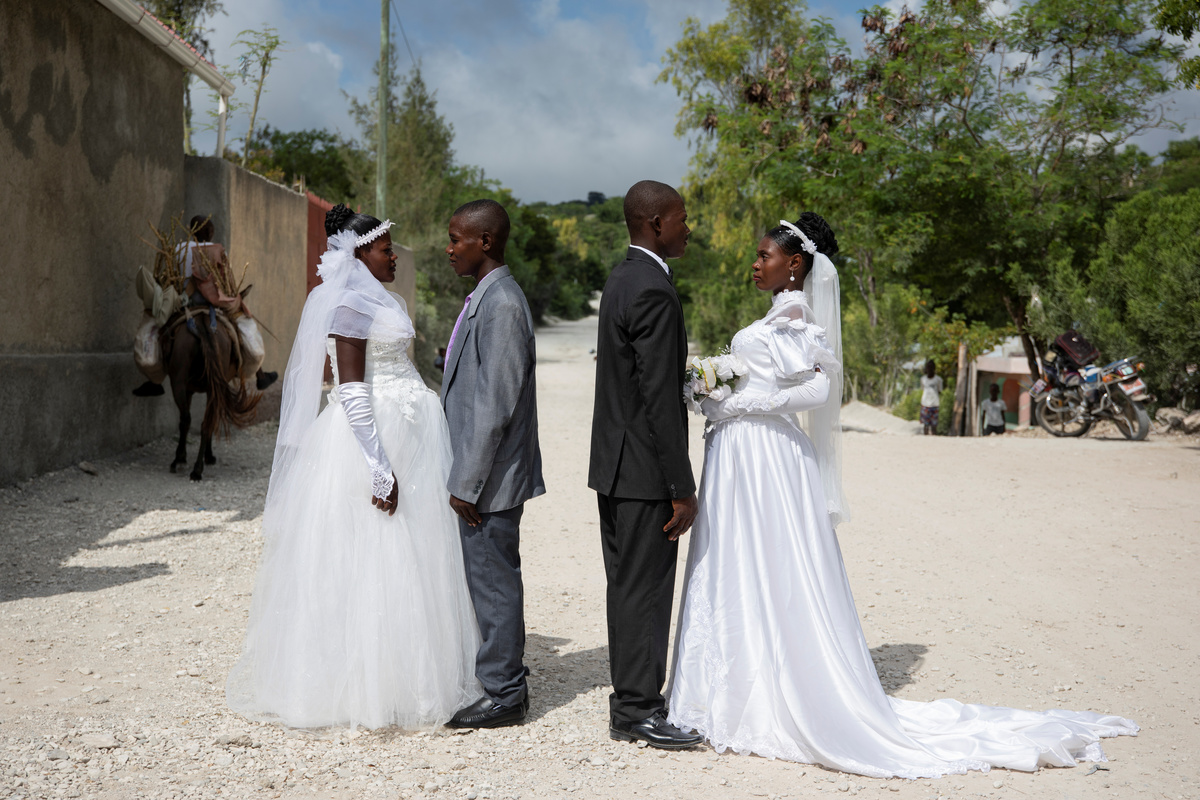
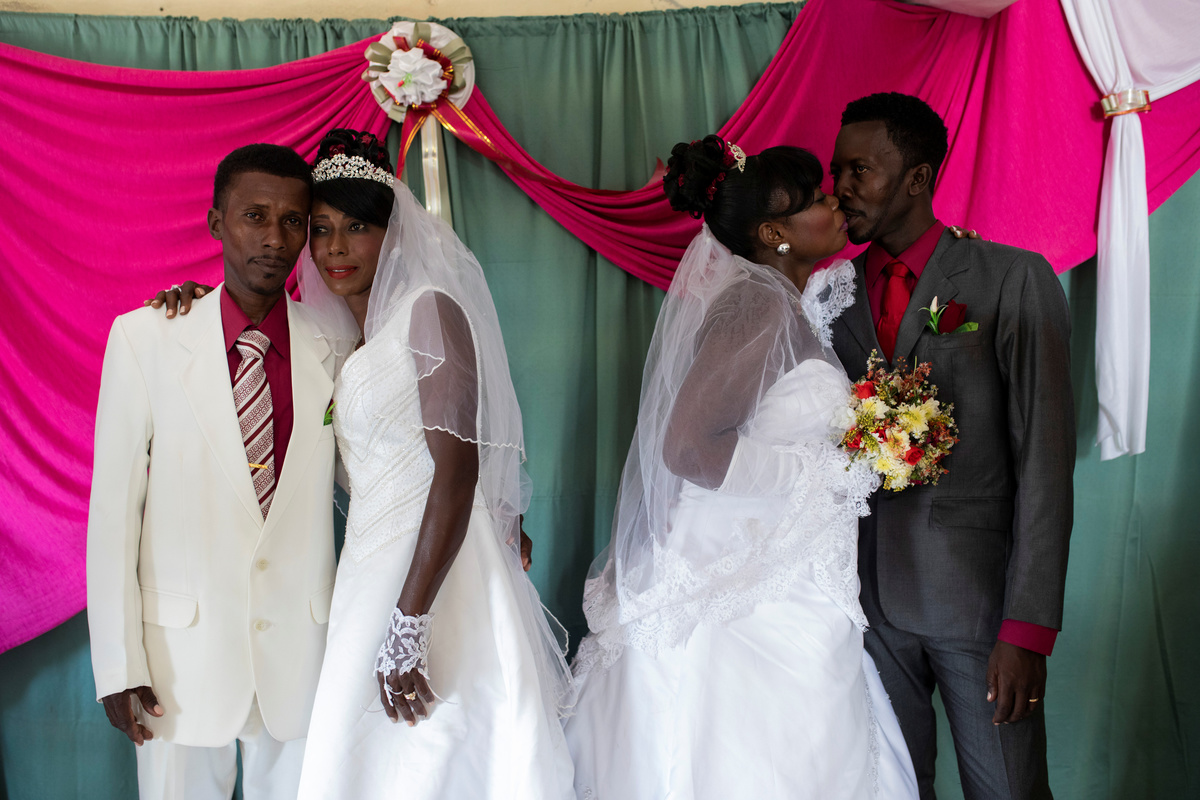
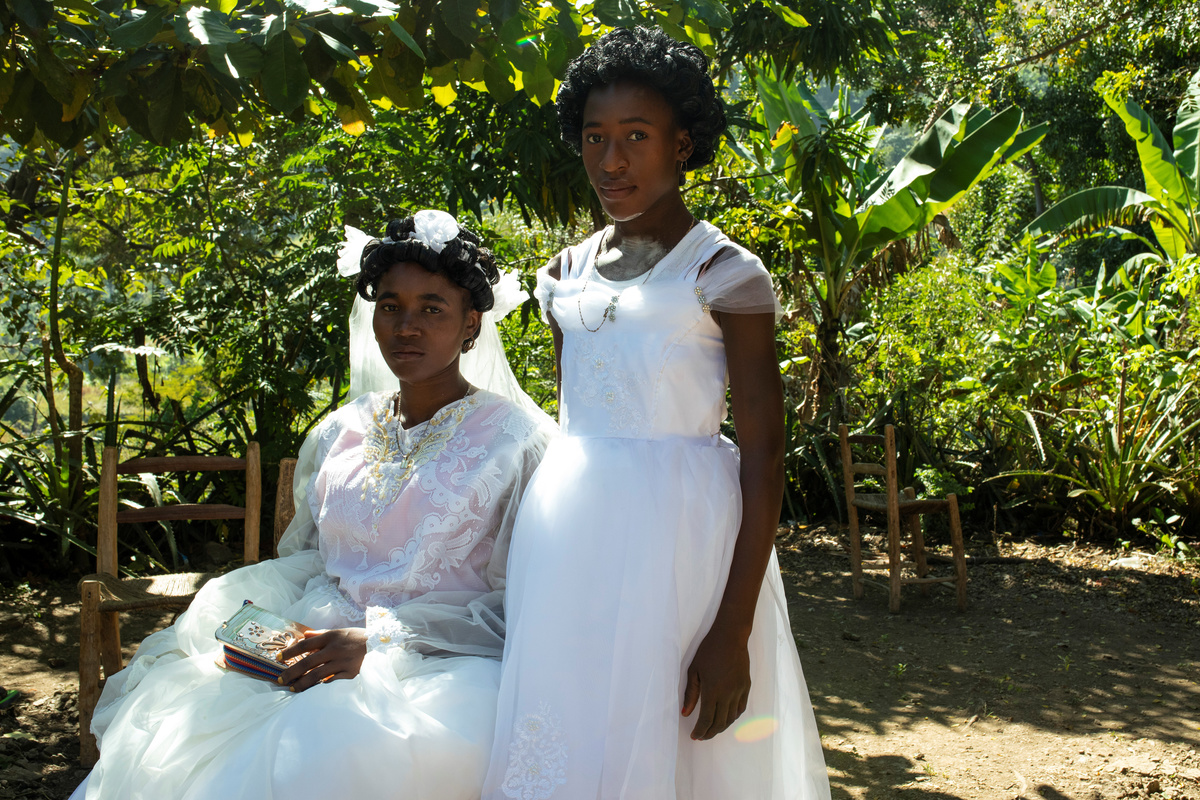
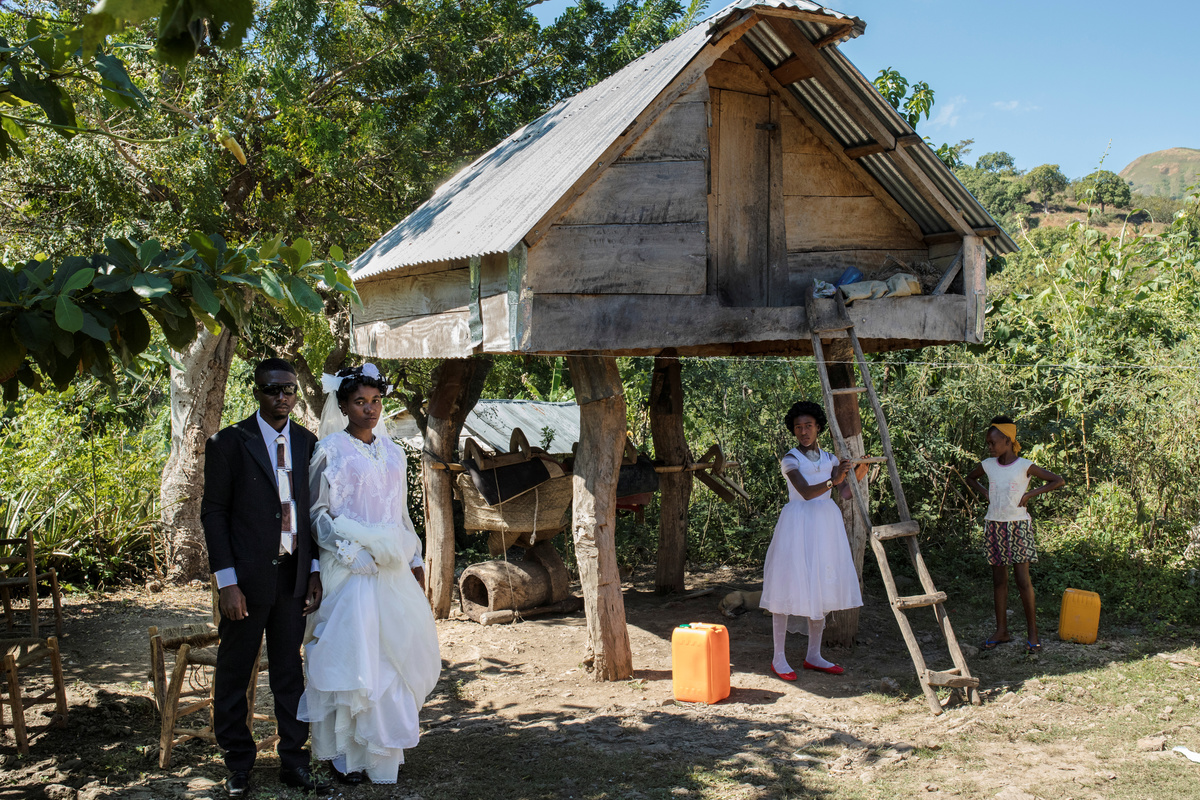
Patricia, who is pregnant, and Obelson, who got married in a joint ceremony with another pregnant couple who they did not know, to share the costs of the ceremony, pose for a photo outside the church where they got married in Baie de Henne, Nord Ouest Department, Haiti, October 27, 2018. Obelson, who works as a motorcycle driver, met Patricia while working. When she fell pregnant, her parents insisted that they get married. Protestant churchgoing communities in Haiti favour marriage, especially if a couple is expecting a child with some religious schools only accepting pupils if their parents can provide a marriage certificate. REUTERS/Valerie Baeriswyl
As anti-government protesters in Haiti's capital blocked principal roads and clashed with police last year, Stanley Joseph and Daphne Gerard used the city's winding and potholed backroads to make it to church for their wedding, decked out in all their finery.
The bride had wondered if they should postpone their big day when it became clear a majority of their guests would not make it, due to the violent unrest that had gripped Port-au-Prince for months.
But they had spent a lot of money and time planning.
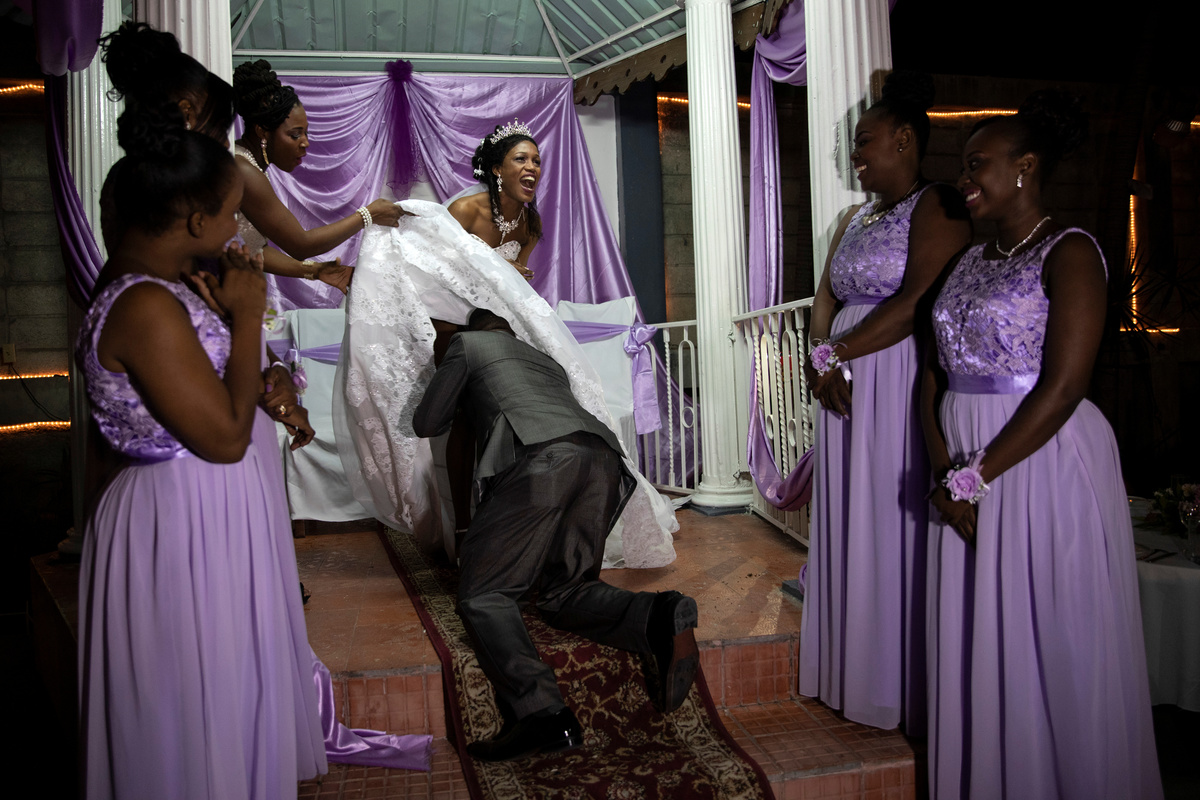
Stanley Joseph, the groom, who works as a driver for an NGO, tries to remove bride Daphne Gerard's garter from underneath her dress, as their bridesmaids look on, during a wedding game, after getting married in Port-au-Prince, Haiti, February 14, 2019. Gerard wondered if they should postpone their big day when it became clear a majority of their guests would not make it, due to the violent unrest that had gripped Port-au-Prince for months. Joseph felt they could make it work, although that meant chartering a plane to bring Gerard's parents up from the country's south-east. "We always have problems in Haiti. You can't wait. You just have to get on and overcome them," said Joseph. "I was stressed but happy." REUTERS/Valerie Baeriswyl
Joseph, 36, felt they could make it work, although that meant chartering a plane to bring Gerard's parents up from the country's south-east.
Such is Haiti, where couples often have to surmount seemingly endless obstacles, from unrest and hurricanes to power outages and, above all, poverty, to get wed.
But wed they do, and in style.
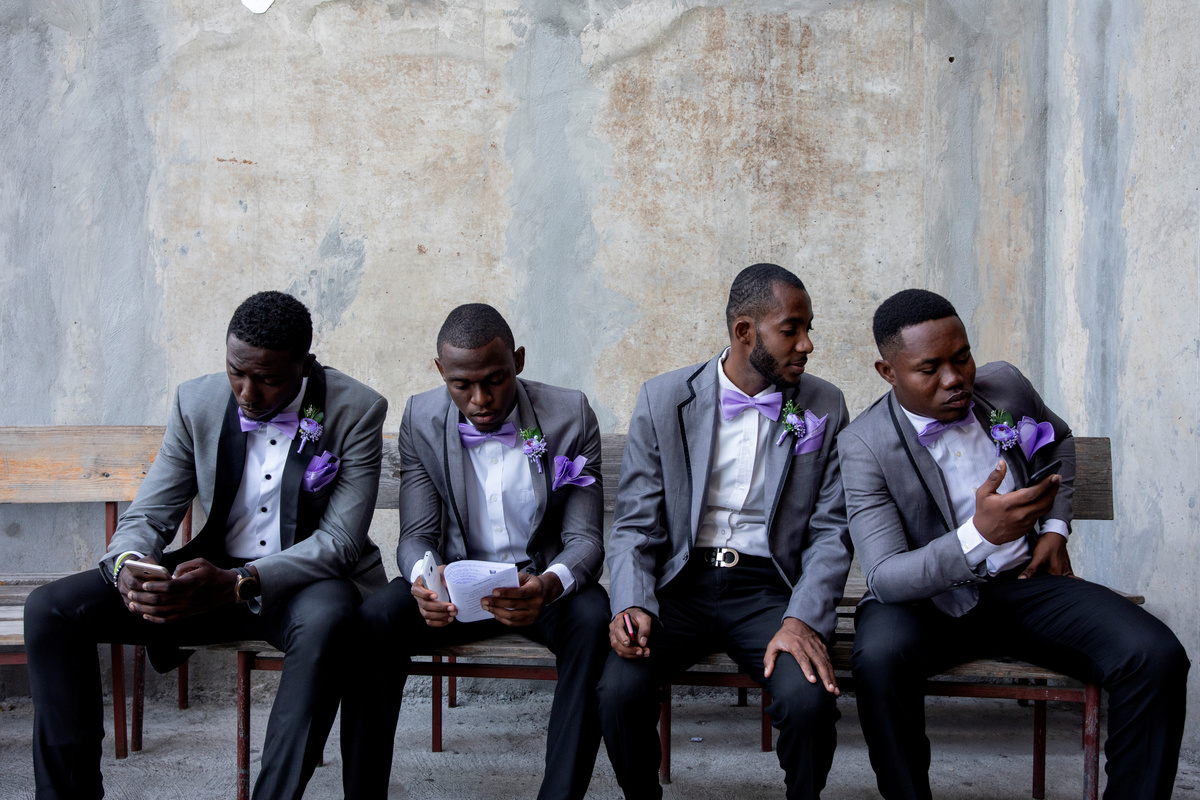
Boys of honour Victor Rulx Guilbert, 25, Lucien Hasting, 27, Jean Louis Fabrice Guerlens, 25, and Edouard Wonder, 27, at the wedding of Stanley and Daphne Joseph, wear matching suits as part of Haitian martial tradition, as they wait for the ceremony to commence, at a church in Port-au-Prince, Haiti, February 14, 2019. REUTERS/Valerie Baeriswyl
"We always have problems in Haiti. You can't wait. You just have to get on and overcome them," said Joseph, who wore a silver suit and lilac tie and boutonniere, matching the bridesmaids' lilac dresses. "I was stressed but happy."
Marriage is not as widespread in Haiti as in other Western countries, given the long-standing Creole tradition of 'plasaj,' an informal marital relationship that is common in rural areas but not legally recognized.
Yet marriage has greater prestige and is particularly favored by Haiti's wealthier, cosmopolitan urbanites, according to Haitian sociologist Tamas Jean Pierre - not least because it is recognized abroad.
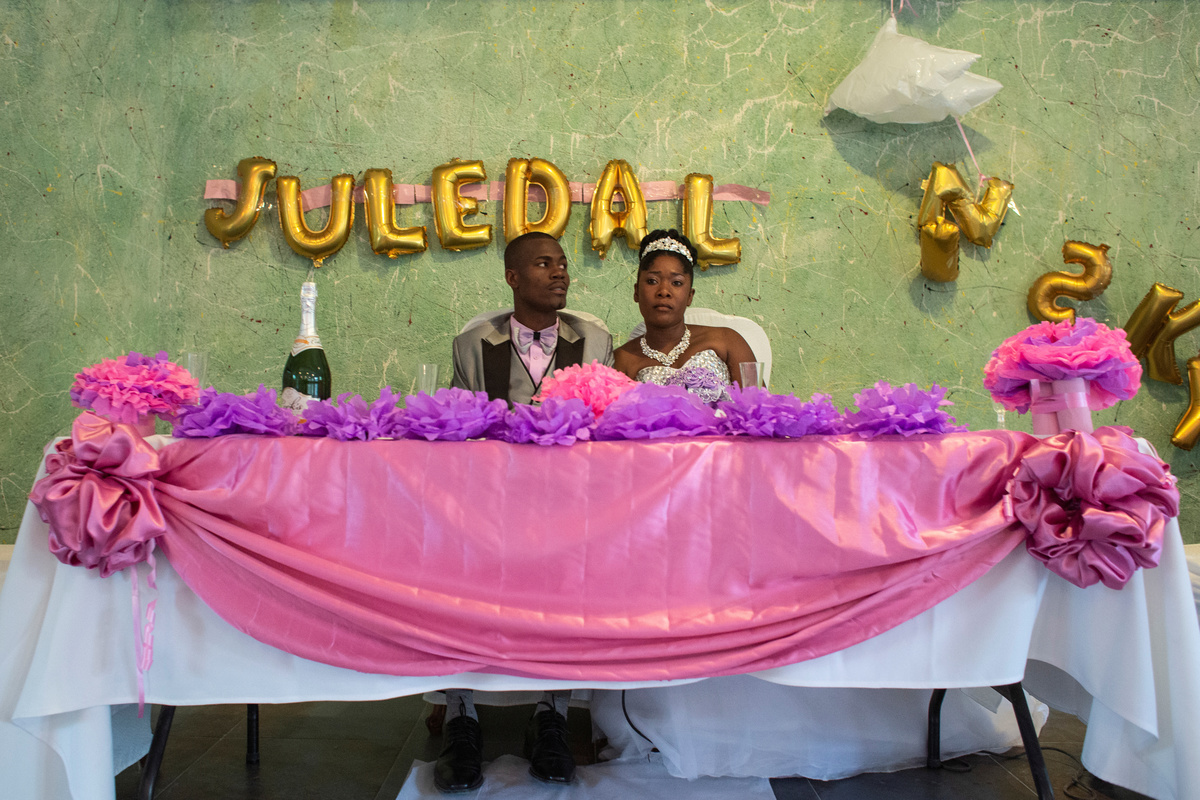
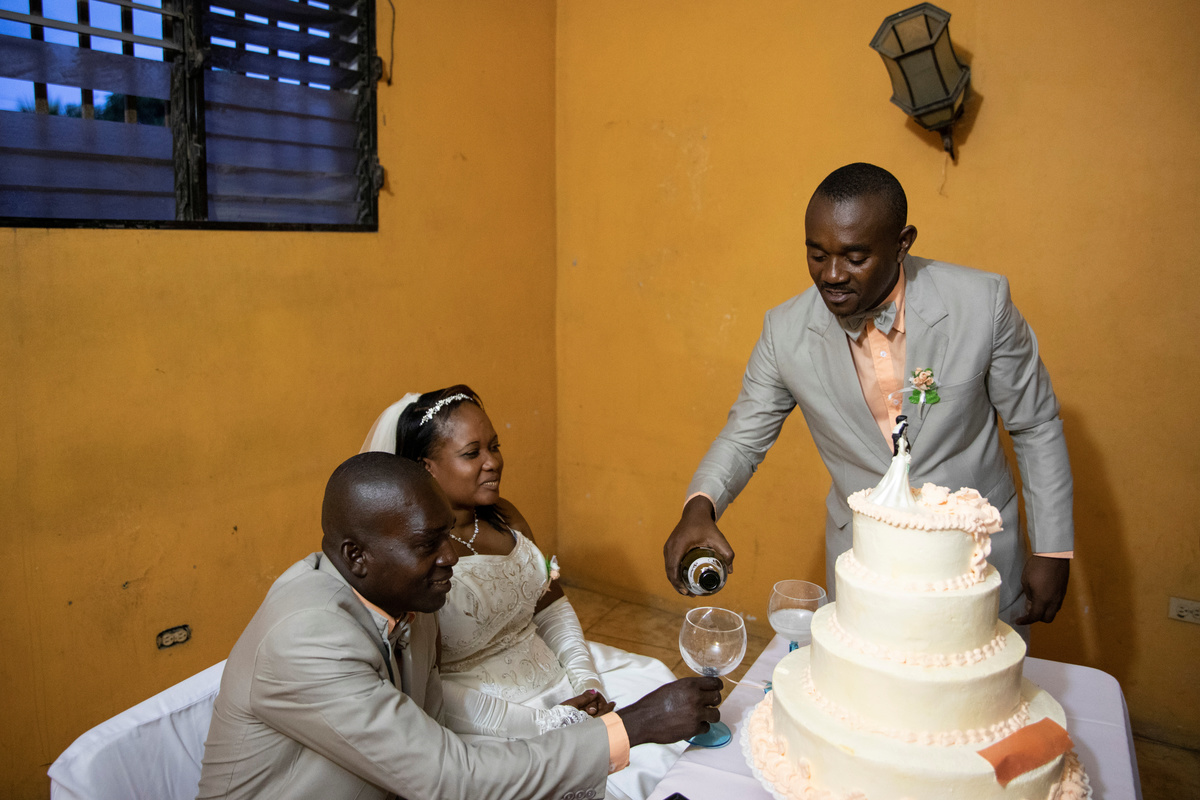
Julio and Dalina sit together at a table as they wait for guests to arrive at their wedding party, after getting married in a church ceremony in Delmas, Port-au-Prince Arrondissement, Haiti, July 31, 2015. REUTERS/Valerie Baeriswyl
Protestant churchgoing communities also favor marriage, especially if a couple is expecting a child. Some religious schools will only accept pupils if their parents can provide a marriage certificate.
"Often the reverend himself puts pressure on the couple, saying it is the will of God, which you cannot disobey," said Haitian ethnologist Isaac Ducléon.
Plasaj does not grant rights such as child support in the event of separation, or a share of a partner's estate if they die.
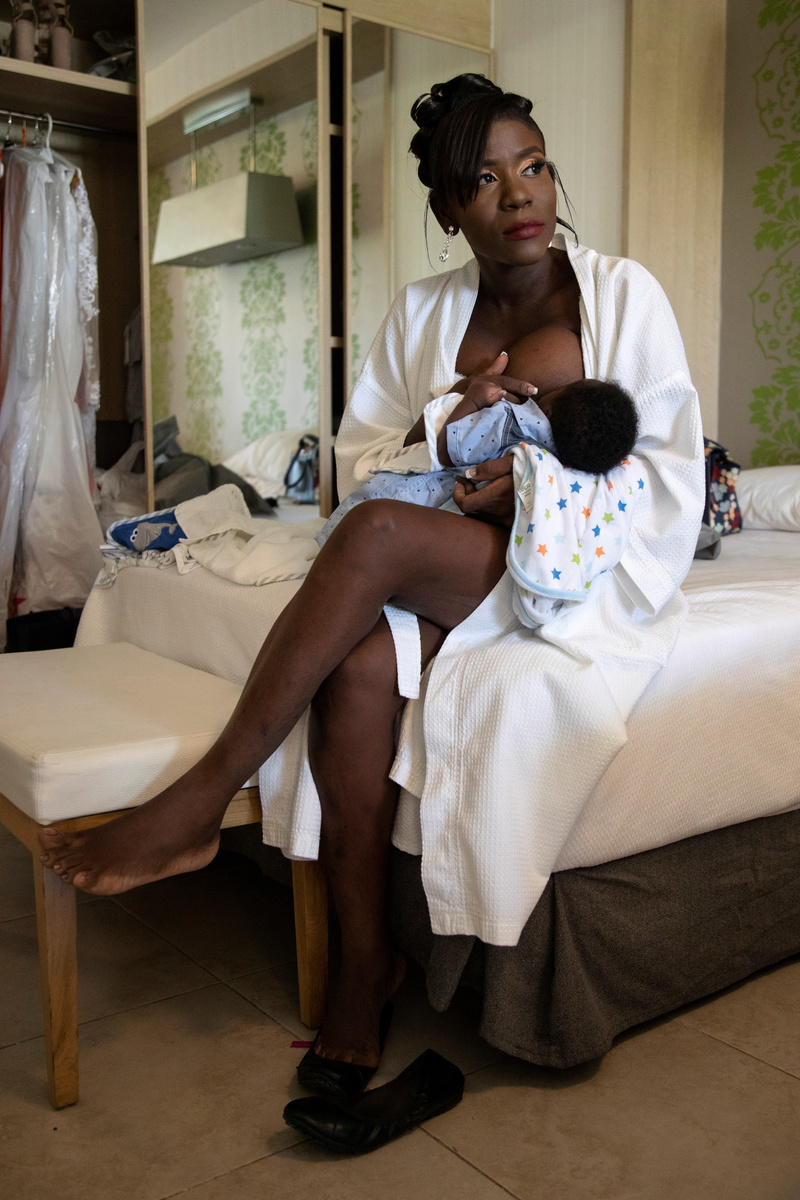
Johane Jean, 38, who works as a manager at a fast food restaurant, breastfeeds her one-month old son Jean Murat Darius, on the day of her wedding to Kilmite Darius, a mechanic, at a hotel paid for by Jean's cousin, a Haitian living in the United States, in Petion Ville, Port-au-Prince, Haiti, March 23, 2019. "I fell pregnant and, as we are both churchgoers, we decided to get married," said Jean who married Darius one month after giving birth and nursed her baby throughout the day. REUTERS/Valerie Baeriswyl
"I fell pregnant and, as we are both churchgoers, we decided to get married," said Johanne Jean, 38, who wed one month after giving birth, nursing her baby throughout the day.
SHINDIG ON A SHOESTRING
A baby's bottle, belonging to the nine-month-old daughter of Luc Andrew Abraham and Wefny Tinor Abraham, who are getting married, is cooled down together with a bottle of champagne in an ice bucket, on the day of Luc and Wefny's wedding day, at a hotel in Petion-Ville, Port au Prince, Haiti, May 13, 2016. REUTERS/Valerie Baeriswyl
Still, in a country where more than half the population lives under the poverty line of $2.41 per day, only the wealthiest of Haitian couples can afford the full shebang of a wedding ceremony, lavish dinner reception, and honeymoon.
Most have to get creative. Sometimes multiple couples get married at the same time to save on church fees.
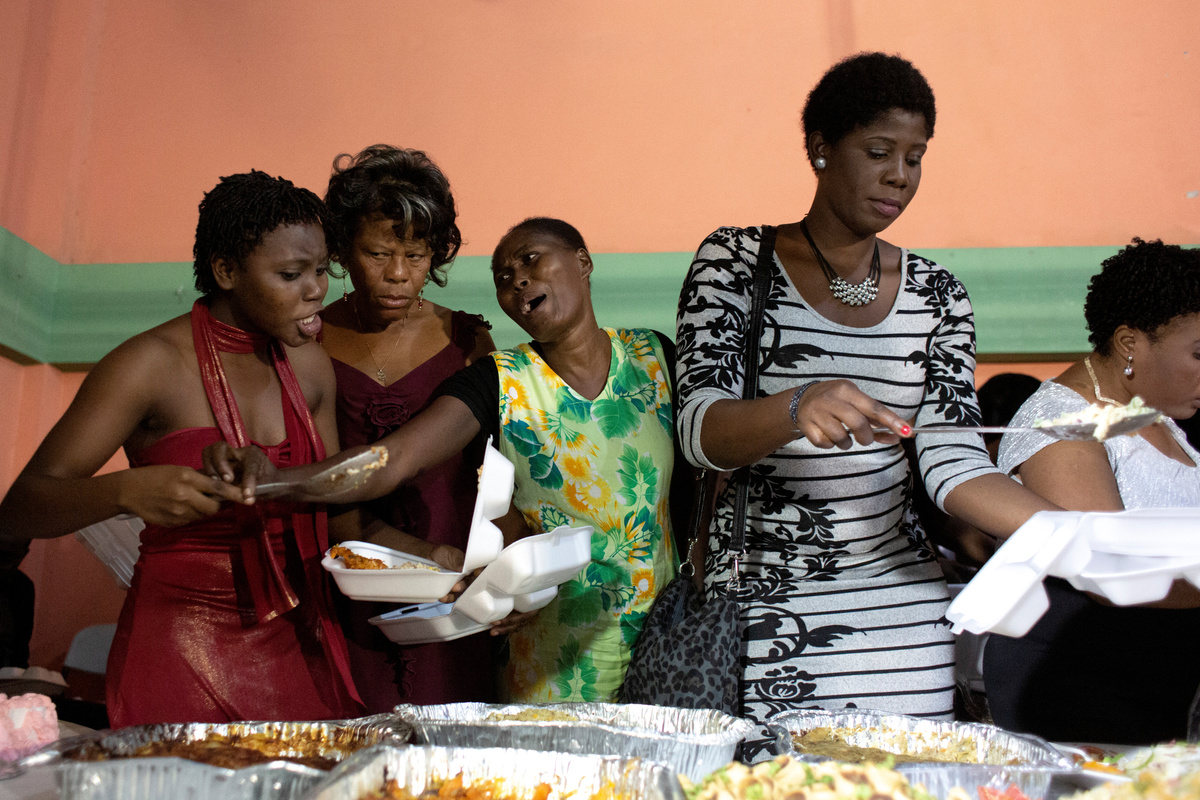
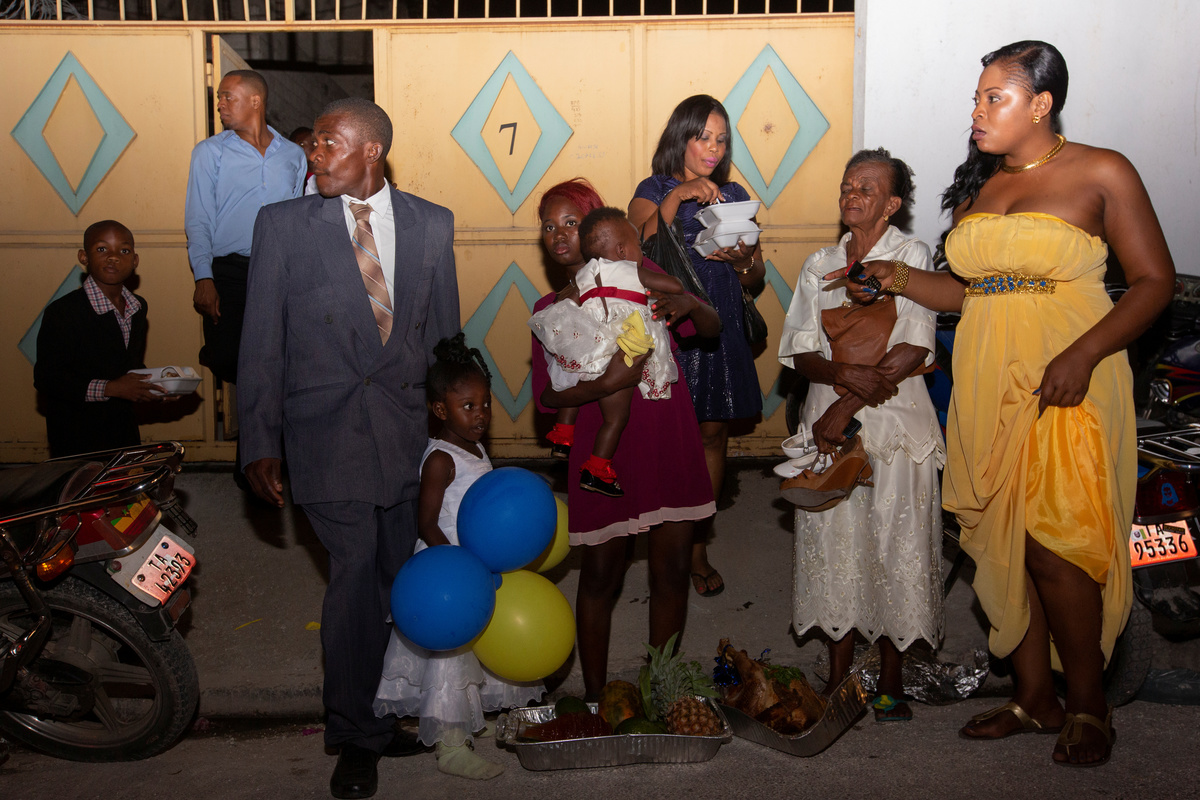
They might skip the reception or, in the countryside, offer a simple meal of bread, fried plantains, rice and coffee. Sometimes, the whole village might provide food. Disputes can occur when there is not enough for all those who turn up, or when guests try to take home dishes or drinks.
Brides Roselene Saint Juste and Mireille Mathurin, who got married in a joint wedding ceremony to cousins Sony Vernet and Herve Vernet, in order to share the costs of the reception, pose for a photograph on the day of their wedding at a church in Mariani, Haiti, April 15, 2017. REUTERS/Valerie Baeriswyl
Usually the cake is not big enough for everyone to have a piece so it is put on display during the wedding and consumed later at home by the couple and their nearest and dearest.
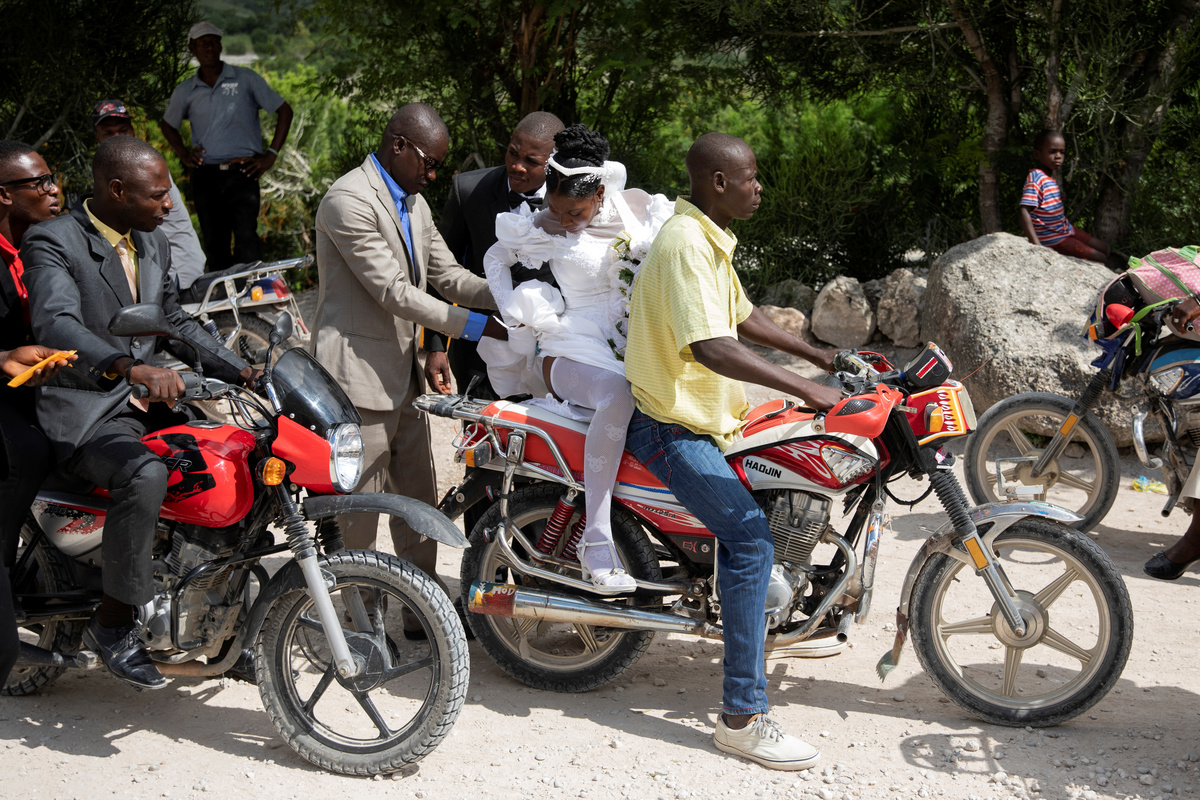
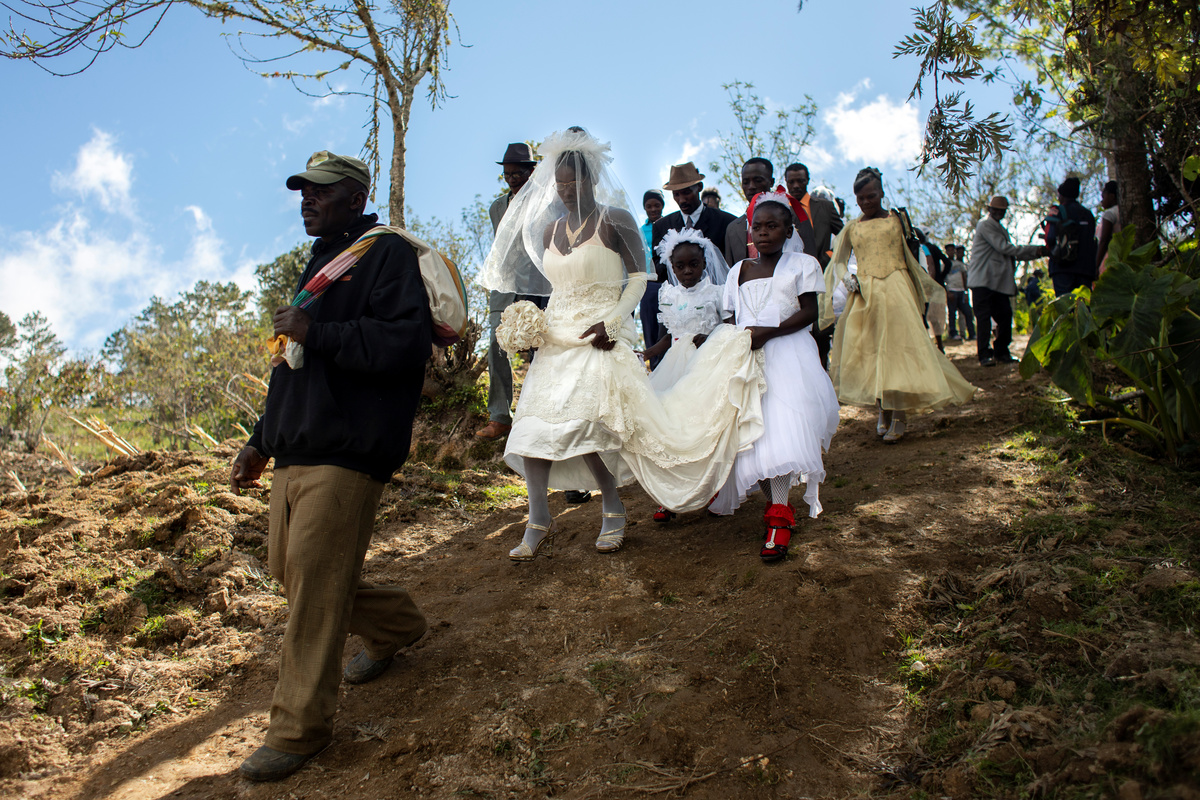
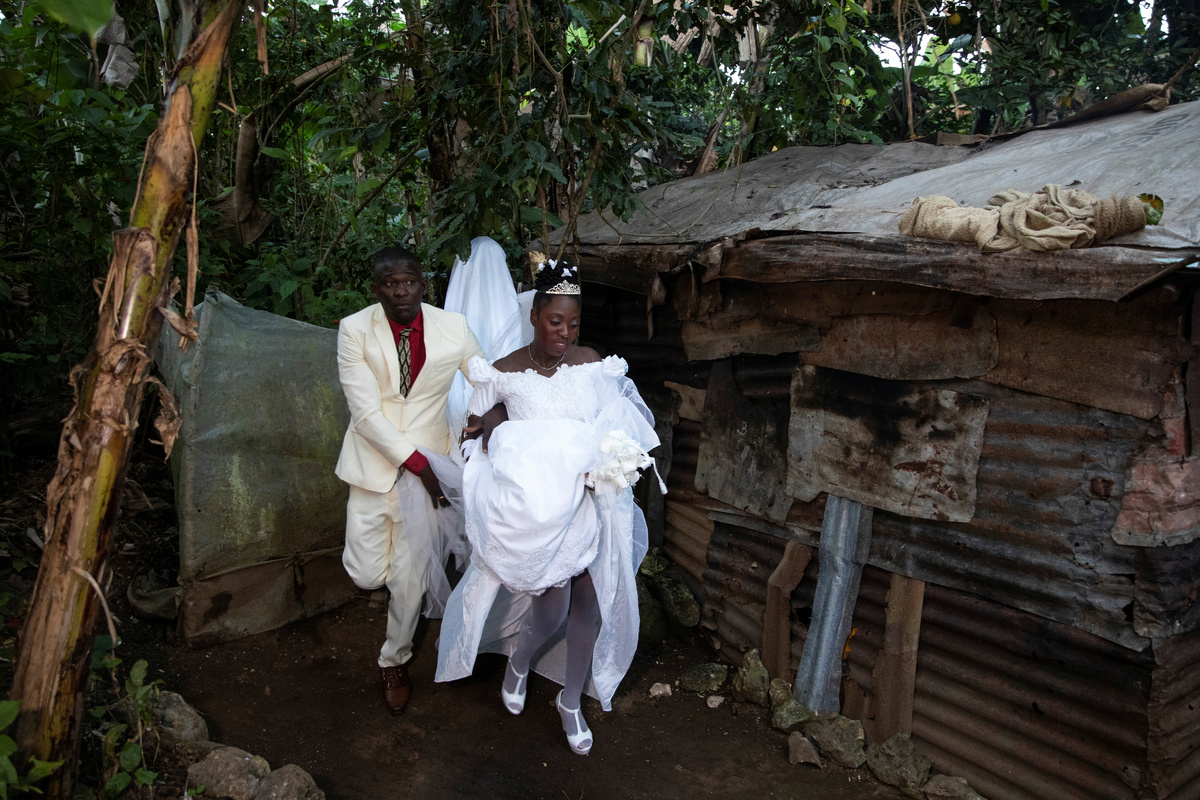
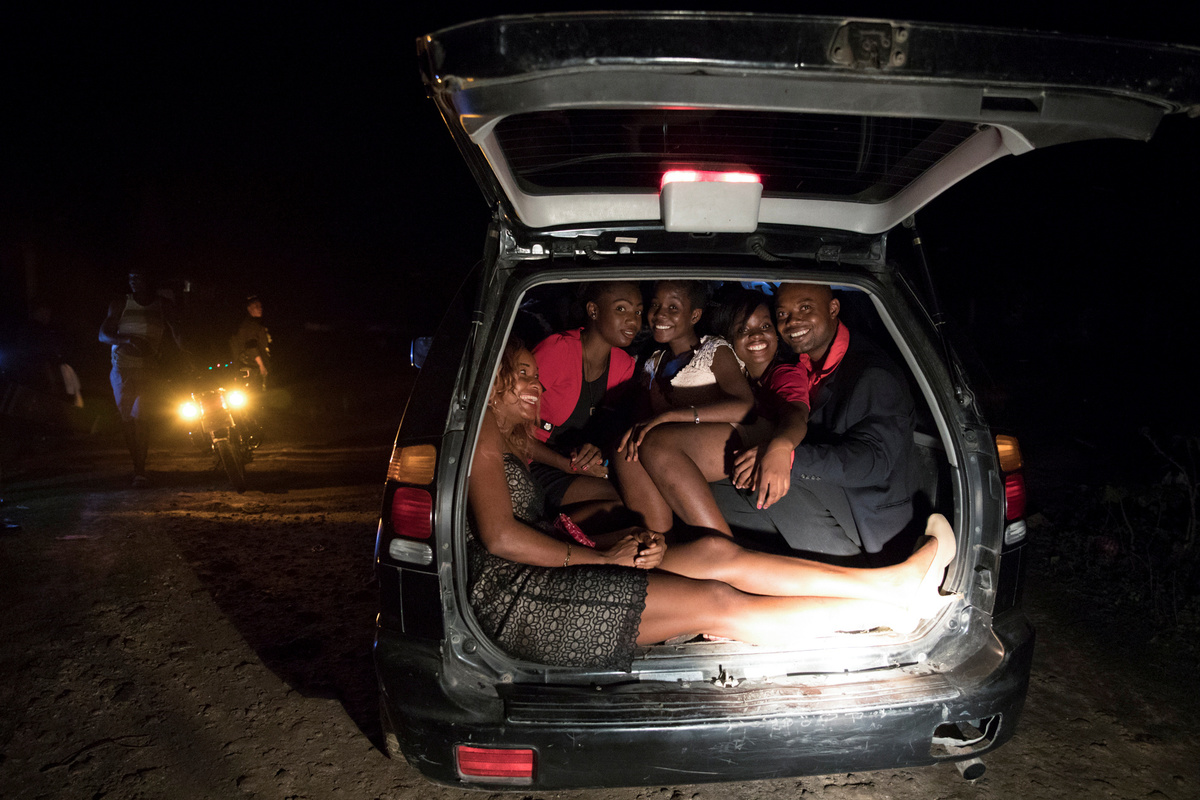
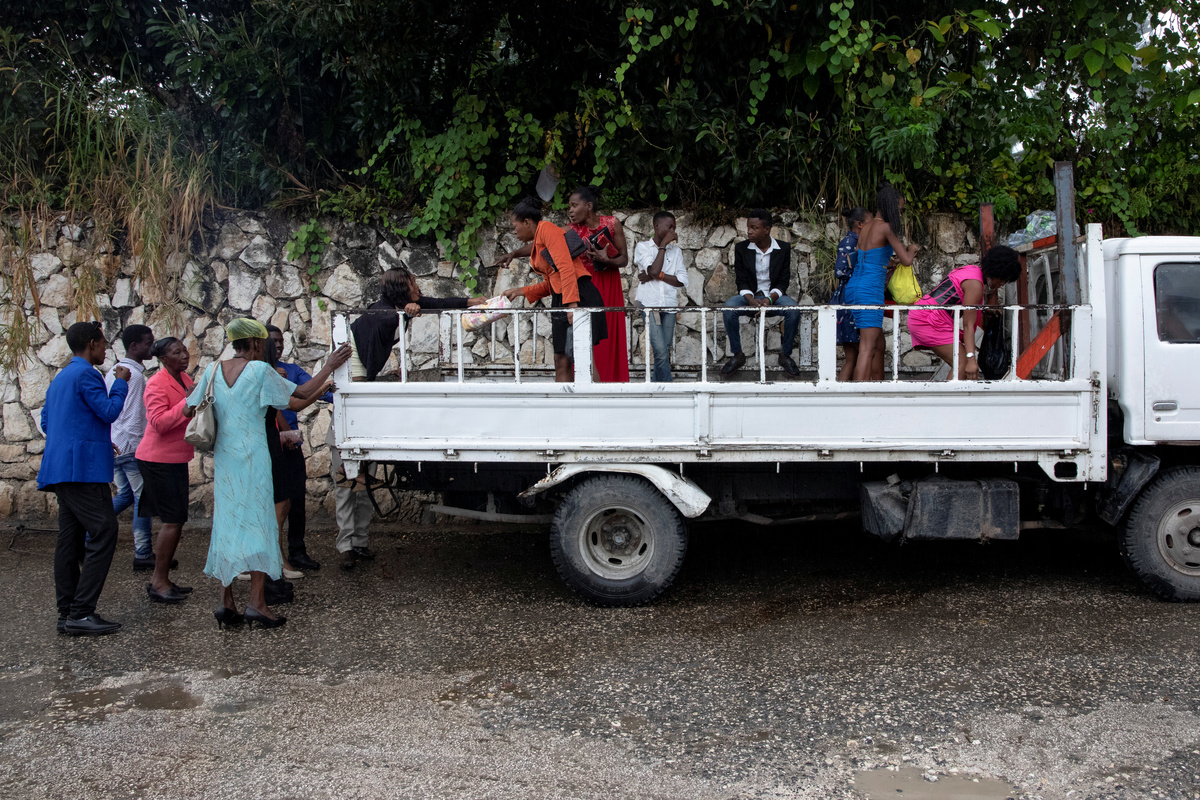
The couple may hire a pickup truck or motorbike taxis for the day to ferry people around. Or they may just walk to church, sweating up and down hills in their wedding clothes in the tropical heat.
Despite tight pursestrings, the showiness of the ceremony is the one element of the Haitian wedding that never lacks.
Wedding guests squabble by the buffet table as they help themselves to food at Favilson Pierre and Mauseline Greffin's wedding in Carrefour, Haiti, January 2, 2016. In a country where more than half the population lives under the poverty line of $2.41 per day, only the wealthiest of Haitian couples can afford the full shebang of a wedding ceremony, lavish dinner reception, and honeymoon. They might skip the reception or, in the countryside, offer a simple meal of bread, fried plantains, rice and coffee. Sometimes, the whole village might provide food. Disputes can occur when there is not enough for all those who turn up, or when guests try to take home dishes or drinks. REUTERS/Valerie Baeriswyl
"It's partly about expressing your social status," said Jean Pierre. "Even the poorest women make an effort to have a beautiful wedding, which for them means a big eye-catching procession that people will talk about for a long time."
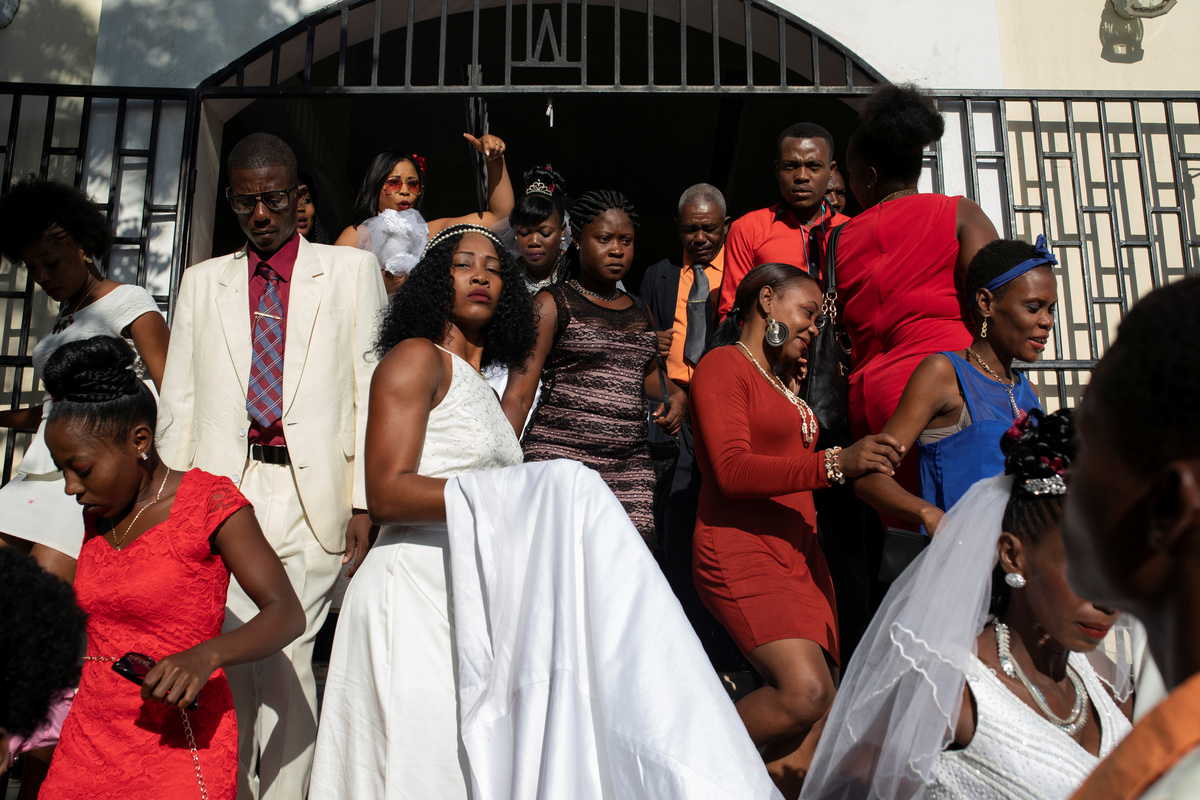
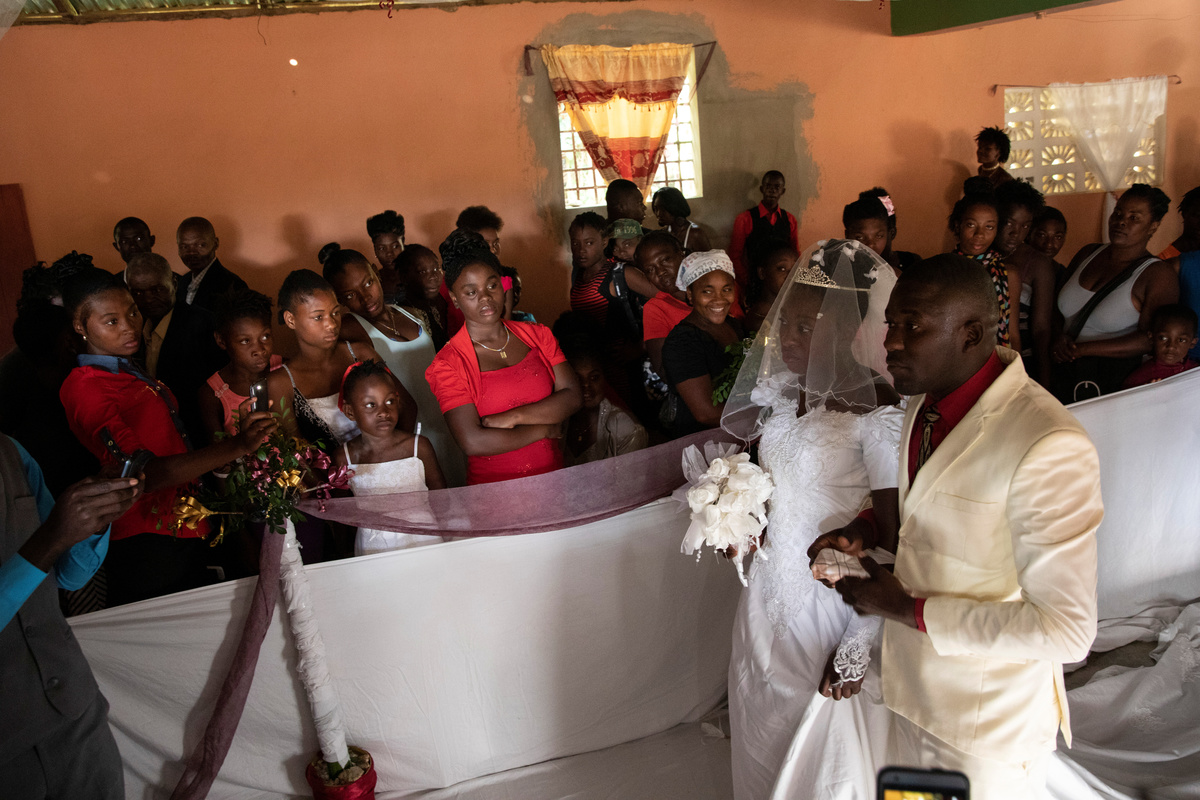
The bridal procession in church can include friends playing the part of a king and queen, while the bridesmaids and groomsmen often dress so similarly to the bride and groom that it can be difficult to define, from outside, who is actually getting wed.
DIASPORIC SUPPORT
A pregnant bride and her groom travel by motorbike to their reception after getting married in a double wedding ceremony in Baie de Henne, Nord Ouest Department, Haiti, October 27, 2018. REUTERS/Valerie Baeriswyl
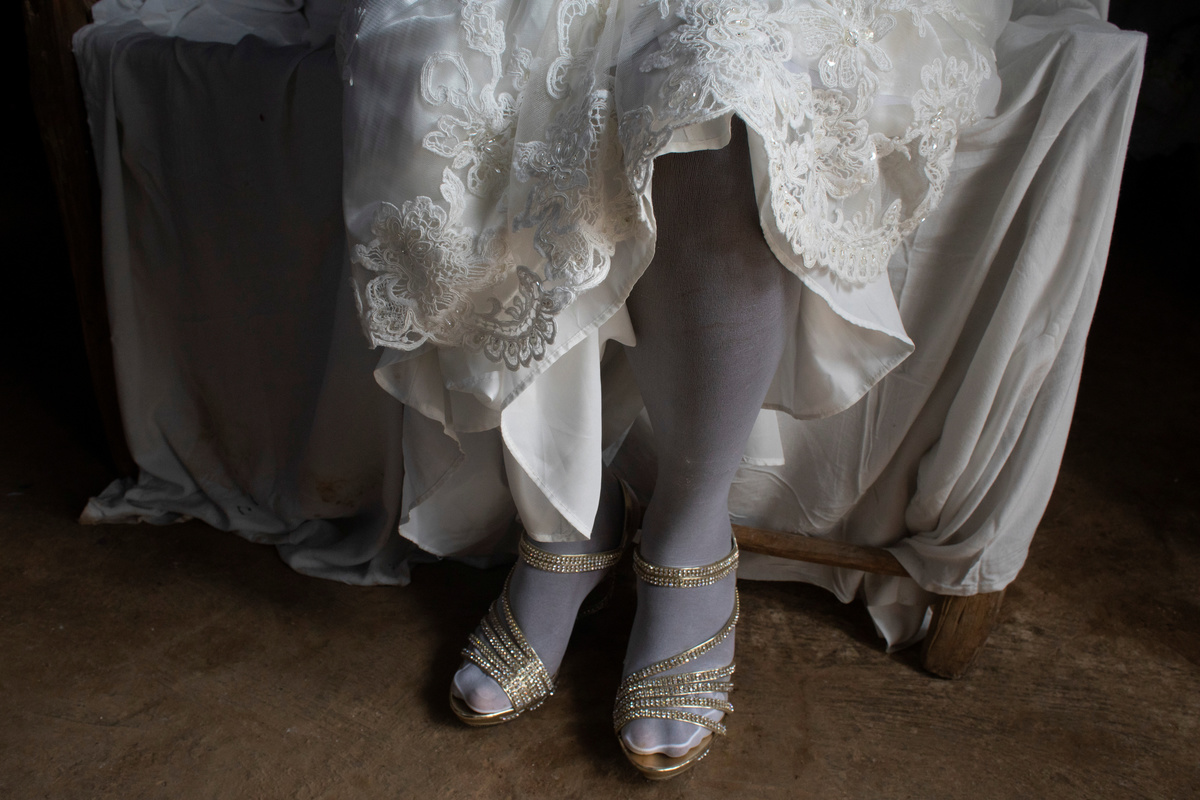
If a couple has relatives abroad willing to be the 'godparents' or witnesses, these will typically make a financial contribution to the wedding, including buying and shipping the bride's dress, usually a bouffant white gown.
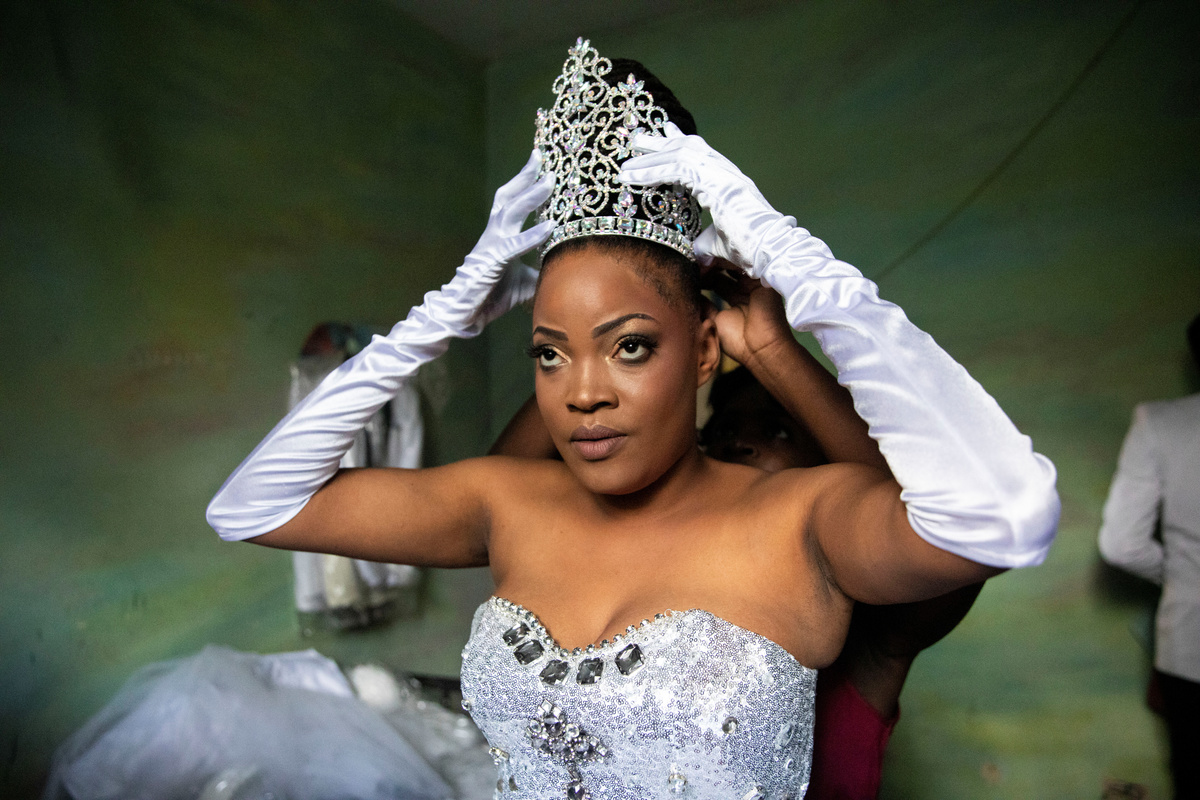
Reggae singer Mirla-Samuelle Pierre, 32, said her cousin who lives in New York and was her wedding godmother purchased her dress, shoes, gloves and tall sparkling crown.
"I wanted to be different to everyone else so I got the tallest one there was," said Pierre, who married her drummer and composer bandmate Duckyns St-Eloi, better known as 'Zikiki'.
Louimene Louis, 25, sits next to her cousin Midene Belantine, 14, referred to in Creole as a 'queteuse' who helps the bride on her wedding day, before getting married to Silvanes Joseph, at the house of a family friend, in Bouli, Centre Department, Haiti, December 1, 2018. REUTERS/Valerie Baeriswyl
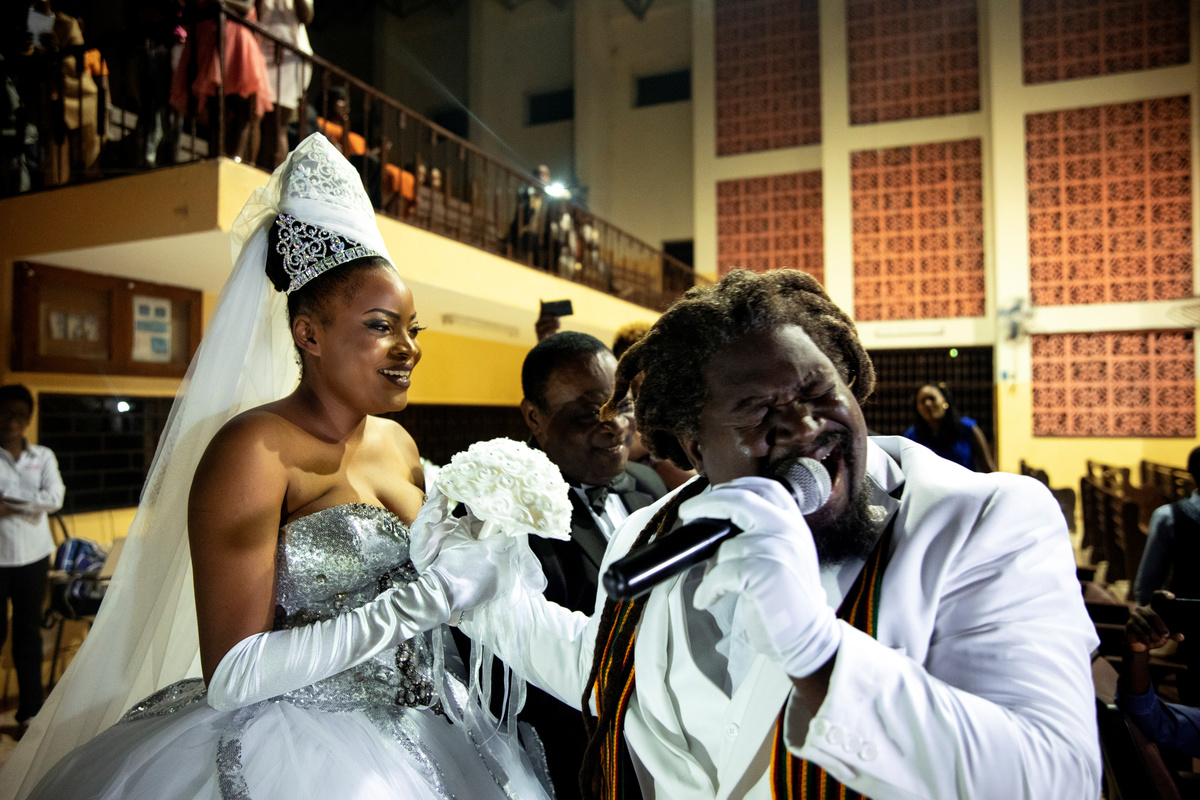
She wed in church, mainly to please her parents. But the theme of the wedding decoration was 'rastafari,' reflecting the culture of the dreadlocked groom.
Zikiki, 38, wore a red, black, green and gold scarf over his white suit and surprised his bride as she arrived in church by belting out the jazz song "What a Wonderful World."
Like all but the wealthiest Haitians, they chose not to spend any money on a grand reception or honeymoon.
Mirla-Samuelle Pierre, 32, a reggae singer, puts on a tiara, as she gets ready before her wedding to Duckyns St-Eloi, better known as 'Zikiki', her drummer and composer bandmate, at the Church of the Adventist University of Haiti, in Diquini, Carrefour, Haiti, December 28, 2017. If a couple has relatives abroad willing to be the 'godparents' or witnesses, these will typically make a financial contribution to the wedding, including buying and shipping the bride's dress, usually a bouffant white gown. Pierre said her cousin who lives in New York and was her wedding godmother purchased her dress, shoes, gloves and tall sparkling crown, "I wanted to be different to everyone else so I got the tallest one there was," she said. REUTERS/Valerie Baeriswyl
"Instead, that same evening we went out to a nightclub," said Zikiki, "and we had a lot of fun together."
(Writing by Sarah Marsh, Editing by Rosalba O'Brien)
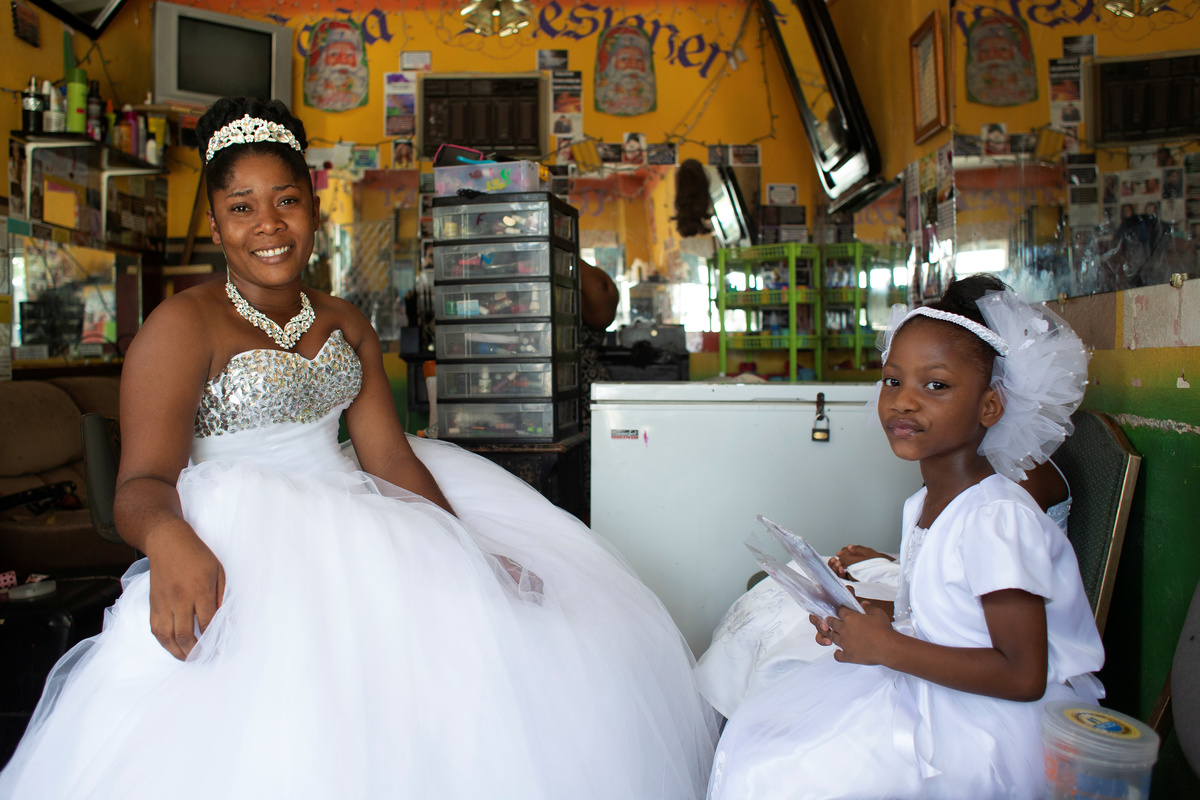
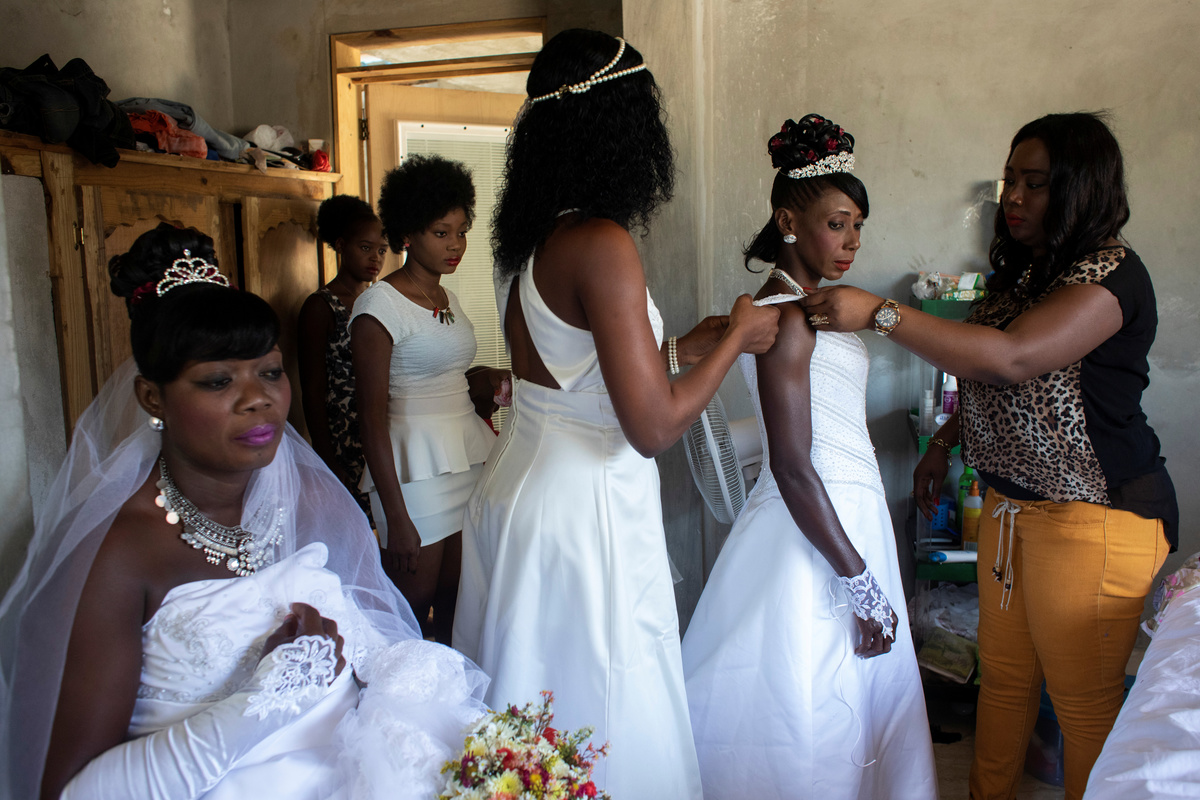
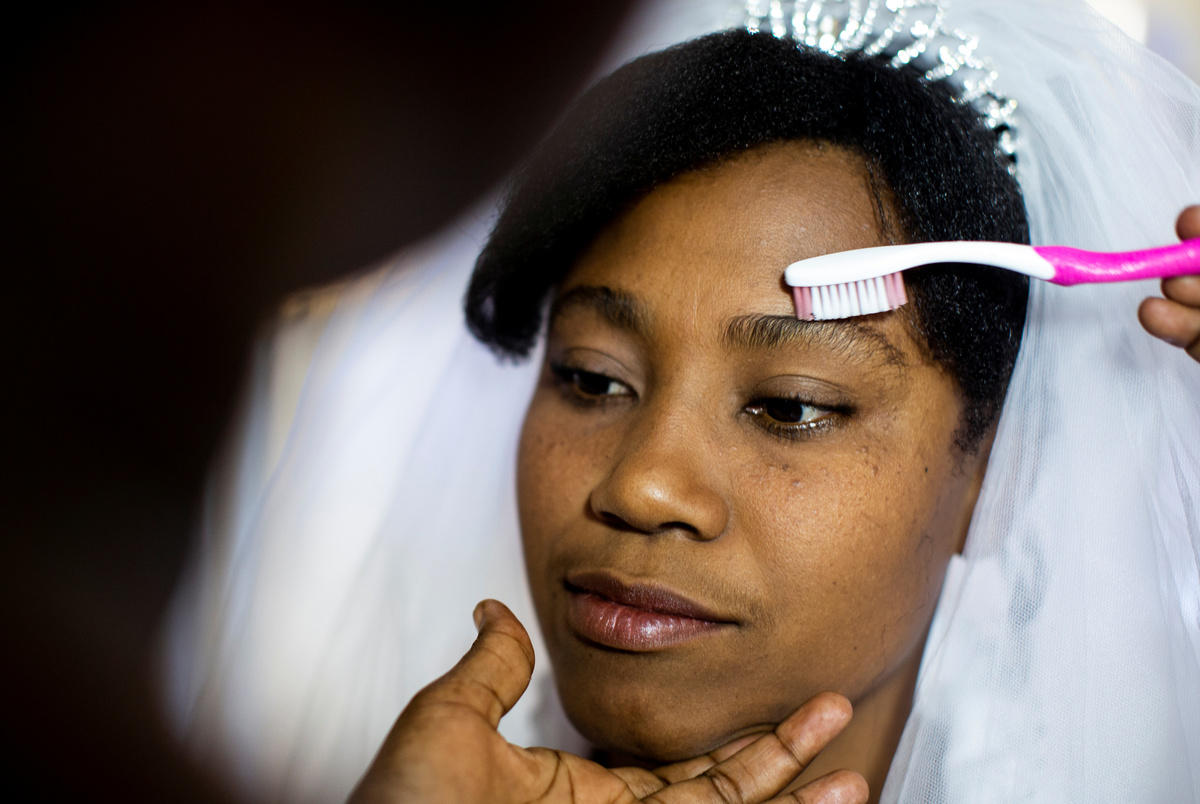
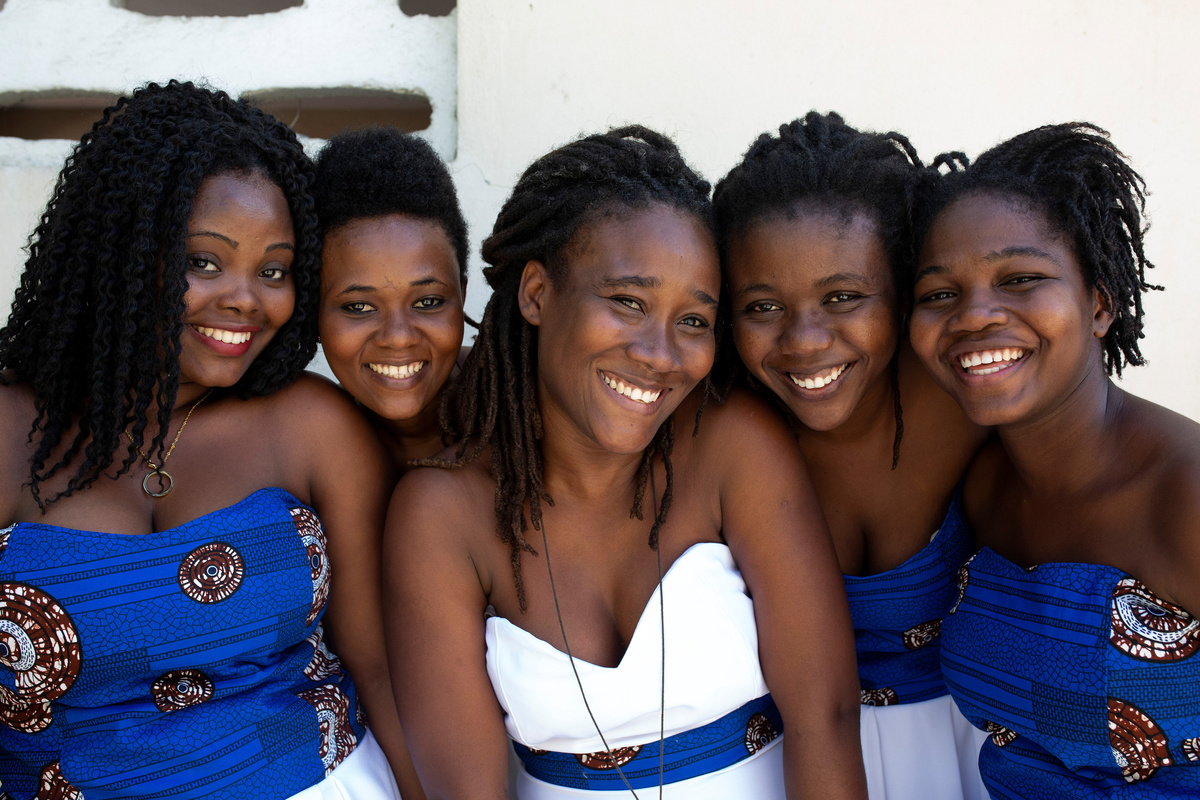
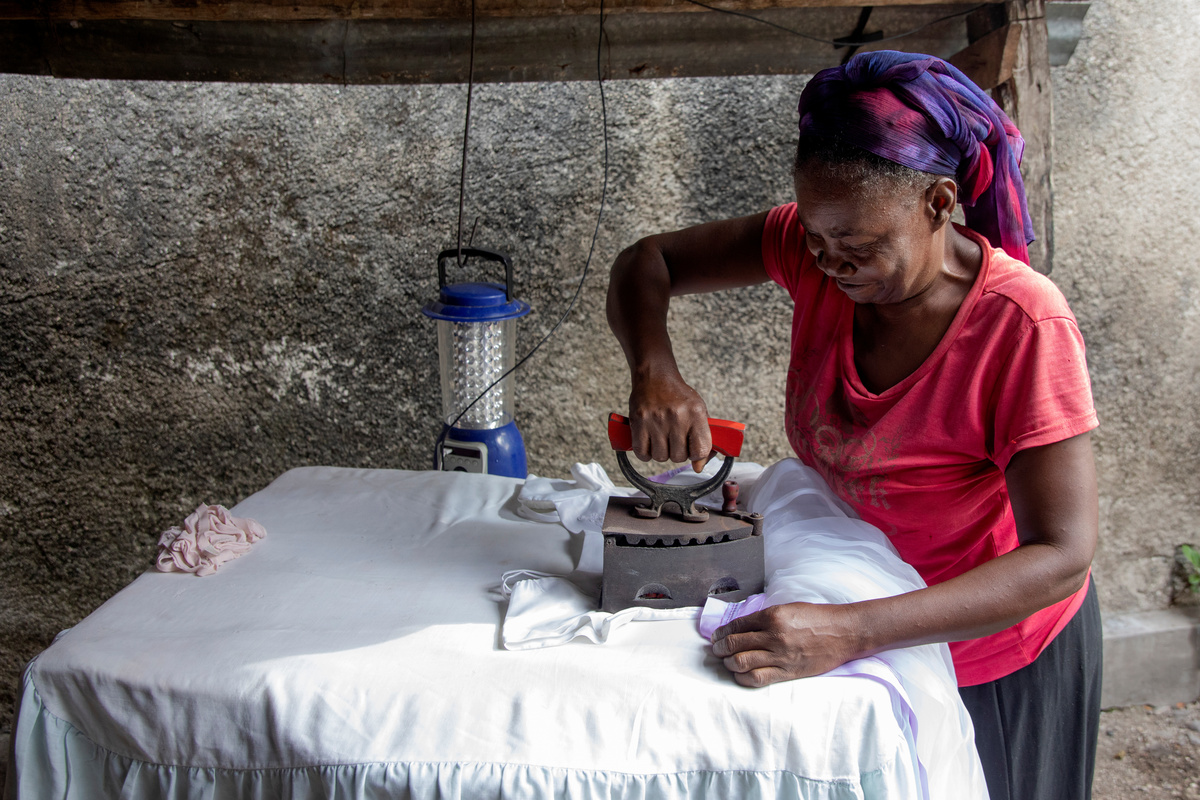
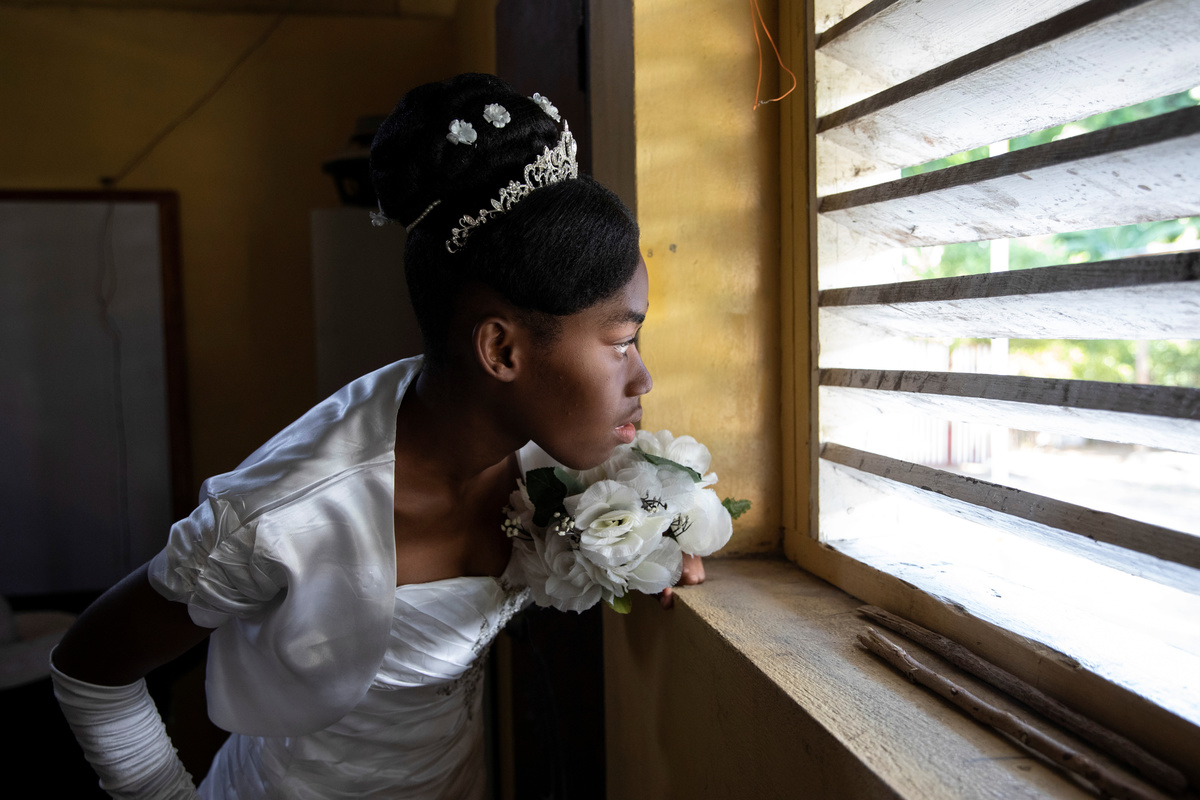
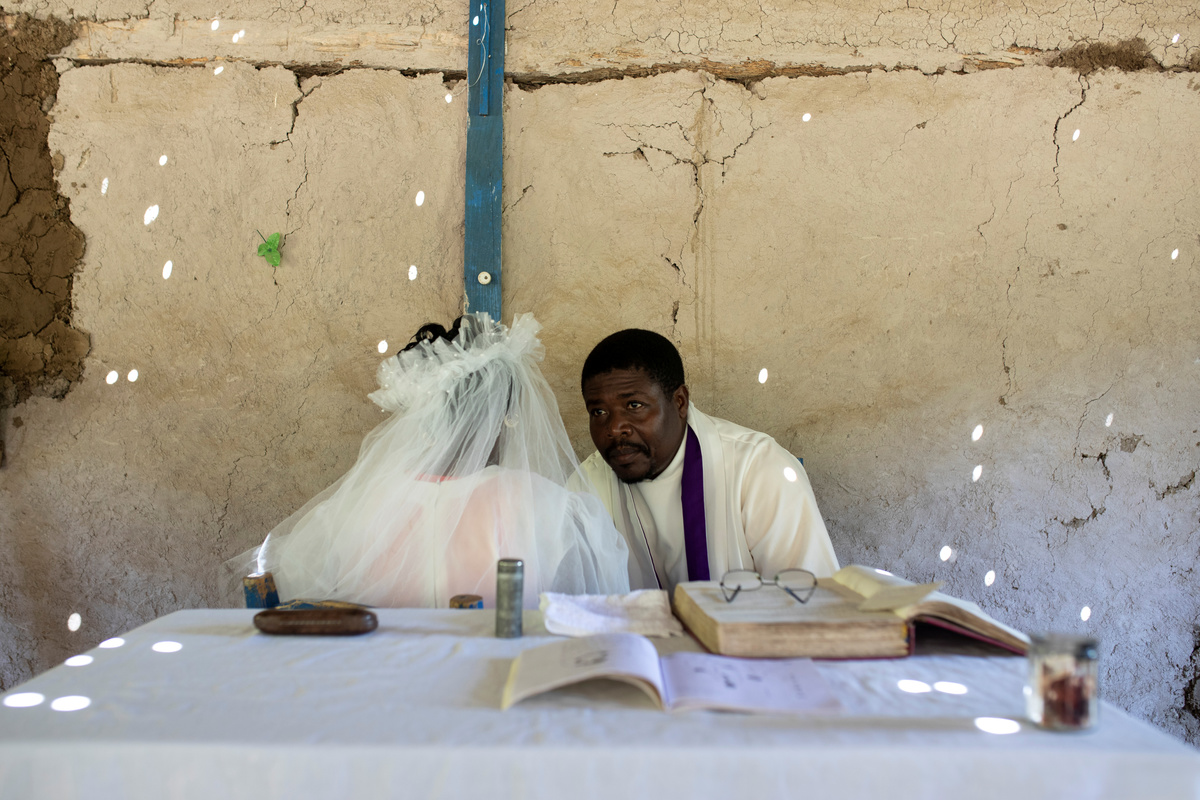
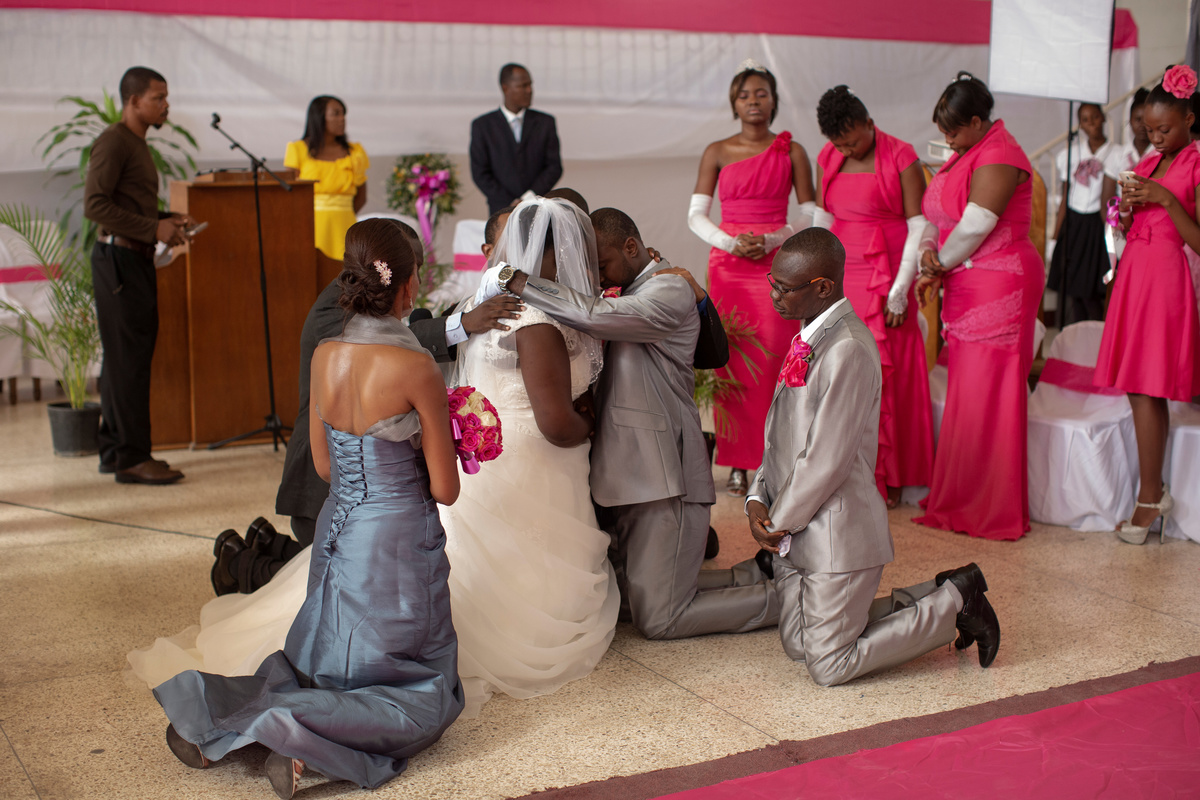
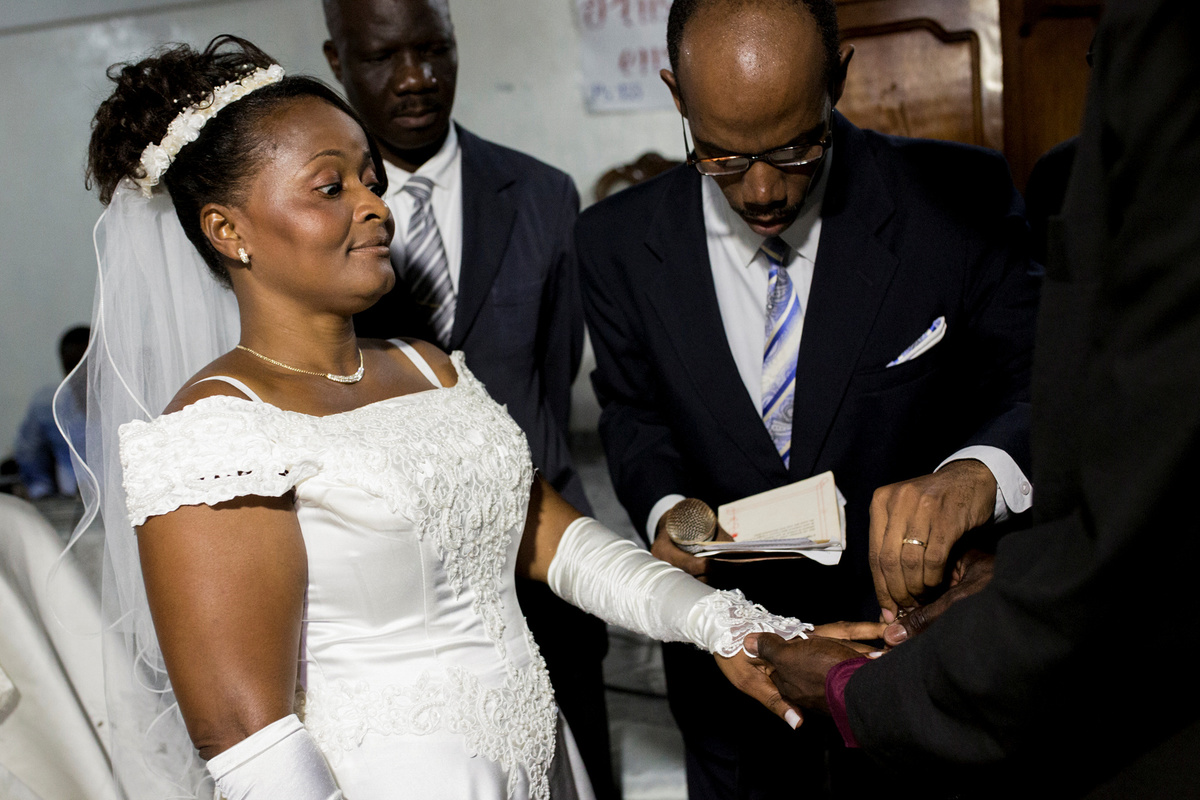
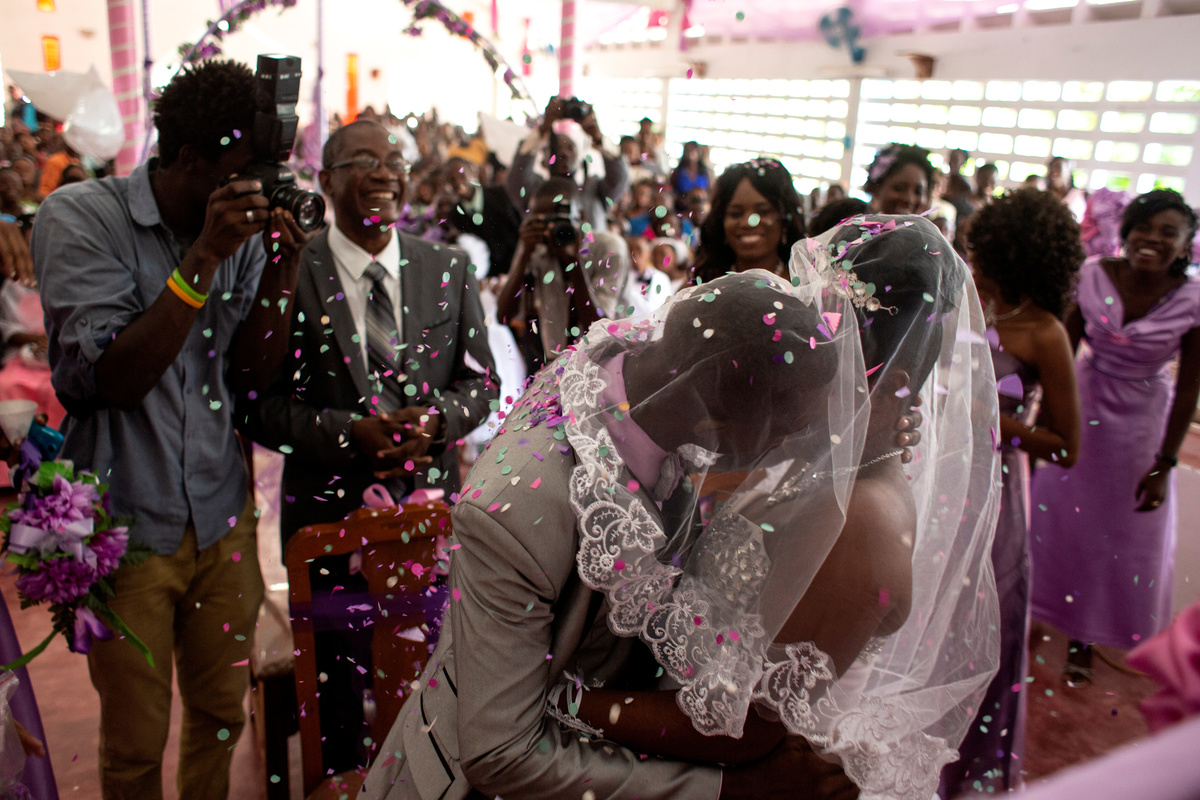
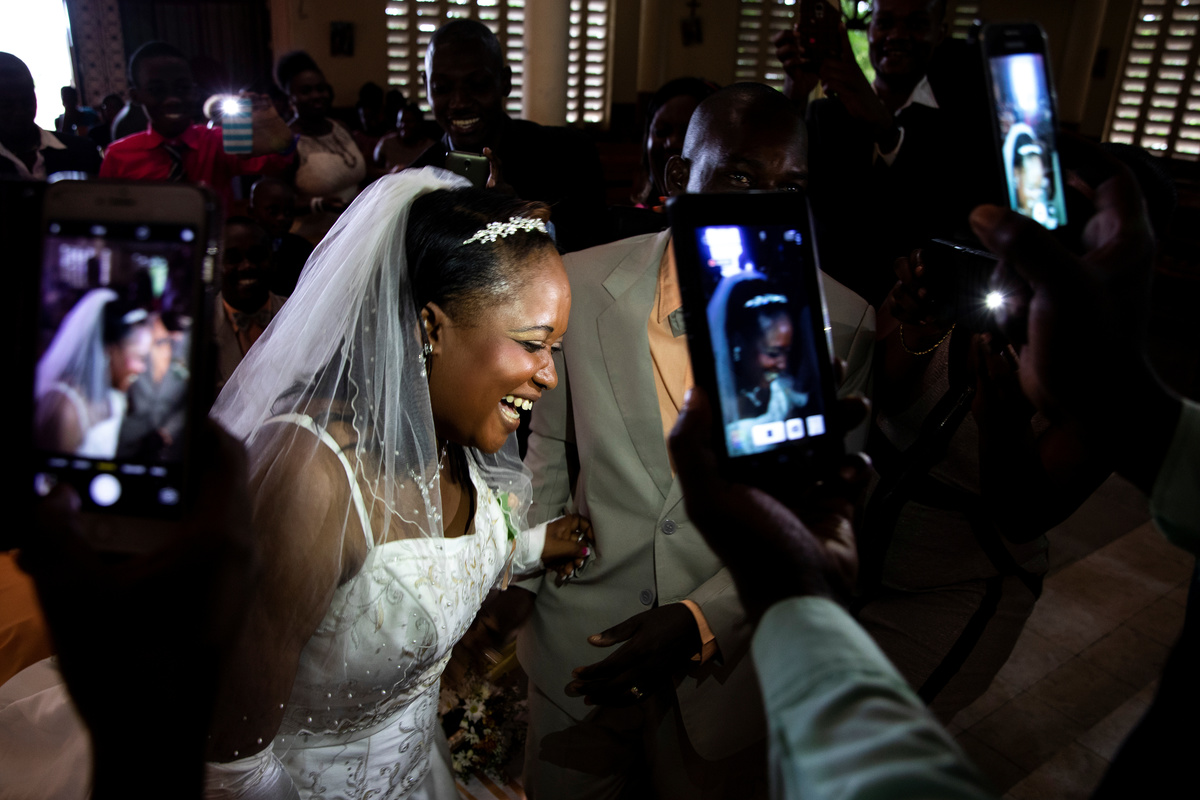
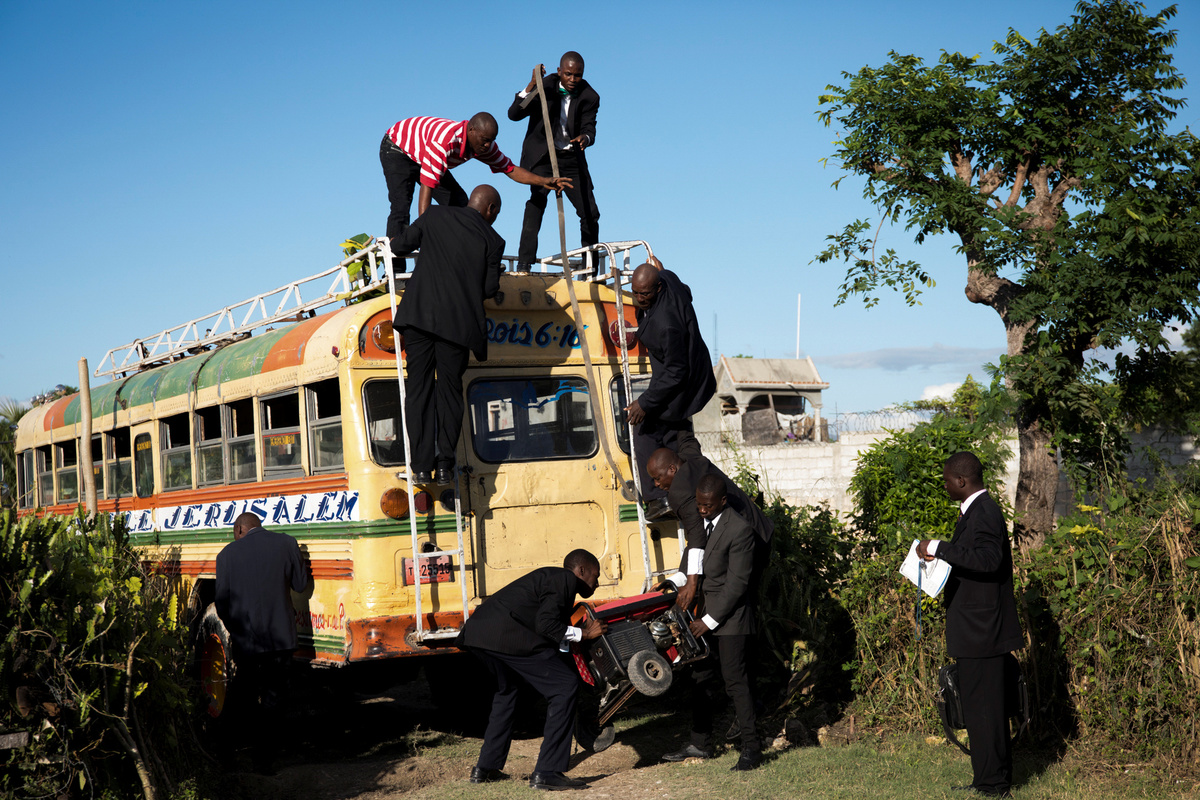
Musician Duckyns St-Eloi, who is known as 'Zikiki' sings to his bride Mirla-Samuelle Pierre as she enters the church with her father Pierre Obas on their wedding day at Eglise de l'Universite Adventiste d'Haiti, a church in Diquini, Carrefour, Haiti, December 28, 2017. Pierre and Zikiki wed in church, mainly to please Pierre's parents. But the theme of the wedding decoration was 'rastafari,' reflecting the culture of the dreadlocked groom. Like all but the wealthiest Haitians, they chose not to spend any money on a grand reception or honeymoon. "Instead, that same evening we went out to a nightclub," said Zikiki, "and we had a lot of fun together." REUTERS/Valerie Baeriswyl Dalina poses for a photograph next to her small bride on the day of her wedding, at a hair salon in Delmas, Port-au-Prince Arrondissement, Haiti, July 30, 2015. REUTERS/Valerie Baeriswyl Brides Roselene Saint Juste and Mireille Mathurin, who got married in a joint ceremony to cousins Sony Vernet and Herve Vernet, get ready on their wedding day in Mariani, Haiti, April 15, 2017. REUTERS/Valerie Baeriswyl Mauseline Greffin, a shopkeeper, has her eyebrows done by a friend on the day of her wedding to Favilson Pierre, a taxi driver, who she met at church, at a house belonging to Greffin's friend in Carrefour, Haiti, January 2, 2016. REUTERS/Valerie Baeriswyl Abydarlyne Jouth, poses for a photograph with her bridesmaids, Ketlove Sainfleur, Adline Jouthe, Tamas Jean Pierre, Marie Claudine Nozil during a fitting for Jouth's and Chelson Ermoza's African themed wedding, in Delmas, Port au Prince, Haiti, December 10, 2017. "We chose to get married like this because we wanted to get out of the traditional European wedding pattern. We wanted to be ourselves and propose another form of costume, another model of ceremony for married people in Haiti," said Jouth. REUTERS/Valerie Baeriswyl Renold St Hilaire, 56, a church friend of Beane Jean & Franck's, who are getting married, irons a wedding guest's dress, before Jean's and Franck's wedding, at her home in L'Asile, Haiti, April 14, 2018. REUTERS/Valerie Baeriswyl Edeline Philipe, 17, the announcer, who will announce the arrival of the bride as part of a Haitian wedding tradition, waits for Sherlyne Fernand, the bride, who works as a merchant, to arrive before making their way in a procession to the church, on the wedding day of Fernand and Imado Joinville, who works as a security guard, in Leogane Arrondissement, Haiti, October 28, 2017. The bridal procession in the church can include friends playing the part of a king and queen, while the bridesmaids and groomsmen often dress so similarly to the bride and groom that it can be difficult to define, from outside, who is actually getting wed. REUTERS/Valerie Baeriswyl Father of the bride Merilus Bonheur, who works as a forest ranger, leads his daughter Christela Bonheur, 29, and their relatives to church on the day of Christela's wedding to Jocithe Auguste, in Foret des Pins, Zone Mare Rouge, Haiti, January 14, 2017. "We used to talk on the phone when I went to school in Croix-des-Bouquets. He lived in the Dominican Republic. We spent three years together before he asked for my hand," Bonheur says about Auguste. REUTERS/Valerie Baeriswyl Joseph, a teacher, and Louimene Louis pose for a photograph with Midene Belantine, Louis's cousin and Benita Estima, Joseph's cousin, in the courtyard of a family friend's house before getting married in Bouli, Centre Department, Haiti, December 1, 2018. REUTERS/Valerie Baeriswyl Father Duportal, of the Catholic parish Boucan Carre, who is marrying Silvanes Joseph and Louimene Louis, listens to Louimene Louis's confessions, as part of a Haitian marriage tradition where both the bride and groom have to go to confession before getting married, in Bouli, Centre Department, Haiti, December 1, 2018. REUTERS/Valerie Baeriswyl Vanessa Dorsainvil and Wesley Desir are surrounded by their godparents during a couple's blessing at Shekinah Adventist Church, during their wedding day in Port-au-Prince, Haiti, August 2, 2015. REUTERS/Valerie Baeriswyl Anelia Marcelus, 36, and Claudel Francois, 38, exchange rings during their wedding ceremony at Salem Evangelical Baptist Church, Port-au-Prince Arrondissement, Haiti, May 28, 2016. REUTERS/Valerie Baeriswyl Julio and Dalina, who met while studying at the same university, kiss each other for the first time as husband and wife at a church in Delmas, Port-au-Prince, Haiti, July 30, 2015. REUTERS/Valerie Baeriswyl Iseleine Granvil, the bride, who works as a teacher, reacts as she is photographed by guests on their smartphones during her wedding day with Etienne Termidor, a carpenter, in Cap Haitien, Haiti, October 31, 2017. REUTERS/Valerie Baeriswyl Woodna Vernet, the godmother, wears a white dress as she and wedding guests at Mireille Mathurin and Herve Vernet's wedding, leave the church, in Mariani, Haiti, April 15, 2017. Mathurin and Vernet got married in a double wedding ceremony. The bridesmaids and groomsmen often dress so similarly to the bride and groom that it can be difficult to define, from outside, who is actually getting wed. REUTERS/Valerie Baeriswyl Guests load a generator onto a bus to be taken to Tatiana Delpeche and Markens Dorcius', who are both teachers, wedding venue on their wedding day in Liancourt, Artibonite, Haiti, November 18, 2017. A generator is an essential element for a wedding in Haiti, especially in the countryside, where some areas are not electrified. REUTERS/Valerie Baeriswyl Santhonax Toussaint, 25, and Luisemene Antoine, 22, return from the church where they got married, as they make their way into their wedding reception in Toussaint's family courtyard where upon arrival, their in-laws will welcome them by throwing holy water and rice to bless the wedding, in Thiotte, Sud-Est Department, Haiti, December 7, 2017. REUTERS/Valerie Baeriswyl Christella Bonheur, 29, sits down after marrying Jocithe Auguste, 30, on their wedding day at a church in Foret des Pins, Haiti, January 14, 2017. REUTERS/Valerie Baeriswyl The godfather pours a drink for Etienne Termidor, a carpenter and Iseleine Granvil, a teacher, before making a speech during Termidor and Granvil's wedding day in Cap Haitien, Haiti, October 31, 2017. If a couple has relatives abroad willing to be the 'godparents' or witnesses, these will typically make a financial contribution to the wedding. REUTERS/Valerie Baeriswyl Family members who attended Junior Cadet and Nerlande Cenatus's wedding, stand in the street with cooked chicken that they took from the wedding reception after there was a power cut, as they wait for public transport to take them home, in Delmas, Port-au-Prince Arrondissement, Haiti, December 23, 2016. At many weddings in Haiti the couple will cater food for more people than are invited as it's common for guests to take some food or drinks home with them. REUTERS/Valerie Baeriswyl Guests at Tatiana Delpeche's and Markens' wedding, travel in a crowded car from the church to the wedding reception in Liancourt, Artibonite, Haiti, November 18, 2017. REUTERS/Valerie Baeriswyl Luisemene Antoine, 22, and Santhonax Toussaint, 25, who both work as shopkeepers, walk down the isle together as they enter the church on their wedding day in Thiotte, Sud-Est Department, Haiti, December 7, 2017. REUTERS/Valerie Baeriswyl Guests at Orassaint Josapha and Stephanie Salomonare's wedding are transported on a truck from the church to the house of Pastor Wallace, where their wedding reception is taking place, in Kenscoff, Fermathe, Petion-Ville, Haiti, January 5, 2018. In a country where more than half the population lives under the poverty line of $2.41 per day, only the wealthiest of Haitian couples can afford the full shebang of a wedding ceremony, lavish dinner reception, and honeymoon. Most have to get creative. The couple may hire a pickup truck or motorbike taxis for the day to ferry people around. REUTERS/Valerie Baeriswyl
Sign up to read this article
Read news from 100’s of titles, curated specifically for you.