After Breguet's 250th anniversary last year, what else calls for a celebration?
In 2026, the tourbillon turns 225, as it was patented on 7 Messidor Year 9, corresponding to June 26, 1801.
The maison marks the 225th anniversary with several timepieces, including Classique models, which embody its aesthetic codes, such as Breguet hands and numerals and guilloché introduced in the 1780s.
The groundbreaking tourbillon took shape in the following decade, after Abraham-Louis Breguet left Paris for his hometown Neuchâtel, to escape from the turmoil of the French Revolution. He came back to his workshop on Quai de l'Horloge in 1795, and subsequently introduced inventions incubated during his stay in Switzerland.
The tourbillon ingeniously compensates for operating errors and fluctuations caused by the effects of Earth's gravity, via a cage in which the escapement and regulating mechanisms (balance and balance-spring) are enclosed and kept in constant rotation around an axis, in all positions.
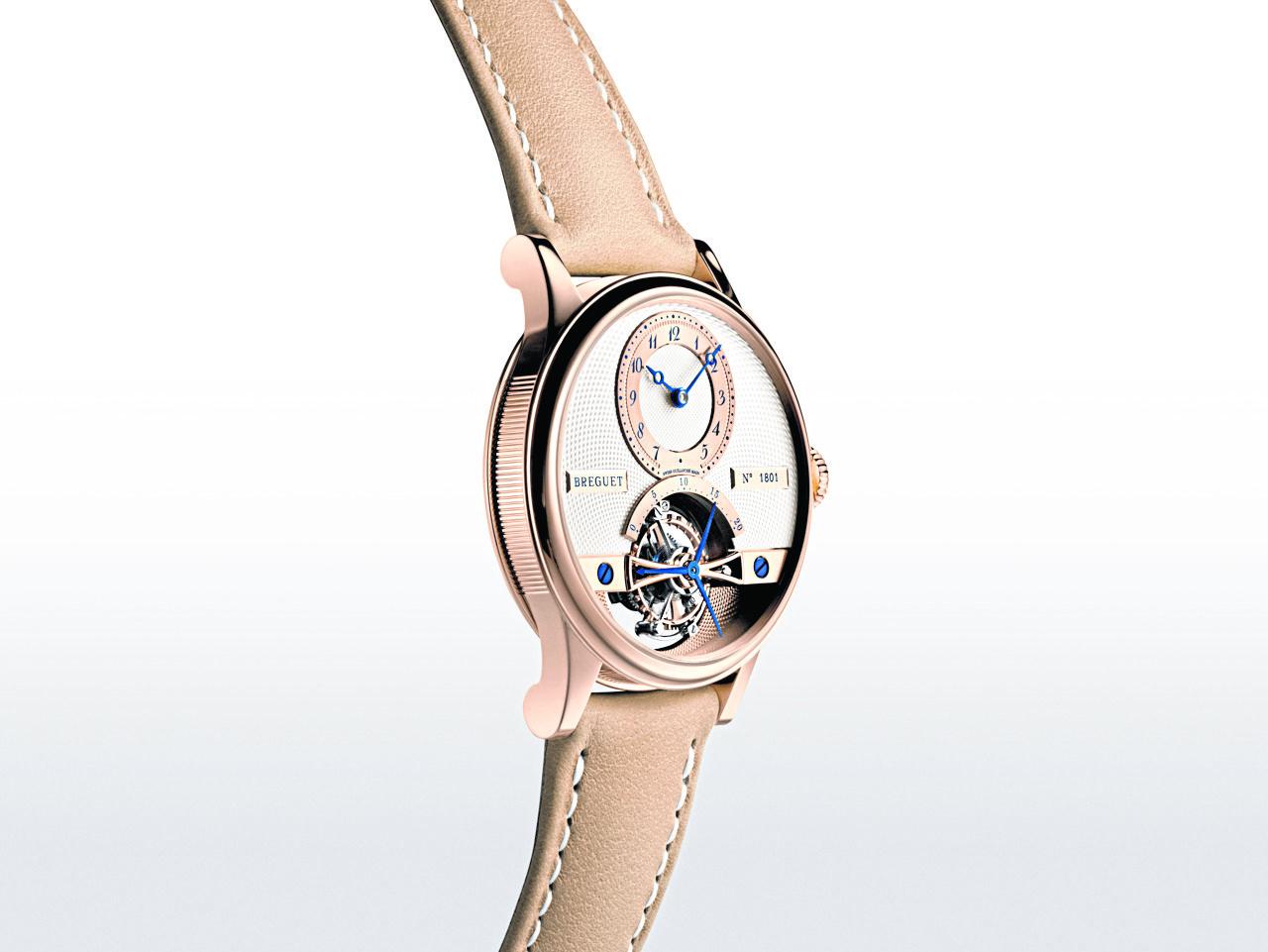
Breguet highlighted its heritage in a contemporary tourbillon wristwatch, Ref 3350, launched in 1989. A direct descendant, the Classique Tourbillon 7357 and a new Calibre 187B commemorate the patent's 225th anniversary.
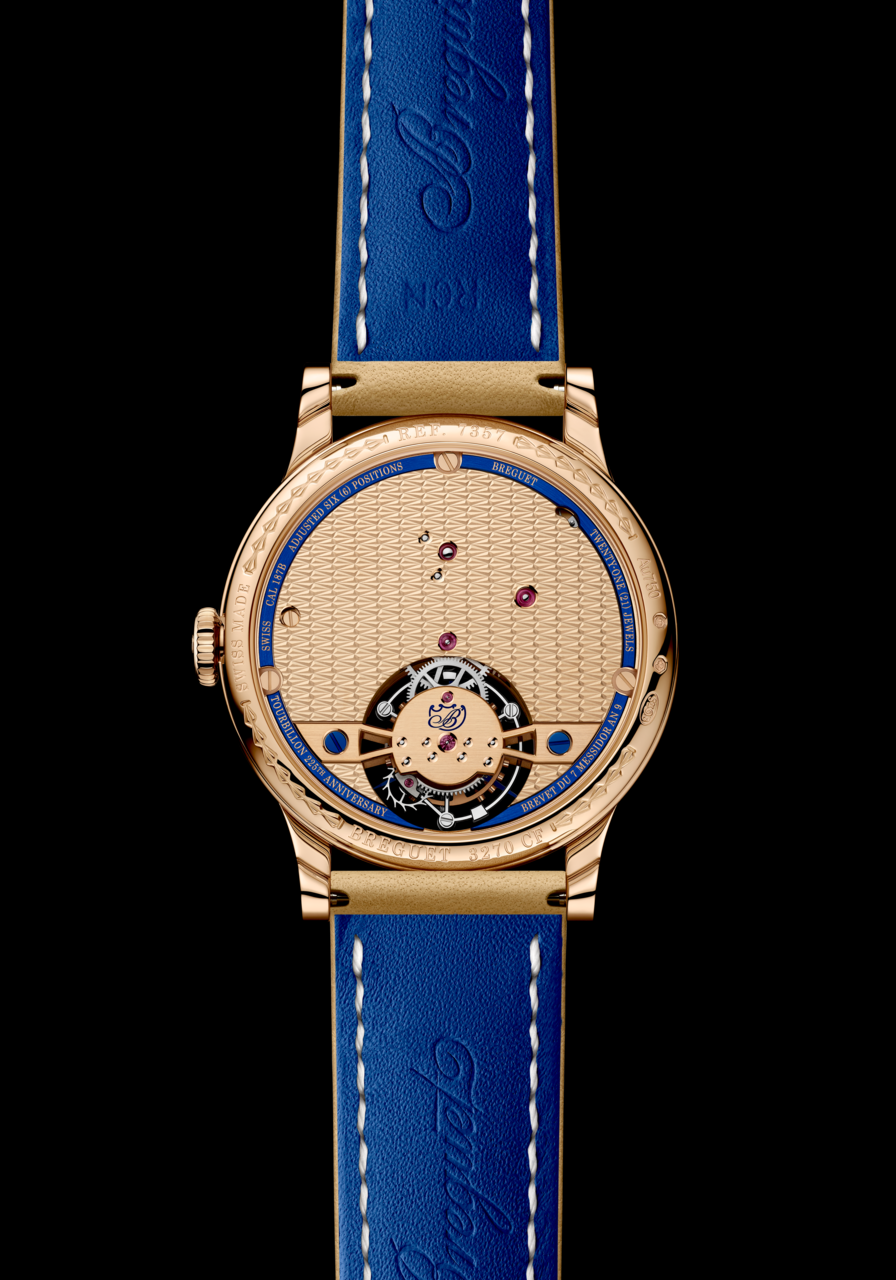
Two versions are housed in a 35mm case in 950 platinum or Breguet Gold. The dials are decorated with Clous de Paris and barleycorn guilloché motifs while the pattern on the baseplate and caseback is inspired by the Dent de Vaulion in the Vallée de Joux, where Breguet established watchmaking facilities in 1976.
The peripheral inlays are finished in a Bleu de France treatment, with this blue shade also used for Breguet hands and three-armed seconds hand. The seconds is indicated on the cage of the tourbillon, positioned slightly below the level of the dial and directly on the mainplate, for a better display while lending depth to the composition.
The manually-wound Calibre 187B delivers a 60-hour power reserve and an enhanced accuracy, thanks to Breguet Nivachron balance-spring with a silicon pallet-lever guaranteeing immunity to surrounding magnetic fields.
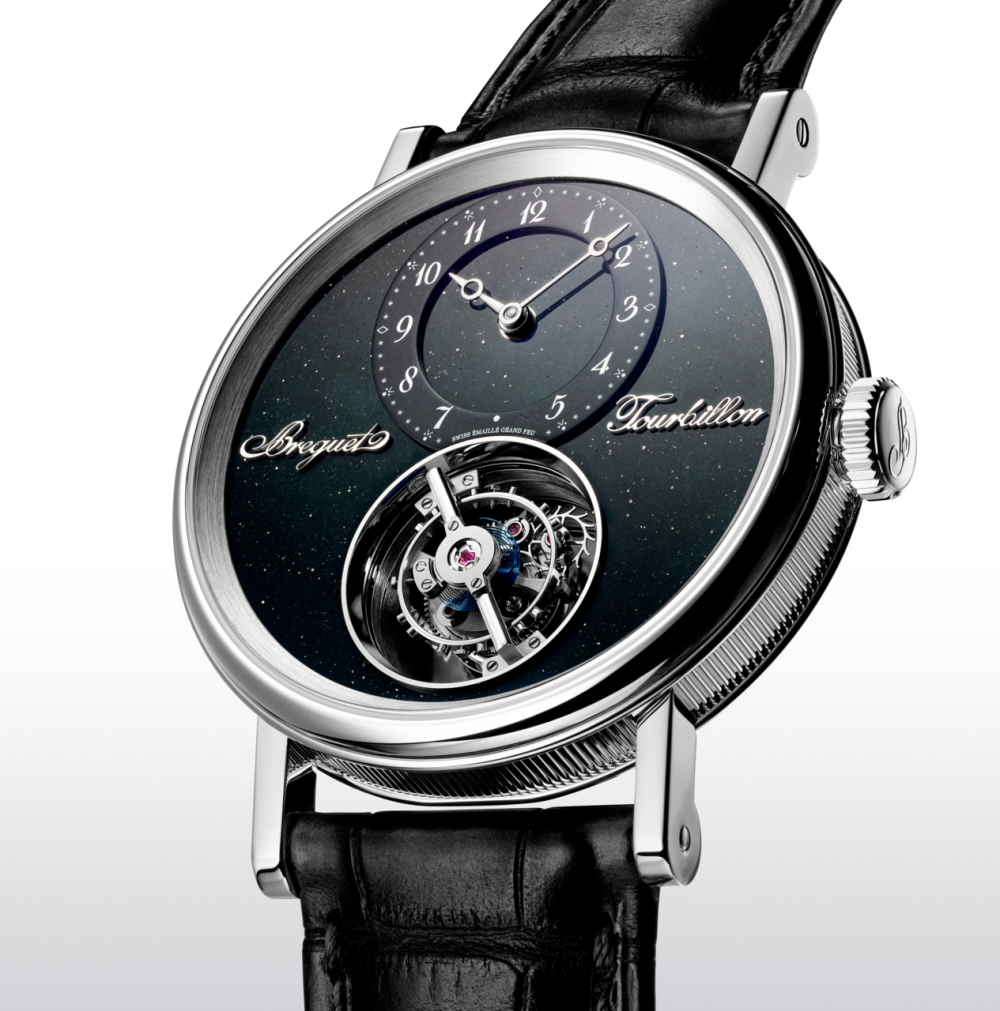
Limited editions for the 225th anniversary include the 38mm Classique Tourbillon Sidéral 7255 in 950 platinum, available in 50 pieces.
Last year, the original in Breguet Gold debuted along with the maison's first flying tourbillon, as a part of its 250th anniversary.
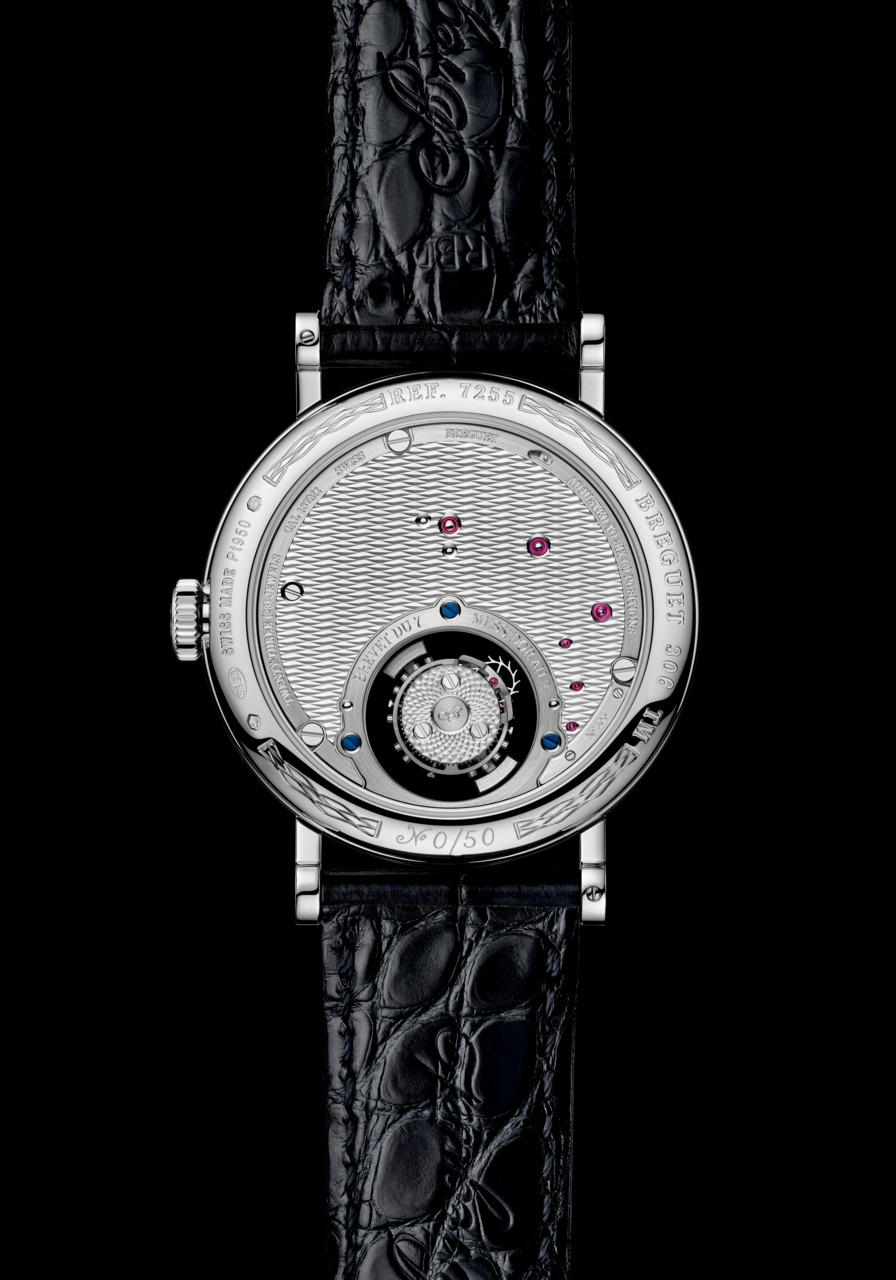
The caseback is adorned with the Quai de l'Horloge guilloché motif while the black aventurine Grand Feu enamel dial recalls the tourbillon's astronomical roots.
The term tourbillon was defined by 17th century French mathematician Blaise Pascal as a "material system animated by rotational motion", and so the concept extended to planetary systems and astronomy. This is reflected in the name of the timepiece as the French word sidéral relates to the stars.
Breguet designed the Classique Tourbillon Sidéral 7255 with a mysterious display. Dating back to the late 19th century, the technique complements the suspended effect of the flying tourbillon, whose cage is held only by its lower bridge, with no upper bridge.
Being supported solely from below gives the impression of floating in mid-air. Furthermore, gears are made of anti-reflective sapphire crystal, making them seem invisible as they connect the tourbillon cage to the rest of Calibre 187M1.
Decorated with guilloché finishes, the manually-wound movement ensures the performance of the mysterious flying tourbillon and a power reserve of 50 hours.