The main reason for the latest about-face judicial decision to grant bail for former Nissan Motor Co. Chairman Carlos Ghosn, the defendant in a case of alleged financial irregularities, was the strict conditions proposed by his defense counsel, according to observers.
These conditions include setting up a surveillance camera to observe his comings and goings at his residence, and requiring him to live in Tokyo after his release on bail.
On Tuesday, the Tokyo District Court approved a request from the defense counsel for Ghosn, 64, to be released on bail after about 3-1/2 months after his initial arrest. The court seems to have favorably assessed the requirements presented by the defense counsel.
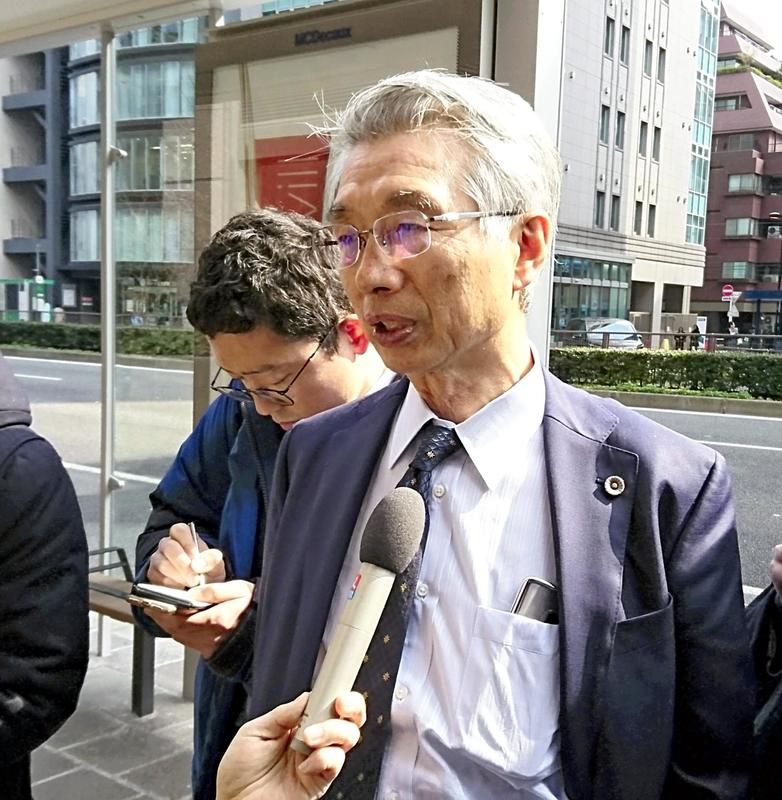
"They are extremely stern conditions, and I believe he'll find them quite hard," Junichiro Hironaka, a lawyer representing Ghosn, told reporters.
According to Hironaka, 73, Ghosn's place of residence will be limited to Tokyo, and he will be banned from going overseas. Monitoring cameras will also be installed at entrances and exits at his residence. Possible contacts between Ghosn and third parties will be checked by his defense counsel, and he will only be allowed to use a personal computer and mobile phone that cannot be connected to the internet.
Prior to his arrest in November last year, Ghosn had served as a top executive at Nissan for 19 years, forging ties with influential people in business circles in Japan and abroad. His longtime acquaintances include Khaled al-Juffali, a businessman in Saudi Arabia, to whom funds are suspected to have been unlawfully transferred from the carmaker.
In deciding whether to grant bail for a defendant, importance is attached to whether there is reason to fear the accused may destroy pertinent evidence. There has been concern that Ghosn could try to destroy evidence tied to his case, taking advantage of his relationships with these acquaintances and his possible influence on Nissan.
The district court's latest decision came after the court had rejected similar petitions twice. Those requests had been filed by his former defense counsel, led by Motonari Otsuru, 64, a former chief of the special investigation squad at the Tokyo District Public Prosecutors Office. He had served as a defense lawyer for Ghosn since his first arrest.
Commenting on his latest request for Ghosn's release on bail, Hironaka emphasized that the defense counsel had worked to find innovative ways of showing the court arrangements in which it would be "impossible" for Ghosn to destroy evidence and escape.
"The defense counsel seems to have achieved success in persuading the court [to grant him bail] through all possible proposals [that the court might accept]," a veteran criminal court judge said.
However, Ghosn has continued to deny all allegations against him. Also, pretrial procedures -- a process for selecting the points of contention to be taken up during hearings in his trial -- have yet to begin in the case.
It is unusual for judicial authorities to grant bail for Ghosn at this stage, despite his denying allegations against him as a defendant in a high-profile case being handled by the special investigation team. "It seems he has been granted bail earlier than in previous judicial practice," another criminal court judge said.
This nation's judicial practice of detaining defendants for an extended period if they deny allegations against them has been criticized, both at home and abroad, as taking the accused "hostage." On Monday, a lawyer for Ghosn's family held a press conference in Paris, during which he said they had complained to the United Nations, asserting that the defendant's human rights are being violated.
Several senior officials of the prosecution insisted that the unusual decision to release Ghosn on bail at an early stage is "unfair," compared with other criminal cases. The district court may have feared criticism from overseas, they said.
One senior official viewed the district court's decision with skepticism, saying, "The presence of a surveillance camera at his place of residence will not prevent him from meeting people with ties to the case while he is away from home.
"He can also borrow a mobile phone from someone else, and the requirements set for his release on bail do not seem to be effective."
Prosecutors are also concerned that his release may adversely affect their investigation. The special investigation squad is currently continuing its probe into the case, with an emphasis on the transfer of Nissan money worth about 100 million dollars, or about 11.1 billion yen, from Nissan to Middle Eastern countries.
It has been found that there was a massive money transfer between Ghosn and a party related to a dealership in Oman, for which a total of 35 million dollars, or about 3.9 billion yen, had been provided.
"[Ghosn's] release will inevitably increase the possibility of his trying to make sure that he and other persons related to the case will tell the same story," a senior official of the prosecution said.
"We will try to make progress in our investigations, just as required, under the circumstances facing us," another official said.
Read more from The Japan News at https://japannews.yomiuri.co.jp/