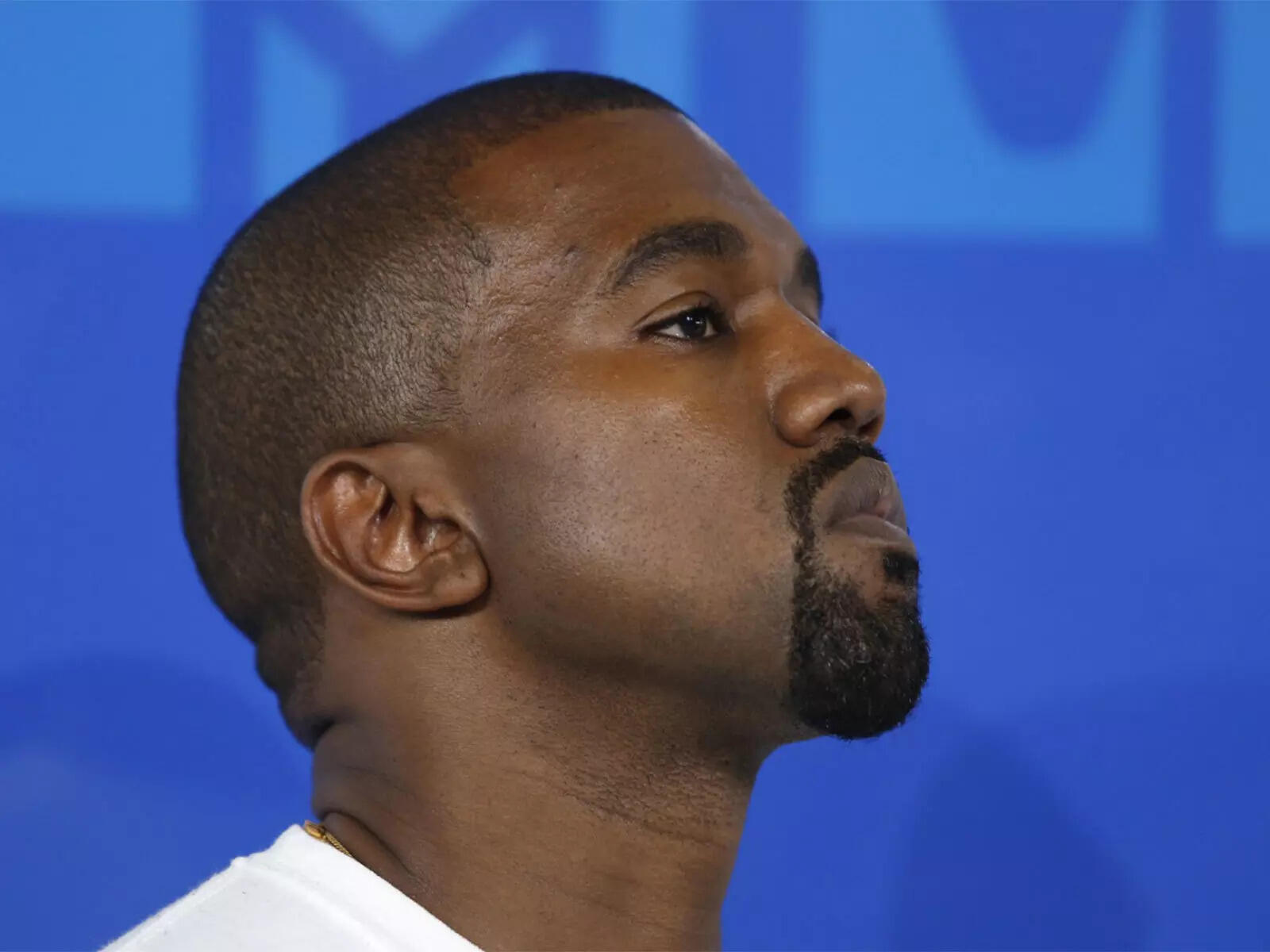
A North American Hindu advocacy group has criticised US rapper Kanye West, also known as Ye, for equating the swastika with Nazi symbolism, calling the remark “deeply insulting” and historically inaccurate.
The Coalition of Hindus of North America (CoHNA) said Ye’s statement had offended nearly two billion people worldwide for whom the swastika is a sacred religious symbol. The organisation said such conflations reinforce long-standing misconceptions about Hindu, Buddhist and Jain traditions.
The controversy follows Ye’s apology for earlier antisemitic remarks, in which he said he had “gravitated towards the most destructive symbol” he could find, referring to the swastika. CoHNA said this framing ignores historical fact, noting that Adolf Hitler did not describe the Nazi emblem as a swastika, but as the Hakenkreuz, or “hooked cross”.
“For thousands of years, the swastika has symbolised auspiciousness, good fortune and well-being in Dharmic traditions,” CoHNA president Nikunj Trivedi said. “Equating it with a symbol of hate is deeply offensive and undermines the religious freedom of millions who use this sacred symbol in their daily lives.”
The group also called on The Wall Street Journal, where Ye’s remarks appeared in a paid advertisement, to issue a correction clarifying the distinction between the Nazi symbol and the swastika used in Eastern religions. CoHNA pointed out that this distinction has been formally recognised by lawmakers in parts of the US and Canada.
Ye’s latest remarks come amid a prolonged period of erratic and controversial public behaviour that has seen the artist repeatedly embroiled in outrage. Over the past few years, he has drawn global condemnation for antisemitic statements, praise for extremist figures, and the use of Nazi imagery in music, fashion and public appearances. Major brands and business partners have cut ties with him, while his public statements have often been followed by clarifications or apologies citing mental health struggles, including bipolar disorder.
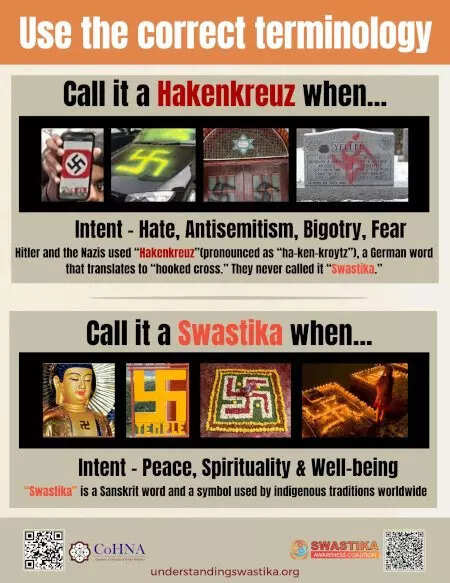
For Hindu and other Dharmic communities, the issue goes beyond Ye himself. The swastika has long been a focal point of global efforts to reclaim and contextualise the symbol as one of peace, prosperity and spiritual meaning, distinct from its 20th-century appropriation by Nazi Germany. Hindu, Buddhist and Jain groups across countries have campaigned for public awareness, educational reform and legal clarity to prevent the sacred symbol from being automatically associated with hate ideologies.
These efforts, community leaders say, are about protecting religious freedom and cultural heritage, not minimising the atrocities committed under Nazi symbolism. “Both historical truth and moral clarity are possible,” CoHNA has argued, stressing that acknowledging the horrors of Nazism should not come at the cost of stigmatising ancient religious traditions.
This is not the first time Ye has faced criticism from Hindu groups. In 2025, CoHNA objected to the sale of merchandise bearing Nazi imagery, again warning against the mislabelling of the Hakenkreuz as a swastika.
Why there is so much misinformation around the swastika
The confusion between the swastika and Nazi symbolism has deep historical roots. In the early 20th century, English-language media began translating Hakenkreuz as “swastika” while reporting on the rise of Nazi Germany. What began as a linguistic shortcut hardened into convention, especially during and after World War II.
Over time, the Western understanding of the word “swastika” became almost entirely defined by Nazism, erasing its thousands-of-years-old religious and cultural history. In Hinduism, Buddhism and Jainism, the swastika predates Nazism by millennia and continues to symbolise good fortune, continuity and the cyclical nature of life.
In recent years, Hindu and interfaith groups have intensified efforts to reclaim the symbol’s original meaning through public education, academic engagement and legal clarification. Several legislatures in North America have formally recognised the distinction between the Nazi Hakenkreuz and the religious swastika, reflecting growing awareness that precision matters when dealing with symbols tied to both genocide and living faiths.