
Draft season always delivers a plethora of storylines. Many of those can be discussed in question form, thanks to social media and the endless debate format on sports shows. Is Joe Burrow the lock solid first selection? How many offensive tackles come off the board in the first round? How many wide receivers are selected in the first two days?
Another question that surfaced in the past few days is this: Do the Washington Redskins mirror the Arizona Cardinals from a season ago and, admist a coaching change, draft a quarterback to replace their first round QB from a season ago?
This debate took on a life of its own in the wake of the 2020 NFL Scouting Combine, when it was reported that Washington met with Alabama quarterback Tua Tagovailoa. While teams meet with players for a variety of reasons during the pre-draft process, including to pick a prospect’s brain on other players in the draft that a team might be interested in (for example Rivera might have asked about Alabama offensive tackle Jedrick Wills, Jr.) the meeting between coach and prospective quarterback apparently centered on Tagovailoa coming to Washington to compete with Dwayne Haskins.
As the South Florida Sun-Sentinel reported, during the meeting between Washington and Tagovailoa the idea was raised of the quarterback competing with Haskins. According to a source, “[The Redskins] felt like Dwayne was not the guy right now. They want to bring in Tua, just get it going and compete.”
But would such a move be the right one for the organization? Does it make sense to potentially move on from Haskins after less than a full season of action?
To answer that question it makes sense to address three topics: First, Haskins as a prospect. Second, Haskins as a rookie, and third, Haskins in 2020 versus Tagovailoa in 2020.
Dwayne Haskins the prospect

This time a year ago, most of the football world was coalescing around the idea that Oklahoma’s Kyler Murray was the top quarterback prospect in the draft. But there were certainly other passers generating buzz. Daniel Jones parlayed a strong Senior Bowl game into an early selection by the New York Giants, and Drew Lock had a similarily strong week down in Mobile a year ago which led to an early round selection of him by the Denver Broncos.
Then there was Haskins, who got a chance to step into a well-constructed Ohio State offense and flourished. In his only year as a starter, Haskins put up impressive numbers, completing 70% of his passes for 4,831 yards and a whopping 50 touchdowns, against just eight interceptions. He also posted an impressive 9.1 Yards per Attempt (Y/A) and an even more impressive 10.3 Adjusted Yards per Attempt (AY/A).
On film there was also evidence that, despite some mechanical flaws and a lack of elite athleticism, Haskins grasped what it meant to run a modern NFL offense. Haskins (and to a certain extent Murray) showed the ability to work through reads in the pocket, rule options in or out pre-snap, and make the right decisions with the football.
Take, for example, this throw against Purdue University. On this snap Haskins showed the ability to hang in the pocket and make a strong anticipation throw with the pressure building around him. Purdue blitzes a linebacker and also generates some pressure off the edge. But the QB is not rattled by the pressure and throws a comeback route to the left (after opening to the middle of the field with his eyes) and throws that route on time, in rhythm, and with some anticipation:
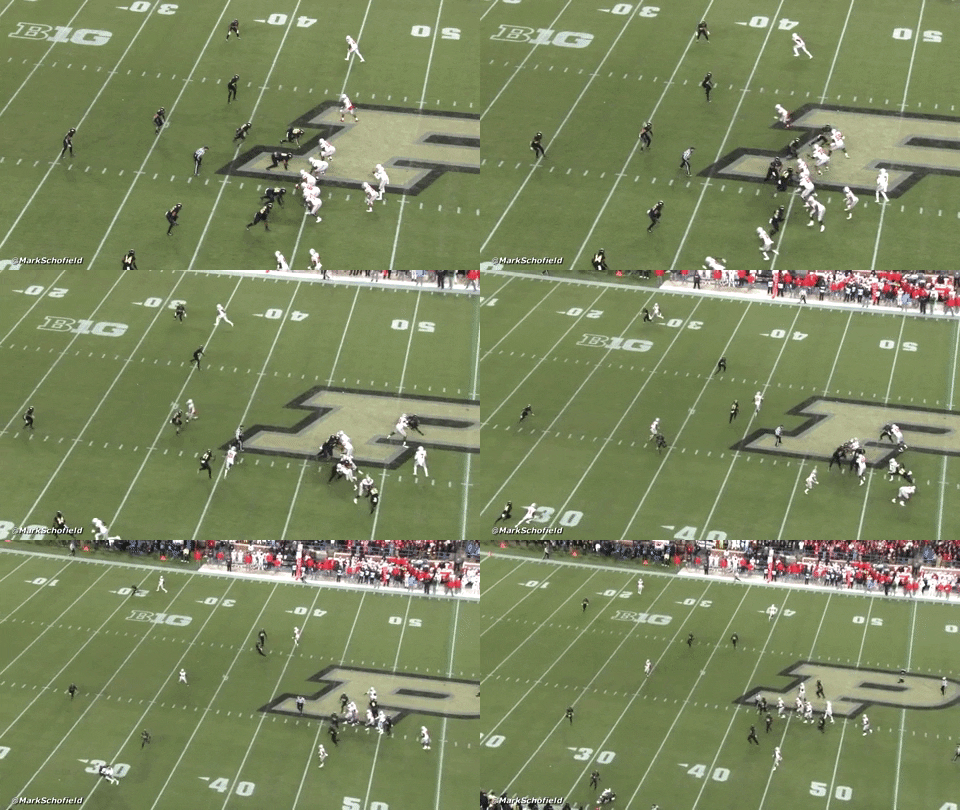
Anticipation throws are a great window into the mind and the processing speed of a quarterback. You often hear the term “see it, throw it” applied to a quarterback. If the quarterback waits to see a route come open, it is too late, especially against NFL defensive backs. Any time the notion of anticipation from the QB spot comes up I am reminded of a game between the New England Patriots and the Pittsburgh Steelers a few seasons ago. Ben Roethlisberger was injured and Landry Jones was starting in his place. Phil Simms and Jim Nantz relayed a story from Antonio Brown that actually provided great insight into this concept. As Brown told Simms and Nantz, he told Jones in practice that if “I see you throw the football, it is too late.”
Anticipation throws towards the boundary are one thing, but anticipation throws challenging the middle of the field are another level when it comes to evaluating quarterback prospects. On this throw, also against Purdue, Haskins throws a crossing route working against zone coverage, and throws his receiver open into a hole behind the linebackers and in front of the safeties:
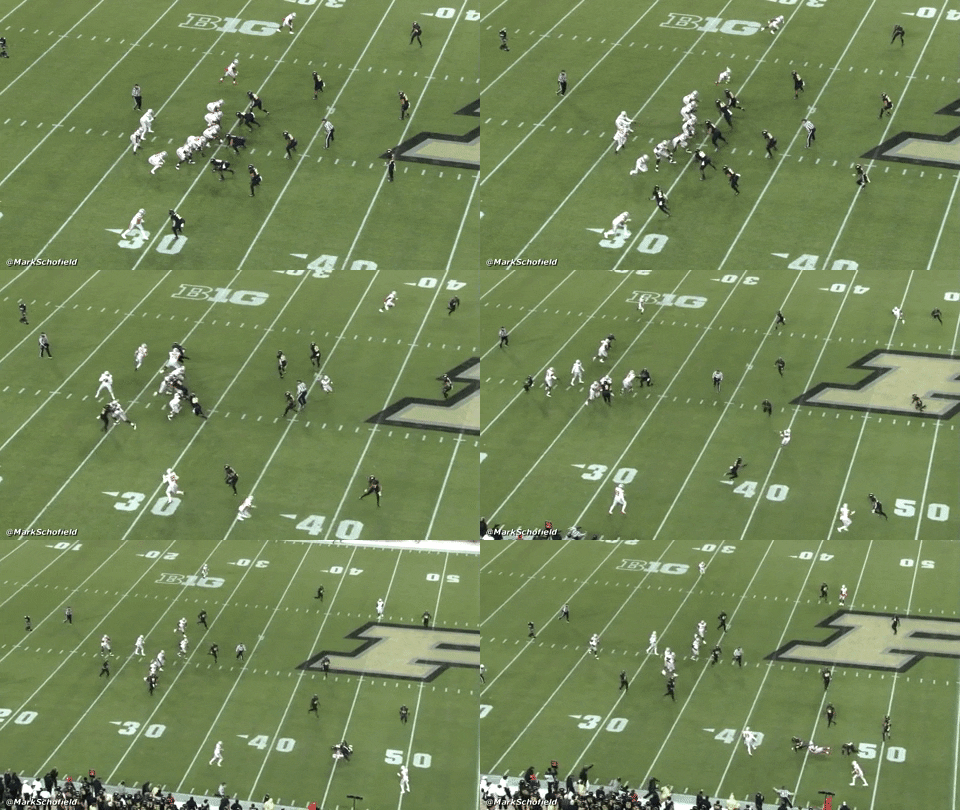
That is advanced processing from a QB prospect.
Haskins also showed the ability to run “NFL concepts” at a high level. Take this throw against Indiana University. This play comes right out of a West Coast playbook. The slot receiver comes in motion and runs the shallow crossing route, and with a defender trailing the receiver during the motion, Haskins knows pre-snap that the Hoosiers are in man coverage. From the opposite side the tight end runs the sit route over the middle and starts to work back to the left, but by then Haskins has pulled the trigger on the crosser;
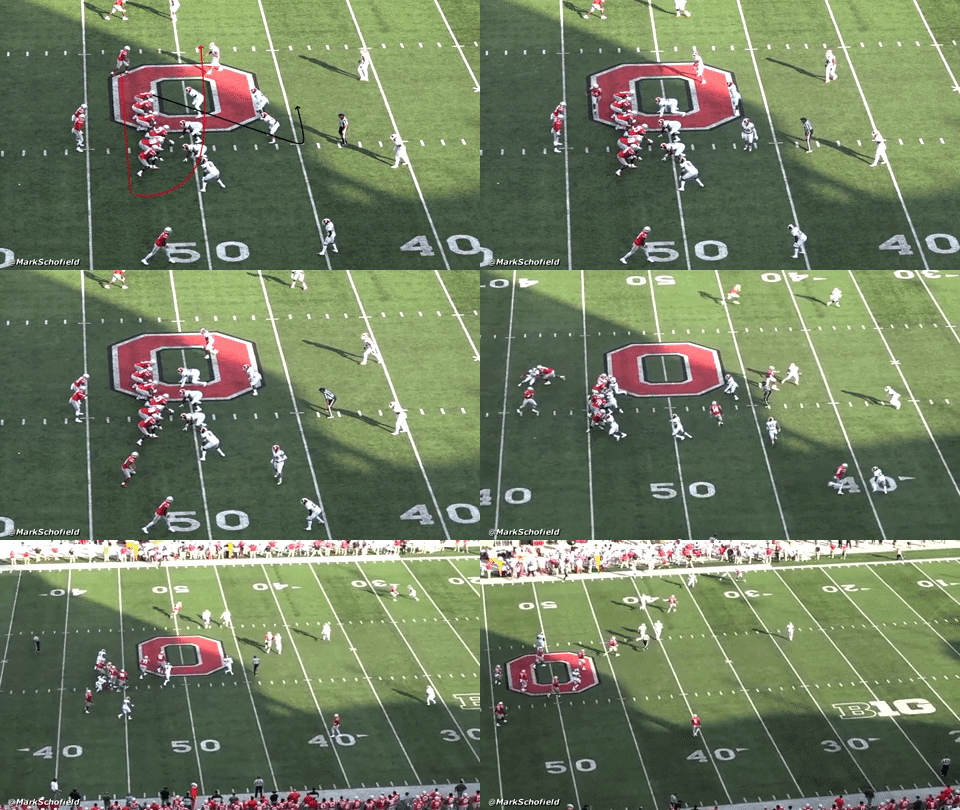
Also important here for Haskins and his overall evaluation is that he gets blitzed but is able to step up in the pocket and deliver in the face of edge pressure.
If I could boil Haskins the prospect, down into one play it would be this snap against Purdue. For context, this play comes late in the contest with the Buckeyes trailing by 22. As you can see, Haskins is active at the line of scrimmage pre-snap as he anticipates a blitz. He adjusts the protection and slides the tight end into a wing alignment to help in pass protection. The blitz does not come, so the quarterback needs to recalibarate his pre-snap expectations, but he still throws a rope on a skinny post route for a touchdown:
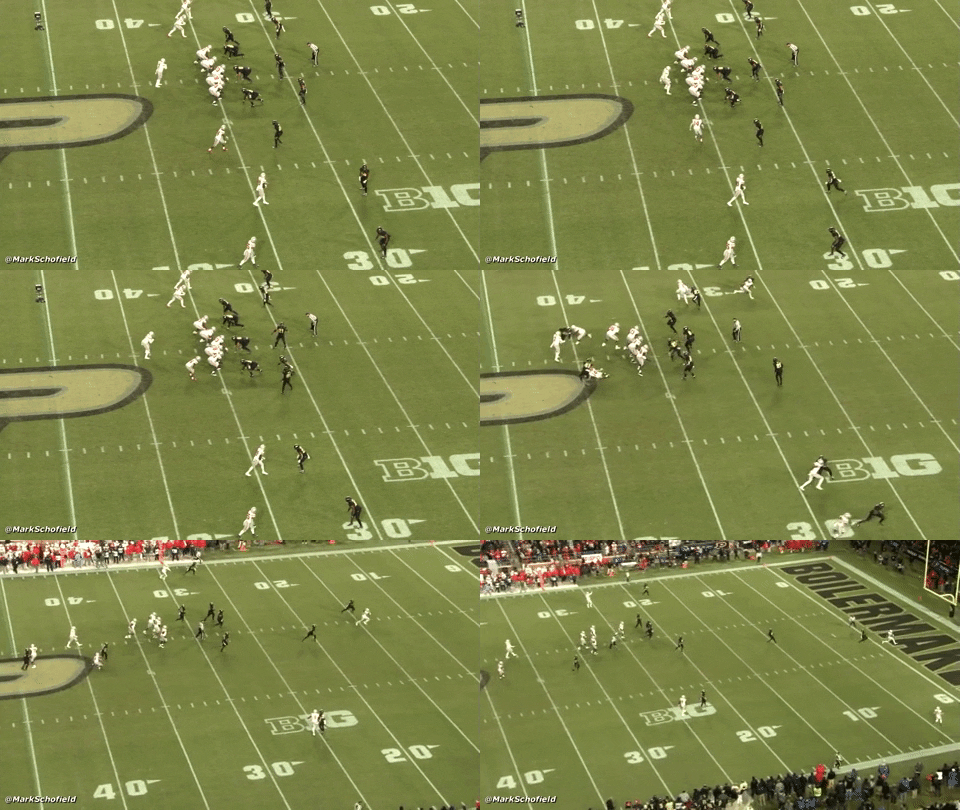
Now Haskins was not without his flaws. There were opportunities, particularly in the downfield passing game, that he missed on due to some mechanical flaws. His upper body and lower body would often not be in synch as he worked through the throwing motion.
In addition, Haskins is more of your prototypical “pocket passer.” I described him last year as more of a “battleship,” who would need to rely on subtle movements in the pocket rather than pure athleticism to avoid pressure.
Speaking of pressure, there were also times when his mechanics and accuracy would break down in the face of heat in the pocket, and if you comb through his game against Penn State – a game in which he led a comeback late – you would see his struggles in this area.
But all told, I was rather high on Haskins the prospect, especially from a mental perspective. But life in college does not always mirror life in the NFL.
Dwayne Haskins the rookie

The second part of this analysis centers on what Washington, and in particular their new coaching staff, saw from Haskins as a rookie.
Let us start, as is sometimes appropriate, with numbers. Haskins was at or near the bottom of many NFL passing metrics. His Adjusted Net Yards per Attempt of 4.25 was 33rd – and dead last – among qualified passers a season ago. His Y/A of 6.7 was behind such illustrious passers as Joe Flacco, Sam Darnold, Case Keenum, Kyle Allen and Josh Allen (although it nosed out Tom Brady’s 6.6 mark, but that might say more about Brady’s 2019 season than this Patriots fan would care to admit). Finally, his AY/A of 5.9 was also near the bottom of the league, just ahead of players like Mason Rudolph and Develin Hodges.
Oh, and Haskins threw seven interceptions against seven touchdowns, and completed just 58.6 percent of his passes.
So, the numbers were not good.
But numbers alone do not tell the story, and if you dig into his film a bit you see evidence that Haskins started to grow as a quarterback. Of course, when you are pressed into action and throw some disastrous interceptions in your first NFL action, there is usually nowhere to go but up. Take, for example, this pick six that he threw in his first live action, against the Giants:
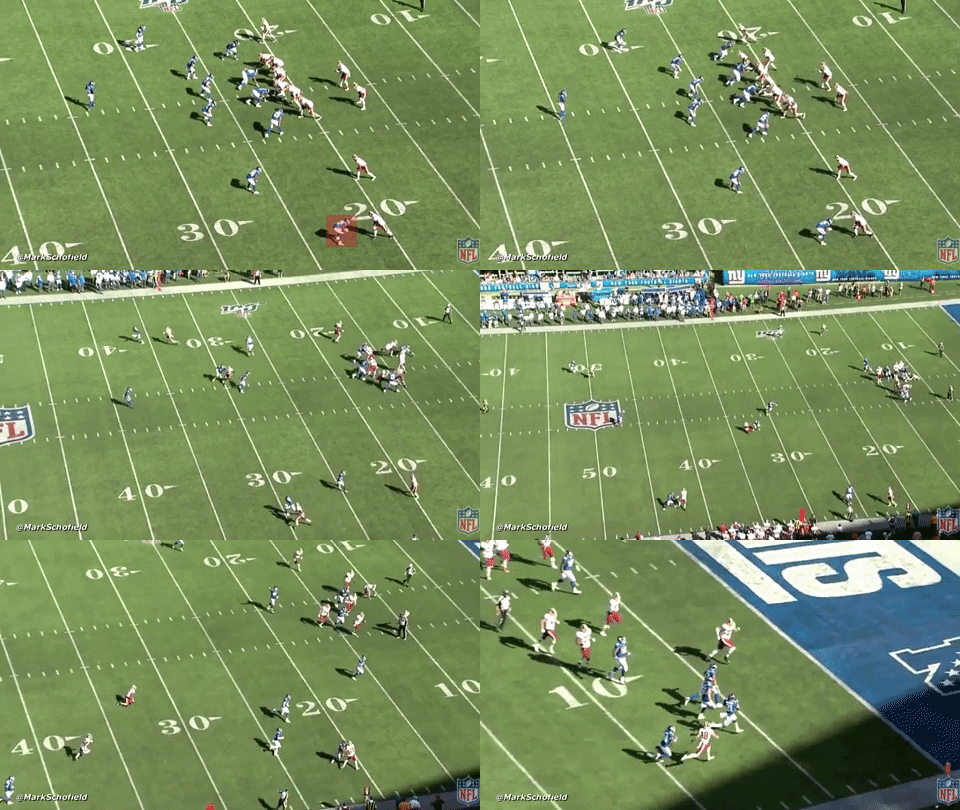
Haskins is reading a simple go/swing combination on the left, and the coverage is sound. That should be something he sees immediately, but he stays on that a bit too long. He then comes to the dig route in the middle of the field from his tight end, but he locks his eyes on that route too long as well. That gives the free safety a chance to jump the dig, and Jabrill Peppers returns it for six.
But over the course of the season there was evidence that Haskins was starting to “get it.” Take his Week 14 game against the Green Bay Packers. If you wanted to see evidence of a rookie QB figuring things out then study these two plays. Early in the game, Haskins takes a sack on a double-curl concept:
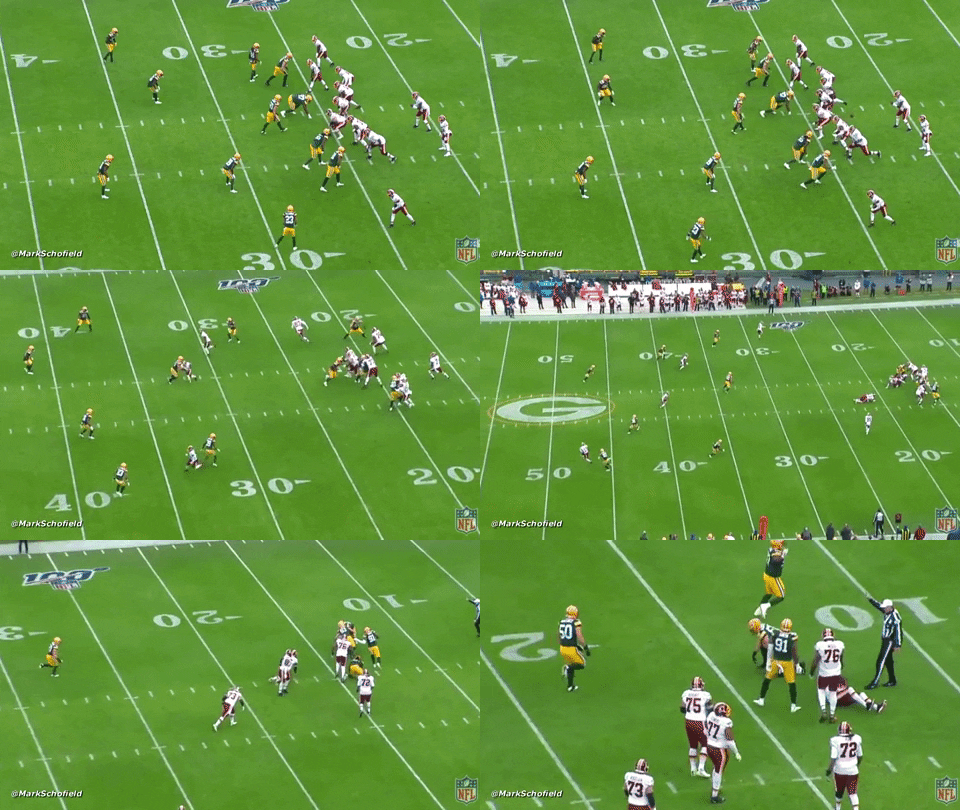
On this snap there is a window to throw the outside curl route with some hesitation, which as you remember from a few paragraphs ago was something he was doing back at Ohio State. Rather than pull the trigger, he hesitates, and takes a sack.
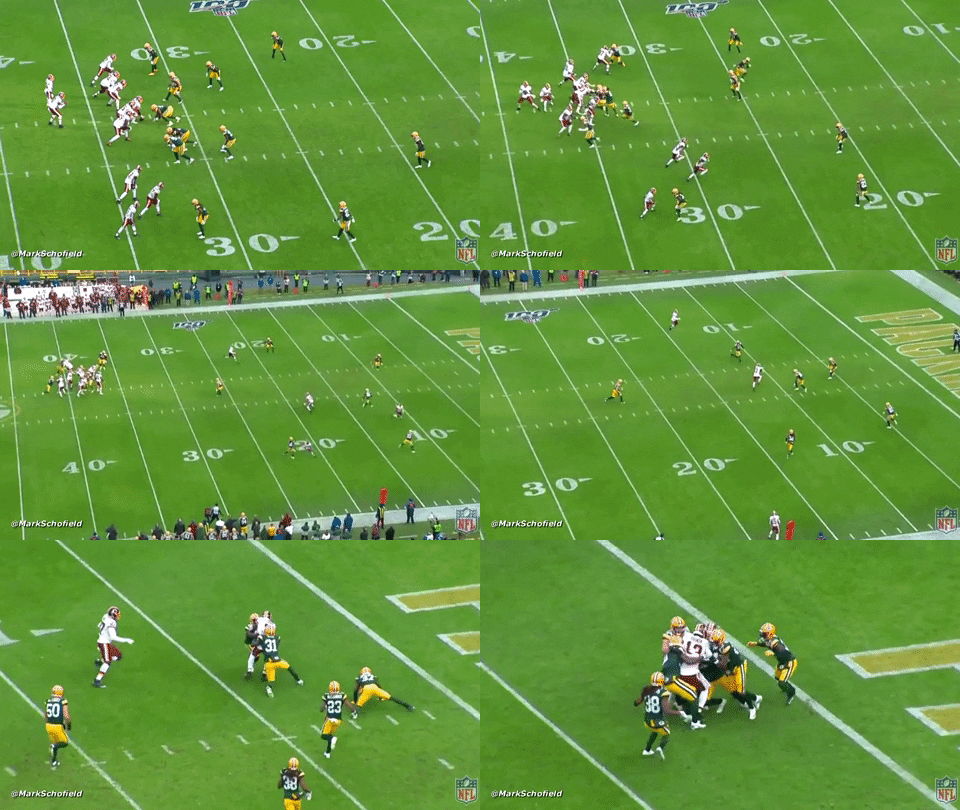
Later in the game Washington runs virtually the same route combination, and this time Haskins remembers what he can do as a passer, and gets the ball out on time and with anticipation:
Then the following week against the Philadelphia Eagles – a team desperate for a win to stay in playoff contention – Haskins turned in arguably his best game of the season. Against the Eagles he completed 19 of 28 passes for 261 yards and a pair of touchdowns, and posted an Y/A of 9.32 (his best of the season) and a AY/A of 10.75, a mark he would only surpass in the season finale against the Giants.
What did we see in that game against the Eagles on film? How about this great example of Haskins reading the zone rotation and making the defense pay:
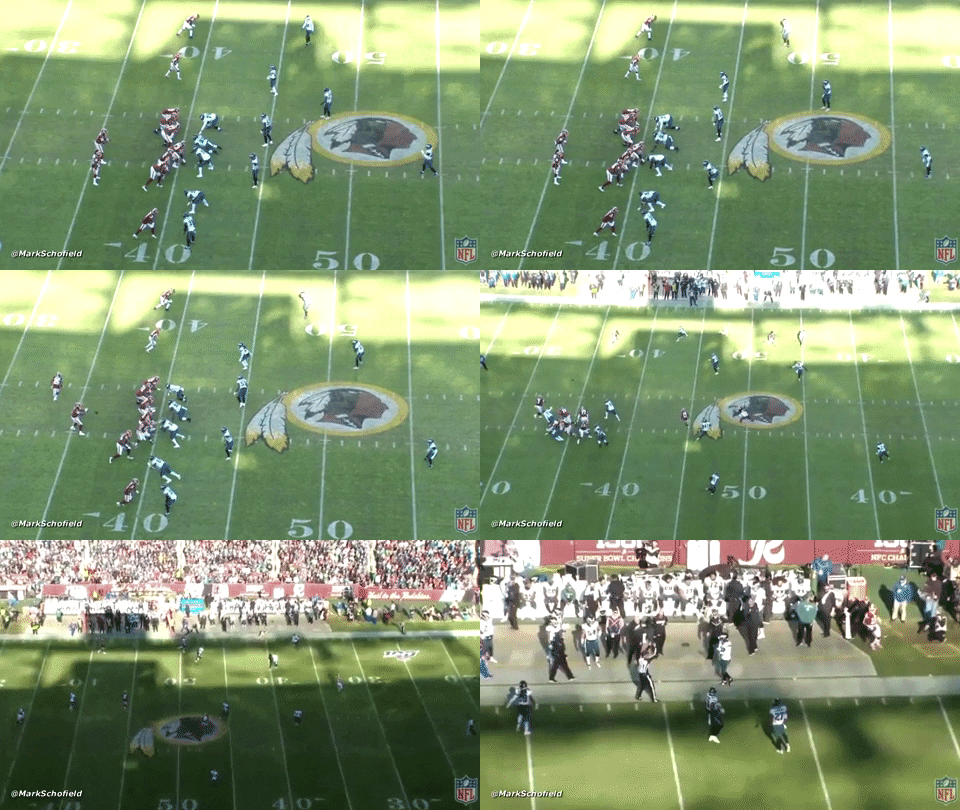
Haskins reads this switch concept perfectly and throws the boundary wheel route into space. I also love how he gives Steven Sims a chance to secure the throw and put his body between the ball and the nearest defender. Haskins also knows pre-snap that the Eagles are in zone coverage, given their response to the pre-snap motion, so he makes an informed decision to attack the soft spot in the secondary.
Washington capped off that drive with this touchdown connection from Haskins to Sims:
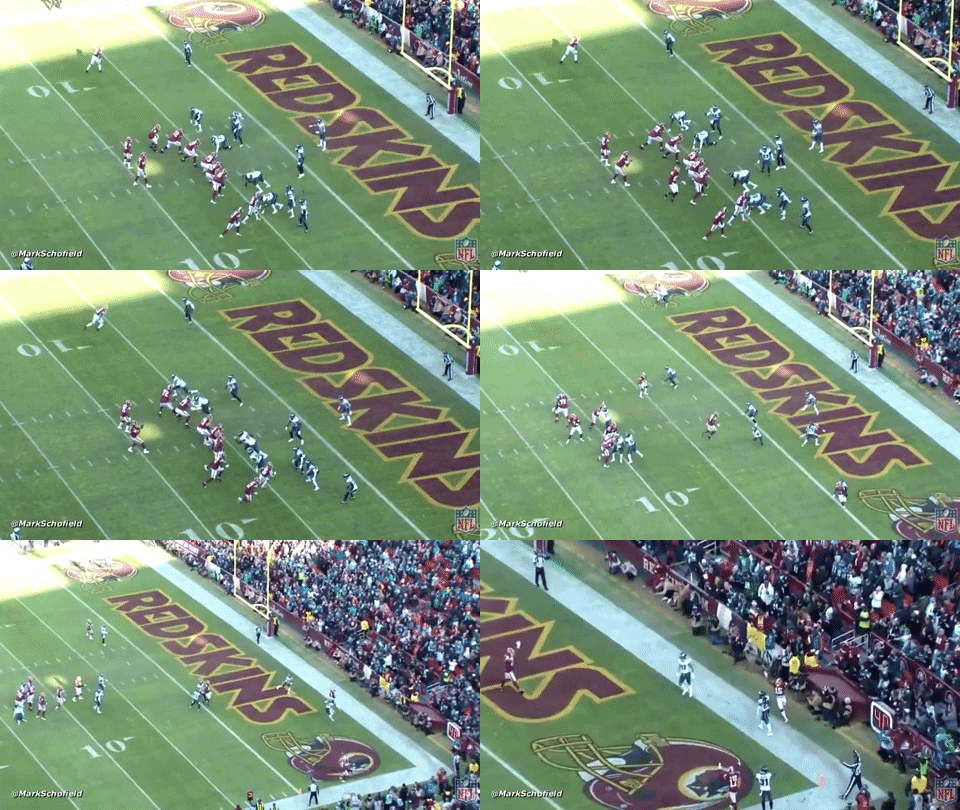
Now, at first glance this seems like a risky throw. However, I would grade this as a great read and decision from the quarterback. Haskins knows the Eagles are in man coverage (thanks to the pre-snap motion indicator) and knows that Sims is running a route breaking to the outside. Once he sees the “29” on the back of Avonte Maddox on his jersey, Haskins knows that a throw to the inside – behind the defensive back’s back – will be tough to defend. That is exactly where he puts the throw:
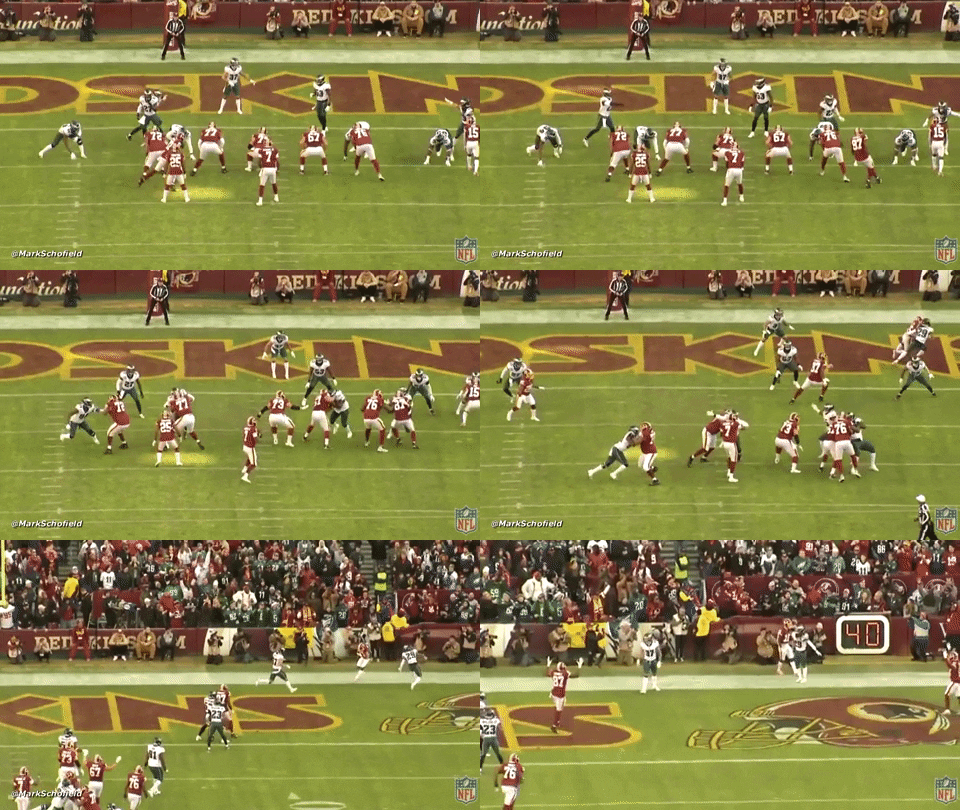
Haskins reads and executes this perfectly.
Closing out this quick look at Haskins from 2019 we can look at another throw from his game against the Eagles. Here, Haskins operates off of a play-action design and Washington runs a dagger concept. That pairs a seam route on the inside with a dig route on the outside from Terry McLaurin working towards the middle of the field. Haskins comes out of his run fake – having turned his back on the defense – and comes up throwing:
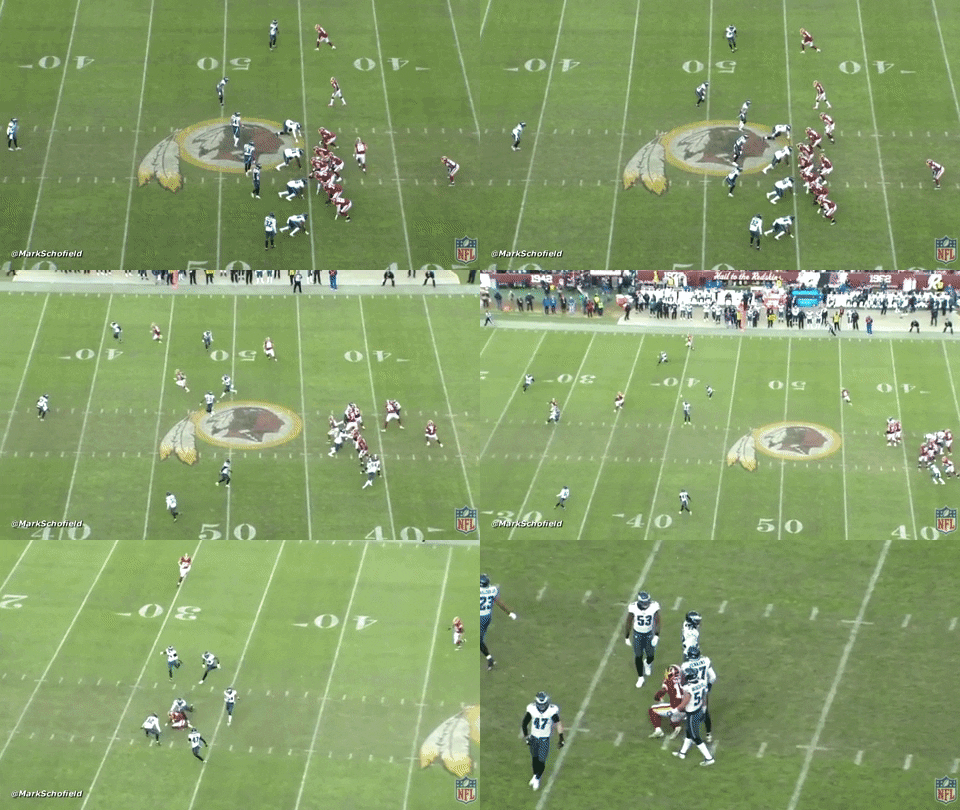
This is again great processing and anticipation in the middle of the field, the things we saw from Haskins back at Ohio State. A critical component here is that Haskins is able to execute having turned his back on the defense. Granted, he has a solid idea of the coverage due to the pre-snap motion and the defense’s reaction, but anytime a QB – especially a rookie – compresses the time he has to read a defense by turning his back on it, and still makes an anticpation throw attacking the middle of the field, it is a good sign.
My point with all this? By the end of the season the rookie quarterback was starting to put everything together. His best statistical games of the year were his final two, and one was against the Eagles who were fighting for their playoff lives. Unfortunately, his Week 16 outing against the Giants was cut short due to an ankle injury, but the point remains. By the end of his rookie year, Haskins was getting it.
Will that be enough?
Answering the Haskins versus Tua question

Here is where the rubber truly meets the road.
Ultimately, what may determine the answer to this question is something that I cannot breakdown on film. Why? Because despite my father’s best intentions when I was growing up I chose law school over medical school. I’m not a doctor (although lawyers often like to think they are doctors in a way) and I cannot tell you what the status of Tagovailoa’s hip injury is, nor his long-term prognosis.
Let us assume, however, that the hip is cleared and Tagovailoa is even ready to return to live action for the 2020 season, something that the prospect himself expressed optimism that he could do back in January. The question then becomes this: Is Tagovailoa the 2020 prospect a better option than Haskins the 2020 second year prospect, and if so, does it make sense for Washington to pass on their other options with the second overall selection?
In a vacuum, there is an argument to be made that as pure prospects, Tagovailoa is ahead of where Haskins was when he left school. But that is not the equation. Haskins has a year of professional football under his belt, and as we just saw, he was improving down the stretch. He was “getting it.” Despite reports that he was struggling to learn the playbook, we saw evidence of him starting to figure things out and make the anticipation throws that are indicative of a young quarterback seeing the game slow down around him.
While Tagovailoa is a very nice quarterback prospect, he is not without his flaws. I documented some of those in this recent video breaking down his three interceptions last season.
In a nutshell, there are times when Tagovailoa stares down route concepts and “assumes” that the defense is doing something, when in actuality they are not, and it gets him into trouble. He also tends to bail from clean pockets at times, relying on his legs and athleticism to create when he could perhaps climb the pocket and trust the protection around him.
Despite what many believe, Tagovailoa might not be the rock-solid prospect that he is made out to be. Still very good, and worthy of a top selection, but is he better right now than Haskins with a year under his belt?
Then there is the matter of fit. Washington hired Scott Turner as the team’s offensive coordinator back in January, after he spent the end of last season as the Carolina Panthers’ interim offensive coordinator. Yes, he is the son of Norv Turner, and as such his offensive philosophy is rooted in the Turner/Coryell school of thought.
That is not what Tagovailoa was running the past few years at Alabama, but it is more in line with what Haskins has been running. While Jay Gruden had a variety of West Coast concepts in his offense, he also incorporated a very interesting vertical passing game into Washington’s offense, and there are elements of what Haskins was running last season that will be very familiar to what Turner will be installing this year.
So, while both quarterbacks are going to be learning new offenses, Haskins will have an edge in picking things up.
Then there is the cost. Or the lost opportunity cost to be more precise. Should Washington draft Tagovailoa with the second overall selection, they would be passing on two defenders with the potential to make an immediate impact on Week 1: Chase Young, the Ohio State pass rusher, or Jeffrey Okudah, the Ohio State cornerback. Or they could be passing on the chance to trade down, acquire additional draft capital, and continue to build around Haskins. These are all options laid out by Steven Ruiz in this insightful piece for For The Win.
There is certainly an argument that if you are an NFL franchise, you keep trying options at the quarterback spot until you know for sure you have “the guy.” That might make drafting Tagovailoa an enticing option. But I would posit that Washington does have the guy in Haskins. What we saw down the stretch was the passer that made him a first round pick at Ohio State, a rookie quarterback who is figuring it out. In Turner’s offense – at least how we expect it to operate – he would be a good fit and he would be ready to hit the ground running given the conceptual overlap between Gruden’s vertical designs and what Turner will be installing.
In short, the grass is not always greener on the other side.
Now whether Washington trades back or drafts one of the Ohio State defenders is a different question. For me, the thought of sliding back a few spots and drafting an Isaiah Simmons has some certain spice to it, but the answer to the underlying question is this: In terms of Haskins versus Tagovailoa, you have your guy, Washington.
Now, build around him.
After ten years of practicing law in the Washington, DC area, Mark Schofield now dedicates his time to his first love: The game of football. The former college quarterback’s work has been featured a number of places, including The Washington Post, Bleacher Report, SB Nation, Pro Football Weekly and the Matt Waldman Rookie Scouting Portfolio.













