Deauville has been a fashionable seaside rendezvous since the 1860s, when the Duc de Morny, half-brother of Napoleon III, drained its marshes and built villas, grand hotels, a casino and the wood-planked seafront promenade, Les Planches.
Along with Trouville, across the mouth of the river Touques, it was a favourite of impressionist painters Manet, Monet and, later, Dufy, who depicted the aristocratic clientele enjoying the new-found pleasures of seaside holidays. It still has a swanky air, with two yacht harbours, smart fashion boutiques, and the promise of film stars in town during the American film festival every September.
Since Morny constructed the first of the town's two horse-racing tracks, Deauville has also been associated with horses, in an area where the lush countryside is peppered with haras – horse-breeding studs. The August races and yearling sales are as much a part of the French social calendar as the sporting one.
Visitors can take lessons or watch international dressage and showjumping competitions at the recently established Pôle International du Cheval, or gallop along the beach at low tide with the Ecole d'Equitation de Deauville.
Further east along the Côte Fleurie is Honfleur and Le Havre on either side of the Seine estuary. These historic ports can both claim to be at the origins of impressionism.
Le Havre has the appeal of a busy port. The entire centre, bombed during the second world war, was rebuilt in warm, yellow concrete by Auguste Perret, and is now Unesco-listed. It has a long sand and shingle beach, and an impressive collection of old masters, impressionists and modern art at the Musée d'Art Moderne André Malraux.
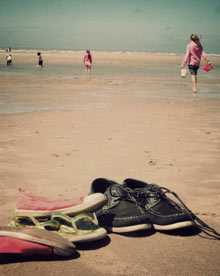
The landscape is quite different up the coast towards Boulogne, at family-friendly Le Touquet-Paris-Plage, once a favourite of English aristocrats, with its sand dunes, golf course and 1920s art deco villas. Tranquil Hardelot-Plage is another resort with strong English connections, created by Sir John Whitley in 1905. Surrounded by forest and a marshland nature reserve, the vast expanse of sandy beach makes it another favourite for horse lovers, with opportunities for riding along the beach and a beach polo tournament at Easter.
Whitley's residence, the mock-Tudor Château d'Hardelot, at nearby Condette, rebuilt by Sir John Hare over medieval ruins, is now the entente cordiale cultural centre, serving tea and Anglophile exhibitions and concerts.
To find out more about this destination, visit gotofrancenow.com/seaside-lifestyle/channel-coast