A SMALL CLUB IN BIG TROUBLE
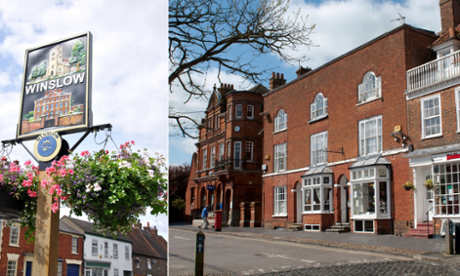
Ten miles south-west of Milton Keynes, by the back roads of the Buckinghamshire countryside, is the little town of Winslow. Home, according to the last census, to 4,407 people, site of a grand country house, Winslow Hall, a fine old inn, The Bell, a pretty little church, St Laurence’s, and, of course, a cricket club. Winslow Town CC, founded by ecumenical men in 1886, their first skipper the town vicar. Their ground, Elmfields Gate, isn’t the prettiest but it serves, and has done since they moved there in the early 1950s. The high street is close by. There is a football pitch to one side, a bowls club on the other and over the back a row of houses beyond the boundary fence. If you’ve travelled at all in England, you’ve seen others just like it.
Elmfields Gate has hosted countless matches – and a few famous names. Ian Botham turned out for a celebrity XI on the club’s centenary in 1986 and a crowd of 1,500 came to watch him play. That same year, Winslow, inspired, went unbeaten from June through to the end of the season. They won their league, the Milton Keynes district Premier Division. The following year, David Gower bought a side to Elmfields Gate, and the club, bolstered by two temporary recruits, Mark Nicholas and Simon Hughes, sent a team over to Barbados to play in a cricket festival. Then there was another league title in ’89. It was “a golden spell”, as the official history has it.
On 6 November of this year, Winslow Town CC’s 17 remaining members gathered for an emergency general meeting. The club had run a loss of more than £1,000 in each of the previous two seasons. In 2015, they had often had to play a man short because they couldn’t put a side together and had conceded one fixture because they couldn’t muster even nine men to play. In 2014, about 5% of all league matches played in England ended in the same way. In Winslow’s case, the league fined them £50 and made them pay half the fee for the tea put on by the opposition. This autumn, Winslow’s groundskeeper quit. It wasn’t the first time he had resigned – but he seemed to mean it.
At Winslow’s EGM, eight men promised to play regular cricket next season. Five more said they would turn out as and when they could. A pool of 13 is scarcely enough to run a league team. So the members put it to a vote and, by a majority of three, they decided that, after 129 years of cricket, Winslow Town CC would shut.
This story needn’t be set in Winslow. It could have been in Pembrokeshire, where Camrose CC have shut. Or Dewsbury, where Thornhill CC have shut. Or Market Rasen, where South Kelsey CC have shut. Or Halifax, where Stainland CC have shut. Or Scarborough, where Oriel CC have shut. Or Peterborough, where Yaxley CC have shut. Or Hull, where Fenners CC have shut. Or Lyndhurst, where Swan Green CC have shut. Each and every one gone in the past two years.
Winslow have a ground and the equipment to keep it, kit to play with, two sightscreens, two nets and a clubhouse they share with the football team. The one thing they don’t have is players. In this, they are exactly like a lot of those listed above. Take Camrose: “I just haven’t been able to find enough players in the last couple of weeks,” the captain, Dan Wilks, told his local paper, “so we had no option.” Or South Kelsey. “It has become hard to make up a team of 11 players every week,” said the secretary, Mike Owen. Or Hull Fenners. “The main reason being due to a shortage of players, at both senior and junior level.”
In 2014 the England and Wales Cricket Board’s national playing survey found that, countrywide, the number of people playing cricket had fallen by 7%. For many small clubs, the drop-off has been sharper still, as players are pulled away to bigger, better sides nearby.
The week before last, Winslow’s chairman, Rupert Litherland, wrote to his local paper. It was, he says, his “last card”. He made an appeal. “Are there any cricketers, cricket supporters or people wanting to play cricket out there?” he asked. “Might Winslow Town Cricket Club rise phoenix-like out of the Ashes of indifference under your leadership? Pray it be so whoever you are. Step forward: take up the challenge.” For the past two years, that challenge has been Litherland’s own. He has been living in Winslow for 19 years, just long enough, he jokes, for some of the locals to stop treating him like an out-of-towner. He took on the chairmanship of the club two years ago, simply because somebody had to.
Each and every club will have its own Litherland and his complaints will sound familiar to anyone who has spent much time anywhere on the circuit. Pressures on parents, competition from bigger clubs, the imposition of excessive regulations and the decline of cricket in state schools. Beyond that, Litherland feels that “camaraderie, team loyalty, stickability, sportsmanship and commitment are dying, and cricket at the grassroots level is dying with it”.
One factor Litherland mentions only as an afterthought is the fact that the professional game can only be seen by those who pay for Sky TV. It has been 10 years since anyone has been able to watch the game on free-to-air TV. The main reason for this, the ECB has always argued, is that the money earned has allowed them to nurture the “grassroots”. In the main that money makes its way to the biggest and best clubs, which then suck up the talent from the smaller teams around them. Litherland argues the resources should be shared, that players should be registered to regions, rather than clubs, and free to play for whoever needs them.
In Winslow those “grassroots” are dying. The playing population is falling even as the resident population is growing. Dozens of new houses have sprouted around the town. Hundreds more are due to be built. Fifty years after the station was shut and the regular services stopped, the railway is set to return. A new secondary school recently opened. The town is booming – but it isn’t, doesn’t seem to be, able to sustain the club that has been at its heart for more than 100 years.
• This is an extract taken from the Spin, the Guardian’s weekly cricket email. To subscribe, just visit this page, find ‘The Spin’ and follow the instructions.