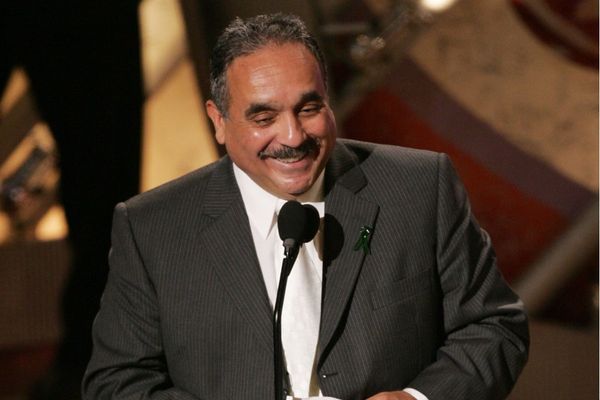
On Friday 15 May 2020, NHS healthcare assistant Carlos Sia was one of 314 people who died after contracting Covid, passing away in the Worcestershire Royal hospital where he worked.
On the same day at the Lister hospital, Stevenage, 98-year-old Marjorie Bourke died of pneumonia and heart failure, alone, her relatives unable to be with her at the time of her passing.
In Somerset, Bernadette Tinsley died at home from pneumonia caused by Parkinson’s disease – her children too scared by the risk of Covid to take her into hospital.
In the midst of this, the prime minister and more than a dozen staff sipped wine and ate cheese in the gardens behind Downing Street, many standing shoulder to shoulder.
It is an image that jars with what was happening around the country. At Kettering general hospital, a minute’s silence was held in memory of all those who had died from Covid; more than 30,000 at that stage of the pandemic. Nationally, many were still clapping for the NHS. A debate was raging over the safety of reopening schools on 1 June.
At that point it was illegal for someone to meet both elderly parents at the same time. Social mixing between households was limited to two people, who could only meet outdoors and at a distance of at least 2 metres. In workplaces, guidance said in-person meetings should only take place if “absolutely necessary”.

The emergence of the picture of the PM and his staff socialising in the sunshine has been a particularly painful moment for those who lost loved ones – from Covid or other illnesses – as Johnson and his staff enjoyed nibbles on the terrace.
Carlos Sia, a healthcare assistant who had worked at Worcestershire Royal hospital died after contracting coronavirus. He left behind a wife and a daughter in the UK and three sons in the Philippines. His colleagues described him as “kind, gentle man with a wonderful smile”.
They said they had huge respect for him and loved working with him as he always treated patients with respect, gentleness and care.
In a statement released at the time, the trust said: “His quiet, gentle and respectful nature, his generosity of spirit, his sense of humour and his calming influence also made him popular with patients.”
It added: “We have lost a valued member of our trust family – and in Carlos’s case, the word ‘family’ has a special relevance, as his wife, Cindy, works [at the hospital] as a healthcare assistant and his daughter, Clair, is a nurse on our acute stroke unit.”
Alexander French, 29, from Hitchin, described the pain he and his mother, Valerie French, felt at not being able to be with his 98-year-old grandmother, Marjorie Bourke, when she died of pneumonia and heart failure on 15 May 2020.
He said: “My mum and I were allowed to visit her at the hospital to say goodbye but were told that we had to do so separately, and that we could only spend 10 minutes each with her. Neither of us was allowed to stay with my grandma until she passed away, meaning she died alone, aged 98.
“My mum still expresses her regret at not being there for her in her dying moments and will carry this guilt with her for the rest of her life.”

Claudette Tinsley, 37, a graphic designer from Somerset, described the desperate moment her mother died at home from pneumonia caused by Parkinson’s disease after being told she would be treated among Covid patients if brought into hospital.
She said: “The day before 15 May, her health took a turn and the on-call doctor had advised us that, as she had developed pneumonia she would be put with the Covid patients to assess her and that she’d likely catch it. I wouldn’t be able to visit her to help her recover and we knew she wouldn’t have a chance.
“He prescribed strong antibiotics alongside medication to ease her passing if they didn’t work,” she added. “Then, on the morning of 15 May, I woke to a panicked phone call to come down quickly and found my brother frantically trying to wake her up but I knew this time we were too late, she had died some time in the night.
“My mother wasn’t a statistic, she was a vibrant, loving person who was there one moment and then just gone,” she said. “So whilst No 10 was breaking their own rules, my family was suffering the consequences of what happens when you can’t send your loved ones to hospital any more.”
All of this came shortly after the resignation of Prof Neil Ferguson, the epidemiologist whose modelling helped shape Britain’s coronavirus lockdown strategy, for flouting the rules by receiving visits from his lover at his home.
The then health secretary, Matt Hancock, claimed to have been left “speechless” by Ferguson’s “extraordinary” behaviour, and said it had been right for him to resign as a government adviser.
Hancock added that the social distancing rules were “there for everyone” and were “deadly serious”.