Get all your news in one place.
100’s of premium titles.
One app.
Start reading
The Guardian - UK
The Guardian - UK
World

Dealing with TB in Burma - in pictures

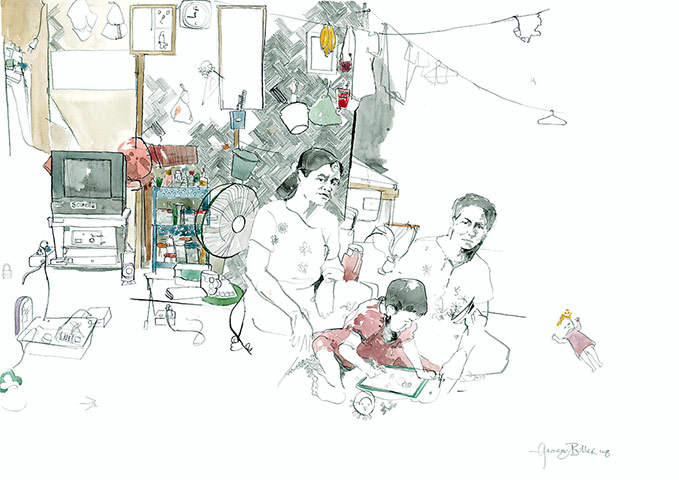
TB in Burma: MSF TB Symposium - George Butler artwork
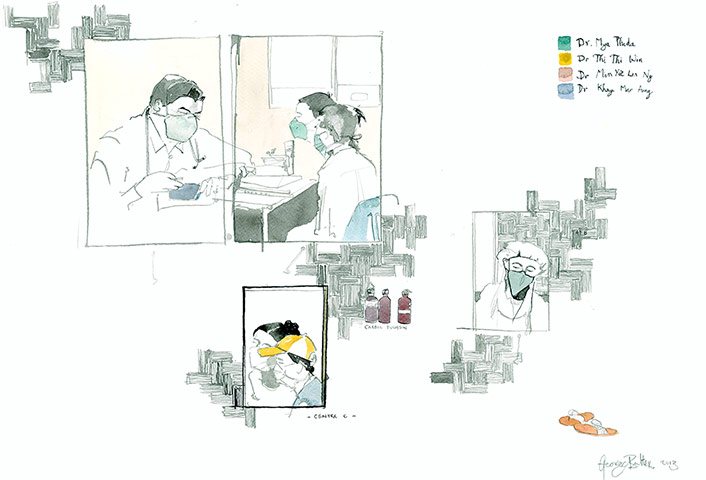
Hlaingtharyar clinic C, in Yangon, Burma provides treatment for people suffering from HIV, TB/HIV co-infection and HIV/multi-drug resistant TB (MDR-TB). Many people come to the clinic from outside of the region - from as far as the Delta region. From the outset, all patients are screened for HIV and TB, and HIV/TB patients are screened for MDR-TB. In Burma, MSF has worked with the Ministry of Health to manage MDR-TB using new models of care. Patients are treated in the community from the outset, except for severe cases, enabling people to stay with their families
Illustration: George Butler/MSF
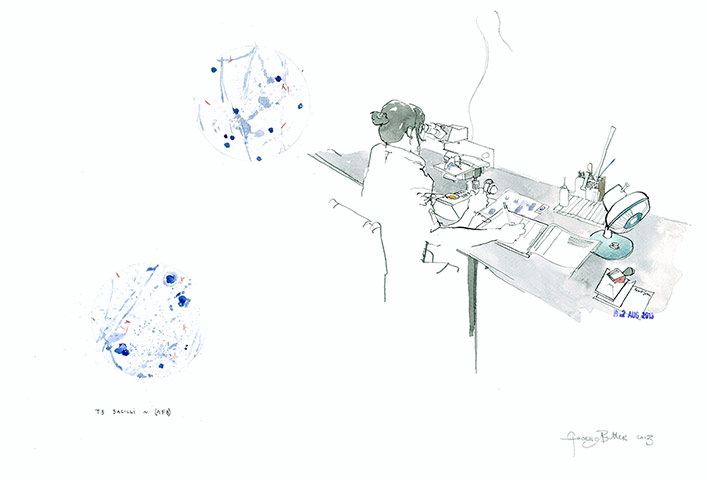
TB in Burma: MSF TB Symposium - George Butler artwork
A laboratory worker performs an initial screening of a sputum sample for the presence of myco bacterian tuberculosis. All HIV/TB patients are immediately tested for MDR-TB using rapid diagnosis. Rapid diagnosis and the correct treatment are the best form of prevention today, increasing a person’s chance of being cured and limiting infection
Illustration: George Butler/MSF
TB in Burma: MSF TB Symposium - George Butler artwork
Many patients experience illness due to the side effects from the long and painful treatments for drug resistant TB. These commonly include nausea, body pain, deafness, and psychosis
Illustration: George Butler/MSF
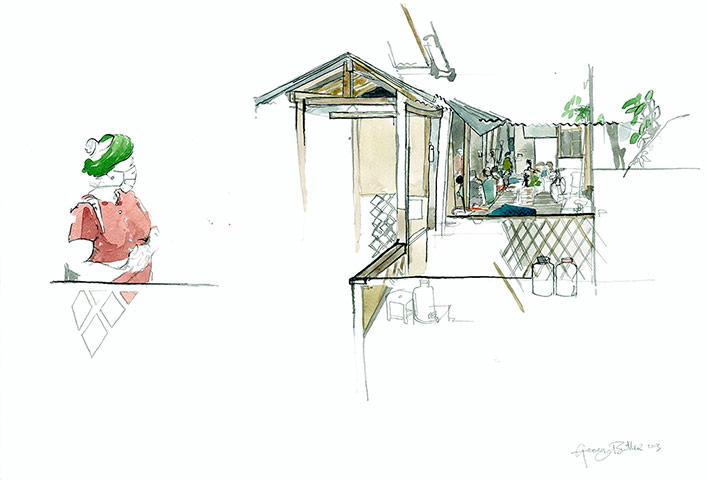
TB in Burma: MSF TB Symposium - George Butler artwork
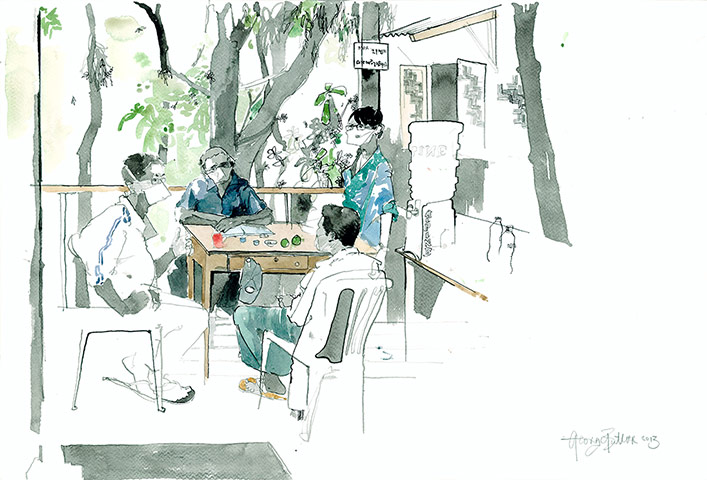
It is essential that staff involved in MDR-TB, from doctors and nurses to support workers, have the necessary skills. Poorly trained staff may increase the risk of patients interrupting treatment, provoking further drug-resistance
Illustration: George Butler/MSF
TB in Burma: MSF TB Symposium - George Butler artwork
Current treatments for MDR-TB take around two years, during which patients must swallow up to 20 pills a day and endure eight months of injections. New, cheaper drugs offer shorter, more effective treatments, with fewer side effects
Illustration: George Butler/MSF
TB in Burma: MSF TB Symposium - George Butler artwork
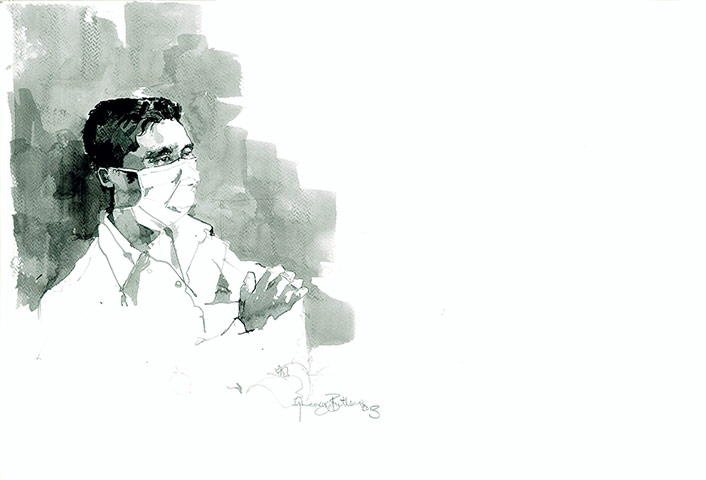
Ko Myint Naing travelled to Yangon for treatment for MDR-TB from his home in Magway, where he worked as a farmer. He has a wife and two children, and is the only child of two elderly parents. His parents have sold much of their land and belongings to support him to travel and live in Yangon during his treatment
Illustration: George Butler/MSF
TB in Burma: MSF TB Symposium - George Butler artwork
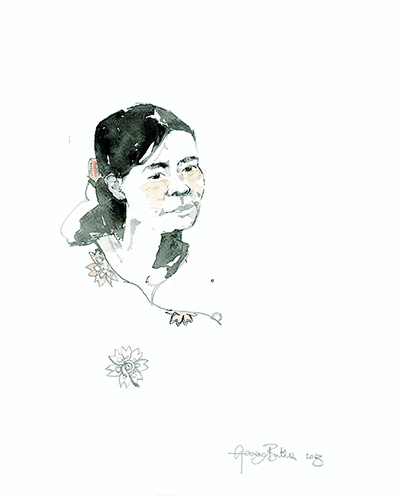
Mya Mya was cured of MDR-TB in early 2012. She is one of the lucky ones. According to global statistics only half of people with MDR-TB are cured using the current long and toxic treatments. Since being cured, Mya Mya provides peer support to other patients. Counselling and psychosocial support, including peer support, are vital in helping patients stick to the long and difficult course of treatment
Illustration: George Butler/MSF
TB in Burma: MSF TB Symposium - George Butler artwork
During her treatment, the sicker Mya Mya felt, the harder it became for her to take care of her family and home. However, her daughters helped give her strength. 'I have two daughters, so I must be alive for the sake of them. I kept that in my mind. With this way of thinking I became healthy,' she said
Illustration: George Butler/MSF
Sign up to read this article
Read news from 100’s of titles, curated specifically for you.
Already a member? Sign in here
Related Stories
Top stories on inkl right now
One subscription that gives you access to news from hundreds of sites
Already a member? Sign in here
Our Picks
Fourteen days free
Download the app
One app. One membership.
100+ trusted global sources.