The suspect in the deadly Berlin Pride attack that left one person dead and 29 injured was shot and killed by police during a confrontation on Sunday in a suburb of the city, authorities said.
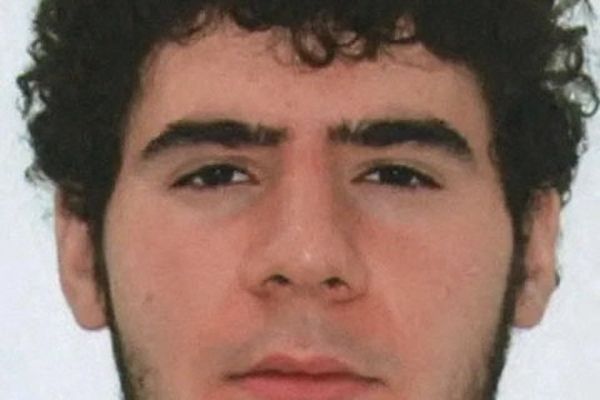
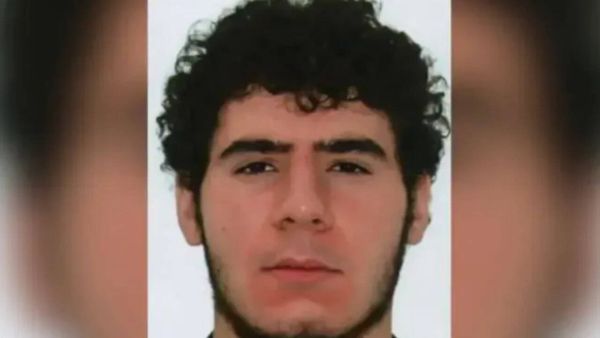
Abdul Ballout, a German citizen with Lebanese roots, was killed following a search that lasted nearly 24 hours after the attack in downtown Berlin.
"Around 6pm, the suspect involved in yesterday's attack in Tiergarten was located at an allotment garden complex in Spandau," Berlin police wrote on X, referring to an area in Berlin's westernmost borough where residents cultivate garden plots.
"According to initial findings, he ran towards officers while armed with a bladed weapon; police... subsequently opened fire. Despite immediate resuscitation efforts by the Berlin Fire Department, he died at the scene."
Dagmar Euent and Juliane Gotzler, who have a garden plot, said they heard several shots and were told to stay inside their garden hut by police.
Investigators believe that the deadly attack near Berlin's Pride parade on Saturday evening was motivated by Islamist ideology, Germany's interior minister said Sunday.
"Everything we see here indicates that this was an Islamist terror attack," Alexander Dobrindt told reporters at the scene, adding that the number of injured had gone up to 29. One woman was killed in the attack.
Read moreVan rams into Berlin Pride crowd, killing one and injuring 16
German media reported that Ballout was a supporter of the so-called Islamic State (IS) group with a criminal conviction.
The attack on Saturday shattered what had been a day of celebration for hundreds of thousands attending Christopher Street Day (CSD), one of Europe's largest Pride events.
How the attack unfolded
Shortly before 10:00pm (20:00 GMT) on Saturday, a white vehicle ran into people on the southern edge of central Berlin's Tiergarten park before crashing into a tree.
Police say that "one or more" people then left the vehicle and fled the scene.
They say several people also suffered stab wounds.
Emergency services said one woman was killed and 16 others were injured.
None of those injured were at risk of succumbing to their injuries, German Chancellor Friedrich Merz said on Sunday.
"My thoughts are with the woman who died and her family as well as those injured in Berlin's hospitals, from whom we thankfully hear that no one is at risk of death any more," Merz said while addressing a memorial service for the victims at Berlin's Marienkirche church.

The attack took place several hundred metres away from the end of the CSD parade route and the event's main stage at Berlin's iconic Brandenburg Gate.
The vehicle used in the attack, a Citroen minivan with a Berlin number plate, could be seen on Sunday morning still at the scene, heavily damaged by the impact with the tree.
Shortly after the attack, the festivities were cut short, with revellers requested to leave the area.
Islamist-linked suspect
Police say that the prime suspect in the case was 21-year-old Abdul Ballout.
German newspapers Bild and Spiegel reported he was an IS group supporter.
He was convicted in Germany of "preparing a serious act of subversive violence", they said. Last year, he travelled to the Middle East in a failed attempt to join the IS group.

Police described him as thin, around 1.90 metres (6.2 feet) tall with black hair and dressed in a black hoodie and white trousers.
A police spokesman earlier told reporters that he was believed to have links to "Islamist circles".
Police say that other suspects could be involved in the attack and that they would carry out searches at train stations in Berlin as part of the investigation.
'Won't beat us down'
German politicians were swift to react to the attack, with Berlin's Mayor Kai Wegner condemning a "brutal attack" on "a gathering for a tolerant and peaceful Berlin".
Before attending a memorial service for the victims in central Berlin's Marienkirche, Merz appealed to those targeted by the attack to "not let yourselves be intimidated".
"These people have only one aim – to divide our society," he said.
President Frank-Walter Steinmeier said he was "shaken and outraged" by the attack, while the speaker of parliament Julia Kloeckner ordered the flag at the German Bundestag to be lowered to half mast.
There were also expressions of solidarity from abroad, with European Union chief Ursula von der Leyen expressing "her deepest sympathies" to the victims of the attack.
The governments of the Netherlands, France, Italy, Sweden and the UK also expressed their shock and condemnation.
Thousands of people gathered for a community vigil at 2pm in Berlin's Pariser Platz, the square surrounding the Brandenburg Gate, just a few hundred metres from where the attack took place.
The event hit maximum capacity about 30 minutes after beginning, despite on and off rain, with police limiting attendance due to security precautions, according to organisers.
Attendees held a moment of silence for the victims and waved pride flags, with one holding an oversized sign reading "From grief, to anger to resistance!"

Alfonso Pantisano, the Berlin state government's LGBTQ affairs commissioner, said he was at Brandenburg Gate when everything changed in a matter of moments.
"To you, my dear community: I know that many of you are afraid right now. I won't sugarcoat it – I am, too. But you are not alone in this fear, in your grief, and in your anger," Pantisano wrote on Instagram.
Armin Duenhoelter, 49, from Wolfsburg, who works as a drag artist, was backstage at the main stage when the celebrations were cut short.
He told AFP on Sunday morning he was still "shocked" by Saturday's events even though "the events in recent years did make us think that one of our events could eventually become a target".
He vowed to be back for next year's CSD "even though in the back of your mind or in your gut you might feel uneasy".
"But we won't let it beat us down".
Spate of attacks
Saturday's attack revived memories of a string of similar incidents which have shaken Germany in recent years and inflamed debate on immigration, with several of the perpetrators being from outside Germany.
Martin Hess, a lawmaker from the far-right Alternative for Germany (AfD) said in a statement that the attack was the result of "a complete failure of the government's security policies".
"Islamism is the greatest security threat for our country," he said.
The deadliest attack in recent years was a truck rampage at a Berlin Christmas market in December 2016 by a Tunisian man with jihadist motives that killed 13 people.
The run-up to last year's general election saw a spate of attacks in public places, including by attackers with Islamist motives.
However, the worst incident in that period saw a Saudi psychiatrist and anti-Islam activist, Taleb Jawad al-Abdulmohsen, kill six people and wound more than 300 in a car-ramming at a busy Christmas market in the eastern city of Magdeburg in 2024.
(FRANCE 24 with AFP, Reuters)