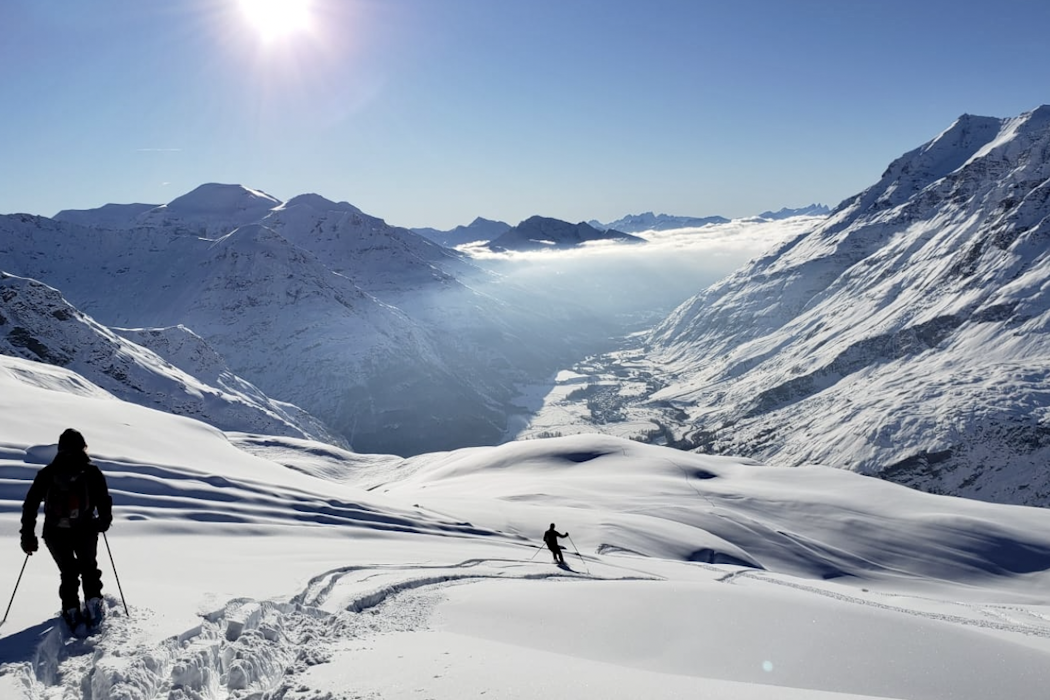
“Mountains are not fair or unfair, they are just dangerous,” said the great Italian mountaineer Reinhold Messner. Once again this year, events have proven him right. Harsh weather has triggered deadly avalanches around Lake Tahoe in California, as well as across the Alps in Europe.
According to figures from France’s National Mountain Safety Observation System (SNOSM), fatal accidents at ski resorts typically range between eight and 14 deaths per year, depending on the season.
Yet by February this year, those averages had already been far exceeded. Despite major progress in avalanche prevention — a practice that UNESCO has recognized since 2018 as part of the world’s intangible cultural heritage — avalanches still claim lives.
This particularly dramatic season can be explained by the unstable structure of snowpack, but also by a flawed perception of risk among some skiers and snowboarders, who often trigger avalanches themselves.
The allure of off-piste: freedom, powder and adrenaline
Every winter, skiers venture beyond marked runs, sometimes at the cost of their lives. Not all of them are reckless or inexperienced. Many are experienced, properly equipped with avalanche safety gear — a transceiver, shovel and probe — and are well aware of the dangers. And yet, they still choose to head “off-piste.”
So why do they take the risk, despite repeated warnings from professionals? Off-piste skiing holds a powerful appeal, whether just beyond resort boundaries or deep in the backcountry on touring skis.
It represents freedom, adventure and the promise of unspoiled landscapes. Powder snow — or “pow” to enthusiasts — is every skier’s dream. It delivers rare, exhilarating sensations. For those who know how to ski it, the pleasure is intense … and can become addictive.
But risk is ever-present in the mountains. It is generally defined by two factors: the probability that something harmful will occur and the severity of its consequences. These elements can be assessed rationally, drawing on personal experience or official avalanche risk bulletins. Yet understanding risk is rarely straightforward.
Why take risks in the mountains?
When a fresh layer of snow blankets the slopes, it can act like a siren call, luring skiers toward terrain that may prove dangerous, even fatal. Why embrace risks that can have such devastating consequences? Researchers in psychology, sociology and neuroscience have explored this question, and several theories help explain the behavior.
The pursuit of thrills. Personality psychology offers one explanation: some individuals have a stronger need for intense experiences than others. This trait, known as sensation seeking, is closely linked to risk-taking. The search for pleasure is naturally part of the equation.
The illusion of control. Experienced skiers often develop a sense of mastery. They know the terrain, they have skied powder before and they trust their equipment — the essential rescue trio. But avalanches are complex phenomena, where even a minor misjudgment can be fatal. The greater the confidence, the greater the potential danger. Carrying a transceiver, shovel, probe or even an airbag backpack does not prevent an avalanche from occurring. Even seasoned guides and instructors are sometimes caught off guard.
Social media and freeride culture. Social media now plays a major role in popularizing off-piste skiing. Videos showing spectacular descents through fresh powder draw many enthusiasts toward unsecured and sometimes dangerous terrain. Posts and videos encourage inexperienced individuals to follow hazardous routes, leading to an increase in rescue operations.
User-generated content can create a distorted perception of risk: dramatic videos, striking photos and enthusiastic comments from skiers suggest that backcountry adventure is accessible to everyone, without sufficiently emphasizing the need for proper training, appropriate equipment and in-depth knowledge of local snow conditions.
Underestimating danger and cognitive shortcuts. Researchers studying avalanche accidents highlight recurring psychological biases in decision-making. Familiarity with a slope or easy access can lead skiers to downplay the danger — simply because they have skied there before without incident, or because existing tracks suggest it must be safe. This tendency to minimize perceived risk, even when snow or weather conditions have changed, helps explain why some venture off-piste without fully reassessing the hazards.
Social and cultural dynamics. Group dynamics also play a key role. Peer pressure and the desire not to appear fearful can influence decisions. Risky choices may be made collectively, without genuine debate. Successfully carving a pristine line down a beautiful slope brings recognition within one’s peer group and can encourage further risk-taking.
The brain and dopamine. Neuroscience offers a biological perspective. The brain is wired to seek reward. When someone takes a risk and avoids negative consequences, dopamine is released, producing intense pleasure. That chemical reward can reinforce risk-taking behavior. The freerider may then chase that emotional high again, sidelining rational analysis of danger and its potential consequences.
Understanding better to prevent better
Skiers are not simply careless. Their decisions stem from a complex interplay of psychological, social and biological factors. Yet those decisions can end in tragedy. The goal of understanding these mechanisms is not to judge, but to prevent.
Improving risk communication, adapting awareness campaigns, requiring appropriate safety equipment and opening debate about whether mountain rescue services should remain free are all possible avenues.
Rather than restricting access to the mountains, a space that symbolizes freedom, the challenge may lie in strengthening a culture of restraint, responsibility and knowing when to turn back.

Frédéric Dimanche ne travaille pas, ne conseille pas, ne possède pas de parts, ne reçoit pas de fonds d'une organisation qui pourrait tirer profit de cet article, et n'a déclaré aucune autre affiliation que son organisme de recherche.
This article was originally published on The Conversation. Read the original article.