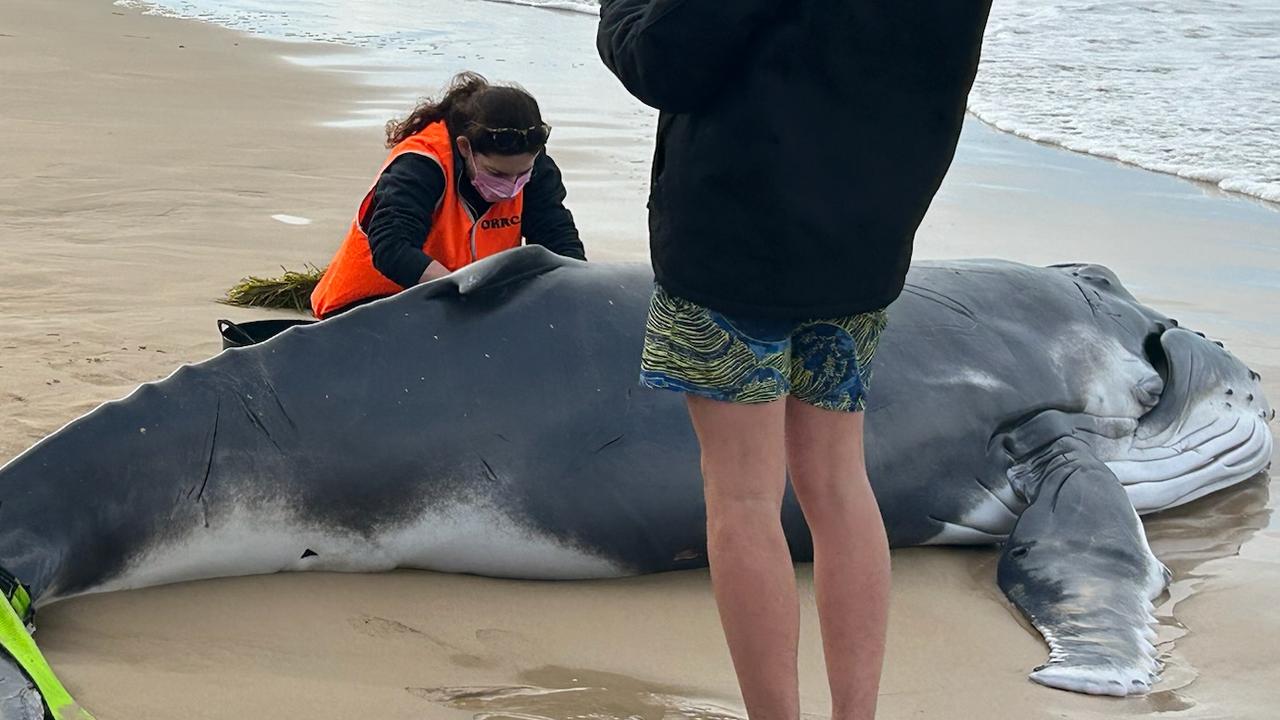
A baby humpback whale stranded on a beach has died, and authorities are testing the carcass for a deadly bird flu strain.
A member of the public spotted the male humpback calf at a Cronulla beach in Sydney's south and reported it to authorities early on Friday.
"Responders were rapidly deployed to assess the animal," said Ashley Ryan, president of the Organisation for the Rescue and Research of Cetaceans in Australia.
"Despite rescue efforts by responding agencies, the calf sadly died shortly after responders arrived."
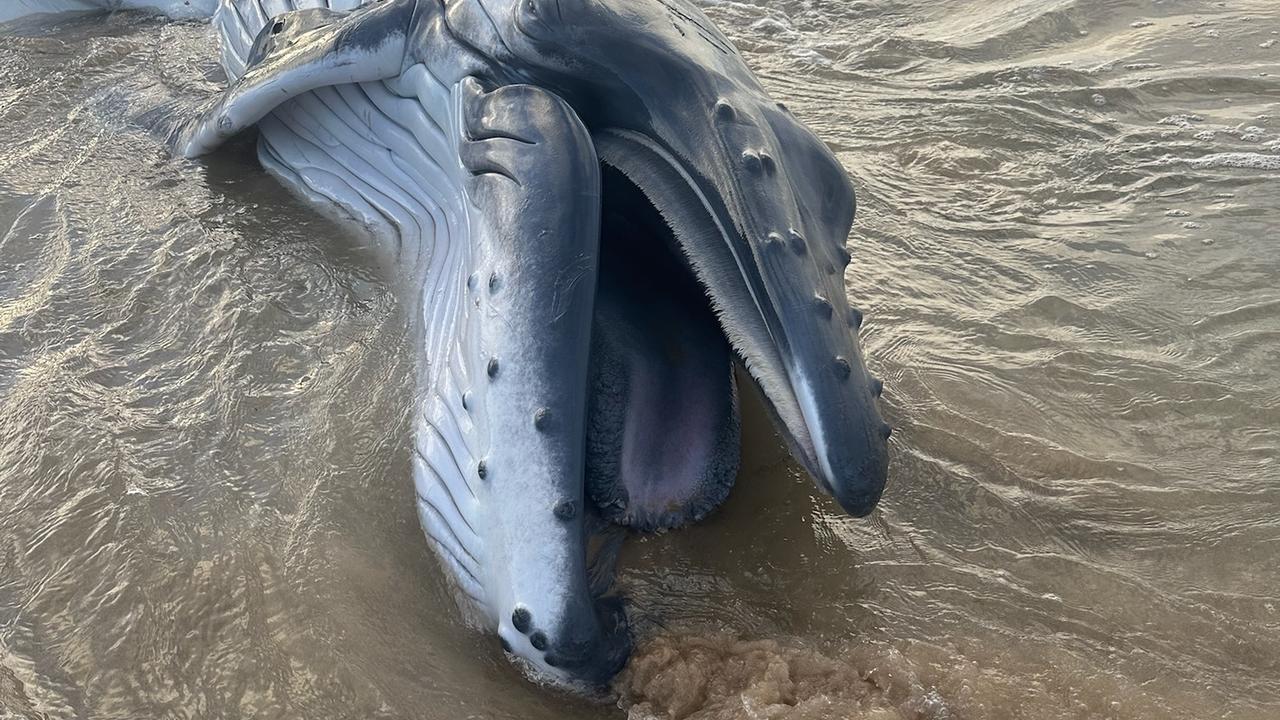
It is not known why the neonate calf, measuring about 4.5 metres in length, became stranded.
"There are many reasons why whales can become stranded, including illness, injury, separation from their mother, navigational challenges or other natural factors," Ms Ryan said.
The whale will be removed from the beach.
As part of standard biosecurity procedures, samples have been collected for H5N1 avian influenza testing.
As a precaution, NSW Department of Primary Industries Fisheries and local lifeguards have been notified so appropriate SharkSmart alerts can be implemented.
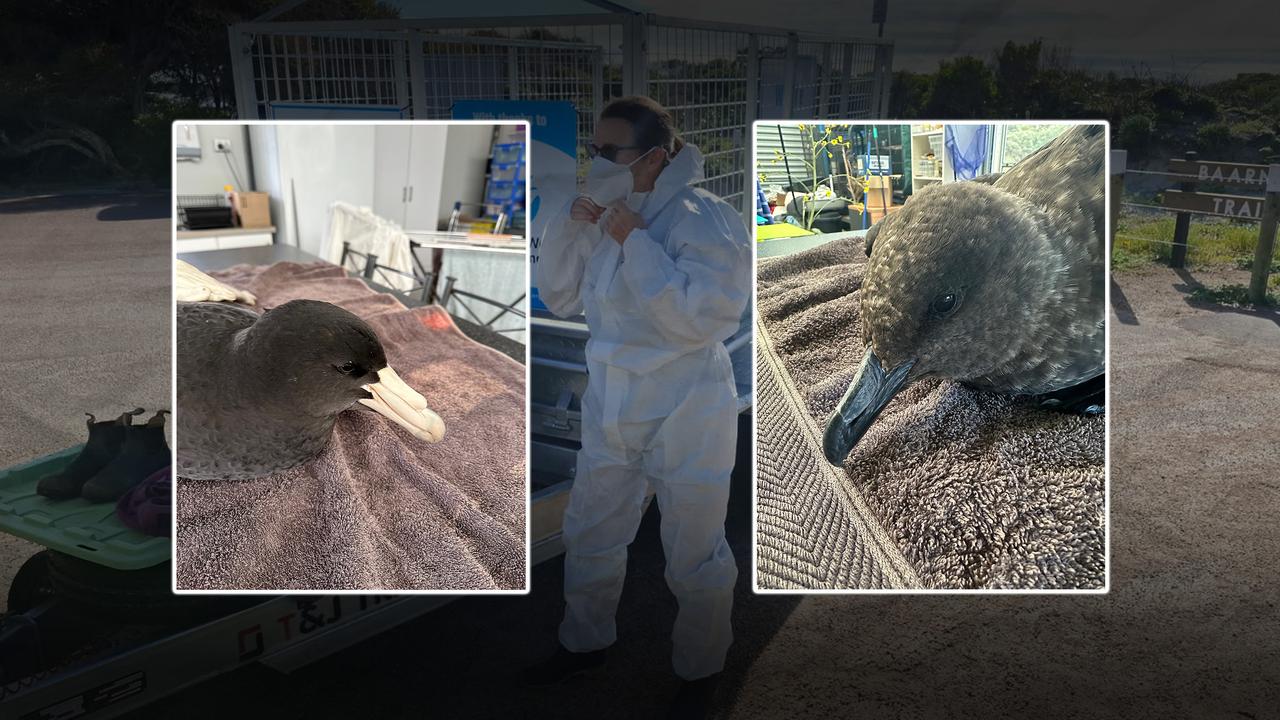
A total of 17 cases of the deadly bird flu strain have been found across Australia.
All have been wild seabirds found in coastal locations, and all but one were migratory species.
The most recent cases were two presumed positive results in petrels.
One was found in Denmark on Western Australia's south coast and the other at Seabird, north of Perth.
"There remains no evidence of any mass mortality events and there are no detections in poultry or in our agricultural production system," Australian Chief Veterinary Officer Beth Cookson said.
The risk to human health remains low.