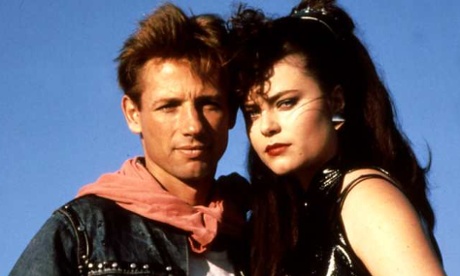
The Ozploitation movement of the 70s and 80s largely comprised fast, trashy and loud movies – unambiguous affairs relegated to the realms of low-brow entertainment. Few attempted (or are remembered for) ambitious intellectual ideas. Director Brian Trenchard-Smith’s 1986 science fiction oddity Dead End Drive-In, one of Ozploitation’s most interesting productions, is a rare exception.
The film has the grungy midnight look of a retro music video; the kind of garish aesthetic that could only emerge from the heart of a decade fashion forgot. But at its core is a bizarre and compelling representation of society as a microcosm. The setting – a drive-in cinema – is both unconventional and perfectly fitting given Trenchard-Smith’s cult movie oeuvre.
Singled out by Quentin Tarantino as his favourite film from the Aussie auteur (who made a range of daffy classics including BMX Bandits, Turkey Shoot and The Man From Hong Kong), Dead End Drive-In belongs to the camp of so-weird-it-works. Trenchard-Smith baited young audiences with the promise of brainless spectacle (the film is far from it, but its marketing material suggested otherwise) and when they sat down they watched a film critical of their own demographic for being numbed and neutered by popular culture.
Set in a dystopian future where crime is rampant, the economy ravaged and cars are considered precious commodities, the film is based in a drive-in theatre where reprobates and layabouts are locked in forever – a kind of cinema concentration camp – and forced to acclimatise to a world built around the screen.
There are political factions, employment infrastructure (people work for coupons traded in at the candy bar) and a nefarious overarching Orwellian purpose to control problematic portions of the population. The cinemagoers-cum-inmates are fed a diet of alcohol, drugs and music, meaning they don’t bother attempting to escape.
A young fitness freak named Jimmy (Ned Manning) also known as Crabs (“I thought I had them once but I didn’t so it sort of stuck”) is an exception. He snuck away with his brother’s Chevy to impress his girlfriend Carmen (Natalie McCurry) and, once confined inside the graffiti-strewn cinematic stink hole, is resolved to bust out of it. At one point that same car goes airborne in a famous scene cast in glittering neon light, believed at the time to signify a world record (over 49m) and achieved by stunt driver Guy Norris.
There are some odd political undertones; odder still because the film’s subtext is perhaps more relevant now than when it was made. The cinema is not only presented as a concentration camp, but a refugee concentration camp: “You’re here until the government decides what to do with you,” says the venue’s owner Thompson (Peter Whitford).
Screenwriter Peter Smalley, adapting a short story from two-time Booker prize-winning author Peter Carey, takes it a step further. Inside the camp simmers racial tension between the Caucasian and Asian inmates. “They could rape me or anything,” says Carmen. “They should limit the number who come here.” That line feels like a chilling lead into the era of Pauline Hanson and John Howard’s “we will decide who comes here” mantra.
If it wasn’t obvious before that moment it’s obvious after: Dead End Drive-In is a political film dressed up (or down) as frothy entertainment. On both fronts it’s a fist-pumping success.