Dead dolphins wash up on France's shores in record numbers
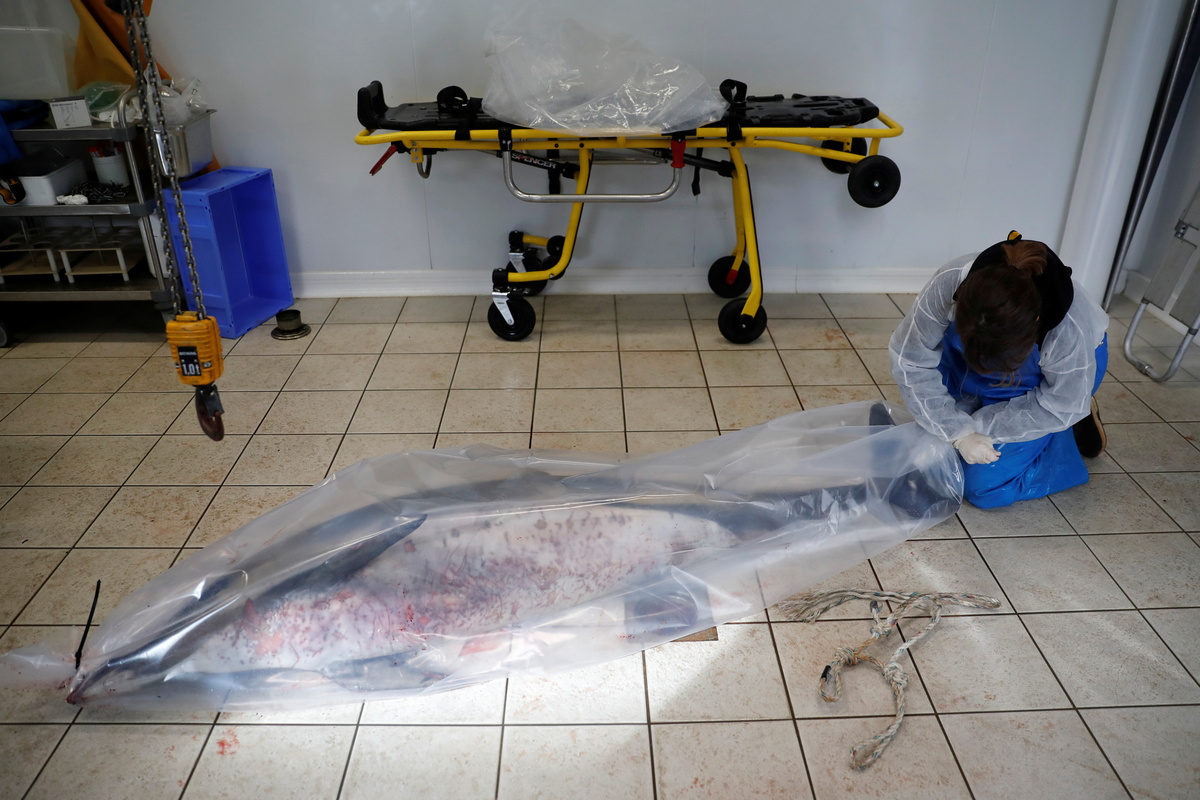
An expert at the Observatoire Pelagis packs in a bag the body of a dolphin, which was found dead on a beach, in a cold room at their marine research station in La Rochelle, France, February 14, 2020. Picture taken February 14, 2020. REUTERS/Stephane Mahe
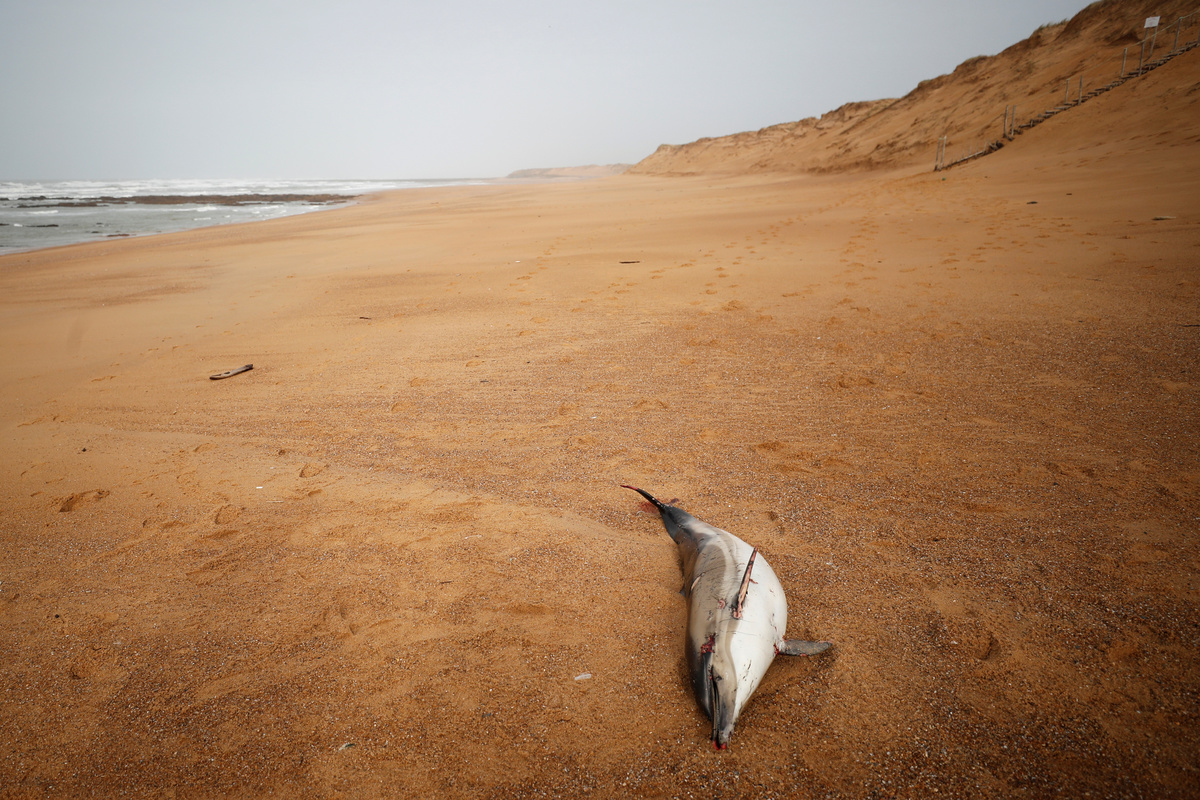
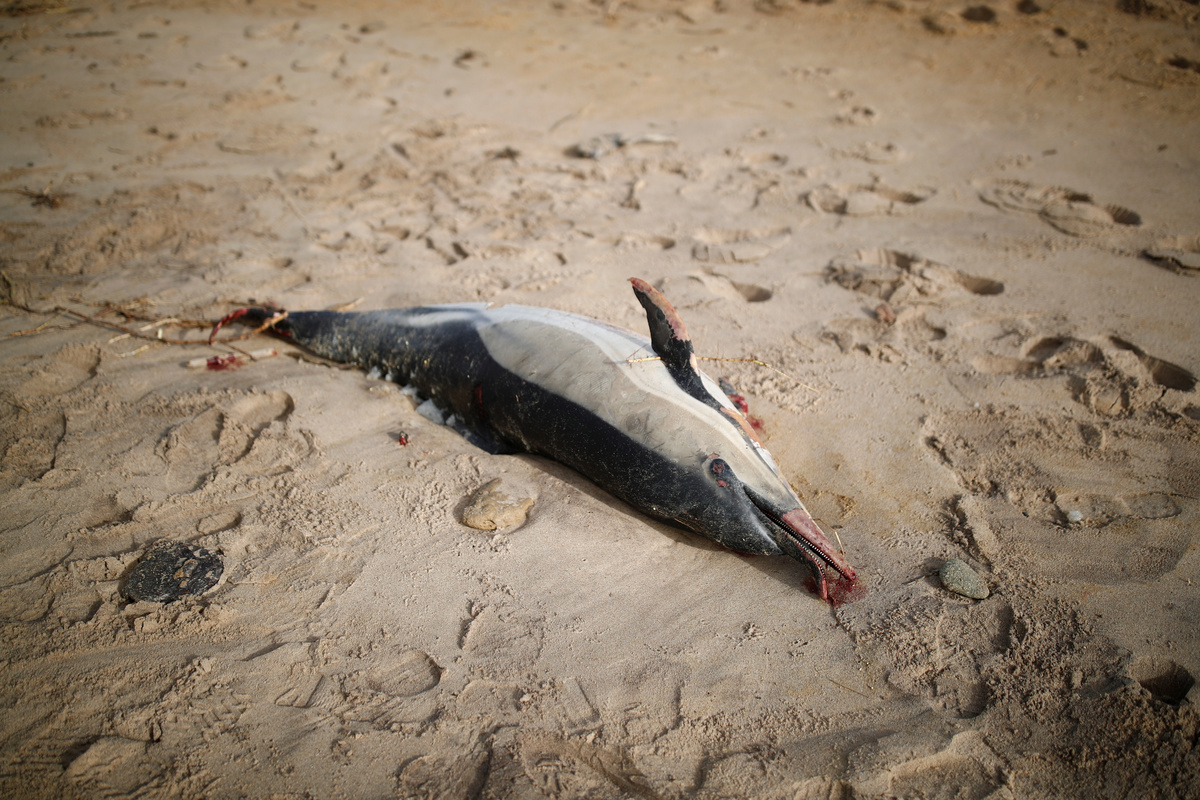
Dead dolphins are washing up on France's Atlantic coast in such high numbers that local populations of the mammals are at risk, marine biologists say.
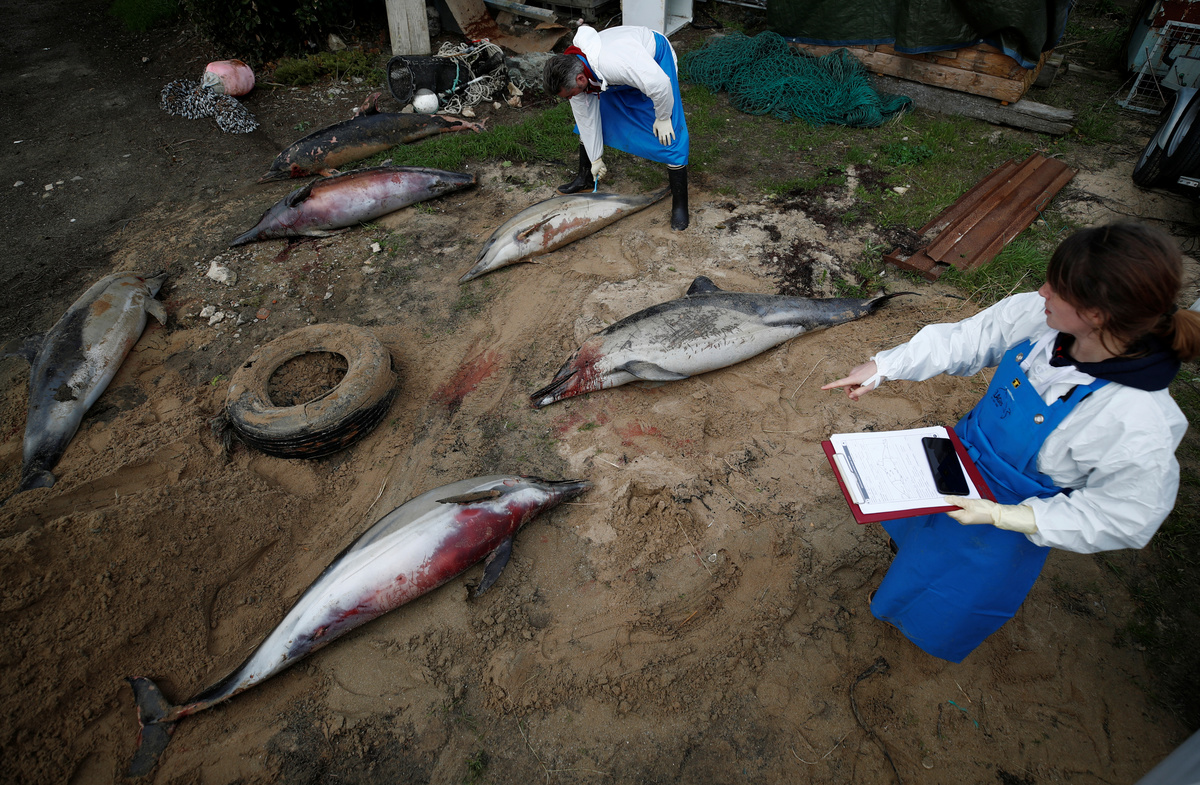
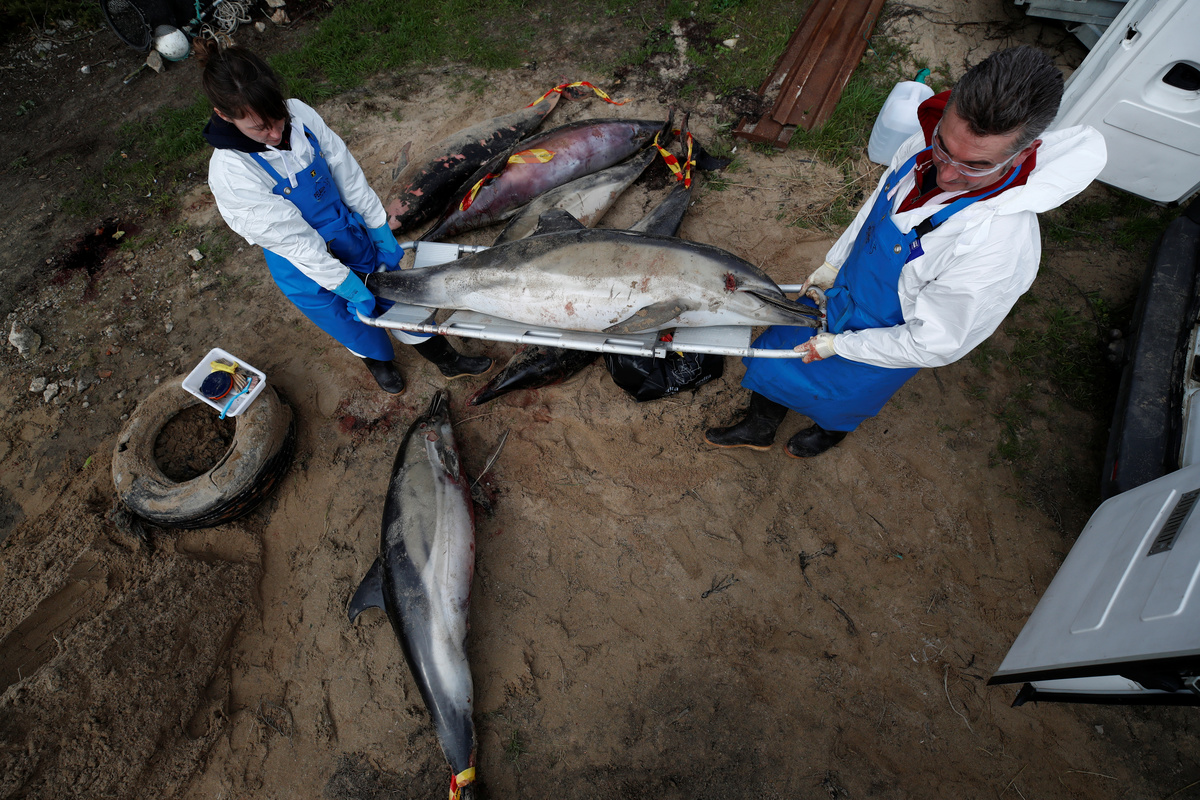
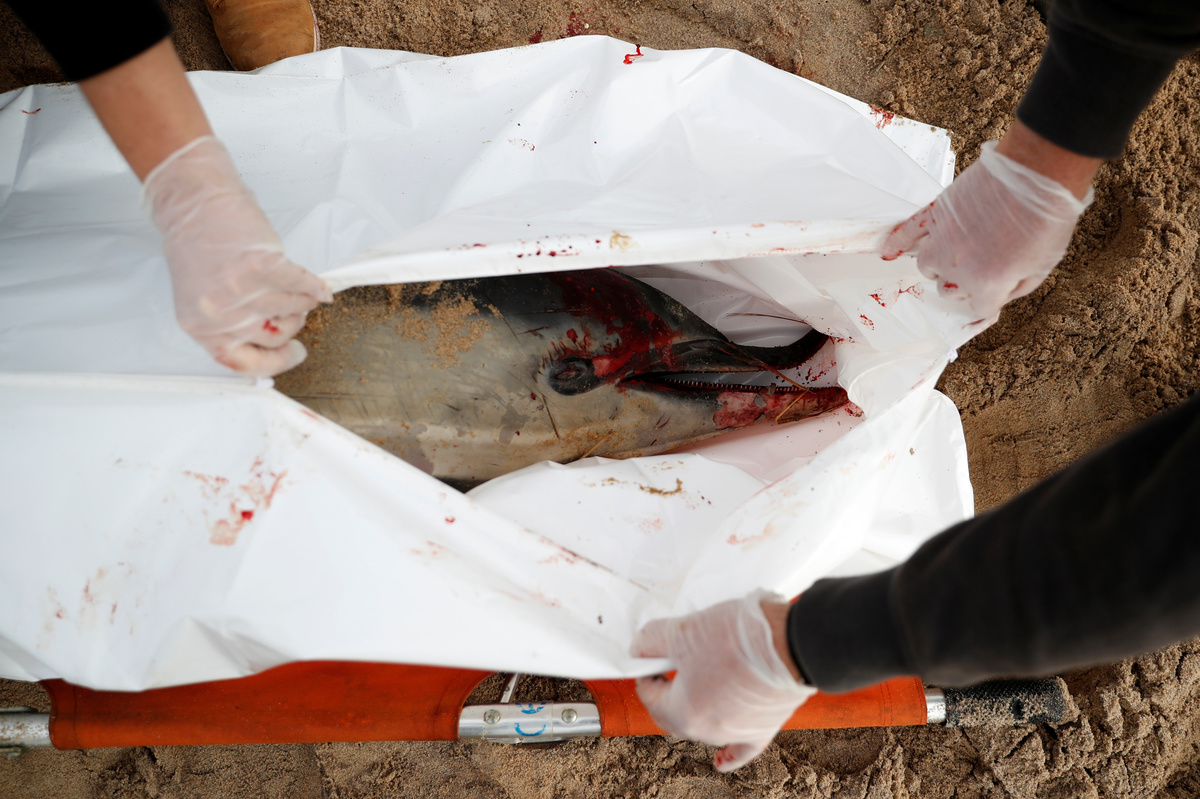
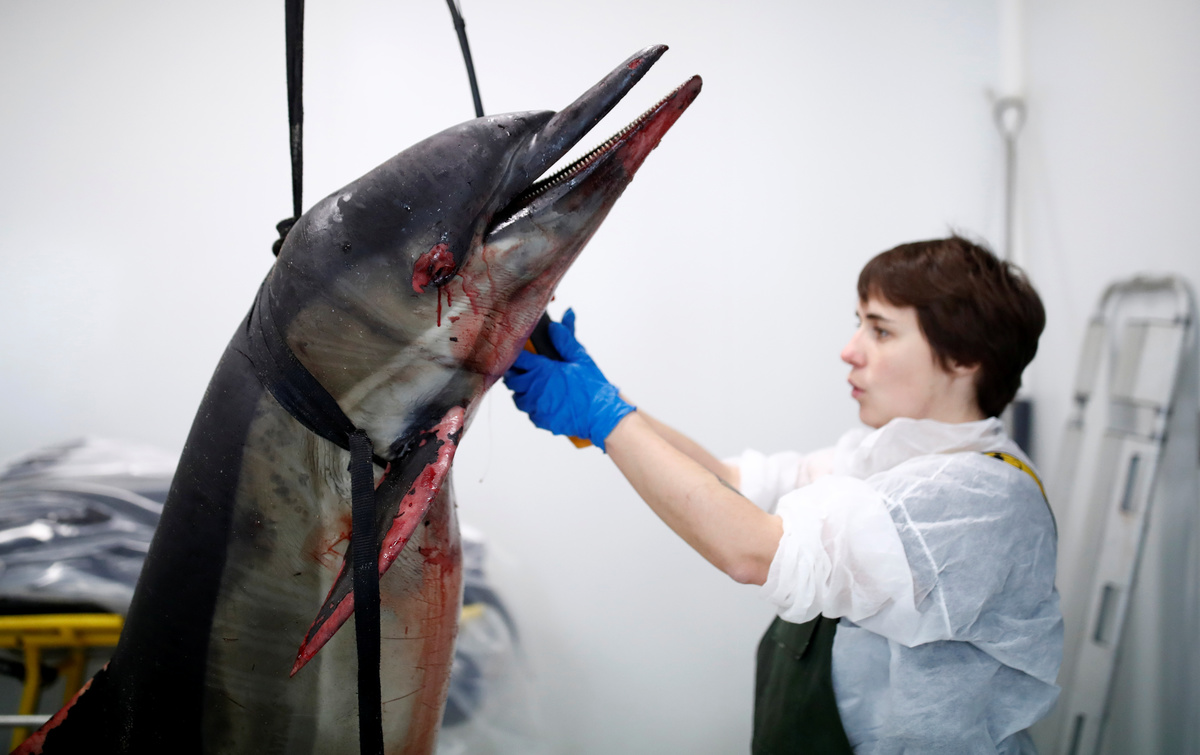
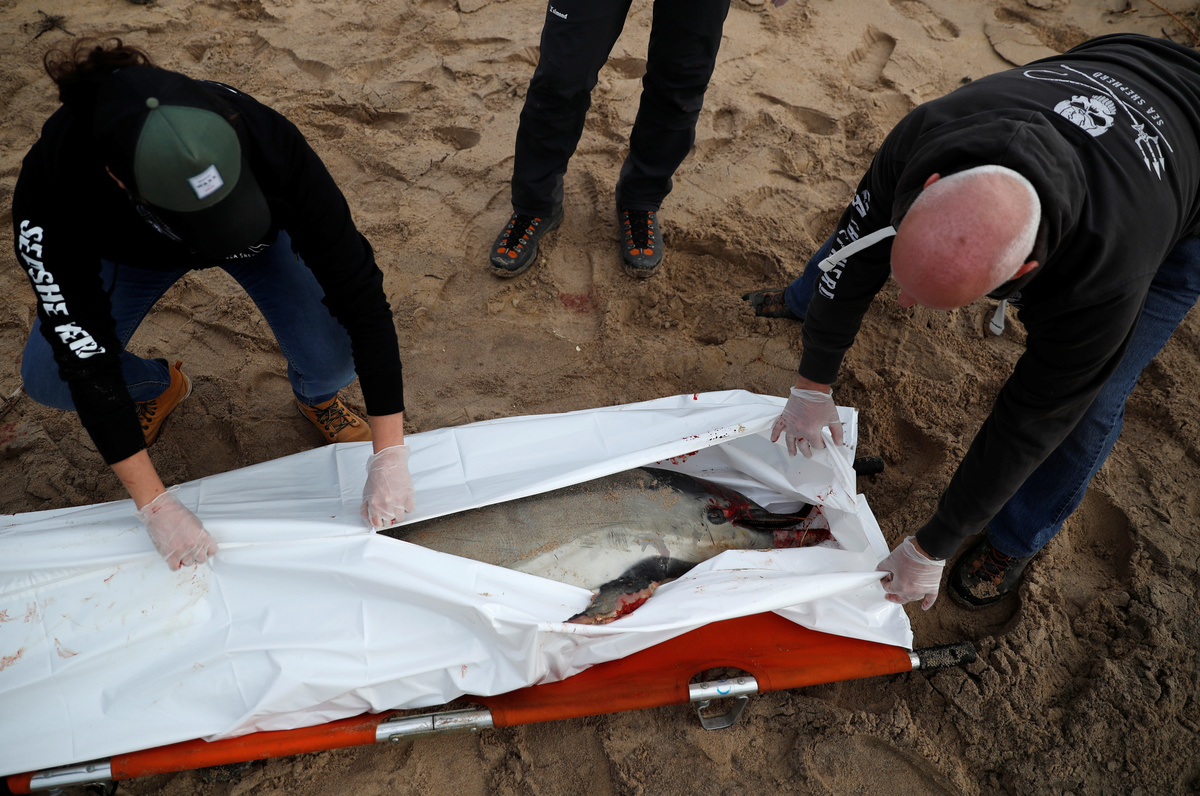
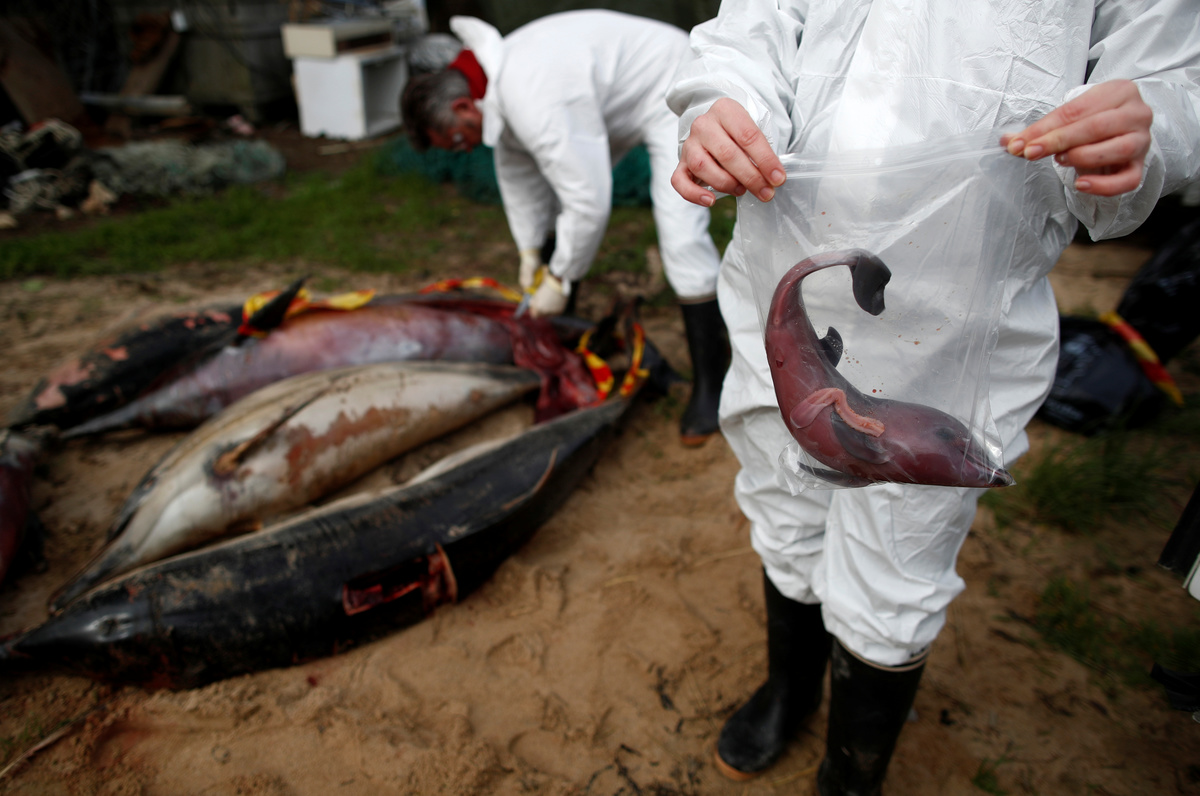
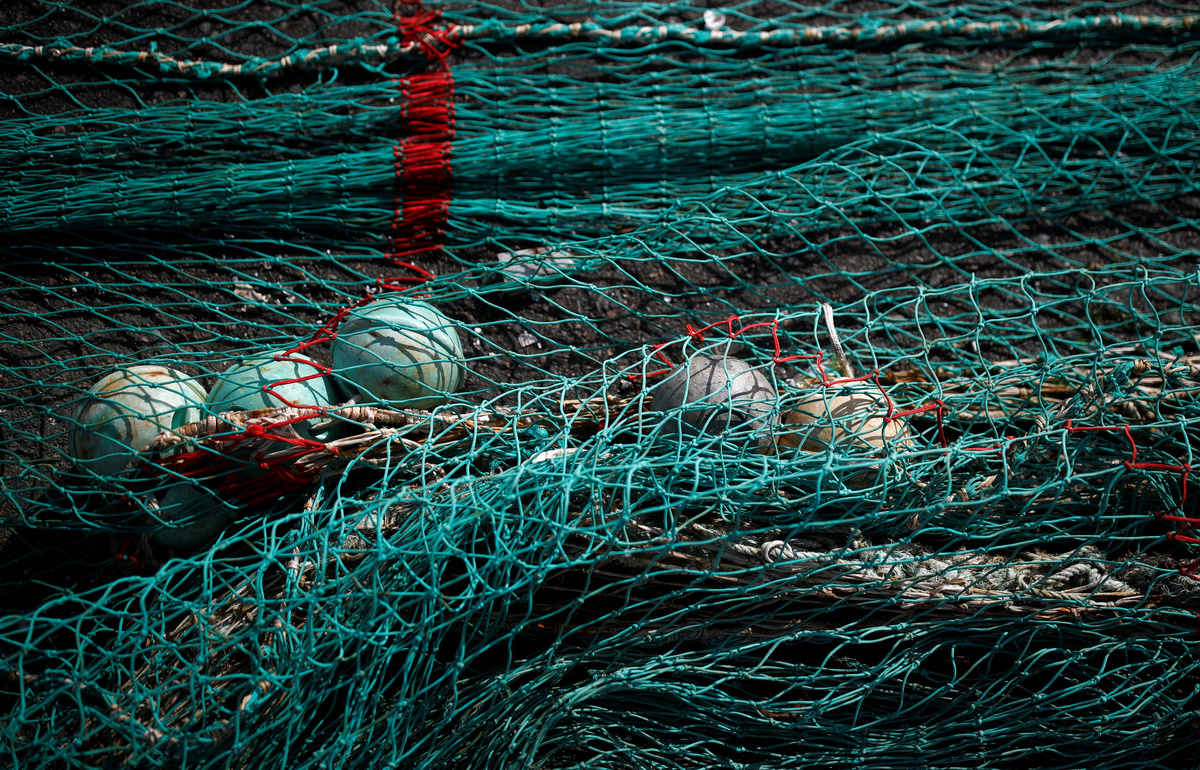
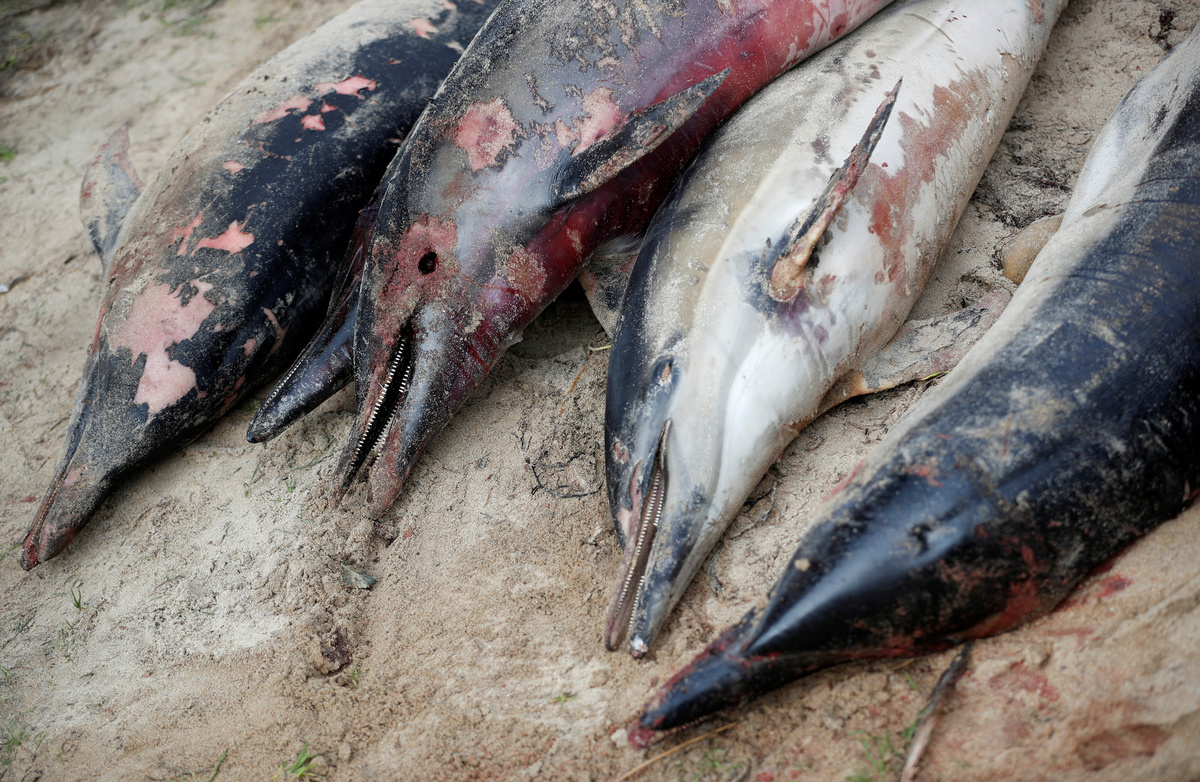
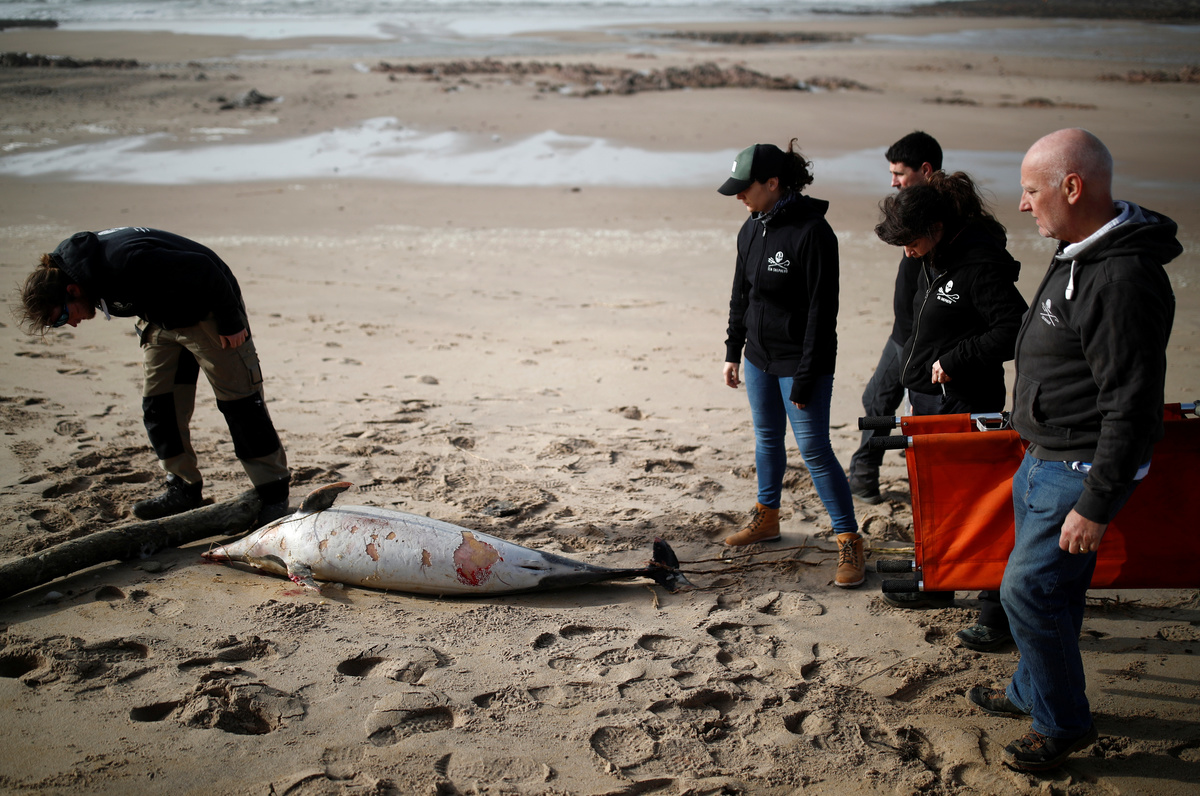
The overwhelming majority drowned in the nets of fishing trawlers. Post mortems often show fractures, broken tails and flippers and deep incisions cut into their skin by the nets. Some have been mutilated as fishermen release their bodies.
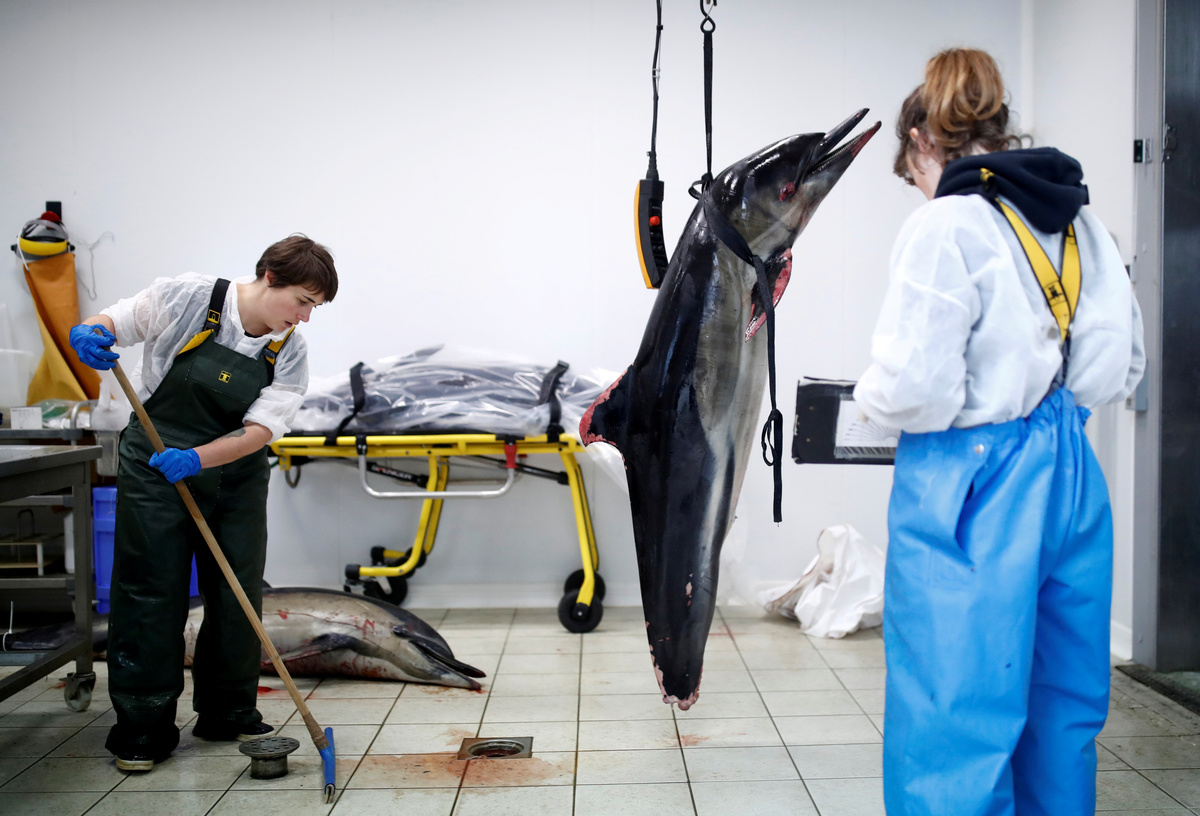
FILE PHOTO: Experts at the Observatoire Pelagis examine the bodies of dolphins, which were found dead on beaches, in a cold room at their marine research station in La Rochelle, France, February 14, 2020. Picture taken February 14, 2020. REUTERS/Stephane Mahe
"We're reaching mortality rates that threaten the survival of the dolphin population in the Bay of Gascony," said Morgane Perri, a marine biologist in Brittany, western France.
"For the last three years, we've seen more than 1,000 deaths (dolphins and porpoises) over a four-month period each winter."
Common dolphins are the hardest hit. Scientists believe those found on beaches represent a small fraction of the total number dying in fishing nets off the coast of France. The real number is likely to be five to 10 times higher, they estimate.
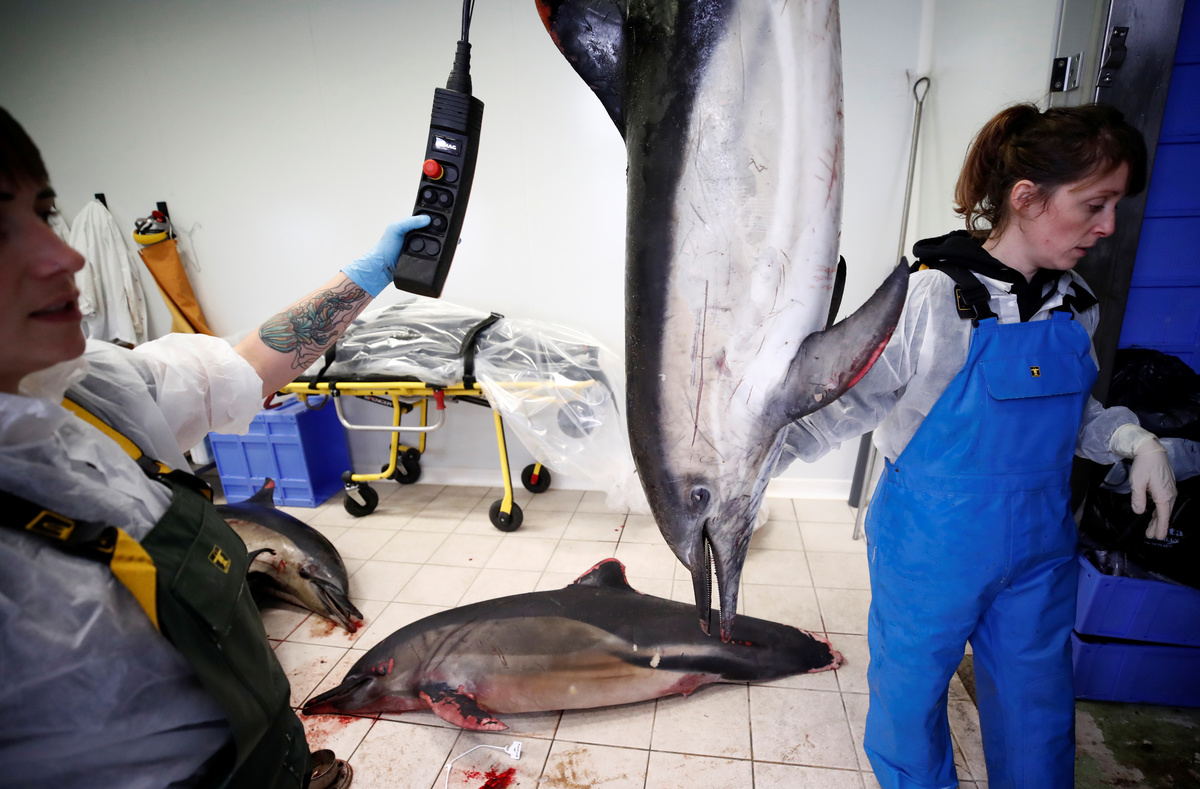
Experts at the Observatoire Pelagis stock dolphins, which were found dead on beaches, in a cold room at their marine research station in La Rochelle, France, February 14, 2020. Picture taken February 14, 2020. REUTERS/Stephane Mahe
Dolphins have for decades been caught in fishing nets in the Atlantic waters off western Europe. But marine scientists say the spike in numbers in recent years is a result of shifting fishing practices, and in particular the fishing vessels that trawl in pairs for sea bass.
French law requires fishermen to declare all cetacean by-catch. But Perri said this rarely happened.
The National Committee of Maritime Fishermen did not immediately respond to a request for comment.
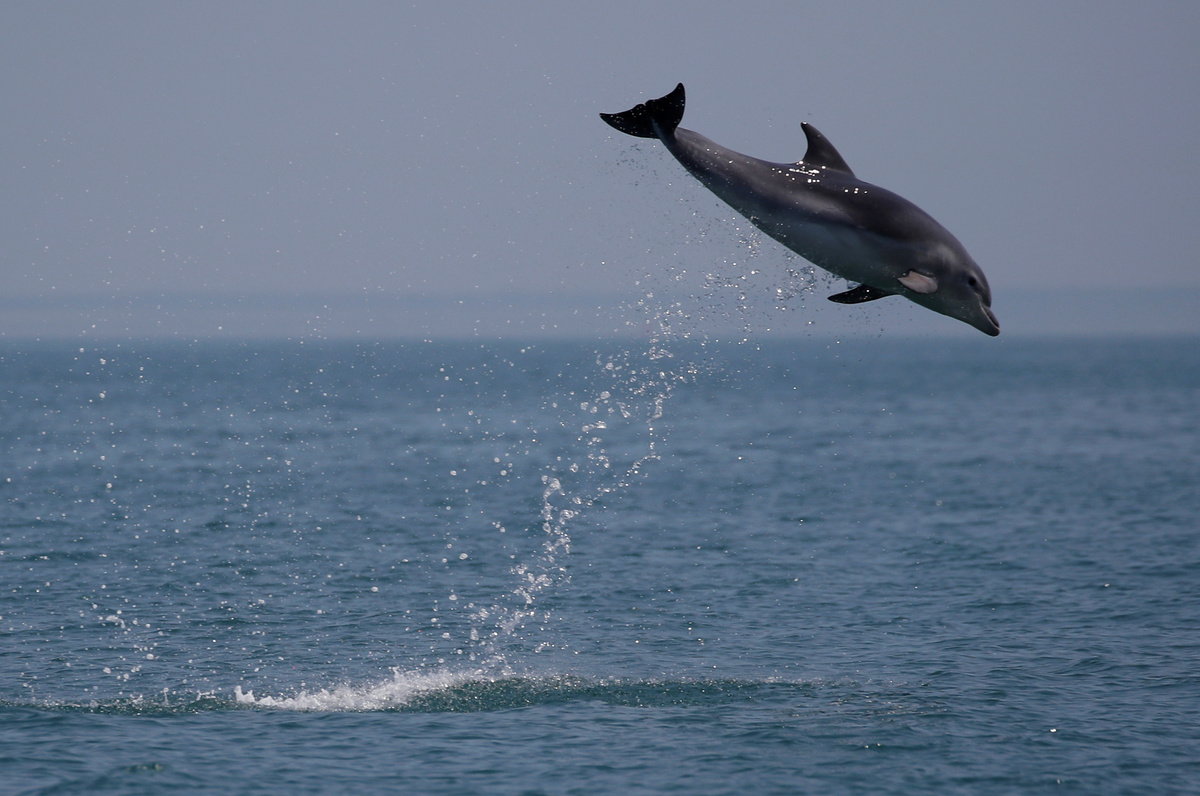
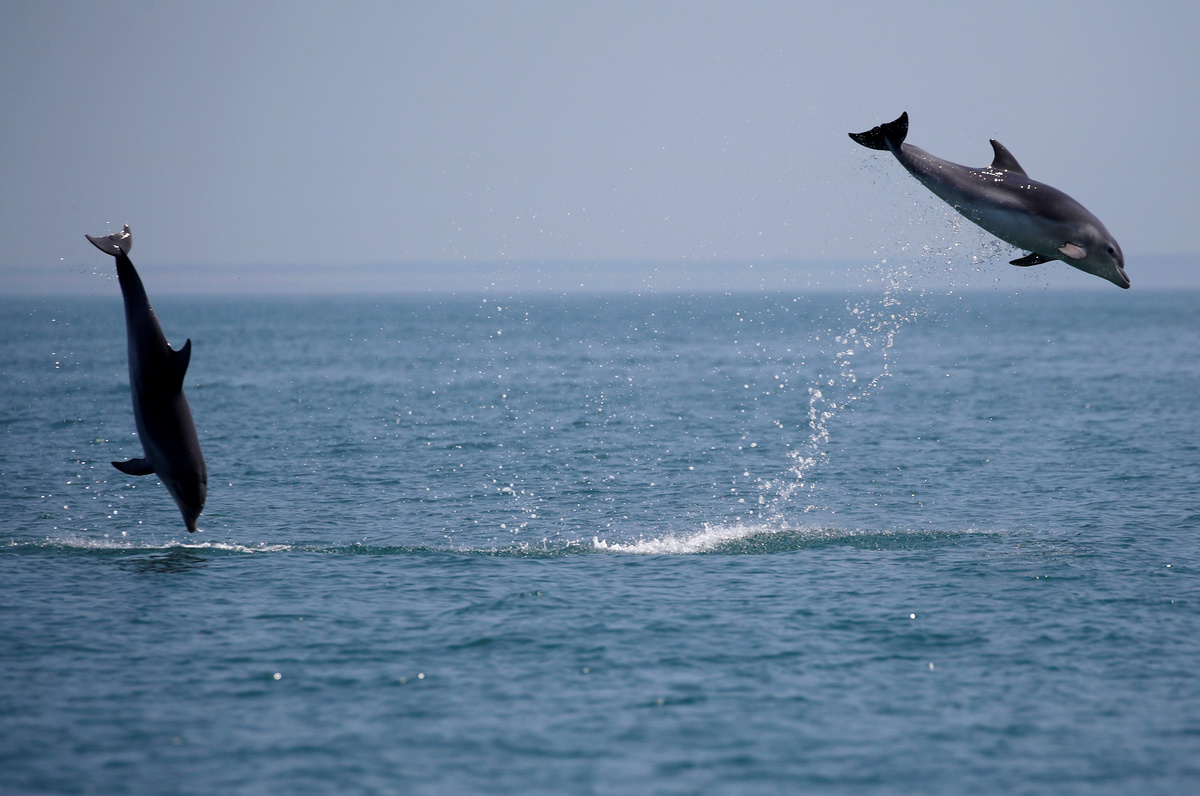
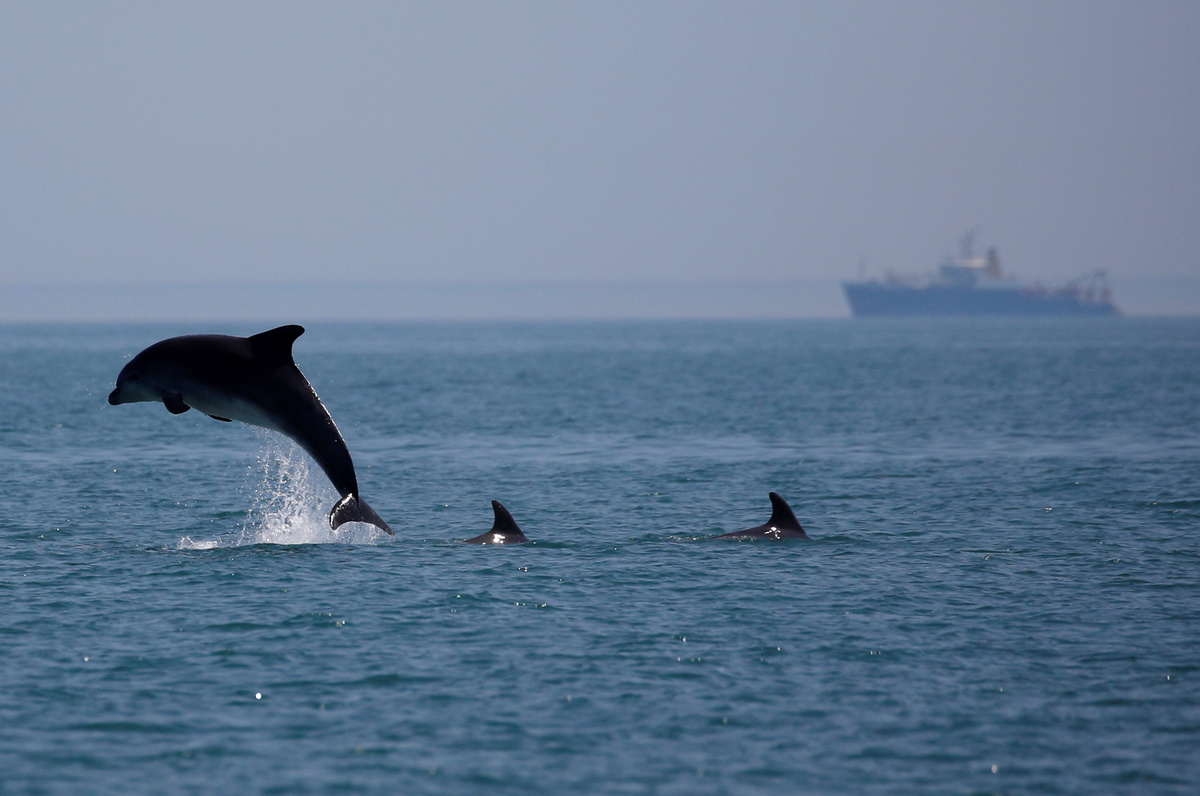
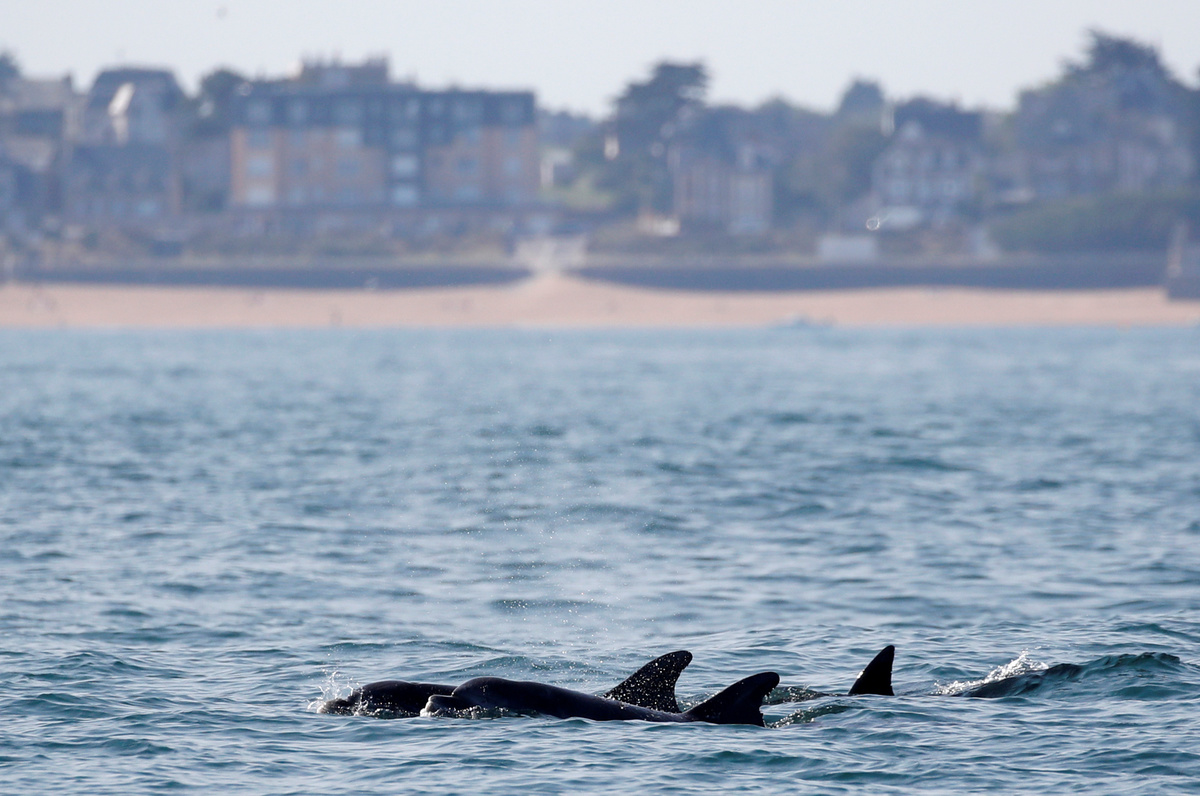
A dolphin jumps out of the sea near Cancale, France June 24, 2020. Picture taken June 24, 2020. REUTERS/Stephane Mahe
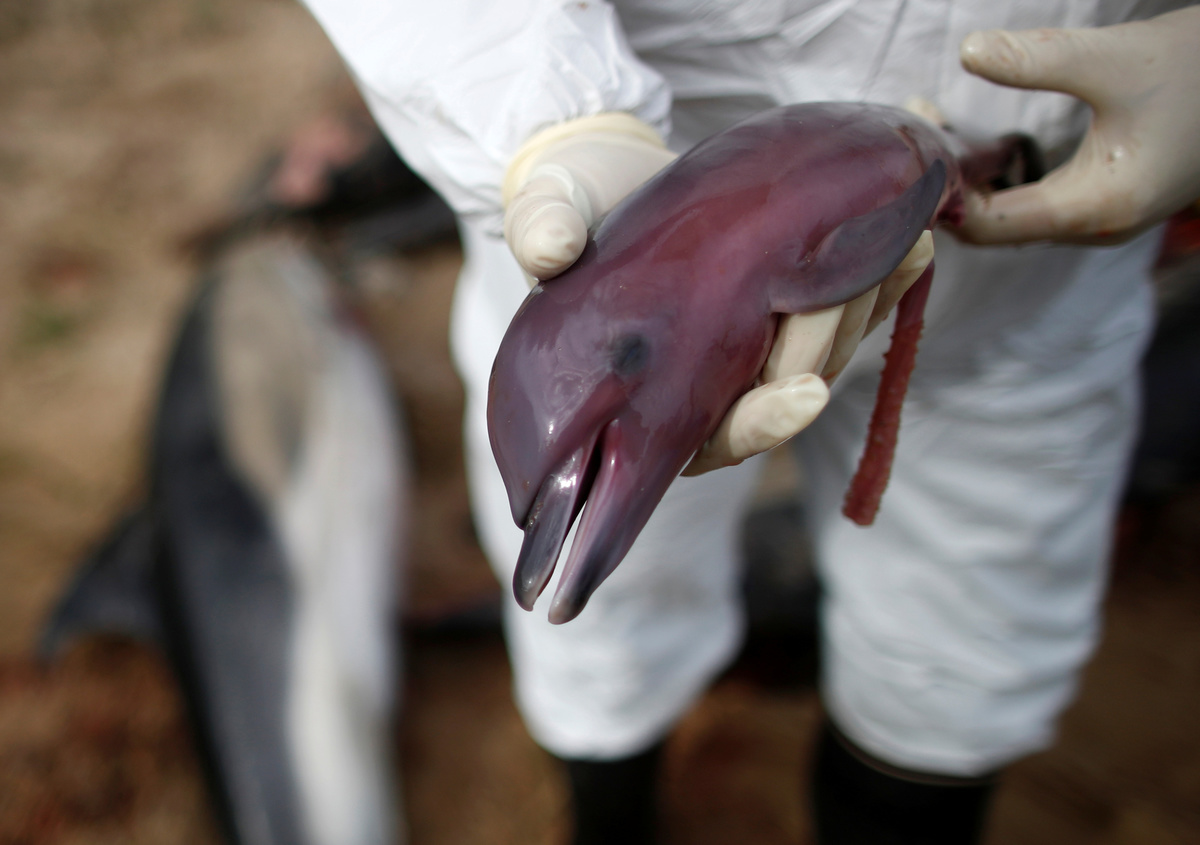
The slow reproduction rates of dolphins, which are mammals and need to surface in order to breathe, means they are particularly vulnerable to sharp falls in numbers, according to the Pelagis Observatory in La Rochelle.
Population models show numbers are stable, said Helene Peltier, a researcher at the observatory. "But once you see the decline, it's too late."
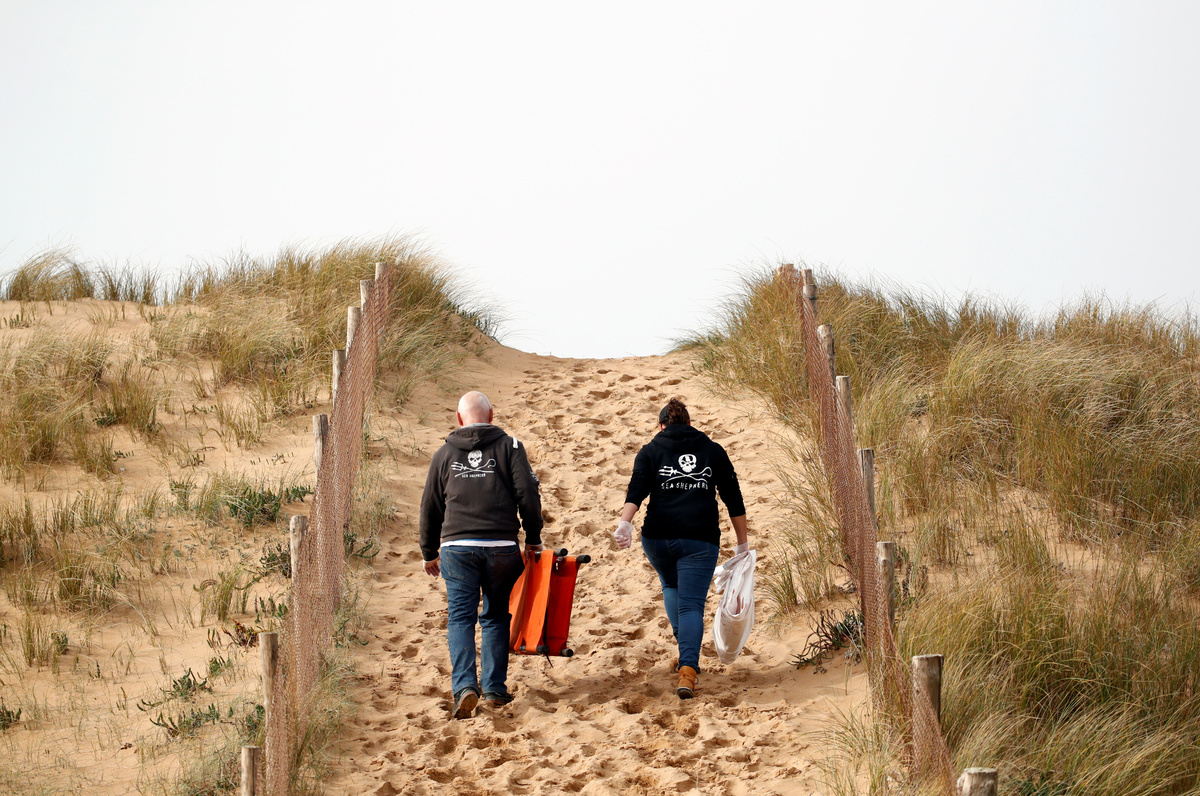
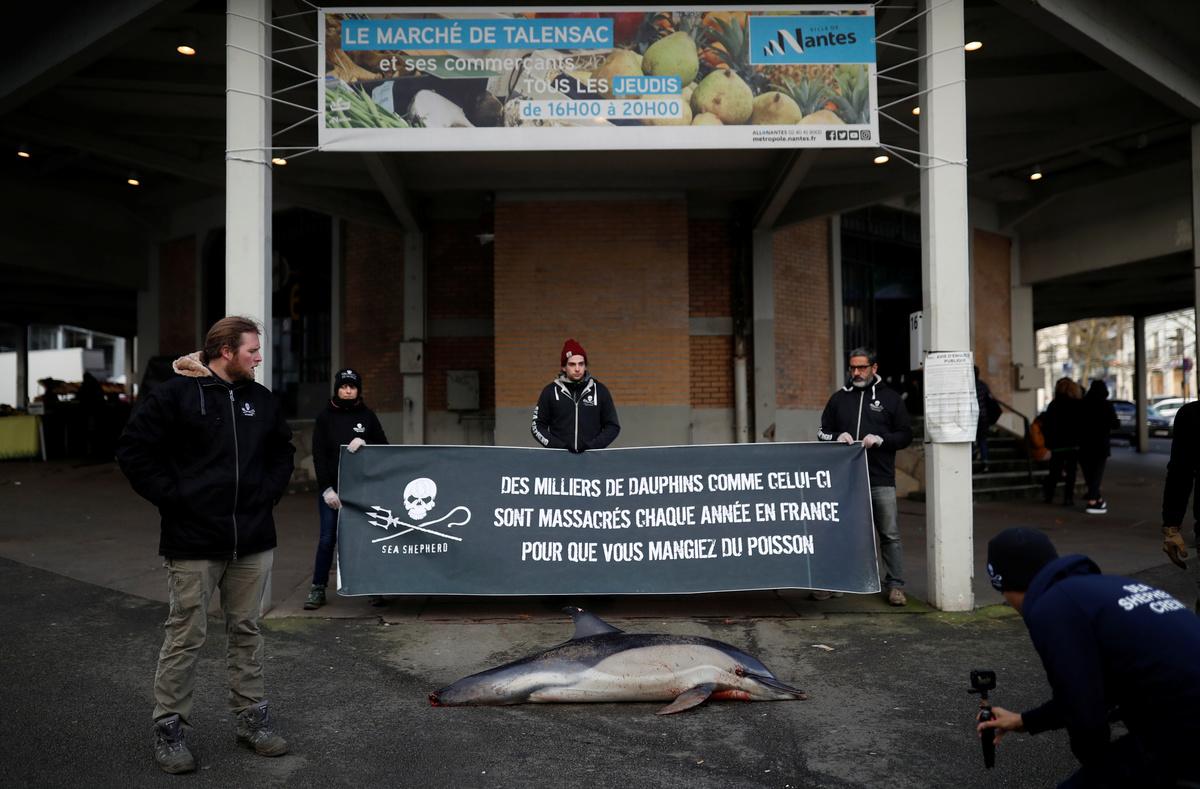
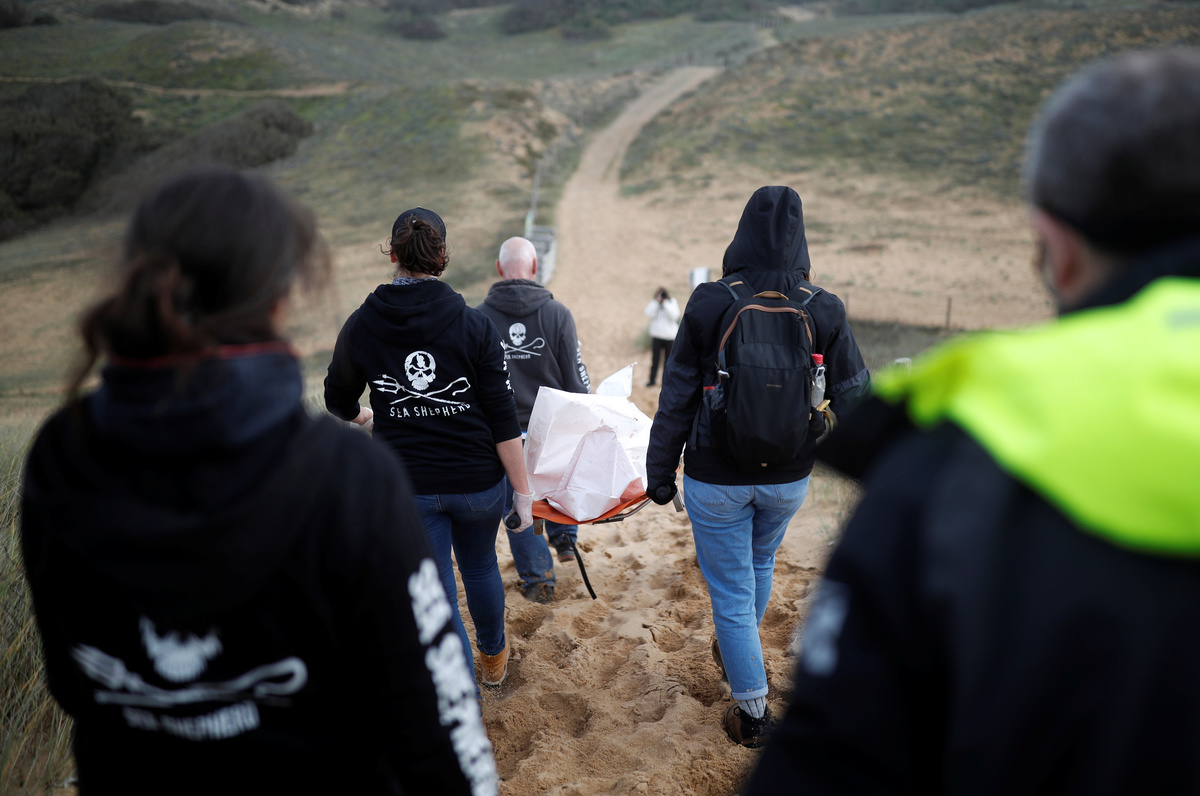
Activist group Sea Shepherd wants trawlers to be banned from fishing in sea bass spawning grounds and better monitoring of fisheries. Acoustic 'pingers' designed to repel dolphins are also being trialled on some fishing boats.
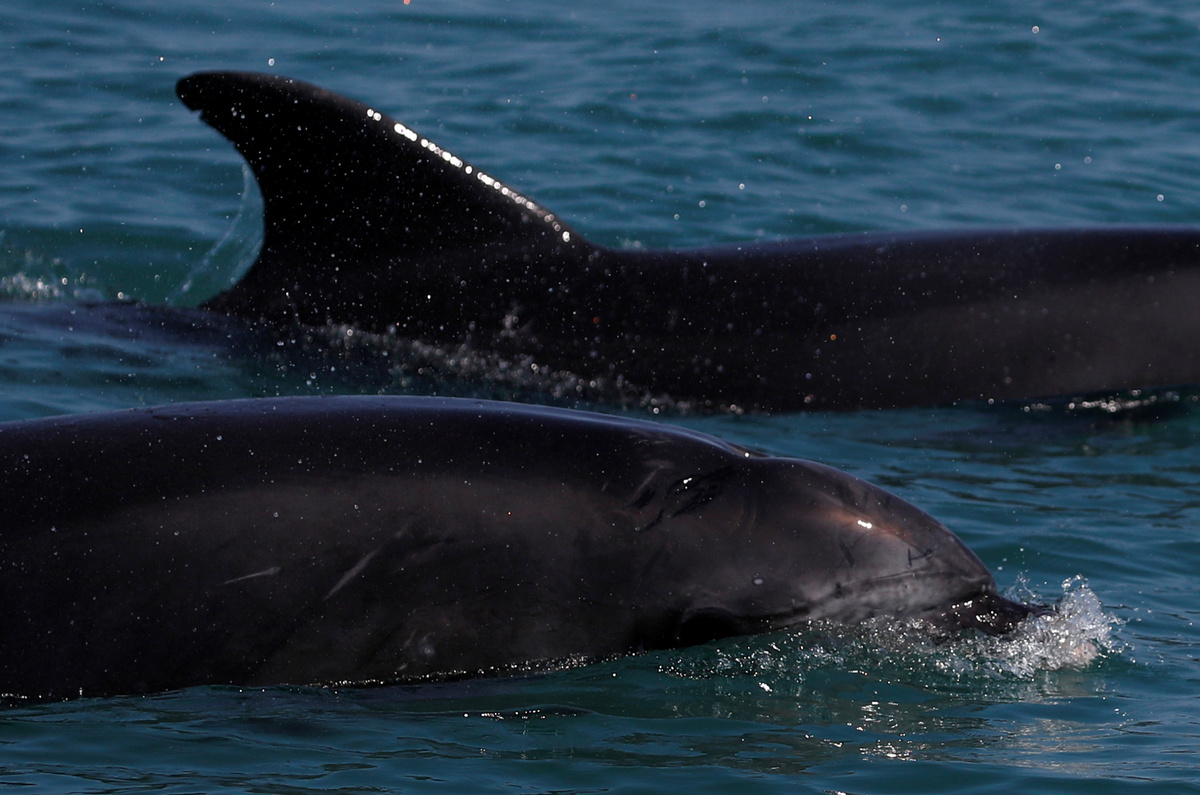
Dolphins swim in the sea near Cancale, France June 24, 2020. Picture taken June 24, 2020. REUTERS/Stephane Mahe
"There is no single miracle solution," Peltier said.
(Reporting by Stephane Mahe; Editing by Richard Lough)
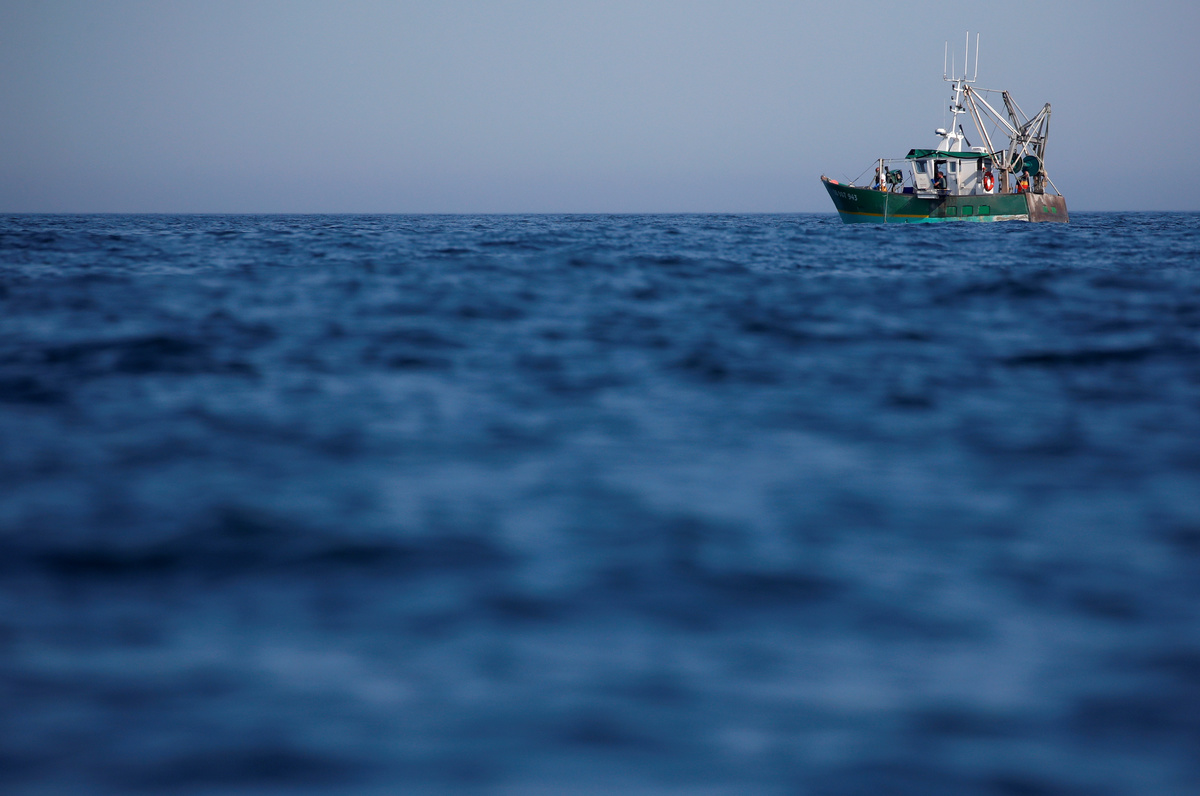
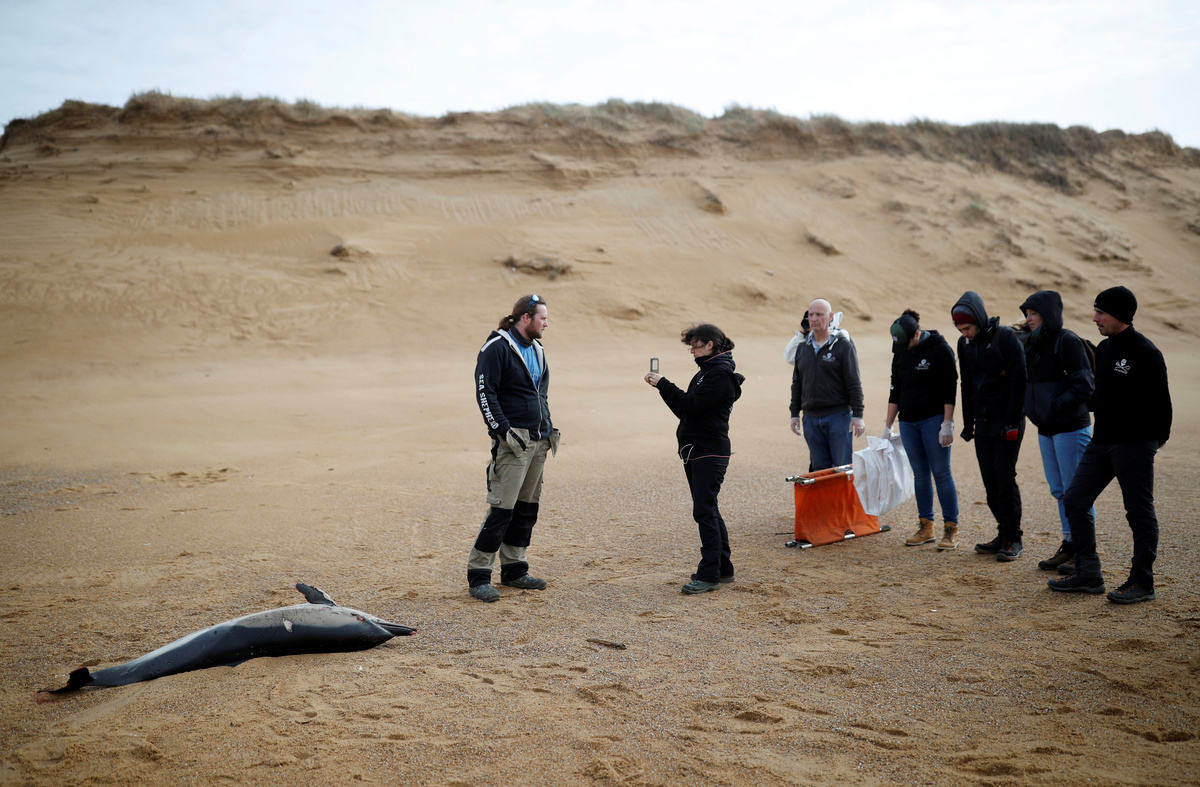
Dolphins jump out of the sea near Cancale, France June 24, 2020. Picture taken June 24, 2020. REUTERS/Stephane MaheExperts at the Observatoire Pelagis examine the bodies of dolphins, which were found dead on a beach, during scientific autopsies at municipal technical services in Barbatre on the Noirmoutier Island, France, February 11, 2020. Picture taken February 11, 2020. REUTERS/Stephane MaheSea Shepherd activists walk to carry on a stretcher the body of a dolphin which was found dead on the beach in Bretignolles-sur-Mer, France, February 10, 2020. Picture taken February 10, 2020. REUTERS/Stephane MaheExperts at the Observatoire Pelagis carry the body of dolphin, which was found dead on a beach, during scientific autopsies at municipal technical services in Barbatre on the Noirmoutier Island, France, February 11, 2020. Picture taken February 11, 2020. REUTERS/Stephane MaheFILE PHOTO: A dolphin jumps out of the sea near Cancale, France June 24, 2020. Picture taken June 24, 2020. REUTERS/Stephane MaheSea Shepherd activists, holding a banner which reads "Thousands of dolphins like this one are killed each year just so that you can eat fish", stand next to the body of a dolphin, which was found dead on a beach, during a protest in Nantes, France, February 4, 2020. Picture taken February 4, 2020. REUTERS/Stephane MaheSea Shepherd activists enclose in a bag the body of a dolphin which was found dead on the beach in Bretignolles-sur-Mer, France, February 10, 2020. Picture taken February 10, 2020. REUTERS/Stephane MaheA fishing boat is seen near Cancale, France June 24, 2020. Picture taken June 24, 2020. REUTERS/Stephane MaheDolphins swim in the sea near Cancale, France June 24, 2020. Picture taken June 24, 2020. REUTERS/Stephane MaheSea Shepherd activists live stream on facebook after finding a dead dolphin on a beach in Les Sables d'Olonne, France, February 10, 2020. Picture taken Febraury 10, 2020. REUTERS/Stephane MaheAn expert at the Observatoire Pelagis moves the body of a dolphin, which was found dead on a beach, in a cold room at their marine research station in La Rochelle, France, February 14, 2020. Picture taken February 14, 2020. REUTERS/Stephane MaheA dead dolphin lies on the beach in Les Sables d'Olonne, France, February 10, 2020. Picture taken, February 10, 2020. REUTERS/Stephane MaheSea Shepherd activists carry on a stretcher the body of a dolphin which was found dead on the beach in Bretignolles-sur-Mer, France, February 10, 2020. Picture taken February 10, 2020. REUTERS/Stephane MaheActivists enclose in a bag the body of a dolphin which was found dead on the beach in Bretignolles-sur-Mer, France, February 10, 2020. Picture taken February 10, 2020. REUTERS/Stephane MaheAn expert at the Observatoire Pelagis holds a dolphin fetus found inside the body of a dolphin, which was found dead on a beach, during scientific autopsies at municipal technical services in Barbatre on the Noirmoutier Island, France, February 11, 2020. Picture taken February 11, 2020. REUTERS/Stephane MaheA dead dolphin lies on the beach in Les Sables d'Olonne, France, February 10, 2020. Picture taken, February 10, 2020. REUTERS/Stephane MaheAn expert at the Observatoire Pelagis holds a dolphin fetus found inside the body of a dolphin, which was found dead on a beach, during scientific autopsies at municipal technical services in Barbatre on the Noirmoutier Island, France, February 11, 2020. Picture taken February 11, 2020. REUTERS/Stephane MaheFishing nets are pictured on the dock of the port in La Rochelle, France, February 14, 2020. Picture taken February 14, 2020. REUTERS/Stephane MaheBodies of dolphins, which were found dead on beaches, are stored for scientific autopsies at the municipal technical services in Barbatre on the Noirmoutier Island, France, February 11, 2020. Picture taken February 11, 2020. REUTERS/Stephane MaheSea Shepherd activists gather around a dead dolphin found on a beach in Bretignolles-sur-Mer, France, February 10, 2020. Picture taken February 10, 2020. REUTERS/Stephane Mahe
Sign up to read this article
Read news from 100’s of titles, curated specifically for you.









.jpg?w=600)



