
Bangkok is a city of contrasts. Despite being ranked as Southeast Asia's third most liveable city by the Economist this year, the capital was also named the world's worst in terms of inequality, based on the Global Wealth Databook by Credit Suisse.
But the city is always trying to move forward and 2018 was another year filled with urban development. Efforts have been made to improve the public space, while new transport connections continue to be built, although some argue that this is being done in outdated or impractical ways.
On the face of it at least, this coming year looks promising for city commuters, as the ongoing city rail network reaches further and encompasses a larger area. There will be new buses on the roads and, more importantly, a greater focus on safety, especially with regard to passenger vans.
Here's a look back at what happened in 2018 with Bangkok's public transport and infrastructure.
Gifts for commuters
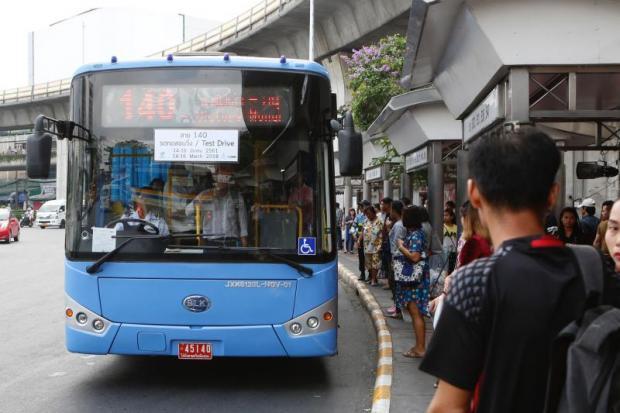
- Bus: Not many seemed to notice, but the decade-long Bestrin bus saga finally came to an end this year. According to Rotmaethai.com, the first fleet of NGV-powered all-blue buses, 100 out of 489, arrived on Bangkok streets in March, quickly followed by the second. The third batch was released this month and the last fleet should reach Bangkok by the end of February.
The latest fleet of NGV-powered buses is only a fraction of the 4,000 buses approved by the government about 10 years ago, aimed at replacing public buses in operation for more than 20 years. The current government is considering making the remaining buses electric.
Commuters who use the bus -- the most affordable and accessible mode -- have not totally been forgotten. The repeatedly delayed improvements are finally taking place.
- Van: At least 3,000 commuters from outside the city were left stranded on the morning of Oct 1, after passenger van operators failed to negotiate with the Department of Land Transport (DLT) to extend their contracts, which expired on Sept 30. As a result, 248 passenger vans that had been in operation for 10 years had to be taken off the road.
The operators initially thought they could force the DLT's hand by holding commuters hostage as usual. But this time, the DLT was adamant that the vehicles had to be replaced with new minibuses in the interests of improving road safety. Passenger safety had been compromised in preceding years, with the van operators being allowed to modify the 10-seater vans to accommodate 14 people.
The new minibuses are gradually being introduced, but numbers are still inadequate. The higher cost means operators are reluctant to invest. And yet more chaos should be expected as a further 1,500 vans are set to be decommissioned by the end of 2019.
- Boat: Water transport hasn't been neglected. Five canals, two on the Bangkok side and the rest on the Thon Buri side, are being revived -- to help restore the capital to its former status as the "Venice of the East". Unfortunately, this is being done for the purposes of tourism, making some question why City Hall isn't prioritising improving public transport for residents.
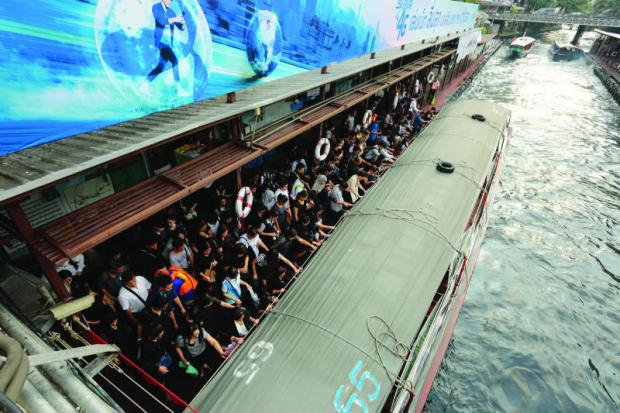
However, there was some good news last month when the government decided to extend the route of the Klong Saen Saep boat service, which serves 60,000 commuters each day, from Wat Si Boonruang in Ramkhamhaeng to Talad Min Buri.
A trial run of the 11km extended route is expected to start in Jan, aiming to ease traffic where construction of the city rail system is taking place. The new boats put into service will be electronic. Officials have also promised that they will be larger and 15% less noisy.
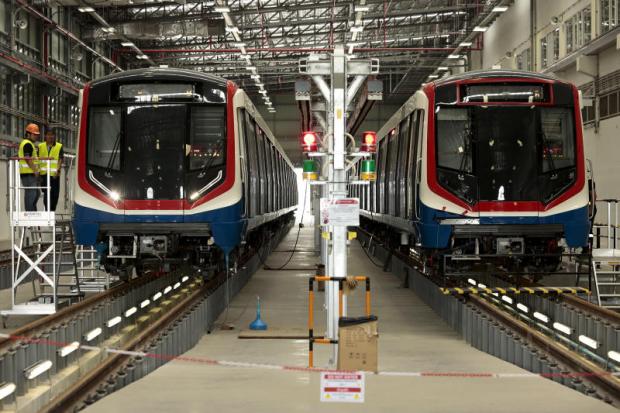
- Train: After a five-year wait, those living in Samut Prakan may now be able to afford a bit of a sleep-in in the mornings, as the BTS Green Line's southern extension was launched on Dec 6 for a trial run, free of charge, until April. The number of passengers increased from over 50,000 on the first day to 75,000 in one week. But the extension has not been without its controversies, with many focusing on the lack of wheelchair access at new stations; one particular photo of an inaccessible wheelchair ramp gained much notoriety.
Another station in the northern extension will be opened in the middle of next year while the rest will be completed in 2020.
Shortly before the launch of the extended Green Line, the state promised to make fares affordable for commuters in the hopes of encouraging drivers to give up their private vehicles. But some feel that this promise has not been kept, as price caps -- 65 baht for the Green Line and 70 baht for the MRT Purple Line, or about 3,000 baht a month -- make up around one-fifth of a fresh graduate's average monthly income of 15,000 baht. Given that many have to also avail of other modes of transport, such as passenger vans or motorcycle taxis, in the same day, this can end up being prohibitively expensive.
Meanwhile BTSC, the skytrain operator, has repeatedly promised to improve its service after persistent complaints about delays (culminating in a day-long breakdown in June) and inefficient service. Let's see if the ticket-vending system does improve as promised. They say they have added more machines that accept banknotes and will introduce a QR code buying system next year.
Improving the city landscape
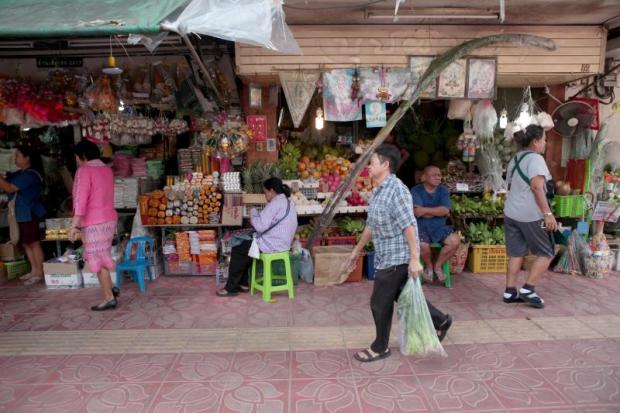
After efforts to reclaim city public space from street vendors and informal settlements, Bangkok has been getting a facelift with more public space being provided for residents.
In July, pavements in Nana began to get upgraded when the Metropolitan Electricity Authority started to put utility wires underground. The first phase expects to be completed by the end of 2019. The next phase will start in the Rama III area, followed by Wireless Road. The 215km project expects to be completed in 2021.
It remains a challenge to keep the pavements clean. Banning street vendors is one thing, keeping motorcyclists out of pedestrian zones is quite another. Authorities briefly took a harder line after a high-school student was hit by a motorcyclist on the pavement in Lat Phrao Road in early November. Tessakit officers, or city inspectors, and traffic police were ordered to employ stricter measures. But the situation returned to normal after only a few days.
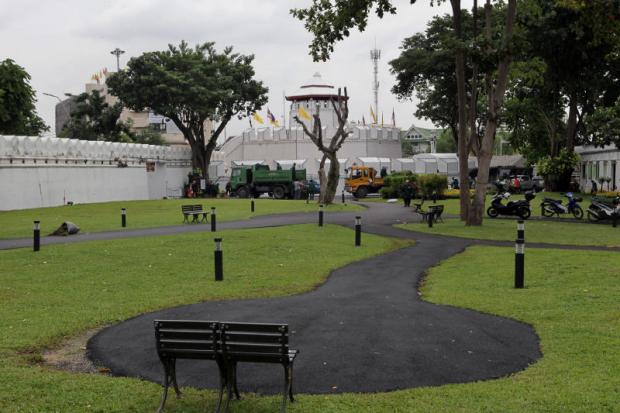
In February, Taemsi Krungthep gave new paint jobs to old buildings in pilot neighbourhoods, starting in Khao San Road and Yannawa. Other pilot areas include Bamrung Muang and Paribatra roads, and Nangloeng. New public spaces were also provided. Pom Mahakan park was officially opened in July and Klong Ong Ang in November for Loy Krathong.
After a 26-year fight, a century-old community was evicted and dozens of unique wooden houses from the early Rattanakosin era, as well as some large big trees, were bulldozed, turning this lush green historical area into a mini golf course. About a dozen big trees along Klong Ong Ang were also felled, paving the way for the new so-called urban park with bush pots. Many questioned why this landscape "improvement" turned this shady space into empty land paved with concrete.
.jpg?w=600)











