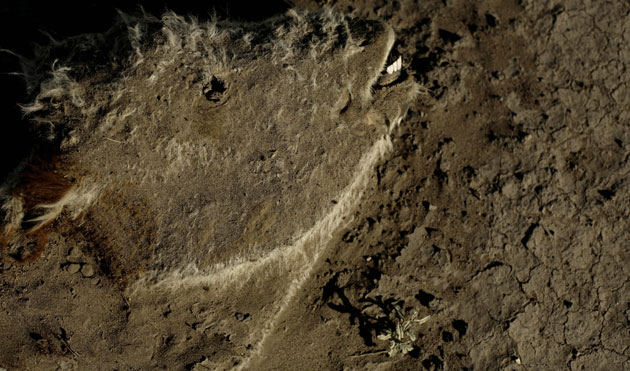
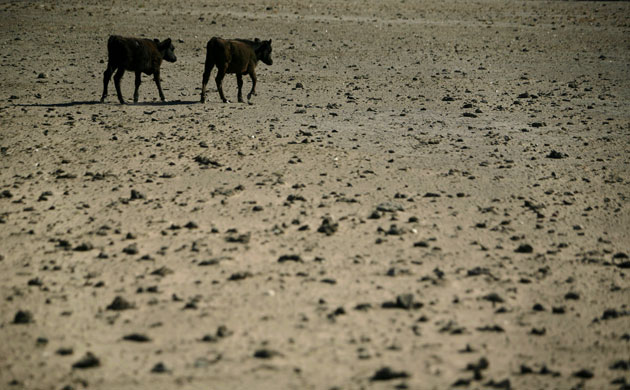
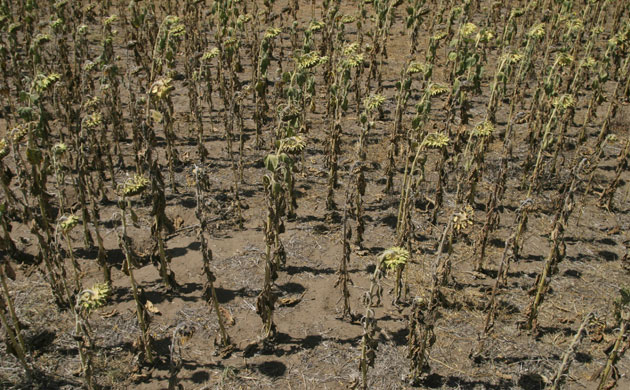
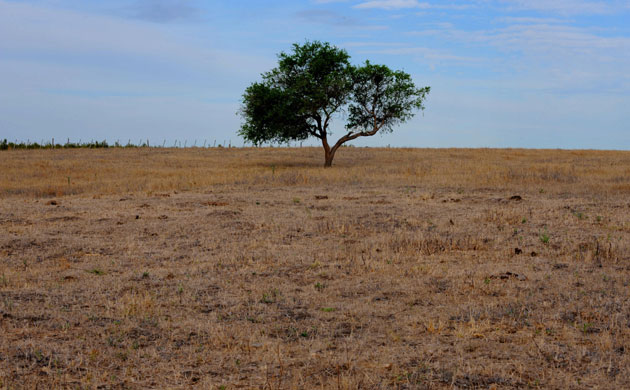
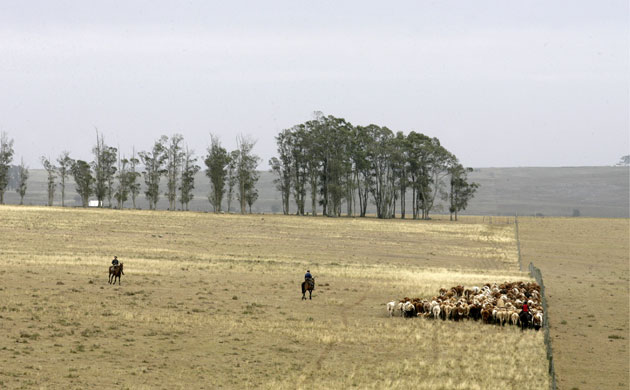
A calf lies dead in Stroeder, Argentina. Farmers are demanding the government's help after a year-long drought that has killed nearly 1 million animals and destroyed cropsPhotograph: Natacha Pisarenko/APStroeder, Argentina: Cows search in vain for food in a parched pasturePhotograph: Natacha Pisarenko/APCarhue, Argentina: Sunflowers wither in the cracked earthPhotograph: Pablo Aneli/AP
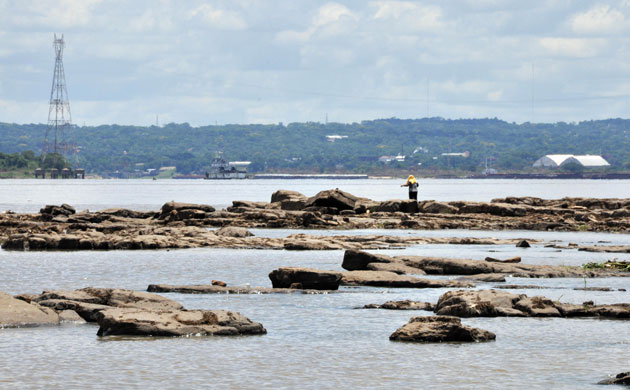
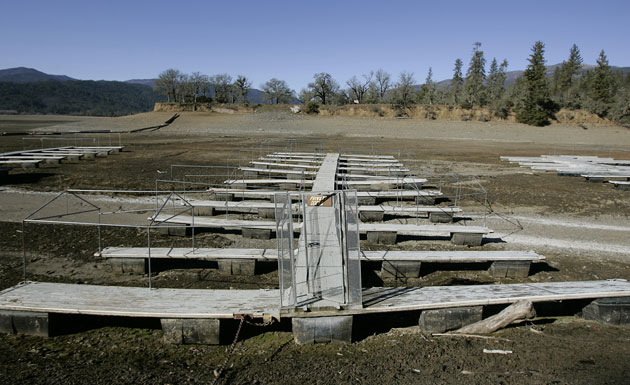
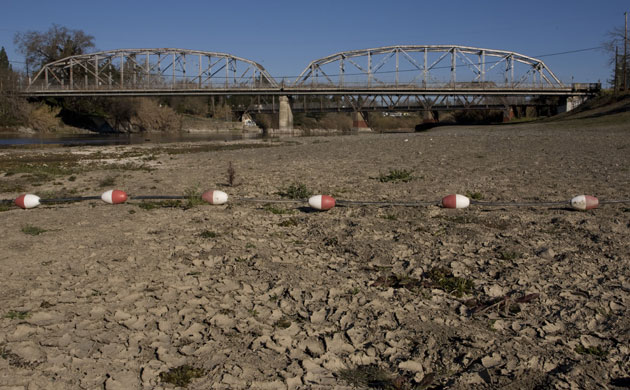
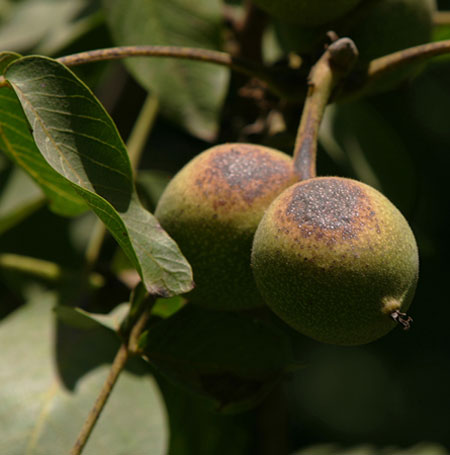
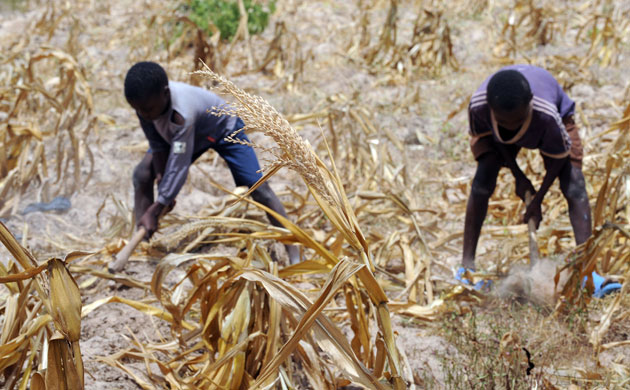
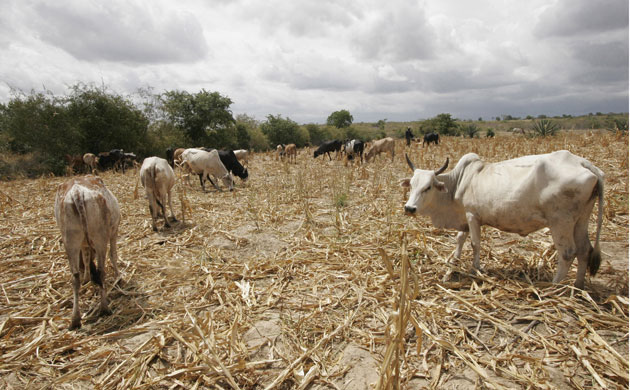
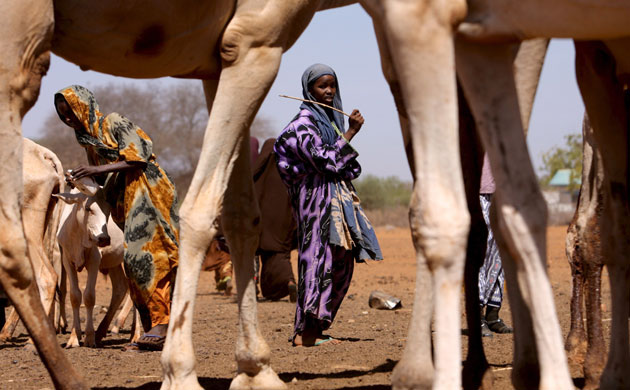
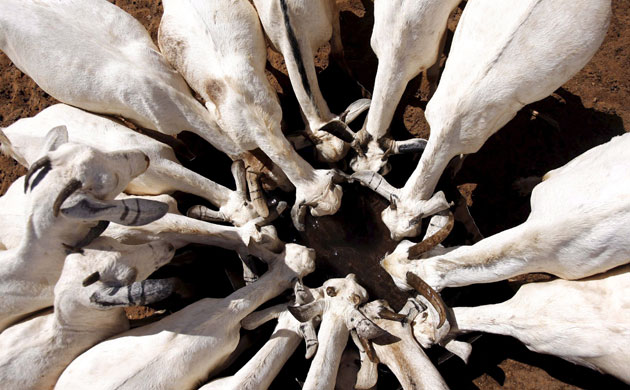
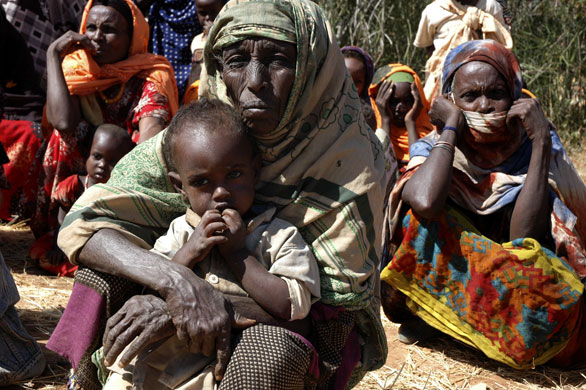
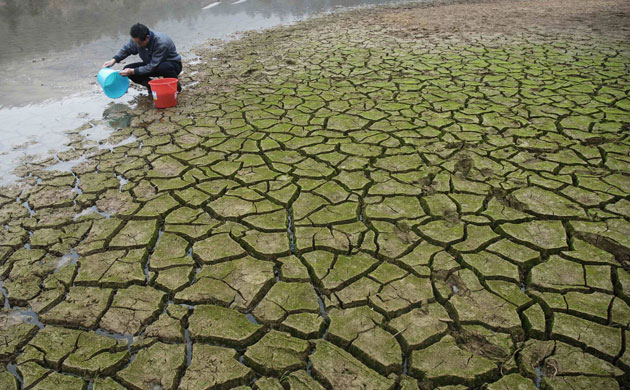
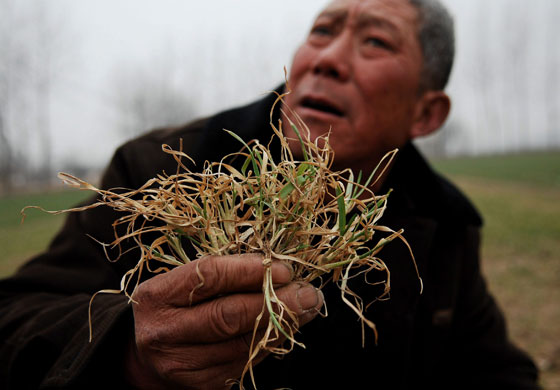
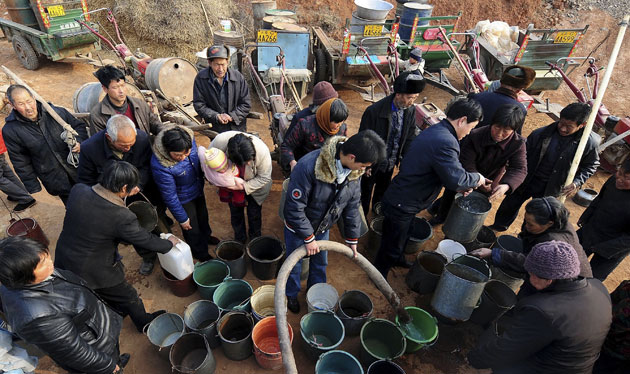
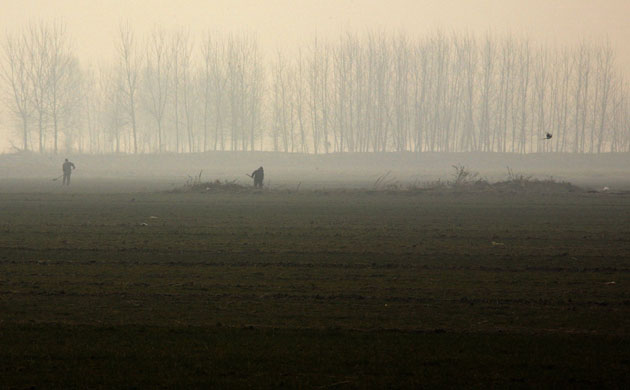
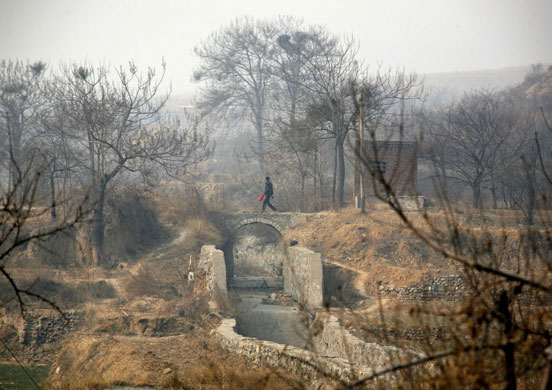
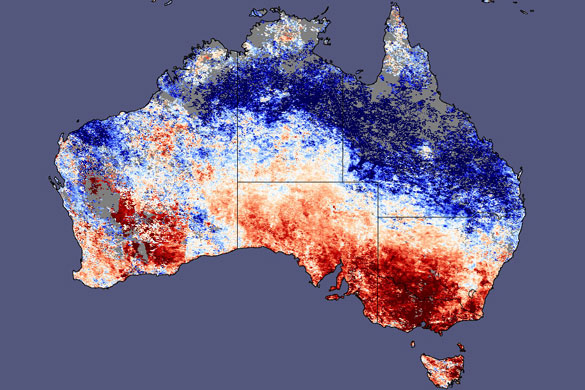
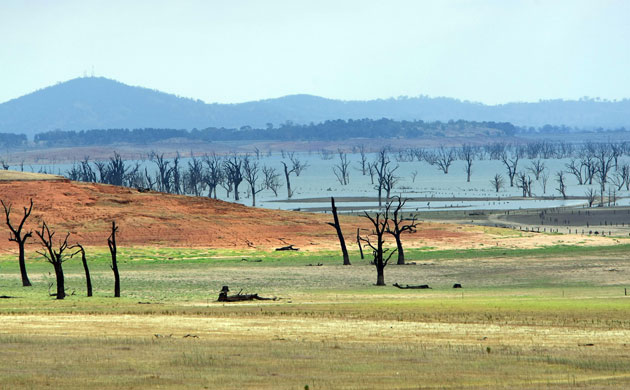
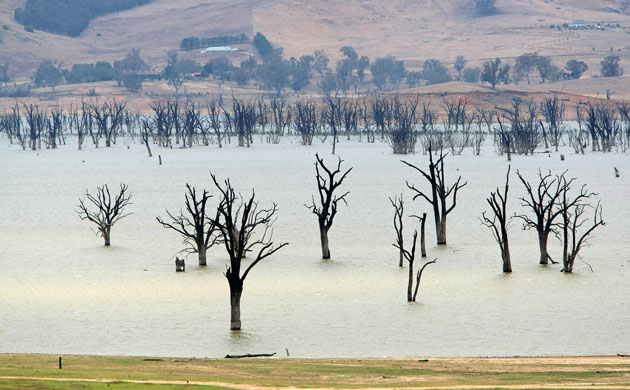
Villeta, Paraguay: Fishermen perch on stones that emerged as the level of the Paraguay river dropped during a severe drought affecting the regionPhotograph: Norberto Duarte/AFPUruguay: Partial view of a grazing field dried up by the intense drought in Paso Panta. Uruguay is suffering the worst drought in several decades that forced the government of Tabare Vazquez to declare a state of "agrarian emergency"Photograph: Pablo Porciuncula/AFPCerro Colorado, Uruguay: A Uruguayan farmer, Dimar Delgado, and his sons herd cattle across waterless pasture on their ranch. The global economic slowdown has sent grain and beef prices tumbling, worrying farmers and governments in South American nations. Concern is perhaps even greater in Uruguay, where ranching is the motor of its small economyPhotograph: Andres Stapff/ReutersIn Lake Pillsbury, California, US, floating pontoons sit stranded, truly high and dry. A third year of drought has prompted California state water officials to urge conservation Photograph: Kent Porter/The Press DemocratUS: The Russian river at the Old Redwood Highway, which flows through Sonoma County and out to the Pacific Ocean, is at the lowest levels in years Photograph: George Rose/Getty ImagesUnprotected, walnuts are burning in the California sun – prompting some farmers to protect their skin with sunscreen Photograph: Gary Kazanjian/APKwale, Kenya: Six-year-old Juma Dalu (left) and his brother, Charo Mwatsalu, plough their family's cornfield. In the coming months about 10 million people will be dependent upon aidPhotograph: SIMON MAINA/AFP/Getty ImagesMwanda Village, Kenya: Cattle graze on dry maize stalk. Last year, prolonged drought led to crop failure in most parts of KenyaPhotograph: Khalil Senosi/APA Kenyan-Somali pastoralist herds camels to a bore-hole in Wargadud, in the arid north of Kenya where people rely on goats, sheep and camels for their livelihood Photograph: Stephen Morrison/EPAThirsty goats at a bore-hole in Wargadud Photograph: Stephen Morrison/EPAEthiopia: Farmers gather with their children at a drought-stricken area of the Oromiya region, where the Ethiopian Red Cross Society and the International Federation of Red Cross and Red Crescent Societies will soon start food aid distributionsPhotograph: HO/ReutersChina: A farmer collects water from a partially dried-up pond on the outskirts of Yingtan, Jiangxi province. China has declared an emergency over a drought, which could devastate crops and farmers' incomes, officials say, threatening further hardship amid slumping economic growthPhotograph: Stringer Shanghai/ReutersZhengzhou, Henan Province, China: A man holds whithered plants in a field on February 2, 2009. China's Ministry of Agriculture said that lack of rainfall in major wheat-growing provinces has brought drought to 119 million mu (7.9 million hectares) of wheat farmlandPhotograph: ChinaFotoPress/Getty ImagesRuyang county, Henan province, China: Villagers queue to receive drinking water from the local government at Zhanghe village. China has declared an emergency in eight provinces suffering a serious drought that has left almost 4 million people without proper drinking water and is threatening millions of acres of cropsPhotograph: APLidong, Hebei province, China: Farmers work in an irrigated field planted with winter wheat crop. The drought gripping parts of central and northern China has sent Zhengzhou wheat futures prices up by 5% but physical prices have not moved, with most investors confident the country's reserves and last year's big harvest can offset any fall in wheat production this springPhotograph: David Gray/ReutersA farmer walks over a dried-up irrigation canal that runs through drought-affected fields near the village of Houyan, 250 miles south of BeijingPhotograph: David Gray/ReutersIn early February 2009, residents of southeastern Australia experienced temperatures of up to nearly 50C. This map of Australia shows how the land surface temperature from 25 January to 1 February compared to the average mid-summer temperatures the continent experienced between 2000 and 2008. Places where temperatures were warmer than average are red, places experiencing near-normal temperatures are white, and places where temperatures were cooler than average are bluePhotograph: NASALake Hume, straddling the border between the states of Victoria and New South Wales, exposes once submerged trees after the dramatic drop in the water level caused by a decade of drought caused the reservoir to fall below one-third of its capacity in February 2009Photograph: Torsten Blackwood/AFP/Getty ImagesAt 100% capacity, Lake Hume stretches for 40km up the Murray and Mitta River valleys and can hold 3,000,000 megalitres of water - approximately five times the volume of Sydney HarbourPhotograph: Torsten Blackwood/AFP/Getty Images
Sign up to read this article
Read news from 100’s of titles, curated specifically for you.