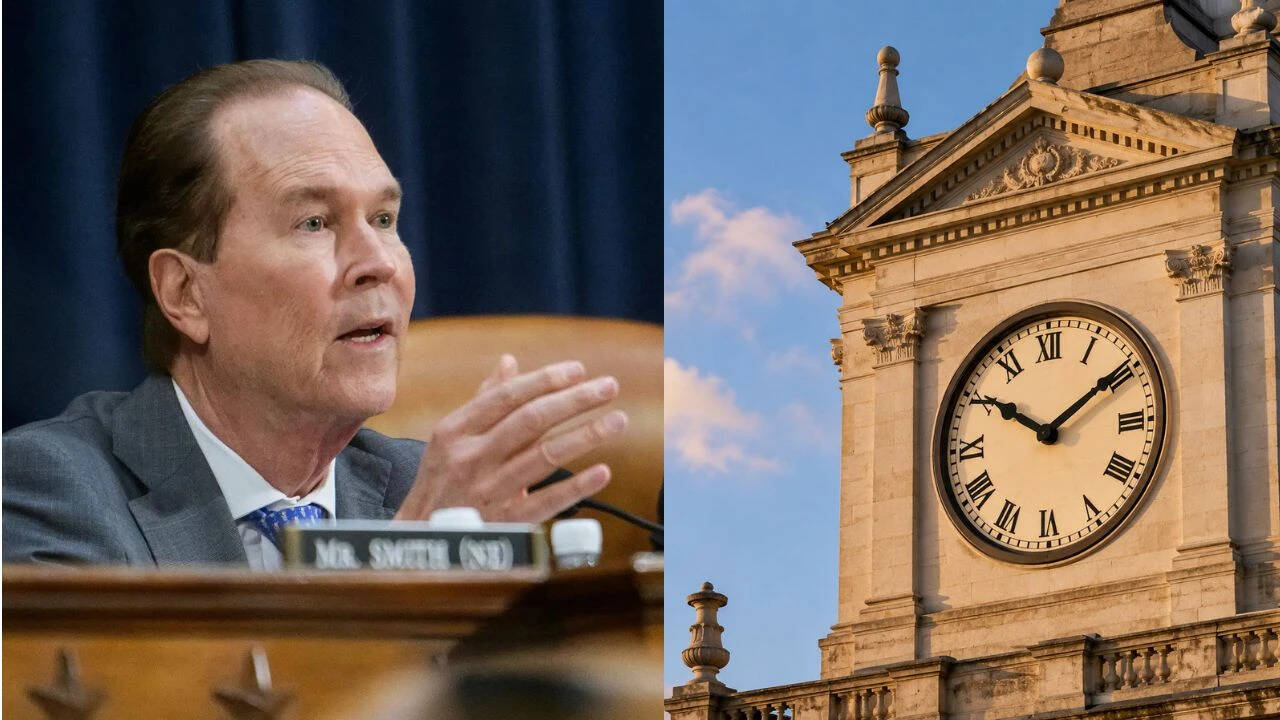
WASHINGTON: The US House of Representatives is set to vote this week on the Sunshine Protection Act (H.R. 139), a bipartisan bill that would make daylight saving time (DST) permanent and end the twice-yearly practice of changing clocks.
Get breaking news anytime, anywhere. Download the TOI app now!
The proposal, sponsored by Congressman Vern Buchanan, comes after the House Energy and Commerce Committee approved the legislation in May by a 48-1 vote.
Buchanan said the legislation would end an "outdated and unpopular" practice. "Americans across the country are tired of the biannual clock change, and the evidence is clear that permanent daylight saving time can improve public health, reduce traffic accidents, lower crime and encourage more outdoor activity."
He added that the measure is a "commonsense reform" that would improve daily life for millions of Americans and urged lawmakers to support the bipartisan bill.
What is the Sunshine Protection Act?
The Sunshine Protection Act would make daylight saving time permanent across the United States, eliminating the need to change clocks twice a year.
In May, the House Energy and Commerce Committee voted 48-1 in favor of the Sunshine Protection Act, Reuters cites. The US Senate voted unanimously in March 2022 to make daylight saving time permanent but the House never took up the measure in the face of opposition
Daylight saving time, which moves clocks forward by one hour during the warmer months, has been observed across most of the United States since the 1960s. While several states have already expressed support for adopting permanent daylight saving time, a change cannot take effect without approval from the US Congress.
In contrast, the Sunshine for Our Kids Act would make standard time permanent throughout the US, should it take effect. However, the bill would allow states to make daylight saving time permanent if they choose to do so.
Trump backs ending clock changes
President Donald Trump has supported ending the twice-a-year clock changes, saying in May that it was "time that people can stop worrying about the 'Clock,'" while criticising the cost and inconvenience of the current system.
Supporters argue that changing clocks twice a year disrupts sleep, increases workplace injuries and road accidents, and that brighter evenings could boost economic activity, reduce crime and encourage more outdoor activity.