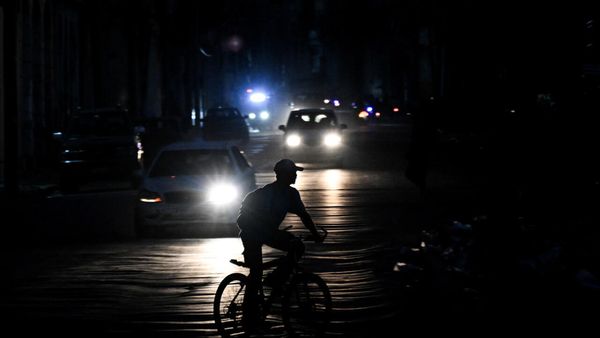
At 2:00 a.m. on Sunday, 8 March, Americans will lose one hour of sleep. Health experts say that a single hour can do real damage.
'The spring time change leads to society-wide sleep deprivation,' Jennifer Martin, former president of the American Academy of Sleep Medicine, told Time Magazine. That deprivation, researchers say, shows up in emergency rooms and on highways within days of clocks springing forward.
This year's transition falls on the earliest possible calendar date. Because 1 March lands on a Sunday, the second Sunday arrives just seven days later. Bodies have less time to recover from winter's shorter days before the shift hits.
Experts Point to Heart Attack and Stroke Data
The lost hour carries consequences that go beyond grogginess.
A Michigan hospital study cited by the American Heart Association found that heart attacks jump 24% on the Monday after clocks spring forward. Finnish researchers reported an 8% rise in ischemic strokes during the first two days following the switch. Severe heart attacks already peak on Mondays compared to other weekdays. Circadian disruption makes that Monday morning riskier.
'We don't really know exactly why there is an increase in heart attacks and strokes during the change to daylight saving time,' said Dr. Art Coffey, chief medical officer with ProHealth Care. 'It's likely connected with the disruption to the body's internal clock, or its circadian rhythm.'
Dr. Darien Sutton, ABC News medical correspondent, put it bluntly on Good Morning America: 'Small changes in sleep, even small decreases, can detrimentally affect your health, increasing stress hormones. That increases our risk of heart attacks and strokes, principally among women and older adults in the first two days after this shift change.'
More than one in three American adults already fail to get recommended sleep for heart health, according to the AHA.
Crash Researchers Sound Alarms Too
The danger follows people into their cars.
A University of Colorado Boulder study published in Current Biology analysed more than 732,000 fatal crashes from 1996 to 2017. Researchers found a 6% spike in deadly accidents during the week after DST begins, roughly 28 additional deaths each year. For drivers living on the western edges of their time zones, where the sun rises and sets later, the increase reached 8%.
'Our study provides additional, rigorous evidence that the switch to daylight saving time in spring leads to negative health and safety impacts,' said Céline Vetter, the study's senior author and assistant professor of integrative physiology at CU Boulder. 'These effects on fatal traffic accidents are real, and these deaths can be prevented.'
The spike starts immediately after the Sunday clock change and peaks during Monday morning commutes, when sleep-deprived drivers flood the roads.
A 30-Minute Fix Nobody's Talking About
A bill already exists that could end the clock-changing ritual entirely. It just hasn't moved.
H.R. 7378, the Daylight Act of 2026, was introduced by Florida Representative Greg Steube on 4 February. Unlike previous efforts, it doesn't call for permanent DST or permanent standard time. Instead, it proposes pushing all American time zones forward by 30 minutes from standard time and locking them there. No more spring forward. No more fallback.
The approach splits the difference between sleep scientists who back standard time and lawmakers who want longer summer evenings. Dr. Karin Johnson, spokesperson for the American Academy of Sleep Medicine, told Nexstar the measure would be 'less harmful than a full hour delay of permanent daylight saving time.'
The bill sits in the House Committee on Energy and Commerce. No hearings scheduled. No floor vote in sight.
Public opinion has shifted, though. A Gallup poll from January 2025 found 54% of Americans want DST gone altogether. Back in 1999, 73% supported the practice. That support has collapsed across every demographic group over the past 26 years.
What Doctors Recommend Before Sunday
Health experts say preparation can soften the blow.
- Start going to bed 15 to 20 minutes earlier a few nights before 8 March.
- Get outside for morning sunlight in the days after the switch to help reset your internal clock.
- Cut back on caffeine late in the day.
- Put your phone in another room at night.
'Making small changes in your daily habits can make a big difference in your sleep quality and overall health,' Coffey told Racine County Eye. 'Implementing these small habits now can help you prepare for the upcoming daylight saving time change.'
If you feel groggy on Monday morning, drive carefully. Watch for chest tightness, sudden weakness, or shortness of breath. Those are warning signs of heart attack and stroke, and the research shows they strike harder in the days after DST begins.
One Hour, Real Consequences
The Sunshine Protection Act, which would make DST permanent, passed the Senate unanimously in 2022 but died in the House. President Trump called the issue '50/50' last year. Nothing changed.
So at 2:00 AM on Sunday, clocks will jump to 3:00 AM. That one hour will vanish. Experts say it's not nothing. For some, it could be everything.