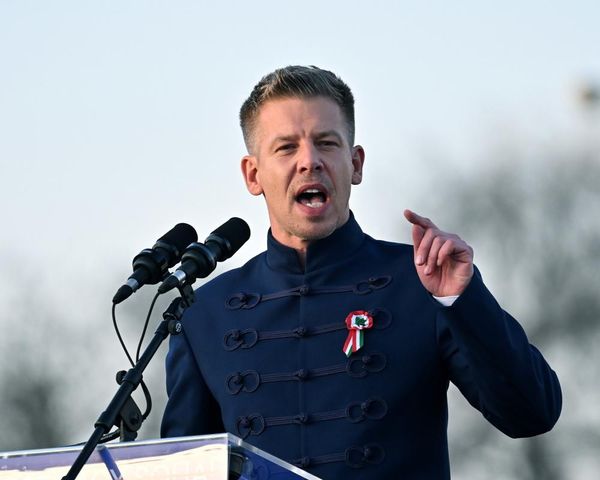
The first day of the World Economic Forum is nearly over, so we’re going to take a break. I’ll be back if there are any major developments - in the meantime, here’s our news story on president Xi’s visit:
Columbian singer Shakira, who collected a WEF Crystal Award last night, has been discussing her work building schools in the most downtrodden parts of the country:
“Sometimes we encounter a tremendous lack of infrastructure. No portable water in many cases, no electricity, no paved roads, so it definitely means that we have to work twice as hard in order to offer a quality education.”
Not only that, but many of the children concerned are affected by violence or have lost family members.
John Kerry also urged Europe to “believe in itself”, and remember that European integration was driven by the need to stop European’s killing each other.
“It’s worked, folks!, said Kerry, adding:
“On the face of the planet, no assembly of countries has grown as significantly and powerfully as Europe.
FTSE 100 in biggest daily fall since Brexit vote, pound jumps nearly 3%
Away from Davos again, and European markets have closed for the day, with the UK the focus of attention.
A positive reaction to UK prime minister Theresa May’s Brexit speech, notably the promise that parliament would be able to vote on any deal with the U, helped push the pound almost 3% higher, its biggest daily rise since 1998.
Sterling was already edging higher before the speech, recovering some ground after the government’s hard Brexit suggestions at the weekend. A weak US dollar as Donald Trump said the American currency was overvalued helped here, as did stronger than expected UK inflation figures which suggested the next move in UK interest rates would be upwards.
The jump in the pound, conversely, knocked back the FTSE 100, which recorded its biggest daily fall since the immediate aftermath of the Brexit vote last June. The FTSE 100 has been boosted for several months by the fall in the pound, which helps the overseas earners and exporters which dominate the leading index.
So the rise in sterling - which is currently 2.8% higher against the dollar at $1.2382 and up 1.87% against the euro at €1.1577 - has had the opposite effect, and the FTSE 100 has fallen 1.46% to 7220.38.
European markets have edged lower, with Germany’s Dax down 0.13% and France’s Cac closing 0.46% lower.
In the US, the Dow Jones Industrial Average is down 29 points or 0.15%.
Updated
President Xi’s trip to Switzerland is already making headlines:
You know capitalism is in trouble when China’s the leading free-trade nation in the world. #Davos pic.twitter.com/abpfGpiMit
— ian bremmer (@ianbremmer) January 17, 2017
Kerry: Iran deal will last
John Kerry, the outgoing US secretary of state, has cited the Iran nuclear deal as proof that engaging with other nations to deliver peace can pay off.
On his final trip to Europe before leaving office, Kerry told Davos that the Iran deal was one of the successes of the Obama presidency, and proof that diplomacy works.
Kerry says:
There are now no longer 19,000 centrifuges spinning and enriching, there are 5,000, which is the agreement.
There is no longer a 12,000 kg stockpile that could produce 10 to 12 bombs. There’s 300kg, measurable every day. And you can’t build a bomb with 300kg.
This is an agreement that can endure, he adds.
Donald Trump has criticised the Iran deal, raising concerns that it could unravel.
Kerry, though, insists it can last.
Take Iran. If the United States were to decide suddenly that we’re not going to pursue this, I bet you that our friends and allies who negotiated this with us will get together, and Russia, China, Germany, France and Britain will say ‘this is a good deal, we’re going to keep it.
And we’ll have done a great injury to ourselves. And it will hurt for a year, two years, while the administration is there <cue laughter>.
Kerry also cites the Paris climate change agreement, progress towards ending the war in Yemen, as reasons to be optimistic about the future.
And he say he won’t guess whether Trump really believes some of the things he’s said in the race for the White House.

Hollywood Matt Damon is talking to the press about his Water.org charity, and the challenges in raising money.
Water.org wants to guarantee clean water for everyone in the world; a great goal, but one which hasn’t been easy to attract funding.
Damon says:
We’ve tried humour -- a few years ago I went on a toilet strike for an entire year.
One of the first hurdles we’ve had to clear in the West is that it’s very hard for people to relate to this issue. If you grew up in Europe, if you grew up in America, you’ve never been thirsty in your entire life and you’ve never been five metres away from a clean drink water.
The water in our toilet is cleaner than the water that 663m people have access to.
Damon adds that he has very high hopes for a partnership with Stella Artois, the brewer. This will mean extra funding for Water.org, which provides affortable micro-loans to help communities install clean water equipment.
You can go into a pub in the UK or America and buy a pint of Stella, and for that one pint of Stella, they will guarantee bringing someone in the developing world clean water for a month.
Updated
S&P’s Paul Sheard also believes President Xi genuinely wants to avoid a trade war (one of the key points of his pro-gobalisation speech this morning).
Sheard explains that China would come off worse than America if globalisation and free trade falters.
If you did go into a trade ice age, who would be better placed to survive it, economically? I think the answer is the US, because the US is a very large economy, resource rich, with a very large population.
Smaller export-driven countries such as Mexico would obviously suffer more, while China (although a huge economy) is still in the development phase.
China has got more to lose in terms of making sure that process of economic development continues than the US would. That doesn’t make it a good thing to go that way, but just in terms of the relative economic costs, it would be higher.
But.... a one-party state like China is in a better state to survive the political consequences of a trade war, while President Trump could suffer an electoral backlash.
Sheard says:
It’s not clear that Trump has the upper hand. You’ve got the mid-terms in two years. If it’s like ‘oh my god this guy screwed up’, he’s on a short fuse.
Updated
S&P's Sheard: Trump wants fair trade
Paul Sheard, chief global economist at S&P, says Anthony Scaramucci is on a one-man mission to explain Donald Trump’s economic policies to Davos this week.
Speaking to me at Davos, Sheard explains:
Scaramucci went a long way at this meeting to clarifying, probably for many people, what the basic intent of the Trump administration is likely to be.
Trump’s been talking about free - he’s a big supporter of free trade - but he also wants to be fair trade.
That means “We’ll open to you, but you’ve got to open to us.
As we covered earlier, Scaramucci insisted that the US is committed to free trade - but wants more “symmetry” (rather than letting the other country get the best of the deal).
The FT’s Gillian Tett has a good write-up here:
Scaramucci gives insight in Davos: Trump committed to globalisation, open trade & NATO. https://t.co/HfzD78e0vV
— Brooke Fox (@brookefox91) January 17, 2017
Updated
Wall Street and FTSE 100 fall, pound soars
Away from Davos for a moment, and Wall Street has opened lower after president-elect Donald Trump’s comments that the dollar was overvalued knocked the US currency lower.
In turn, a falling greenback plus higher than expected UK inflation and a positive response to prime minister Theresa May’s Brexit speech - notably the line that parliament will be able to vote on any deal - has boosted the pound and pushed the FTSE 100 lower. The index is full of dollar earners who have benefited from the weak pound in recent months but are now heading lower as sterling strengthens.
The Dow Jones Industrial Average has returned after the Martin Luther King day break with a 62 point or 0.33% decline. Meanwhile the FTSE 100 is down 1% at 7247, on track for its biggest one day fall since November, while European markets have also edged lower.
As for the pound, it is currently 2.6% higher and on track for its best daily performance since December 2008.
Updated

IHS's Behravesh: Now Xi must deliver
IHS Markit chief economist Dr Nariman Behravesh agrees that president Xi’s speech on globalisation and free trade was “very encouraging”; but the real test is whether he delivers on it.
President Xi gave a very rigorous and articulate defence of globalisation. Essentially, he said that we should not blame all the world’s problems on globalisation and that the benefits outweigh the costs.
Very importantly, he made commitments about opening China up to more imports and foreign direct investment and making sure that China’s exchange rate policy didn’t destabilize the global economy. All this is very encouraging.
However, actions speak louder than words. A lot will depend on what China does. This is a good start. This is a good set of commitments on his part. It is encouraging, but we will see what the follow through is.
Updated
Trump transition team member Anthony Scaramucci is speaking again – and insisting that the next US government doesn’t want a trade war either.
Scaramucci says the president-elect wants a very strong relationship with China:
Scaramucci on China — “The new administration does not want to have a trade war.”
— Miriam Elder (@MiriamElder) January 17, 2017
Scaramucci — “President Trump could be one of the last great hopes for globalism.”
— Miriam Elder (@MiriamElder) January 17, 2017
0_o
Scaramucci also talking in desperately glowing terms about how Donald Trump won the US election, and why he joined the Trump campaign.
Scaramucci says he realised that Trump was on to something after he met with visitors to a rally. The common thread was that they were on government assistance because factories had been closed.
Scaramucci says:
And I started going through the crowd, and I thought ‘oh my god, these are the people I grew up with’.
The “great irony of this story” is that it was a billionaire real estate developer who picked up on these concerns and offered solutions, Scaramucci adds.
Hedge fund manager and Trump advisor Anthony Scaramucci says Donald Trump is more in touch with the working class while the elite are #wef17
— Alexandra Stevenson (@jotted) January 17, 2017
Scaramucci claims there’s only one (!) negative with Trump – he’s always on the go.
I don’t know when he sleeps.... We need to outwork him, and it’s not possible.
He criticises the media for assuming that Trump’s huge rallies wouldn’t actually translate into votes on election day.
If someone is willing to wait in the rain for eight hours outside an arena, do you think they’re not going to show up and vote?
On other politicians, Scaramucci says the president-elect has “a tremendous amount of respect for chancellor Merkel, and president Putin”.
Scaramucci insist that Trump isn’t at all racist (despite his comments about Mexicans, muslims and immigrants during the campaign - and that barney with the respected civil rights leader John Lewis last week).
But what about the big issue of Nato? Does Trump really think it’s obsolete?
Scaramucci says the alliance needs radical reforms to adjust to today’s political climate; comments that may not reassure the Baltic states.
Donald Trump wants to reorganise NATO to better reflect the current global political climate, Trump adviser Anthony Scaramucci tells #wef17
— Global Shapers BNE (@ShapersBNE) January 17, 2017
Scaramucci on changing NATO: "Many people have renovated our homes, we’ve certainly changed our wardrobes since the 1940s."
— Miriam Elder (@MiriamElder) January 17, 2017
Updated
Environmental campaigners have welcomed President Xi’s call for leaders to stick with the Paris Climate Change deal.
Here’s Li Shuo, Senior Global Policy Advisor at Greenpeace East Asia:
“Given the current volatility of global politics, President Xi Jinping’s address today in Davos helped calm nerves. His reference to climate change highlights a growing sense of China’s international responsibility, and the country’s evolving calculus towards taking action on the issue.
“As Mr. Trump drops President Obama’s climate legacy, Mr. Xi might well establish one of his own. 2017 presents a real opportunity for China to rise to the challenge of responsible climate leadership. Having moved from climate villain to a reluctant leader in five short years over the first half of this decade, it’s reasonable to expect China to become a true leader by its end.”
Xi addresses WEF: Instant reaction
The global elite who gather at Davos each January have waited more than 40 years for a Chinese president to address them.
And Xi Jinping was worth the wait, delivering a rollicking defence of globalisation that would have been unthinkable from a Chinese leader in the past.
While the hall was packed out with business leaders and politicians, many of Xi’s remarks were aimed at one person who certainly isn’t at Davos - Donald Trump.
The key moment was probably when Xi insisted that a trade war would be in no-one’s interests, and dismissed protectionism as simply locking oneself in a dark room.
"No one will emerge as a winner in a trade war," China's President Xi Jinping says https://t.co/CWwXmsZyb2 #wef17 pic.twitter.com/s65KuaBdOG
— Bloomberg (@business) January 17, 2017
His pointed reminders about the strength of the Chinese economy - all those tourists, all that trade - were another jibe at those who think world trade has gone too far.
And by stoutly defending globalisation, Xi is hoping that other world leaders might be on his side if relations with Washington deteriorate.
The speech definitely went down well in Davos, and beyond:
World's most powerful communist, Xi Jinping, argues for free trade at Davos, while president-elect of 'free' world argues for protectionism.
— Benjamin Ramm (@BenjaminRamm) January 17, 2017
Chinese President #xi is playing Go, while May and Gove are struggling with noughts and crosses. UK needs a better class of politician. https://t.co/frZHpKL8kZ
— Mark Alexander (@markpalexander) January 17, 2017
Chinese Pres Xi relaxed & confident at Davos: making a strong call to the world to commit to globalisation https://t.co/Byo0RNJwhj via @wef
— China Relations (@ingriddhooghe) January 17, 2017
I am very much enjoying watching a bright and thoughtful man speak with consideration https://t.co/ZY0q8Sg6vw
— Louisa Bojesen (@louisabojesen) January 17, 2017
@louisabojesen nice to hear something inspiring as opposed to enraging
— Brenda Kelly (@Brenda_Kelly) January 17, 2017
Xi's speech is a serious rebuttal of the anti-globalization/Trumponomics/Brexit narrative. Striking contrast
— Enda Curran 柯恩达 (@endacurran) January 17, 2017
Of course; these speeches are often notable for what’s missing; Xi didn’t talk about Chinese dumping of steel on European markets, the Great Firewall preventing citizens getting full access to the Internet.
And his talk about staying resolute in stormy seas won’t comfort those in the west losing their jobs, either to automation or free trade.
Experienced China-watched George Magnus, former chief economist of UBS, isn’t convinced that the president will live up to the vision he laid out today.
C'mon Twitter, you think Xi JinPing is the new champion of free trade and a liberal trading order? Big show at Davos, I know, now calm down
— George Magnus (@georgemagnus1) January 17, 2017
But still -- a speech to remember, not least because who gave it; 2017 is going to be another year to remember.
It's surreal. A Chinese president giving a speech one might have expected from a US president. #Davos
— Richard Quest (@richardquest) January 17, 2017
China’s president Xi may have played to a packed house at Davos, but there was another key player on delegates’ minds - and apparently Xi’s too - while not even being there. That person of course is Donald Trump. Larry Elliott writes:
Hamlet without the prince. That, bluntly, is how Davos feels this year.
The usual caravan of business leaders, academics, clerics, journalists and celebs has trekked up into the high Alps for their annual January get-together but the man everyone is talking about is 3,000 miles away awaiting his inauguration in Washington later this week.
Donald Trump is dominating proceedings. The survey of business executives conducted by PwC showed that companies are worried by Trump’s protectionist rhetoric. Predictably, the concerns are strongest in the US and Mexico given what the president-elect has said about building a wall along the Rio Grande.
But Trump’s influence can be felt in other ways. The manner in which he won the US election, tapping in to deep-seated anger about the unfair distribution of the spoils of economic growth, has been noted. There is talk in Davos of the need to ensure that globalisation works for everyone.
Larry’s full piece is here:
President Xi sums up with a call for world leaders to stick with globalisation.
When encountering trouble we should not blame others, or run away, he declares, adding:
History is created by the brave - let us boost confidence, take action, and work together for a bright future.
And that’s it!
WEF founder Klaus Schwab thanks Xi for bringing some sunshine to Davos; I’ll pull together some more reaction now....
Xi: China's trading door is always open
In conclusion, Xi says that China’s economy is now entering a ‘new normal’ (after many years of double-digit growth).
We have 1.3 billion people, and their living standards are not yet high.
The aim is to achieve “medium to high” level growth, and move the economy to the higher end of the supply chain.
Xi talks about the need to strengthen property rights in China, and make its economy better regulated.
And then he drops some loud hints that the world economy needs China.
Over the coming five years, China expects to import $8 trillion of US goods and make $750bn of outbound investment, and Chinese tourists will make 700m visits overseas.
Xi declares:
China will keep its door wide open, and not close it.
And we hope that other countries will keep their doors open, and maintain a level playing field, Xi adds -- another nudge at president-elect Trump.
And Xi promises that he won’t launch a currency war, or devalue the yuan.
Updated
Xi urges leaders in Davos not to abandon the historic climate change agreed in Paris in December 2015:
Chinese Pres says everybody should stick to the Paris Climate deal
— Louisa Bojesen (@louisabojesen) January 17, 2017
Xi now turns to China’s own progress, saying its “people-oriented philosophy” has lifted 700 million people out of poverty.
“All roads lead to Rome”, he declares, but that doesn’t mean that what works for one country works for another.
“All roads lead to Rome” - Xi Jinping justifying the political agenda of the Communist Party of China at #WEF17 pic.twitter.com/L9iVs8zOKb
— Marc Baumann (@MarcPhilippeB) January 17, 2017
Piling ever more cliches on his audience, Xi says China knows there is no such thing as a free lunch, and no “pie will fall from the sky”.
He’s now explaining that China’s moves to opening its economy has been a boost to the whole global economy; and the country isn’t jealous of other people’s success (which I think is a nudge to other leaders not to blame Beijing for their ills).
Updated
Xi: No-one wins in a trade war
A ripple of applause rings out across the conference hall as president Xi declares that “no-one will emerge as a winner in a trade war”.
In remarks that could well be aimed at president-elect Trump, Xi he tells WEF that global leaders must push for open and willing cooperation”, rather than nipping back to the harbour every time there is a storm.
Pursuing protectionism is like locking oneself in a dark room. Wind and rain may be kept outside, but so is light and air.
Xi: "we should meet challenges of climate change and aging population. We should say no to protectionism. No one wins in a trade war" #davos
— Katie Martin (@katie_martin_fx) January 17, 2017
Xi now turns to “worrying” levels of economic inequality.
One percent of the population control as much wealth as the remaining 99%, he says;
The fundamental problem facing the global economy is the lack of a driving force for growth. We must relentlessly pursue innovation, to find ways to push growth rates up.
Xi: We need better economic governance
Xi now turns to the problems in the global economy,.
The path to sustainable solid growth remains elusive, he says, and then singles out “inadequate” governance in the financial markets. Trade and investment rules has not kept pace with other developments, he warns:
Very big speech from Xi Jinping. Lauds globalisation but warns governance must evolve in line with "profound" changes to global econ. #Davos
— Aengus Collins WEF (@aenguscollins) January 17, 2017
Whether you like it or not, the global economy is the big ocean that you can’t escape from, Xi continues.
Any attempt to cut off the glow of capital, goods, and people between economies and channel the waters into the ocean back into isolated lakes and creeks is simply not possible.
Ina speech ripe with analogies, Xi declares that China’s move towards open markets has been choppy -- with plenty of whirlpools and choking along the way.
But we have learned to survive, and we must have the courage to keep swimming in the global market.
Xi: To grow its econ, China must have courage to swim in the vast ocean of the global market, adds China has had its "fair share of choking"
— Alexandra Stevenson (@jotted) January 17, 2017

The financial crisis was caused by “chasing profits” and failed regulation, not globalisation, says Xi.
Xi Jinping says the international financial crisis was the result of excessive pursuit of profits, not globalization @CNBC #Davos
— Louisa Bojesen (@louisabojesen) January 17, 2017
The voices attacking globalisation have laid bare the pitfalls facing globalisation, and we need to take this seriously, the Chinese president continues.
Xi quotes a Chinese proverb that “Honey melons hang from bitter vines”.
Nothing is perfect in this world, he continues.
President Xi he insists that there is “no point” blaming globalisation for all the problems facing the world.
He cites the flow of refugees from the Middle East and Africa - a global concern, but not one caused by opening up markets.
War, conflict and regional turmoil that have caused these problems, says Xi. The solution is in promising peace and restoring stability.
Xi: Globalisation is now seen as Pandora's Box
President Xi begins his speech by quoting Charles Dickens -- and his famous line that “It was the best of time, it was the worst of times”.
We live in a time of incredible change, Xi tells Davos. We face global challenges like terrorism and refugees.
Many people are wondering - what has gone wrong with our world?
Economic globalisation was once seen as the treasure in the cave found by Ali Baba -- now it is seen as Pandora’s box, he continues.
Updated
Xi becomes first Chinese president to addresses Davos
And we’re off! Here’s a live feed of president Xi’s speech:
WEF founder Klaus Schwab is giving president Xi Jinping a typically effusive welcome, congratulating the Chinese leader for his country’s growth record and hailing his leadership on issues such as climate change.
No mention of human rights issues or internet censorship, mind you...
There’s a massive buzz across the World Economic Forum right now, as we wait to hear from president Xi Jinping.
The main hall is absolutely packed --- they’re turning people away at the door --such is the interest in the first Chinese president to address WEF.
Room fully packed in Davos 4 Xi Jinping's address: despite trade tensions w US&EU he will label China as champion of globalisation #WEF2017 pic.twitter.com/IngsBDL83F
— Jorge Valero (@europressos) January 17, 2017
Anthony Scaramucci has told ITV News that Britain will be at the ‘front of the line’ for a trade deal, reversing president Obama’s ‘back of the queue’ warning before June’s vote.
We want the UK to be at the front rather than the back of the line for US trade deal,Trump advisor Scaramucci tells me. #davos2017 @itvnews
— Noreena Hertz (@noreenahertz) January 17, 2017
Scaramucci: Only 3% benefitted from central bank intervention
Anthony Scaramucci, one of Donald Trump’s top advisors, is making some fascinating comments about monetary policy here in Davos.
Scaramucci is arguing that only 3% of the world population benefitted from unorthodox monetary policy such as quantitative easing, leaving the other 97% behind:
“A global crisis forced a massive monetary intervention. It was a success but a by-product was asset reflation. 97% of global citizens did not get an uplift.”
[central banks used QE to buy up government bonds, which pushed up asset prices as banks invested in riskier things]
Scaramucci said he was from a working class family but didn’t see the current system delivering for aspirational Americans.
Politicians need to reconnect with the rest of the population, and find economic policies that benefit them too, he adds.
“I don’t feel that anymore. The top 3% are back where they were in 2007. The other 97% are struggling. We’ve got to listen to the people.”
Anthony @scaramucci: 97% of global citizens didn’t experience uplift [from QE]. Common person has really struggled…
— Ed Conway (@EdConwaySky) January 17, 2017
Scaramucci: "when I go to Donald Trump rallies, there's a real sense of despair"
— Katie Martin (@katie_martin_fx) January 17, 2017
Anthony @scaramucci: People are struggling. Go out to the prairie lands. Listen to the people. We have to come up with the right policies...
— Ed Conway (@EdConwaySky) January 17, 2017
Scaramucci also argues that Trump could be followed by a left-wing president in 2020, if he doesn’t make the situation better.
Trump appointment Scaramucci says if we don't fix inequality now in four years time US will get a "left leaning" leader that is 'worse'
— Philip Aldrick (@PhilAldrick) January 17, 2017
That’s music to Bernie Sanders supporters’ ears....
Updated
Tom Stevenson, investment director for Personal Investing at Fidelity International, said:
Inflation is back with a vengeance. The weakening pound continues to drive prices higher and today’s CPI reading of 1.6% on the back of rising fuel, food and air fares is significantly higher than expected.
With more hints from the UK Government that a hard Brexit is on the cards, we could see sterling fall even further in the lead up to the Prime Minister pulling the trigger on Article 50. This will translate into further inflation in the short term. Indeed, some of Britain’s biggest retailers have already warned that they may have to raise prices as they are forced to pass on higher costs of importing goods from abroad to customers.

Updated
A rise in UK interest rates is in prospect as inflation rises, says Paul Sirani, chief market analyst at Xtrade:
Although inflation hitting a two-year high is a sign of a strong economy, and those on the other side of The Channel would hope for some of the same, today’s CPI data could sound alarm bells for the Bank of England.
The pound is shaking amid the uncertainty surrounding Brexit and consumer spending, which has proved vital in helping the economy recover from June’s referendum, is likely to dry up.
Inflation could rise as high as 3% this year, surely leaving Mark Carney and the BoE considering an interest rate hike.
The inflation figure is the highest level since mid-2014, with higher air fares and the fall in the value of the pound since the Brexit vote fuelling the price rises.
Food prices were higher after the sterling slump (remember Marmitegate?) and there was also a smaller fall in petrol prices than in December 2015, following the recovery in the crude price since then.
The move pushes inflation closer to the Bank of England’s 2% target. In November the Bank forecast it would exceed 2.7% by the end of this year as the pound’s slump pushes up the price of imports, and these figures are showing signs of that effect. NF
Updated
UK inflation higher than expected
Breaking news: UK inflation came in higher than expected in December, with the Bank of England’s preferred CPI measurement up 1.6% compared to 1.2% in the previous month and expectations of 1.4%.
Updated
HSBC chief: Brexit wasn't a vote for free trade
The chairman of HSBC has criticised those who argue that Britain’s Brexit vote was a vote for free trade.
Speaking in Davos this morning, Douglas Flint was asked whether voters in the North of England were voting for free trade when they ticked the “No” box in last June’s referendum, as some Brexiteers have argued.
Flint dismissed the idea as “extraordinary”:
No, I think they were voting to leave the EU. I think the interpretation of the vote is extraordinary, just as it is in the US as well.
People can have theories, but at the end of the day certainly in relation to Brexit there was a single question on the voting slip and that’s what people voted for. They voted to leave Europe, whatever was in their minds that caused them to vote that way is up to them.
The priority now is to implement Brexit, in as painless a way as possible, Flint continued.
Lot of people can have theories, usually backing up their own perception....but we’ve had a vote, and we’re now in the implementation phase, of what does that mean and how to you execute it in a way that does the least harm to the EU 27 and the UK and can be completed as efficiently and quickly as possible.

Flint says that HSBC is now doing a “huge amount of work” helping clients understand what Brexit means. Their supply chains may be ‘longer and clunkier’ than before, and revenue may take longer to flow through.
The “real challenge” is helping small and medium-sized forms who haven’t had to think about these issues for the last 40 years, as they were part of the single market.
Flint reminded his audience that the City had coped extremely well with the turbulence in the markets after June 23; that’s a reason not to fragment London’s financial system.
Very few financial systems in the world that could cope with that event, there was so much volatility, and nothing broke, Flint said.
What exists in London today is the aggregation of decades of experience, risk management, and so forth, he added. Fragmenting that across New York, Singapore, etc would go against efforts to reduce risks in the financial sector.
#Davos There is a huge desire & momentum to avoid fragmentation, maintain improvements aggregated since crisis - Douglas Flint #HSBC Chair pic.twitter.com/OSSvFoAOXZ
— FTI Consulting EU (@FTIconsultingEU) January 17, 2017
Flint also warned that Europe’s economy could suffer if the Brexit deal hurts the City:
One of the dangers is that the aggregate supply of financial capacity to the economy of Europe drops in two years time, which would not be consistent with trying to grow the economy.
One of the attendees at Davos is the head of the world’s biggest fund manager Blackrock, which has been making headlines in the financial world by attacking executive pay and becoming the largest shareholder in Lloyds Banking Group. Jill Treanor has the background:
Among the 3,000 politicians, business leaders, economists and celebrities attending this year’s World Economic Forum in Davos will be a 64-year-old with receding hair and rimless glasses.
The academic demeanour of Larry Fink belies his role running BlackRock, an outfit he founded 30 years ago and which has become the biggest fund manager on the planet, overseeing $5.1tn (£4.2tn) of investments for pensioners and savers.
The sheer size of the operation – the UK economy is worth £1.8tn – puts Fink at the helm of an international powerhouse, with tentacles across markets for stocks and bonds around the globe.
In the UK alone, BlackRock is usually found among the top three shareholders in FTSE 100 blue-chip companies. Last week it pipped the UK government to become the biggest investor in Lloyds Banking Group.
While Fink makes regular appearances at major events such as Davos – this year he is to opine on the global economy – BlackRock is not known for its public pronouncements. It does not provide specific detail on its shareholdings in each company or offer opinions on individual investments.
However, there are signs that it may be about to become more vocal in public after its UK arm fired off a letter to the boards of the biggest 350 companies listed in London to urge them to rein in executive pay.
Jill’s full piece is here:
Perhaps Davos 2018 should have more hairdressers and fewer politicians, based on this research:
Hairdressers are more trusted than lawyers, pollsters, economists, bankers, journalists and politicians. #Davos #wef17 pic.twitter.com/tpSFzsetFJ
— ian bremmer (@ianbremmer) January 17, 2017
Political scientist Ian Bremmer is also tweeting some good stuff about the changes coming up in the world of work:
65% of children currently entering primary school will have jobs that do not yet exist. But have fun at school! #Davos #wef17
— ian bremmer (@ianbremmer) January 17, 2017
2025: Risk of replacement, in as non-threatening a format as possible. #davos #wef17 pic.twitter.com/jgFx33qotL
— ian bremmer (@ianbremmer) January 17, 2017
The question isn’t just whether there will be jobs in the future… it’s whether they’ll be quality jobs! #Davos #wef17
— ian bremmer (@ianbremmer) January 17, 2017
Entire populations won’t stand by idly as automation destroys their occupations. Expect unrest. #Davos #wef17
— ian bremmer (@ianbremmer) January 17, 2017
Lloyds of London chairman: Let's crack on with Brexit
We just caught up with John Nelson, chairman of Lloyd’s of London, about Britain’s exit from the European Union.
Nelson was a “remainer” but says:
“We’ve had all the arguments about the various options. We are leaving. We’ve got to get used to it. Let’s get cracking. The sooner we get negotiations going the better. We need decisions at the top.”
Nelson said the signs ahead of Theresa May’s speech were that the UK would not have access to the single market after Brexit, and the City would lose the passporting rights that allow staff to work across the EU.
“We need to make the best of it,” he said.
“It doesn’t make sense to discriminate against the UK as a punishment.
It is in everyone’s interests to have as much free trade as possible. But I don’t expect a special deal.”
Lloyd’s is setting up a European subsidiary to get round the passporting issue. The location of the office will be announced in the next three months, Nelson said.
Nelson also had mixed feelings about the arrival in the White House of Donald Trump.
He expressed concern about the president elect’s views on climate change - a key issue for the insurance industry - but thinks Trump could stimulate growth.
“Climate change is a long-term problem. Our concern is that Trump will reverse the slow progress that has been make. It will put humanity at risk if we continue to blow carbon into the air.”
Harvard professor Ken Rogoff has been predicting tense times in the world’s government bond markets, once Donald Trump gets his hands on the keys to the White House:
Rogoff: 'if Donald Trump brings nothing else, it will be risk for the bond markets'
— Katie Martin (@katie_martin_fx) January 17, 2017
Rogoff: 'it's likely we will start to have central bank digital currencies in the next 20 years if not the next 5'
— Katie Martin (@katie_martin_fx) January 17, 2017
Overhead at Davos: The world is ending...
Theresa May’s upcoming speech on Britain’s exit strategy is the talk of Davos this morning.
Yesterday’s reports that the UK PM will announce the UK will leave the single market has disappointed those hoping for a ‘soft Brexit’.
Two delegates arriving at the swanky Steigenberger Grandhotel Belvédère for breakfast meetings captured the mood.
Delegate 1: How are you today?
Delegate 2: Oh, I’m very calm
D1: Why are you calm?
D2: Because the world is coming to an end today.
D1: Ah yes, it is today with Theresa Maybe’s speech....
It’s a chilly minus 13 degrees Celsius in Davos this morning, and some of the pavements are a little treacherous, but at least it’s not snowing.
Here’s Facebook’s WEF HQ - which the Daily Mail says was built specially for the occasion.

Introduction: Davos 2017 begins
Good morning from Davos, where the World Economic Forum is getting underway.
Once again world leaders, top business people, economists, academics and the media have descended on this small ski resort to discuss the state of the world and hammer out deals.
Much is the same as usual - from the bustling high-powered CEOs to the armed police on the streets.
But this year’s WEF is different; taking place under the twin shadows of Donald Trump’s election victory and the Brexit vote, and the broader tide of populism.
#WEF2017 : rise of populism. Not just Brexit & Trump. Also authoritarian populists in Russia, Turkey, Hungary, Poland, Philippines, etcm
— Nouriel Roubini (@Nouriel) January 17, 2017
Last night, WEF founder Klaus Schwab told the assembled throng that they must “prioritise” the public social good, over their own interests.
“Sometimes it seems that the world is overwhelmed by pessimism and cynicism. But we have to look in a confident way into the future.”
This morning we’ll get an insight into the new world order, when Chinese president Xi Jinping formally opens WEF.
Xi is expected to make a powerful defence of globalisation, and pitch China as a country that could fill the void if Trump tries to take America way from free trade.
Quartz has a good take this morning:
Xi will defend trade and make a pitch for China to step into the leadership void left by a more-protectionist US under president Trump. It’s worth keeping an eye on @realDonaldTrump, to see if the US president-elect tries to steal the Chinese president’s thunder with a trademark early-morning tweetstorm.
One of Trump’s key advisers, Anthony Scaramucci, is also taking the stage today to discuss where the US economy is heading. That could give some crucial insights into the Trump camp’s thinking.
There’s also masses of other meetings, covering issues such as the 4th Industrial Revolution, equality and climate change, a speech by outgoing secretary of state John Kerry, and Hollywood star Matt Damon with his water.org charity.
- 11am Davos time/10am GMT: Xi Jinping speech
- 1pm/noon GMT: Anthony Scaramucci on the Outlook for the United States
- 3.15pm/2.15pm GMT: John Kerry on ‘diplomacy in an era of disruption’.
We’ll be tracking all the key events in Davos today, and trying to explain what it means for the world economy.
Updated