When all the recounting, court challenges and general election appeals are finally over, Donald Trump's presidency could well be headed for the dustbin of history. But Trump the TV show will roll on and on, I fear. He might be voted out of the Oval Office, but he will remain on our screens and in our heads for years to come. If you thought you were going to be done with him, forget it.
Consider what cable news looked like in the wake of the election: a never-ending stream of live camera shots of votes being counted in Georgia, Arizona and Pennsylvania, endless in-studio visits to the red and blue electronic maps of the United States, talk and more talk about county-by-county vote totals amid nonstop speculation as to how Trump might react to the latest developments.
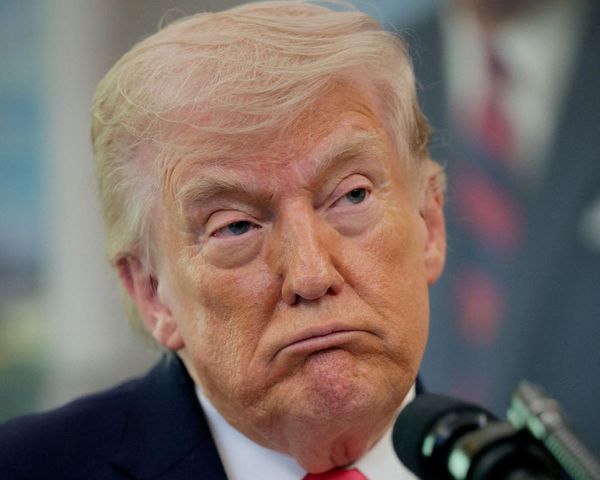
Trump was uncharacteristically quiet during the day Wednesday, after shocking many with his remarks in the East Room of the White House in the wee hours by declaring himself the winner, alleging "massive fraud" by the Democrats and vowing to go to the Supreme Court for relief.
By the end of the day Wednesday, his campaign was also calling for a recount in Wisconsin and had filed lawsuits in Michigan, Georgia and Pennsylvania.
By the end of the day Thursday, Trump himself was back at the podium: "If you count the legal votes, I win easily. If you count the illegal votes, they can try to steal the election from us."
And then he stoked the conspiracy fires: "We were winning in all the key locations by a lot actually, and then they started to miraculously get whittled away in secret."
Stay tuned, because there is more to come in this latest story arc: The weakened and angry king battles desperately to hold onto power as he sees it publicly being stripped away. Will his followers hear the call of his conspiracy claims and rise up to defend him? Proud Boys, stand by.
Mary L. Trump, the president's niece, a clinical psychologist and author of "Too Much and Never Enough: How My Family Created the World's Most Dangerous Man," a profile of her uncle, described him in that Thursday appearance as "desperate" and "flailing."
In an MSNBC interview, she went on to say, "This was Donald talking about an attempted coup. The leader of a country trying desperately to delegitimize an election. It's obscene.
In 2018, I wrote about Trump's chaotic presidency as a prime-time soap opera, specifically one of the glitzy, gaudy, greed-is-good, prime-time soap operas of the 1980s like "Dallas" or "Dynasty."
Same values, I said: Money is god, government is the work of Satan, and morality is for losers waiting to be fleeced by the winners.
I saw Trump as the Dallas character J.R. Ewing in his senior years, "crazy insecure as ever, still lying, scamming, cheating and trying more than anything else to see how disruptive he can be as he flies around in his private jet and piles up money for the family business."
A cheesy prime-time soap opera featuring a transgressive villain seemed to be the appropriate entertainment genre to describe the Trump presidency until recently.
This fall, the Trump narrative took a darker and more desperate turn as the death toll from COVID-19 soared and criticism of his response to it mounted. The more intense the criticism became, the more detached the president seemed to grow from the reality of COVID-19 and the destruction it was wreaking on the nation.
The storyline shifted to a twisted, reality-TV version of the hero quest where everything was the opposite of what it is in the universal, mythic narrative cataloged by Joseph Campbell in "The Hero with a Thousand Faces." Instead of a righteous hero fighting to redeem or save his community, we had a pathologically selfish anti-hero totally lacking in empathy as the central figure. Instead of a hero embodying the highest values of society, which many Americans like to think of as decency, self-sacrifice and fair play, we had an anti-hero showing greed, cruelty, indifference to the suffering of others and little or no respect for the rule of law.
The story arcs connected to this distorted, reality-TV version of the hero quest came fast and furious in recent weeks, almost like regular episodes. After months of denying the seriousness of COVID-19, Trump became infected with the virus. But then, after three days and the most advanced therapeutics at the Walter Reed National Military Medical Center, he was back and standing on the Truman Balcony of the White House as if defying the illness and the gods. His return to the White House was filmed, of course, and distributed on Twitter with stirring military music.
"You're going to beat it (COVID-19)," he told the American people in a follow-up video. "As your leader, I had to do that. I knew there's danger to it, but I had to do it. I stood out front. I led. Nobody that's a leader would not do what I did. And I know there's a risk. There's a danger. But that's OK, and now I'm better. Maybe I'm immune. I don't know."
Maybe you're divine. Who knows? But this is Trump standing in front of a camera and trying to write himself against all odds, after his actual mishandling of the pandemic, into a starring role on the hero quest.
And then came an actual physical quest as he set off on a manic dash with as many as four rallies a day in the last two weeks in battleground states.
As exhausted as I am by Trump, and as sick as I am of seeing him and hearing his voice, I watched every second of him on screen election week. How could you not want to see what happens next with this man who has caused such chaos and pain in American life the last four years? Will his next move involve using his office to push the nation toward civil strife if he is officially declared the election's loser?
Trump will remain on our screens because he cannot live without seeing himself on television. As much as he is a product of television, he is also its victim. If he does not see himself on TV, he does not exist. There is a reason he has been repeatedly described as spending more time each day watching Fox News than doing anything else.
Trump will also remain on our screens because more than 69 million people voted for him by Friday morning, with a core following that seems to believe anything he says no matter how large a lie. With that kind of following, if he does not start his own TV channel to financially exploit it, someone like Rupert Murdoch will pay a lot of money to have Trump appear on his. As a New York Times article analyzing the political power Trump could still wield noted, the president has in the past talked about launching his own channel.
But I am talking about cultural power, and the way Trump will be able to continue to debase our popular culture with his on-screen presence as long as he chooses to do so. I am not happy about that. He has already taken up far too much of my consciousness the last four years.
But if he's out of the White House, at least I can tune him out with the push of a button on my remote. I can't do that now when he has such power over our lives.