Afternoon summary
- MPs have voted 215 to 0 in favour of a non-binding backbench business motion which calls for the government to “reconsider the effect on the lowest paid workers of its proposed changes to tax credits due to come into force in April 2016, to carry out and publish analysis of that effect, and to bring forward proposals to mitigate it”. The Conservative party did not whip the vote and almost everybody in the chamber during the debate – including a number of Tory MPs – spoke out against the government’s current plans to cut £4.4bn to the tax credits bill. Labour’s Frank Field, the chairman of the work and pensions select committee, was supported by a succession of Tory MPs, after he urged the government not to go ahead with “terrifying” changes to tax credits next April.
- Sir John Chilcot has announced that he will publish his report into the Iraq war next June or July, giving government officials up to three months to carry out national security checks on its findings. In a letter to the prime minister the former Northern Ireland office permanent secretary said he would finally complete his work seven years after Gordon Brown set up the inquiry. Downing Street reacted with disappointment to Chilcot’s timescale. In a letter of reply to Chilcot, David Cameron said:
I recognise that you have a significant task, but would welcome any further steps you can take to expedite the final stages of the inquiry.
- Jeremy Corbyn has said he would be willing to go to Beijing if necessary to continue lobbying China not to dump steel at under cost price, following a visit to a plant in Scunthorpe where 900 job losses were announced last week. The Labour leader accused the government of being in thrall to “the idea of a global market economy” and called on the World Trade Organisation (WTO) to intervene after he toured the Tata steelworks on Thursday. Our Northern Editor, Helen Pidd, reports.
- Chris Grayling, the leader of the House of Commons, has signalled a crackdown on the “misuse” of Freedom of Information requests as a means of researching stories for journalists. Grayling made the comments in the House of Commons after being asked for an urgent debate to discuss worries of the Birmingham Post and Birmingham Mail newspapers about the current threat to freedom of information. He said it was wrong that the Freedom of Information Act was being used as a “research tool” to “generate stories” for the media. In advance of a review of FOI, which ministers believe is costing too much money, Grayling said it should be used for “those who want to understand why and how government is taking decisions”.
That’s all from me. Andrew will be back next week. Thanks very much for all your comments.
Updated
The Guardian’s political editor, Patrick Wintour, has written about today’s tax credits debate. You can read the article here and this is how it starts:
Frank Field, the chairman of the work and pensions select committee, has been supported by a succession of Tory MPs as he urged the government not to go ahead with “terrifying” changes to tax credits next April.
The Labour MP said the government should accept that those most damaged by the proposals were those who had done the right thing – and said ministers should come up with a more modest package that would only reduce tax credits for new claimants.
Field told MPs in a Commons debate on the issue: “Talking to constituents you cannot come away without being incredibly conscious of the fears people are suffering. People we should be saluting and cheering are sick with worry about how they will make ends meet, whether they are going to lose their homes, whether the interest on their mortgages can be repaid, let alone protecting their children.”
MPs vote 215 to 0 to reconsider tax credits changes
MPs have voted 215 to 0 in favour of a backbench business motion which calls for the government to “reconsider the effect on the lowest paid workers of its proposed changes to tax credits due to come into force in April 2016, to carry out and publish analysis of that effect, and to bring forward proposals to mitigate it”.
The motion was always going to be passed as the government is keen to avoid a row and so did not whip the vote. The motion, which is non-binding, is also essentially the same as what the Lords voted for on Monday. Peers voted in favour of a motion by the former Labour minister Lady Hollis to halt the cuts until the government produces a scheme to compensate low-paid workers for three years.
Updated
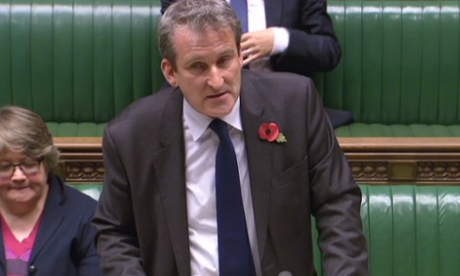
Damian Hinds MP, Exchequer Secretary to the Treasury, has been responding to the debate on behalf of the government.
I’m grateful to all 32 honourable and right honourable members who have participated in this debate on both sides of the house. The government is listening and this debate forms an important part of this process... We are all united in wanting to implement policies to deliver the best possible settlement for our constituents, now, in the near future, and for the generations to come...
The chancellor has said he’s listened to concerns from colleagues and has come forward with proposals in the autumn statement to achieve the goal of reforming tax credits, saving the money needed to secure our economy while at the same time helping in the transition to these changes.
MPs are currently voting on the motion.
Conservative MP Jeremy Lefroy points to a statement from the IMF that “excessive inequality damages growth” and he says tax credits have been a means of reducing excessive inequality.
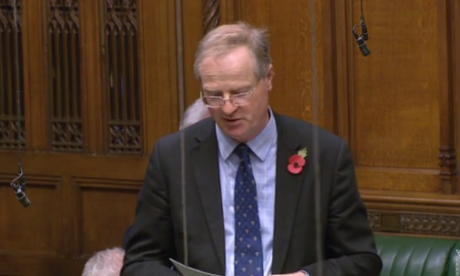
Lefroy talks about “the fallacy of trickle down economics”, and says the UK needs “surge up” economics. He stresses that people spend their money locally and that money from VAT will come straight into the treasury. The government must recognise the loss to the economy that will come from reducing people’s spending power by cutting tax credits, he says.
The Guardian’s Politics Weekly podcast is out, covering Europe’s migration crisis, Poland’s election and the merits of the Norwegian model. Have a listen.
Updated
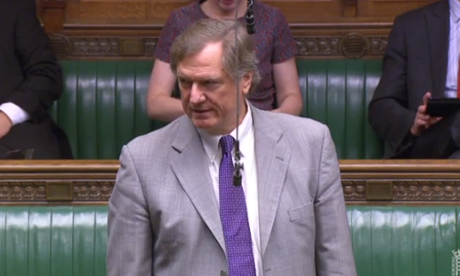
Conservative MP Peter Aldous said that, whilst the government was pursuing the right “strategic course”, the way the policy was going to be implemented would leave vulnerable families exposed. He said that the debate had allowed MPs to discuss the appropriate transitional measures.
Aldous suggested that the withdrawal of working tax credits should be phased in, that the National Insurance threshold be raised, and that tax breaks should be offered to companies who pay the living wage.
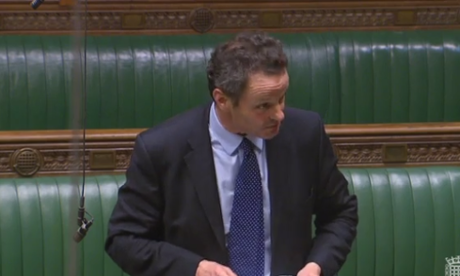
Conservative MP Tania Mathias, who beat Liberal Democrat Vince Cable to represent the constituency of Twickenham in May, also spoke out against the initial proposals and said she would be supporting the cross-party motion.
I have come across some people going through some of the most challenging times of their lives. But these people [...] do not have weak shoulders. Their shoulders are stronger than mine or anybody’s here.... They want to [work], because they want to be a role model for their children... They are doing their best for their families and we must do our best for them because ultimately they become role models for our society.
Back to tax credits, Labour MP Graham Allen has commented on the unusual nature of today’s tax credits debate – which has featured a disproportionate number of Conservative critics of the plans.
Madame deputy speaker, this has been a very strange debate. It is as if we’ve managed to collect within the chamber of the House of Commons all the sensible people from the other parties and have a serious debate about some of the issues. It’s quite unnerving to step out of the comfort zone of yelling at each other and actually hear sensible contributions from throughout the house... and perhaps it’s a lesson to all of us that maybe this is how we should have done it in the first place before the Chancellor made an announcement.
Actually to set out some broad principles, which [the Chancellor] is entitled to do – ‘We need to reduce the welfare budget, we made a commitment in our manifesto. We’d like to look at these issues. We need to find £12bn. How might we best do it?’ – and using the wit of all the people throughout the chamber, all the select committees which we nominate... I’m perfectly sure we could have come up with something less painful, less crude, less crass and saving the Chancellor a fair bit of grief as well.
Cameron says he is frustrated on behalf of parents who lost children in Iraq
My colleague Nick Watt is with the prime minister in Iceland and has filed this from this afternoon’s press conference.
The prime minister said he was “immensely frustrated” by the delay on behalf of families who lost loved ones in the war.
Speaking at the conclusion of the Northern Future Forum in Reykjavik, he said: “I am immensely frustrated by the slowness and amount of time it has taken. I am not frustrated on my own behalf. I am frustrated for the mums and the dads who lost loved ones and who want to know what happened and why it happened and want to make sure that the lessons are learnt.
“What I can say is this is an independent enquiry, the timing is not set by the government. Indeed if the last Labour government had started this enquiry when my party first put it forward in parliament, even on these elongated timetable, it would have been done and dusted and read and absorbed by now. What I can say for my own part is that as soon as this report arrives on my desk I will move as quickly as I possibly can to publish it as I did with the Saville enquiry into Bloody Sunday where it was published within two weeks. But I share the frustrations of many across our country. We should be learning the lessons from what happened and it shouldn’t be taking this long.”
The prime minister said that allowing government officials to conduct a national security clearing of the report was the normal procedures with such reports. A similar process took place with the Bloody Sunday enquiry.
He said: “On Chilcot, we will follow absolutely the required method of responding to independent inquiries, where they arrive on the government’s desk, there is a very brief bout of national security checking that has to be carried out. As I said, when we had the Savile inquiry – which was an even longer inquiry into Bloody Sunday – I think it took two weeks for my office to make sure that was turned around and published. I’ll publish it as quick as I possibly can. I know how long people have waited, they don’t want to have to wait any longer.”
Updated
Corbyn says Chilcot inquiry is 'beyond ridiculous'
Labour leader Jeremy Corbyn has been speaking to the BBC about today’s Chilcot announcement.
I suppose I should welcome it, but this is getting beyond ridiculous. This inquiry was established by Gordon Brown when he was prime minister and it was due to report before the end of the 2005/2010 parliament. We have now been through a whole parliament and it still hasn’t reported.
We are going to be in 2016 when it finally reports. I hope it is the whole story. I hope stuff hasn’t been left out of it. I hope we are not still negotiating with Tony Blair and George Bush as to what has got to be included in that report.
We need to know what happened. We need to know why it happened. We need to know who made the decisions and we never need to make these kind of catastrophic mistakes again.

Cameron speaks at a press conference in Iceland
The prime minister has been taking questions from journalists along side other leaders in Reykjavik. It wasn’t broadcast in full, so here’s a summary of Twitter reaction from journalists who were attending.
Cameron here now - all very jolly informal summit thus far, Danish PM just revealed Cameron got beaten at Lego building challenge
— Laura Kuenssberg (@bbclaurak) October 29, 2015
Finnish PM now talking about them forming a band..... Whatever they have discussed seems like they've enjoyed each other's company
— Laura Kuenssberg (@bbclaurak) October 29, 2015
Er…? Estonian prime minister says his country saves 2% of GDP per year by using digital, rather than handwritten, signatures. #NFF
— Lucy Fisher (@LOS_Fisher) October 29, 2015
Wow, these Nordic types... Icelandic PM sums up six key lessons of NFF summit. Final one: "Creativity is sexy". (No really.)
— Lucy Fisher (@LOS_Fisher) October 29, 2015
Cameron says "if last Labour Gov had started this inquiry when we wanted to" would have been published much earlier...
— Faisal Islam (@faisalislam) October 29, 2015
Cameron says he is 'immensely frustrated' by #Chilcot delays 'not on my behalf but on behalf of the mums and dads who lost loved ones'
— Tamara Cohen (@tamcohen) October 29, 2015
My role on Kids Company was always to try and keep it doing its good work, to give it one more chance - @David_Cameron tells @DMcCaffreySKY
— Nicholas Watt (@nicholaswatt) October 29, 2015
Cameron dodges question about whether FOI shd be used by journalists, says: “The British gvt is one of the most open + transparent” in world
— Lucy Fisher (@LOS_Fisher) October 29, 2015
The Conservative party has 'lost its way a little' over tax credits, says Tory MP
Back briefly to the tax credits debate, there is no shortage of Conservative MPs expressing their doubts about the government’s proposals.
Conservative MP Neil Parish said his party had “lost its way a little” –
I think we are standing up for what we believe to be right because as far as I am concerned it’s absolutely fundamental people that work are better off than those that don’t... If we’re not at all careful this policy will actually drive people back on benefit and do the absolute opposite direction of where we want to take people.
...Can I be so bold to say, you can have as many spin doctors and clever people with figures as you like but in the end when it comes to the fact when you’re on a low income and you’re relying on tax credits, when you know that money is being taken away from you it’s absolutely real. So I think the Government and the Chancellor on this occasion, and I hate to have to say it, does have to be absolutely certain as to how many people are going to be affected and what we’re going to do about it.
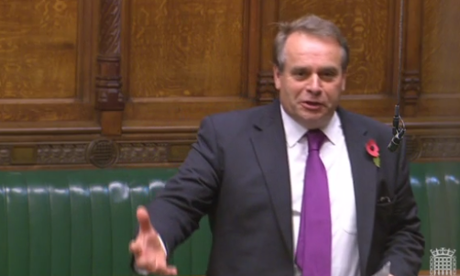
Conservative MP Will Quince said that “sometimes even friends can be critical, as long as it’s constructive.”
Updated
Blair not to blame for the delay of Chilcot, his office says
Tony Blair’s office has issued a statement on the publication of the timetable for the Chilcot report. It stresses that the delays were not the result “either of issues over the correspondence between him as Prime Minister and President Bush; or due to the Maxwellisation process”.
Tony Blair has always wanted the Inquiry to report as soon as it properly can and he looks forward to responding to the Inquiry’s report.
Mr Blair also wants to make it clear that the timetable of the Inquiry and the length of time it will have taken to report is not the result either of issues over the correspondence between him as Prime Minister and President Bush; or due to the Maxwellisation process.
As for the first, the correspondence has been with the Inquiry from the beginning. The only question was over how much of the correspondence could be published in the final report not about its content being used to inform the report. In any event that question was resolved between the Cabinet Office and the Inquiry in May 2014.
Secondly, Tony Blair received the deliberations of the Inquiry under the Maxwell process in full only in January 2015, four years after the Inquiry finished taking evidence. He responded by August. This is not therefore the reason for the delay as Sir John Chilcot has made clear.
It is our understanding that other witnesses also received information very late in the process, so any suggestion that witnesses have been the cause of the delay is categorically incorrect and this has again been stated clearly and publicly by Sir John.

Updated
Lunchtime summary
- Sir John Chilcot has announced that he will publish his report into the Iraq war next June or July, giving government officials up to three months to carry out national security checks on its findings. In a letter to the prime minister the former Northern Ireland office permanent secretary said he would finally complete his work seven years after Gordon Brown set up the inquiry. Downing Street reacted with disappointment to Chilcot’s timescale. In a letter of reply to Chilcot, David Cameron said:
I recognise that you have a significant task, but would welcome any further steps you can take to expedite the final stages of the inquiry.
-
A National Audit Office (NAO) report indicates that Cameron, former education secretaries Michael Gove and David Blunkett, and the former schools secretary Ed Balls all intervened to support Kids Company between 2002 and 2015, in some cases to prevent it from becoming insolvent. Tim Loughton, who was Cameron’s children’s minister from 2010 to 2012, said people would “have to ask No 10” why warnings about the effectiveness of Kids Company were ignored, and suggested Batmanghelidjh’s personal lobbying of the prime minister influenced a decision to support the charity.
Basically, it went over our head at the Department for Education. As was the characteristic of Camila Batmanghelidjh, she wrote the ‘Dear David’ letter and went straight to No 10.
- David Cameron is in Iceland today for a meeting of the Northern Future Forum. The prime minister of Iceland, Sigmundur Gunnlaugsson, has told the BBC’s political editor Laura Kuenssberg that a looser relationship with the EU “might be better for the UK”. While Finnish Prime Minister Juha Sipila and Estonian Prime Minister Taavi Roivas have said they have seen no “concrete proposals” from Cameron on what exactly he wants from renegotiation.
- MPs are debating cuts to tax credits in the House of Commons. A number of Conservative MPs have been speaking out against the plans. Stephen McPartland led Conservative opposition to the cuts in a backbench debate, while Guto Bebb MP suggested the Chancellor dump planned further rises to the personal allowance to help off set the £4.4bn cuts. McPartland said:
I do want to work with the Treasury. I’m a prodigal son, I can be returned to the fold I’m sure. But there is huge fear out there in the public and we need to come forward with some proposals as fast as we can.
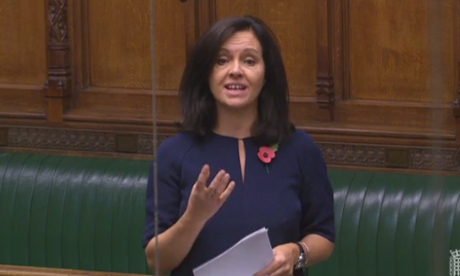
Labour MP Caroline Flint, is speaking in the tax credits debate. She says that when Labour gained power in 1997 they found high rate of poverty among families with parents in work. Tax credits changed the fortunes for many families, she says, and they reduce child poverty by 1.1m over a decade.
Flint says that tax credits are not simply a state handout to companies who are paying low wages. Companies are blind to the amount of tax credits received by individuals, she argues, and employers will not immediately step into to fill the void if tax credits are cut. “The government must know this”, she says.
The tax credits bill increased over the course of the last Labour government because they started to incorporate include various other benefits in their cost - like child care costs. Flint also says it’s good for the economy to have people in work.
Back to the tax credits debate in the commons. Stephen McPartland, a Conservative MP for Stevenage, is talking about his decision to vote against his party on the tax credits measures.
He says he does not think the effects of the cuts had been properly explored by the government before they put the proposals to parliament.
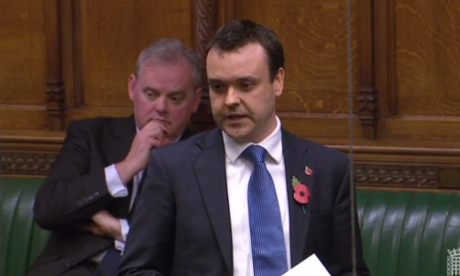
“I am pleased that the chancellor is listening,” says McPartland. He wants provision to me made so that income his constituents lose through the tax credits cuts will be made up elsewhere.
He says that macroeconomics tells us that the £4.4bn cut from tax credits represents £4.4bn take out of local economies. “I do want to work with the treasury,” he says. “I can be a prodigal son. I can return to the fold.
Sir Ming Campbell, former Liberal Democrat leader, has also been talkig to the BBC about Chilcot. He says that much of the blame for the delay should be placed with the last Labour government.
The prime minster’s welcome is very lukewarm, isn’t it? Because on all sides it’s agreed that tis has taken far too long. I suspect that if you asked Sir John Chilcot, he would agree.
The problem is the way in which the inquiry was set up. The Labour government at the time thought it could kick the issue into the long grass. It told the inquiry team ‘go away and tell us about Iraq’. It didn’t give specific terms of reference. Of course, the didn’t have a judge to lead it, nor did it have the kind of legal team that the Leveson inquiry. If you put the two together – Saville into Bloody Sunday and Chilcot into Iraq – it’s pretty clear we can’t afford financially or indeed politically any other inquiries of that kind.

Updated
Conservative MP Bernard Jenkin, who is chair of the public administration select committee, has told the BBC that he welcomes the announcement of a date, but that people should not criticise John Chilcot.
We should stop criticising Sir John Chilcot personally. He has been heroic in the way he has resisted public pressure. He has been resisting pressure from some of the witnesses. I thought the criticism levelled by Clare Short earlier this year was absolutely out of order. I think it’s out of order for the former prime minister Tony Blair to be issuing his sort of pre-buttal denials in advance of the publication of the report.
He’s seen parts of the report through the Maxwelisation process, so he is already responding in public to a report that hasn’t been published. This is not right and this underlines again, if this had been a statutory inquiry they would not have been able to do this. It would have been illegal for them to act in any way on what they have seen in the draft report...
There are going to be lessons to learn from this. If it had been a statutory inquiry it would have, I think. helped the discipline of the inquiry. And if it had had an end date in the remit to report by a certain date that would have focussed the minds of the inquiry on that.

Updated
MPs are currently debating tax credits in the chamber. Frank Field MP, who is the chair of the work and pensions select committee, calls on the government to provide more data on the impact the tax credits cuts will have on the low paid. He congratulates the House of Lords – not for causing a constitutional crisis – but for giving the government a welcome opportunity to have a rethink.
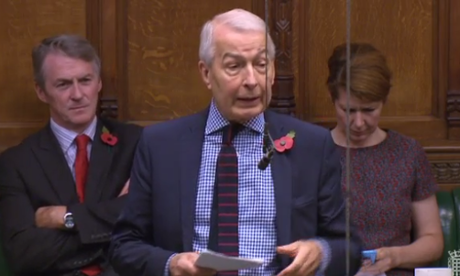
2) Field says Treasury must accept there will be a cost and government shouldl reduce budget surplus & find cash from pension tax relief.
— Patrick Wintour (@patrickwintour) October 29, 2015
It’s Frances Perraudin here again. I’ll be anchoring the live blog for the rest of the afternoon.
Updated
The speaker has joined criticism of the timetable for publication:
John Bercow says of Chilcot: "The whole situation is extremely unsatisfactory."
— PoliticsHome (@politicshome) October 29, 2015
As has the leader of the Commons:
Grayling: "I share and govt shares frustration".. says it's "not his job to preannounce a letter from Sir John #Chilcot"
— Tim Reid (@TimReidBBC) October 29, 2015
Updated
The Liberal Democrat leader Tim Farron, has welcomed the announcement of a timetable for publication and urged the parties involved to stick to it. He said:
The Iraq war impacted the lives of many, not least the soldiers who fought out there and their families.
Given they have had to wait seven years for this publication, I urge the government and Sir John Chilcot to stick to this timetable. It is already many years too late.
I also encourage the government to take this opportunity not just to reflect on the choices of the previous administration in the run up to the war, but to ensure that similar mistakes regarding major foreign policy decisions are not made again in the future.
Here’s the full text of the prime minister’s response to Chilcot:
David Cameron's response to Chilcot: hurry the hell up, please. pic.twitter.com/lf9BkkFL1Q
— Jim Waterson (@jimwaterson) October 29, 2015
In his reply to Chilcot, Cameron also says:
We remain ready to provide whatever further assistance we can in order to support the conclusion of your work, and I am very happy to provide more resource if it would allow the report to be published more quickly.
He adds it would be possible to complete security checking within two weeks as occurred with the Savile inquiry into Bloody Sunday.
Cameron disappointed by delay
The prime minister has replied to Chilcot’s letter.
But most journalists and commentators have made put their minds already so won't bother to read it in any case https://t.co/9Rfto4jxrt
— Mike Gapes (@MikeGapes) October 29, 2015
PM to Chilcot: "I am disappointed & I know the families of those who served in Iraq will also be disappointed" at report publication timing.
— Callum Jones (@CallumIJones) October 29, 2015
Mike Gapes, a Labour MP since 1992 who voted in favour of the Iraq invasion, has suggested the Iraq inquiry should be neither finished nor published as people have made their minds up already.
Why bother wasting money finishing and publishing Chilcot ? The hysterical Blair haters have decided already. https://t.co/oyZ9kx1cJo
— Mike Gapes (@MikeGapes) October 29, 2015
But most journalists and commentators have made put their minds already so won't bother to read it in any case https://t.co/9Rfto4jxrt
— Mike Gapes (@MikeGapes) October 29, 2015
In 2009, Chilcot told a press conference that 2010 was “probably the earliest possible” date that a report would be published - though he warned it could take longer.
How wise he was to add that caveat.

Sir John Chilcot, who has said that the Iraq Inquiry report should be ready for publication in June or July 2016. Photograph: David Cheskin/PA
Rose Gentle, whose Royal Highland Fusilier son Gordon, 19, was killed in a bomb attack in Basra in 2004, has said she is “disappointed” by the news.
Gentle, from Glasgow, who set up the Military Families Against The War group, said:
We thought it should be out a lot sooner than this. I thought it would be out by the end of the year, because they have everything there.
It’s another let-down. It’s another few months to wait and suffer again.

So, we will have to wait another seven months minimum to get Chilcot’s conclusions. In the meantime, Peter Oborne has published the results of his own unofficial inquiry for BBC Radio 4’s The Report after studying much of the testimony given to the official inquiry. Here are his conclusions:
Did the British government mislead parliament about weapons of mass destruction? Yes.
Did the war very substantially increase the threat from al-Qaeda? Yes.
Is there hard evidence that Tony Blair entered into a secret deal with the US president? No.
Was the war illegal? Yes.
Whether Chilcot will reach such black-and-white conclusions in the course of his two million plus words remains to be seen.
My colleague Richard Norton-Taylor points out that the “national security checking” alluded to by Chilcot in his letter to Cameron represents another opportunity for Whitehall to meddle:
It became clear, as the Maxwellisation process got under way, that Whitehall had held back relevant documents from the inquiry only to give them later to those the inquiry planned to criticise. This has caused further delays, and aggravated the deteriorating relations between Chilcot on the one hand, and Whitehall, backed by 10 Downing Street, on the other.
For it also should be remembered that it is not only Blair and former Labour ministers and political advisers who will be attacked, but senior Whitehall officials – sometimes called the permanent government. Armed with a powerful weapon – the final say over what documents could, and what could not be published, they have fought a rearguard action against Chilcot.
And Whitehall has not yet finished, Chilcot made clear in his statement on Thursday. After the report is completed “confidential access will be given to a team of officials for national security checking.” Chilcot told David Cameron: “I entirely understand that a checking process is necessary and is normal procedure in Inquiries which have considered a large volume of sensitive material”. But, as Chilcot must know full well, the phrase “national security” covers a multitide of sins.
The report should provide an unprecedented insight into one of the most disastrous decisions made by a British government in recent times – certainly since the 1956 Suez crisis. But it should do more than that. It should also provide unprecedented insights into the relations between military commanders and their political masters, how Britain was governed, and how it should not be ever again. Whether the long delay should have raised our expectations or lowered them, we will have to wait for another seven months to find out.
The announcement of the inquiry publication date comes just days after Tony Blair offered a qualified apology in relation to Iraq.
In an interview with Fareed Zakaria on CNN, he said:
I apologise for the fact that the intelligence we received was wrong. I also apologise for some of the mistakes in planning and, certainly, our mistake in our understanding of what would happen once you removed the regime.
But Blair made clear that he still felt he made the right decision in backing the US invasion of Iraq to remove Saddam Hussein. He said:
I find it hard to apologise for removing Saddam.
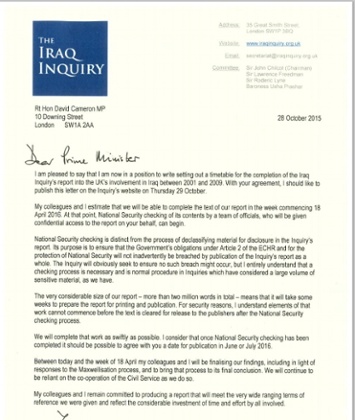
Here’s the full text of Chilcot’s letter to the prime minister:
My colleague Nick Watt explains what has held up publication:
Chilcot was involved in a lengthy wrangle with two successive cabinet secretaries - Lord O’Donnell and Sir Jeremy Heywood - over the publication of correspondence between Blair and George W Bush.
These focused on whether Blair provided undertakings to Bush in the run up to the invasion in 2003 - around the time of his visit to Bush in Crawford, Texas in April 2002 - that Britain would join US forces.
Blair has always said that he gave no definitive commitment to the US and actually succeeded in putting pressure on the White House to seek UN authority in the autumn and winter of 2002.
Heywood, who feared that publication of the correspondence might harm communications with future presidents, eventually agreed to some limited publication.
This then paved the way for the Maxwellisation process in which the Chilcot team sent sections of the report to witnesses who are to be criticised. This is a lengthy process because witnesses have the right to respond
The report is more than 2million words long, Chilcot said in his letter. Good luck if you plan on reading it.
At avg. adult reading speed (https://t.co/mBesKfGF0q) it will take you >121 hours to read the Chilcot inquiry report https://t.co/NjSyAFaSO6
— Chris Hanretty (@chrishanretty) October 29, 2015
Chilcot's Iraq inquiry is over 2 million words long. That's 3x War and Peace in length https://t.co/jTiUMgMrwD pic.twitter.com/I5C2Oc6Www
— Asa Bennett (@asabenn) October 29, 2015
Updated
Reg Keys, whose son was killed in Iraq in 2003, has greeted news of the publication date “with a certain amount of anger”. He told Victoria Derbyshire on BBC News:
We the families believe Sir John allowed the Maxwellisation process to run on far too long. There is no legal requirement to do that. All we’ll get now is a watered down version of some of the criticisms...
The families will not hear the original criticisms that Sir John put to Tony Blair and Alastair Campbell...
We see no reason why it couldn’t have been completed before Christmas.

The Iraq war inquiry website says that the inquiry expects to be able to complete the text of its report in the week of 18 April 2016:
At that time, confidential access will be given to a team of officials for national security checking.
Sir John wrote “I entirely understand that a checking process is necessary and is normal procedure in inquiries which have considered a large volume of sensitive material” to ensure that the government meets its obligations under Article 2 of the European Convention on Human Rights and for the protection of national security.
Sir John also explained “The very considerable size of our report - more than two million words in total - means that it will take some weeks to prepare for printing and publication ... We will complete that work as swiftly as possible. I consider that once national security checking has been completed it should be possible to agree with you a date for publication in June or July 2016.”
Sir John ended his letter “My colleagues and I remain committed to producing a report that will meet the very wide ranging terms of reference we were given and reflect the considerable investment of time and effort by all involved.”
Iraq war inquiry to be published next summer.
Sir John Chilcot has announced that he is to publish his report into the Iraq war next June or July following intense pressure from David Cameron to speed up his timetable.
In a letter to the prime minister, the former Northern Ireland office permanent secretary said that he will finally complete his work seven years after the inquiry was set up by Gordon Brown.
The prime minister, who received Chilcot’s letter as he travelled to the Northern Future Forum in the Icelandic capital on Wednesday, is expected to set out his response later on Thursday.
Updated
A National Audit Office (NAO) report into the collapse of the charity Kids Company has found that Labour and Conservative ministers brushed aside civil servants’ concerns about the charity’s finances on six occasions to push through government grants to the charity totalling at least £42m over 15 years. Here’s the full story from our social policy editor Patrick Butler.
The report indicates that David Cameron, Michael Gove, Ed Balls and David Blunkett intervened to support Kids Company between 2002 and 2015, in some cases to prevent it from becoming insolvent, and often after being directly lobbied by the charity itself.
Civil servants repeatedly warned ministers that providing financial support to Kids Company carried risks because of the charity’s persistently fragile finances. But they were overruled, the NAO reported – though there is no evidence that ministers acted inappropriately or beyond their powers.
Tim Loughton, former Conservative minister for children, was just on the Today programme and said that he had raised concerns about funding for Kids Company when they submitted an emergency application for government money in 2012.
I was very sceptical at the time and very against giving them such a large amount of money... basically, it went over our heads in the department for education and, as was characteristic of Camila Batmanghelidjh, she wrote the ‘Dear David’ letter and it went straight to number ten...
The officials were very clear that there were serious question marks about the way Kids Company was run, about its financial sustainability and as to whether it was actually doing the job for which the funds were given and I was constantly asking for the performance indicators and the data to see whether it was having the effect to which it was promised... We never saw the proof and when you are handling such large quantities of public money you really do need to show that it’s effective.

Estonia and Finland's leaders say they haven't seen Cameron's proposals
The BBC is reporting that Finnish Prime Minister Juha Sipila and Estonian Prime Minister Taavi Roivas have seen no “concrete proposals” from Cameron on what exactly he wants from renegotiation.
Sipila told the BBC:
When you have a concrete proposal I think that Finland and other Nordic countries, we are very open to finding a solution for that.
David Cameron is in Iceland today for a meeting of the Northern Future Forum. He will be giving a press conference around lunch time, which I will be covering, and all focus will be on the prime minister’s attempts to renegotiate the UK’s relationship with the EU.
The prime minister of Iceland, which is not in the EU, has told the BBC’s political editor Laura Kuenssberg that a looser relationship with the EU “might be better for the UK”.
Sigmundur Gunnlaugsson said:
I wouldn’t like to tell British politicians what to do - concerning the EU, it maybe one of the things they want to look into when they have this debate about Britain’s relationship with the EU.
Maybe some third alternative is better for the UK, I couldn’t say or at at least I wouldn’t like to speculate.
Out campaigners have been pointing to places like Norway, which like Iceland is a trading partner with the EU but doesn’t have formal membership, as a model for what the UK’s position could be. Speaking at prime minister’s questions yesterday, Cameron said:
If we don’t get what we need in our negotiations I rule nothing out, but I do think it’s important that as we have this debate as a nation that we are very clear about the facts and figures of the alternatives.
Some people arguing for Britain to leave the European Union - not all people, but some people - have particularly pointed to the position of Norway saying that is a good outcome. I would guard very strongly against that.
Norway actually pays as much per head to the EU as we do. They actually take twice as many per head migrants as we do in this country but of course they have no seat at the table, no ability to negotiate.
There will be backbench business debate this afternoon about the “distributional effect of proposed reforms to tax credits”. Since the Lords has forced the government to reconsider its tax credits proposals anyway, the motion is likely to be passed unopposed, but it will be interesting to see how many Conservative MPs express their reservations.
I’m covering for Andrew Sparrow today – though I have to pop off for a meeting for a few hours at 9am.
I will also be covering breaking political news as it happens, as well as bringing you the best reaction, comment and analysis from the web. I will post a summary at lunchtime and another in the afternoon.
If you want to follow me or contact me on Twitter, I’m on @fperraudin.
Updated