Evening summary
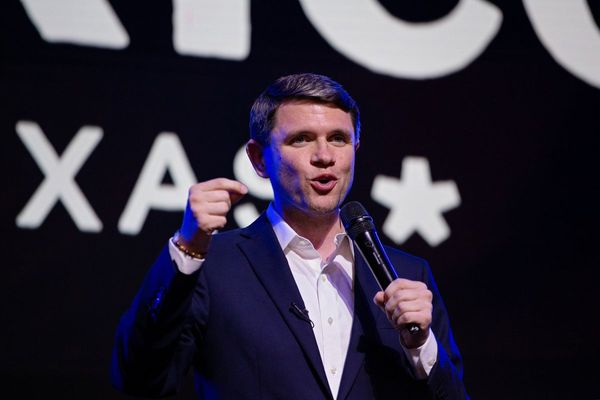
- Tim Farron stepped down as leader of the Liberal Democrats citing his Christian beliefs. In his resignation speech he said he felt “remaining faithful to Christ” was incompatible with being his party’s leader.
- Jeremy Corbyn has reshuffled his shadow cabinet –– only making changes to five key posts and promoting significant figures from Labour’s general election campaign.
- Andrew Gwynne, Ed Balls’ former parliamentary private secretary has been promoted to Shadow Secretary of State for Communities and Local Government following on from the success of the national campaign he ran alongside ex-miner Ian Lavery in the run-up to the June 8 vote.
- Ian Lavery in turn has been given the job of Party Chair, while former leadership rival Owen Smith is now the Shadow Secretary of State for Northern Ireland.
- New MP Lesley Laird has risen swiftly to the Labour frontbench after she was newly elected as an MP last Thursday. She is now Shadow Secretary of State for Scotland.
- And Dawn Butler is back as Shadow Minister for Diverse Communities after stepping down earlier this year to vote against triggering article 50.
- Theresa May has said an investigation will be launched once emergency services complete their work at the Grenfell Tower fire site to see if there are “lessons to be learnt”.
The prime minister Theresa May has said that once emergency services have completed work at the Grenfell Tower fire site, an investigation will be launched to assess if there are “lessons to be learned”. She said:
Of course, once the scene is secure, once the recovery is complete, then an investigation will take place into the cause of the fire and if there are any lessons to be learned.
Until then, our focus must be on ensuring that the emergency services have what they need to continue with their harrowing work, and that help and support is being provided to all those who have suffered as a result of this tragedy.
Updated
Jo Swinson, who regained her East Dumbartonshire seat last Thursday, has quickly emerged as the bookies’ favourite to take over from Tim Farron as Lib Dem leader. The Guardian’s round-up of the early runners and riders in the leadership race can be read here
Updated
Owen Smith, who mounted a leadership challenge against Jeremy Corbyn last year, has said he is “honoured” to be named new shadow Northern Ireland secretary – as tensions mount in the region over direct rule from Westminster and DUP’s new influence with Downing Street
Helping bring about peace & powersharing in N Ireland is one Labour's proudest achievements and I'm honoured to be our new Shadow SOS for NI
— Owen Smith (@OwenSmith_MP) June 14, 2017
Updated
Scottish Labour leader Kezia Dugdale has congratulated Lesley Laird for her swift promotion to Labour’s top team after winning Gordon Brown’s old seat of Kirkcaldy and Cowdenbeath last Thursday
Thrilled to see @LesleyLaird join the UK Shadow Cabinet as shadow for Scotland 🌹Watch out @DavidMundellDCT
— Kezia Dugdale (@kezdugdale) June 14, 2017
New shadow secretary of state for communities and local government Andrew Gwynne is also rewarded for his work on the campaign that saw Labour’s vote swell. The former parliamentary private secretary to Ed Balls ran the successful national campaign alongside Lavery.
Updated
Ex-miner Ian Lavery has been rewarded for his work on Labour’s election campaign and replaces Tom Watson as party chair
Cobyn uses an olive branch as a weapon: Tom Watson replaced as Labour chair by ex-miner Ian Lavery pic.twitter.com/jtidd85cZn
— Kevin Maguire (@Kevin_Maguire) June 14, 2017
Jeremy Corbyn will keep the rest of his shadow cabinet as they are – no big moves as the leader sticks with the team who helped on the road to the party’s unexpected election boost.
Updated
Labour confirms new shadow cabinet appointments.
Jeremy Corbyn said: “I am delighted to announce four appointments to fill shadow cabinet vacancies. I look forward to working with the strengthened shadow cabinet as we prepare a government in waiting to carry out our manifesto for the many not the few.
“Our party is now on a permanent campaign footing in anticipation of the failure of Theresa May’s attempt to establish a stable administration with the support of the DUP.
“I am therefore appointing Ian Lavery, Co-National Campaign Coordinator, to the additional role of Labour Party Chair to strengthen our campaigning and party organisation, as we prepare to contest a new general election and form the next government.”
Updated
Political blogger Guido Fawkes has tweeted some early names from Labour reshuffle
LABOUR RESHUFFLE KLAXON pic.twitter.com/5OlB2oEaBZ
— Guido Fawkes (@GuidoFawkes) June 14, 2017
A reshuffle of Labour’s shadow cabinet is understood to be taking place this evening.
At the last general election the Liberal Democrats increased the number of MPs they have at Westminster from nine to 12, after making overturning Brexit the central thrust of their campaign. But they also lost seats – including Richmond Park, which was won by Sarah Olney just months earlier. Some of the party’s big beasts, including former ministers Vince Cable, Ed Davey, and Jo Swinson have returned to Westminster and could be potential leadership contenders.
Updated
Earlier today Brian Paddick, the Lib Dem spokesman on home affairs, resigned over Farron’s views on homosexuality. Our story is here.
Updated
Here is the statement in full: “This last two years have seen the Liberal Democrats recover since the devastation of the 2015 election.
That recovery was never inevitable but we have seen the doubling of our party membership, growth in council elections, our first parliamentary by-election win for more than a decade, and most recently our growth at the 2017 general election.
Most importantly the Liberal Democrats have established ourselves with a significant and distinctive role – passionate about Europe, free trade, strong well-funded public services underpinned by a growing market economy.
No one else occupies that space. Against all the odds, the Liberal Democrats matter again.
We can be proud of the progress we have made together, although there is much more we need to do.
From the very first day of my leadership, I have faced questions about my Christian faith. I’ve tried to answer with grace and patience. Sometimes my answers could have been wiser.
At the start of this election, I found myself under scrutiny again – asked about matters to do with my faith. I felt guilty that this focus was distracting attention from our campaign, obscuring our message.
Journalists have every right to ask what they see fit. The consequences of the focus on my faith is that I have found myself torn between living as a faithful Christian and serving as a political leader.
A better, wiser person than me may have been able to deal with this more successfully, to have remained faithful to Christ while leading a political party in the current environment.
To be a political leader – especially of a progressive, liberal party in 2017 – and to live as a committed Christian, to hold faithfully to the Bible’s teaching, has felt impossible for me.
I’m a liberal to my finger tips, and that liberalism means that I am passionate about defending the rights and liberties of people who believe different things to me.
There are Christians in politics who take the view that they should impose the tenets of faith on society, but I have not taken that approach because I disagree with it – it’s not liberal and it is counterproductive when it comes to advancing the gospel.
Even so, I seem to be the subject of suspicion because of what I believe and who my faith is in.
In which case we are kidding ourselves if we think we yet live in a tolerant, liberal society.
That’s why I have chosen to step down as leader of the Liberal Democrats.
I intend to serve until the parliamentary recess begins next month, at which point there will be a leadership election according to the party’s rules.
This is a historic time in British politics. What happens in the next months and years will shape our country for generations.
My successor will inherit a party that is needed now more than ever before. Our future as an open, tolerant and united country is at stake.
The cause of British liberalism has never been needed more. People who will fight for a Britain that is confident, generous and compassionate are needed more than ever before.
That is the challenge our party and my successor faces and the opportunity I am certain that they will rise to.
I want to say one more thing: I joined our party when I was 16, it is in my blood, I love our history, our people, I thoroughly love my party.
Imagine how proud I am to lead this party. And then imagine what would lead me to voluntarily relinquish that honour.
In the words of Isaac Watts it would have to be something ‘so amazing, so divine, (it) demands my heart, my life, my all’.”
Updated
In his resignation statement Farron said: “The consequences of the focus on my faith is that I have found myself torn between living as a faithful Christian and serving as a political leader. A better, wiser person than me may have been able to deal with this more successfully, to have remained faithful to Christ while leading a political party in the current environment. To be a political leader – especially of a progressive, liberal party in 2017 – and to live as a committed Christian, to hold faithfully to the Bible’s teaching, has felt impossible for me.”
Updated
Tim Farron, the Liberal Democrat leader, has announced his resignation
Afternoon summary
- Jeremy Corbyn has suggested spending cuts could have contributed to the deadly fire at Grenfell Tower. The Labour leader said “searching questions” need to be asked about what happened at the west London tower block, adding: “If you deny local authorities the funding they need, then there is a price that’s paid.” Our main story about the catastrophe is here.
- Nick Timothy, Theresa May’s former co-chief of staff, has criticised the Tory elections chief Lynton Crosby for running a presidential campaign. (See 4.18pm.)
- Ian Blackford has been elected as the SNP’s leader at Westminster. (See 3.53pm.)
That’s all from me for today.
Thanks for the comments.
Northern powerhouse minister resigns
Andrew Percy, northern powerhouse minister, has resigned from the government.
Writing on social media, the MP for Brigg and Goole said he had been offered the role again following last week’s election, but had decided to “pursue other challenges”. He said:
[It] was a privilege to be asked to continue serving in my role in government as a minister, but I have reluctantly decided to step down and leave the government. I thank the prime minister for offering me this role again but I have decided to pursue other challenges. She continues to enjoy my full support from the back benches.
Percy was promoted to the job in Theresa May’s first cabinet reshuffle last July. He took over from James Wharton, who was the first MP to take the role and lost his seat in Stockton South last week. Percy has been MP for his Yorkshire constituency since 2010 and increased his majority by 7.4 points on Thursday.
Commenting on the resignation, Ed Cox, director of IPPR North, said that while ministers come and go, “the weight of the north’s £300bn economy continues to gather momentum despite Westminster whims”. He went on:
In the north, the votes in 2015, 2016 and 2017 have one thing in common: northerners have each time snubbed the ‘Westminster option’. Miliband, Remain and now Theresa May were rejected by Northern voters who want to see real change.
Now more than ever, we need a council of the north in a new federal UK, able to make vital decisions for itself such as on international trade and economic development, and to give a voice to the North during Brexit negotiations.
The mass exodus of Northern Ireland political parties to London tomorrow (see 2.10pm), including most critically Sinn Fein’s leader at Stormont Michelle O’Neill, is an interesting development.
It would suggest Theresa May is going to outline to them the deal she is hatching with the Democratic Unionists to shore up a minority Conservative government.
And that this deal could have benefits for everyone in Northern Ireland, the line will probably be, if and only if course that these parties reform the broken power-sharing executive back in Belfast.
No doubt reassurances will also be given that this Tory-DUP deal will not undermine the core principles of the Good Friday Agreement.

In response to popular demand (well, a request from ID873852 BTL), here are some more charts from the YouGov research about how different groups voted in the election.
How people voted by age

How people voted by educational achievement

How people voted by gender

May's former top aide criticises Lynton Crosby for making Tory election campaign presidential
Nick Timothy, who resigned on Saturday as one of Theresa May’s joint chiefs of staff, has written an article for the Spectator (paywall) defending the role he played in the Conservative party’s non-victory. (It wasn’t quite a defeat, although it felt like one.) Timothy was one of the two main authors of the Tory manifesto (the other was Ben Gummer) and many people have been arguing that the party lost because it contained unpopular policies, like getting the elderly to pay more for their social care, and nothing particularly appealing.
Here are the main points.
- Timothy criticises Lynton Crosby, the political strategist who ended up running the Tory campaign, for making the campaign too presidential. He does not name Crosby in this paragraph, but Timothy is clearly referring to him when he says:
This election failed to produce the majority we needed, it is impossible to call the campaign anything but a failure. Before it began, we envisaged a return to traditional campaigning methods, with daily press conferences to scrutinise Labour and promote our policies. Theresa, never comfortable hogging the limelight, expected to make more use of her ministerial team. On the advice of the campaign consultants, and following opinion research that showed Theresa to be far more popular than the party or her colleagues, we eschewed our instincts. We were wrong to do so.
- Timothy admits that the manifesto was “too ambitious”.
The manifesto was later written off as ‘the worst in history’. One of the criticisms is that, instead of offering voters giveaways and bribes, we spelt out where cuts would fall. While I accept that the manifesto might have been too ambitious, I worry that the implication of this argument is that politicians should not be straight with the electorate.
- He defends asking the elderly to pay more for social care.
The biggest complaint, though, was about our social care proposals. You can criticise the policy, but we need to be honest with ourselves. Since we have an ageing population, we need to spend more on health and care, and we need to decide how to pay for it. We can ask older people to meet the costs, subject to certain protections, from the wealth they have accrued through life, or we can tax younger generations even more. Somehow we have reached a point where older people with assets expect younger, poorer people to pay for their care. With Britain’s demographics, that is not sustainable; neither is it socially just.
- He says a “late projection” at CCHQ suggested the Tories were on course to win a majority of 92. And he says Crosby’s last text to Timothy before the exit poll came out said the party was “doing well”, which Timothy took as meaning the party was on course for a majority of more than 60.

Lib Dem HQ is not saying very much about Brian Paddick’s resignation. (See 2.37pm.) When asked for a comment, they just said: “We thank Brian for his service.”
Ian Blackford elected SNP leader at Westminster
Scottish National party MPs have elected a party veteran, Ian Blackford, to be their new Westminster leader after their previous chief, Angus Robertson, lost his seat to the Tories in last week’s general election.
Blackford, an investment banker who lives on Skye, was chosen by his 34 colleagues from a field of three including the Edinburgh South MP Joanna Cherry QC, and the former leader of Highland council, Drew Hendry.
A gradualist on independence from the SNP’s centre, Blackford is a former SNP party treasurer who fell out with then party leader Alex Salmond in a dispute over parliamentary expenses.
After defeating the former Lib Dem leader Charlie Kennedy to win Ross, Skye and Lochaberin the 2015 general election, Blackford ran a successful and high profile campaign last year with the Home Office to allow an Australian family, the Brains, to remain the UK.
Commenting on his election, Blackford said:
It is an honour and a privilege to be elected to lead the SNP’s strong and talented team of MPs during such a crucial period.
As Scotland’s leading party at Westminster, and the third party across the UK, the SNP has a huge opportunity in this parliament to stand up for Scotland’s interests.
The hung parliament means that SNP MPs will have more influence than ever before, and with crucial Brexit negotiations on the horizon it has never been more important to make Scotland’s voice heard.
SNP MPs will work hard to ensure Scotland has a seat at the Brexit negotiating table, and to protect our vital membership of the Single Market and customs union.
Nicola Sturgeon, the SNP leader, said that she was delighted by Blackford’s election and that he had “formidable professional and political experience and has played a key role in the last two years as part of the effective opposition to the Tory government”.
Blackford’s first big test in the Commons will come in the debate on the Queen’s speech, which is due on Monday but which may be delayed, when he will speak after Jeremy Corbyn and Theresa May.
Then his most regular challenge will come at PMQs, where as leader of the third biggest party he gets two questions every week. Robertson, his predecessor, was particularly effective in this slot and regularly asked questions that were seen as more damaging to the prime minister than Corbyn’s.
This is what John Bercow said a few moments ago.
All of us will be aware of and horrified by the tragic fire which engulfed the vast majority of an enormous block of flats in London in the early hours of the morning. Colleagues, it is not possible to treat of that matter in the way that we otherwise would wish to do in the chamber today. The government is very sensitive to the concern that exists on this subject and my very clear understanding is that arrangements are in hand for a meeting with the relevant minister to take place within the precincts of the Palace of Westminster. That meeting can be attended by colleagues gravely concerned about this matter and no doubt questions can be put to the ministers and answers such as he or she is able to give can be provided. It will not be a proceeding of parliament. And that would not be possible under our standing orders. Nor is it possible, after I have spoken, for anybody else to say anything.
I just want - I’m sure on behalf of each and every one of you in this chamber - to offer our condolences to the families and friends of the victims of this unimaginable and horrific disaster. I want also, I’m sure with you concurrence, to offer the warmest and most effusive thanks to our magnificent emergency services for coping as best they can in this horrendous situation.

Updated
Minister to take questions from MPs in parliament about the London fire, says Bercow
In the Commons, where MPs are starting the process of swearing in, John Bercow, the speaker, has just said that it is not possible to have a statement in the chamber about the Grenfell Tower fire. That is because the Commons cannot sit properly until MPs are sworn in.
But Bercow said that a minister will appear before MPs somewhere else in the building - presumably in one of the big committee rooms - to take questions on the matter.
I will post his quote shortly.
Lib Dem home affairs spokesman Brian Paddick resigns because of 'concerns' about Farron's views
Brian Paddick, the Lib Dem peer and former police commander, has resigned as his party’s home affairs spokesman. Paddick has posted a tweet saying he is quitting over some of Tim Farron’s “views” that were highlighted during the election.
I've resigned as @LibDems Shadow Home Secretary over concerns about the leader's views on various issues that were highlighted during GE17.
— Brian Paddick (@brianpaddick) June 14, 2017
Paddick is gay, and he is likely to be referring, at least in part, to Farron’s views on gay sex.
We have asked Paddick to elaborate, but he has not responded yet to calls.
Updated
The House of Commons is not sitting this week. Today and tomorrow MPs will be swearing in, a relatively lengthy process because they have to do it one by one.
But, according to the BBC’s Norman Smith, Jeremy Corbyn is calling for a government statement on the Grenfell Tower fire in parliament tomorrow, if necessary in a committee room.
Jeremy Corbyn demands govt statement in parliament tomorrow on #grenfelltragedy
— norman smith (@BBCNormanS) June 14, 2017
Jeremy Corbyn calls for a cabinet office minister to appear before MP in Grand Committee room to answer questions about #grenfelltragedy
— norman smith (@BBCNormanS) June 14, 2017
Sinn Fein leaders are coming to London tomorrow to meet Theresa May, Sky’s David Blevins reports.
Sinn Fein's Stormont leader Michelle O'Neill will meet Prime Minister Theresa May in London tomorrow.
— David Blevins (@skydavidblevins) June 14, 2017
Sinn Fein leaders Gerry Adams, Mary Lou McDonald and Michelle O'Neill will meet Prime Minister Theresa May in London tomorrow.
— David Blevins (@skydavidblevins) June 14, 2017
Apparently the other Northern Ireland parties, the DUP, the SDLP, the Ulster Unionists and the Alliance, are all going to be there too. It is a meeting to discuss the resumption of power sharing.
Updated
YouGov has published a good blog with with a series of charts showing how Britain voted by age, class, education, gender, employment and newspaper affiliation. There are no particular surprises but it is very useful if you want to understand voting behaviour.
Here is one of the charts. As everyone knows, the young were much more likely to vote Labour, and the old Conservative. According to YouGov, the crossover point at election day - the age after which one became more likely to vote Tory - was 47. At the start of the election campaign, before Labour’s surge in the poll, it was 34.

Ruth Davidson, the Scottish Tory leader, has ridiculed Nicola Sturgeon’s call for a seat in the UK’s negotiating team by accusing her, in terms, of hypocrisy.
In a tweet, Davidson said Sturgeon and the Scottish National party were simultaneously talking up an anti-Tory progressive alliance at Westminster.
She pointedly said Sturgeon had also revealed parts of a private conversation on Brexit last June with the Scottish Labour leader Kezia Dugdale, just three days before the SNP faced losing a swathe of seats to Labour, the Tories and Lib Dem.
Davidson parodied the SNP position like this:
"Our sole focus at WM is to defeat the UK gov. Now, give us a seat at the table. And don't think private conversations stay private, either" pic.twitter.com/L1zq8o76yd
— Ruth Davidson (@RuthDavidsonMSP) June 14, 2017
Sturgeon will argue that her stance on Brexit and on the UK or Scotland retaining membership of the EU single market is endorsed by a cross-party vote at Holyrood, and carries a broad consensus in Scotland, including amongst senior business leaders, and the trade union movement.
Davidson, at the time a frontline campaigner for remain, has herself called for a softer Brexit after the election left May leading a minority government.
The Green party has renewed its call for proportional representation. Publishing the results of a poll suggesting that 34% of people think British politics would be better with more than one Green MP in parliament, the Greens said they would have 11 MPs if the voting system was proportional.
Jonathan Bartley, the Green party’s co-leader, said:
The evidence is clear that last week many felt they had to vote tactically, rather than feeling free to vote for the party they actually believe in. But it is also clear that even under the exceptional conditions like the ones saw in the general election, our broken electoral system does not deliver healthy results. Theresa May’s deal with the DUP looks at best unstable and that its days will be numbered. It is time Labour also recognised the new political landscape, the dangerous consequences of an outdated voting system, and made a firm commitment to electoral reform.
If anyone observing the DUP-Tory deal want to know how the former party’s “confidence and supply” mechanism works in terms of propping up a minority government, witness what will happen around 2pm in Dublin today.
Ireland’s parliament the Dail will elect a new prime minister when Fine Gael leader Leo Varadkar makes history by becoming Ireland’s youngest, first gay and first son of a developing world immigrant Taoiseach.
Varadakar will become premier thanks to the main opposition party Fianna Fail abstaining in the vote giving the minority Fine Gael-Independents side of the house enough numbers to crown him as Taoiseach. Fianna Fail do this under a more than year long “confidence and supply” arrangement with Fine Gael and its allies to prop up the government in Dublin.
Sturgeon renews call for 'four nation' approach to Brexit
Nicola Sturgeon has written to Theresa May to reinforce her demands for a “four nation” approach to the Brexit talks, including a further request for the three devolved governments to have formal roles in the UK negotiating team.
The first minister had earlier this week told May she believed the prime minister’s failure to win a majority in general election gave voice to anti-Brexit parties and those seeking a softer Brexit – demands echoed by Michael Gove, the newly appointed, pro-leave UK environment secretary, and Ruth Davidson, the Scottish Tory leader.
In a short letter to May, Sturgeon sets out three demands: reconvening a joint ministerial committee on Brexit involving the devolved administrations with a cross-party advisory group to include Sinn Fein; appoint members of the devolved governments to the UK negotiating team; and finally immediately guarantee the rights of EU citizens in the UK.
She called again for the UK to remain part of the single market and the customs union, a strategy known as the “Norway option”.
Sturgeon is being accused by her critics of using Brexit and the UK government’s crisis as a smokescreen to deflect attention from her own problems dealing with the consequences of the SNP’s loss of 21 seats, including two of its most senior figures, Angus Robertson and Alex Salmond.
In a significant setback for Sturgeon, the SNP won just under 37% of the general election popular vote, losing 480,000 votes on the 2015 election result when it won 50% of the vote, while pro-UK parties regained 21 seats.
She told May:
I have said that I will reflect on the election result in Scotland, listen to voters and consider carefully the best way forward for Scotland. I hope that the UK government too will reflect on what the election results mean for the importance of finding an outcome from Brexit that meets the needs and aspirations of all the people and nations of the UK.
With Sturgeon likely to tie a new independence vote at some undefined time to Brexit, May’s handling of the talks, her response to Sturgeon’s demands and the impact of the final deal on Scotland will have a direct impact on the SNP’s chances of fostering and then using any Scottish resentment or dislike of the final deal to promote a new referendum.
Lib Dems to hold deputy leadership election
The Lib Dem leader Tim Farron has announced that his party will hold a deputy leadership election. In a statement he said:
In the last parliament we didn’t have any women in our parliamentary party and we didn’t feel it was right to elect a deputy in those circumstances. But I wanted to revive the role as it gives the party another powerful voice and has helped give prominence to many of our notable MPs, including Ming Campbell, Simon Hughes and Vince Cable.
Now a third of our parliamentary party is female and we have our most diverse group of MPs ever, I feel our MPs form a more representative group to elect a deputy leader. There is still much more work needed to make ourselves more like the nation we seek to represent, but this is a really positive time for our party after increasing our number of MPs by 50%.
The deputy leader has to one of the party’s 12 MPs, and he or she will be chosen by those MPs. Farron’s statement amounts to a clear hint that he wants the job to go to a woman, and so Jo Swinson must be a favourite. But Sir Vince Cable or Ed Davey could fancy their chances too.
Nominations close on Tuesday next week. If there is more than one candidate, there will be a hustings on Tuesday 27 June, after which the election will take place.

DUP wants to make Tory policies 'more compassionate', party sources say
The Democratic Unionists are seeking to make the new government’s policies “more compassionate” across the UK, party sources said today.
They said the DUP was attempting to dilute austerity measures and defend things like the triple lock on pensions in its negotiations with the Conservatives.
The DUP was a unionist party and wanted to secure a deal that not only could benefit Northern Ireland but also people in England, Scotland and Wales, they said.
Among the issues the DUP were raising that were Northern Ireland-specific was a special corporation tax status for the region, possibly at a 12.5% rate. This is similar to the Irish Republic’s tax regime which has successfully attracted foreign direct investment to Ireland.
The DUP has described the 12.5% as a “game-changer” for Northern Ireland. The last government insisted that if Northern Ireland was awarded a lower corporation tax, the price for the 12.5% rate would be reductions in the UK Treasury’s block-grant of billions into the local economy.
The sources said the DUP is asking that this Treasury-imposed condition could be erased as part of the deal that would enable the 10 party MPs to put the Conservatives back into power.
The message coming out of the DUP on Wednesday appears to be addressed to two audiences.
The first, it seems, is to the wider UK population, who might welcome the prospect that the DUP could help soften the blows of austerity across the union via this deal.
The second appears to be directed at the other Northern Ireland parties, but most importantly Sinn Fein, 24 hours before round table party talks resume in Belfast aimed at restoring devolved government.
The DUP is arguing, and will argue tomorrow during those discussions, that the national deal with May and the Tories will bring dividends to Northern Ireland which a restored power-sharing executive can distribute and manage from Belfast.

Updated
Guy Verhofstadt, the European parliament’s lead Brexit negotiator, has been using Twitter to renew his demand for the UK to clarify what it wants from Brexit.
I ask clarity from the British side on these five pressing questions ⬇ pic.twitter.com/5aaLlPSOM3
— Guy Verhofstadt (@GuyVerhofstadt) June 14, 2017
Yesterday, in near identical language, Wolfgang Schäuble, the German finance minister, and Emmanuel Macron, the French president, said there would be an open door for the UK if it changed its mind and decided to stay in the EU.
Verhofstadt has been tweeting about that too. He seems to be saying that, if the UK does want to stay in the EU, it will have to accept new terms, not the current ones.
If Britain changes its mind, it will find an open door but it will be a new door to a new Europe. pic.twitter.com/MFgkthOEbL
— Guy Verhofstadt (@GuyVerhofstadt) June 14, 2017
My colleague Jennifer Rankin says what Verhofstadt really objects to is the idea that Britain could stay in the EU and still keep its budget rebate.
If you are looking for an illustration as to why Brussels might be confused about the UK’s current Brexit stance, just take a look at these two newspaper front pages.
Wednesday's Daily Telegraph: "May: I'm sticking to my Brexit blueprint" #tomorrowspaperstoday (via @BBCHelenaLee) pic.twitter.com/ZhAUODZJw5
— BBC News (UK) (@BBCNews) June 13, 2017
Wednesday's Times: "Hammond pushes Tories to ditch Brexit trade plan" #tomorrowspaperstoday (via @BBCHelenaLee) pic.twitter.com/BfpGrbWTa1
— BBC News (UK) (@BBCNews) June 13, 2017
Updated
Nicola Sturgeon has quashed speculation she is on the brink of a major announcement on her plans for a second independence referendum, insisting she would “not be dictated to by demands for quick headlines.”
The Scottish edition of Sun reported today that Sturgeon had been “locked away with a cabal of top lieutenants plotting how to keep their indy dream alive.” A Sun journalist tweeted that his sources said the first minister was planning a speech this week to state that she would press on with the referendum, but make it a plebiscite on the final Brexit deal.
Sources: Sturgeon plans to reveal this week she will carry on with #indyref2 push with even more focus on it being a vote on Brexit terms
— Chris Musson (@camusson) June 14, 2017
Those reports were emphatically denied by Scottish government sources, who denied Sturgeon had met her three colleagues, John Swinney, the deputy first minister, Mike Russell, her Brexit minister, and Ewan Crawford, a special adviser, to plot any referendum strategy.
Implying a decision on Sturgeon’s next steps on the referendum could be weeks away, he said the immediate, dominant issue for her was dealing with Brexit and the chaos in the UK government.
Sturgeon tweeted: “Most of media speculation about #ScotRef is nonsense. I’ll set out way forward in due course after talking to people across @theSNP. I’ll take decisions in best interests, not just of @theSNP, but of Scotland...and not be dictated to by demands for quick headlines! In meantime, @scotgov will focus on trying to influence Brexit talks - a Tory led hard Brexit is simply not acceptable post #GE2017
1/3 Most of media speculation about #ScotRef is nonsense. I'll set out way forward in due course after talking to people across @theSNP
— Nicola Sturgeon (@NicolaSturgeon) June 14, 2017
2/3 I'll take decisions in best interests, not just of @theSNP, but of Scotland...and not be dictated to by demands for quick headlines!
— Nicola Sturgeon (@NicolaSturgeon) June 14, 2017
3/3 in meantime, @scotgov will focus on trying to influence Brexit talks - a Tory led hard Brexit is simply not acceptable post #GE2017
— Nicola Sturgeon (@NicolaSturgeon) June 14, 2017
The first minister will face renewed pressure from opposition parties at Holyrood later today during a Scottish government debate on the economy: Labour, Tory and Lib Dem leaders will accuse Sturgeon of undermining business confidence by refusing to take the referendum off the table.
The government source acknowledged the Scottish cabinet had not discussed independence or the referendum yesterday, despite Sturgeon’s acknowledgement after losing 21 SNP seats on Thursday that she had to rethink her biggest policy decision: to call for an independence vote by spring 2019. She appears to be taking weeks to discuss her options with government and party strategists; the Brexit crisis lends her extra time to delay a crunch decision.

Owen Smith 'to be made shadow Northern Ireland secretary'
Jeremy Corbyn was expected to carry out a shadow cabinet reshuffle today, although party sources are now saying that those announcements may be delayed because of the fire.
According to a New Statesman report, which has not been denied, Owen Smith is going to be made shadow Northern Ireland secretary. Smith used to work as a special adviser for Paul Murphy when he was Northern Ireland secretary, so the appointment would make sense. But it’s not the shadow cabinet job that Smith was hoping for when he challenged Corbyn for the party leadership last summer.
After being soundly beaten in the leadership contest, Smith retained his reservations about Corbyn but largely he kept his doubts to himself. However, like many others in the Labour party, following Corbyn’s performance in the general election Smith has admitted he had got Corbyn wrong. “I don’t know what Jeremy has got, but if we could bottle it and drinking, we would all be doing very well,” he said after the results came in.
For a more general guide as to what to expect in the shadow cabinet reshuffle, this blog by Stephen Bush in the New Statesman is definitely worth a read.

Ken Clarke urges May to adopt cross-party approach to Brexit
This is what Ken Clarke, the Conservative former chancellor and father of the Commons, said on the Today programme this morning calling for Theresa May to adopt a cross-party approach to Brexit.
You cannot carry out this negotiation on the basis that every aspect of it is going to be negotiated with the DUP to get their vote in support of it and then you are going to try to get the entire Conservative party to agree with each other on whatever you have tried to negotiate.
Both parties, major parties, are hopelessly split on the issue.
The public are very disillusioned with knockabout party politics after low-level debates in the referendum and the general election.
I think we’d restore confidence in politics if we could show that this parliament can at least function in presenting a view in the national interest which could command the majority on a cross-party basis ...
We’re in a new situation and the national interest calls for a cross-party approach.

Announcement of Tory/DUP deal postponed following London fire
DUP sources are confirming that the Tory/DUP deal will not be announced today because of the Grenfell Tower fire. And they say that 95% of it is already agreed. But they are playing down the suggestion that the final announcement will be postponed until next week.
Updated
The unemployment figures are out. They show that unemployment remains at a 42-year low, but that in real terms (ie, taking into account inflation) wages are falling.
My colleague Graeme Wearden has more on his business live blog.
According to the BBC’s Norman Smith, the Tory/DUP deal will not be finalised today because of the terrible Grenfell Tower fire in London.
Its understood there will be no deal announced today between the Govt and the DUP because of the #grenfelltower tragedy
— norman smith (@BBCNormanS) June 14, 2017
Deal between DUP and Govt cd be delayed until next week cos of aftermath of #grenfelltower and diary commitments of both leaders
— norman smith (@BBCNormanS) June 14, 2017
Sources say delay over Govt deal with DUP not cos talks are "stuttering" - 95% agreed between both sides
— norman smith (@BBCNormanS) June 14, 2017
Here is the BBC’s Laura Kuenssberg with the latest on the Tory/DUP talks.
Meanwhile DUP and govt talks continue, understand Treasury now looking thro the financial implications
— Laura Kuenssberg (@bbclaurak) June 14, 2017
May appoints more new junior ministers
Downing Street has announced a series of new ministerial appointments.
The following have all been made parliamentary under-secretaries of state (the most junior form of minister).
In the Commons
Cabinet Office - Caroline Nokes
Ministry of Defence - Tobias Ellwood
Department of Health - Jackie Doyle-Price and Steve Brine
Department for Business, Energy and Industrial Strategy - Richard Harrington
Northern Ireland Office - Chloe Smith
Department for Culture, Media and Sport - John Glen
Department for Work and Pensions - Guy Opperman
HM Treasury (economic secretary to the Treasury) – Stephen Barclay
In the Lords
Department for Transport - Lord Callanan
Department for Communities and Local Government and the Northern Ireland Office (joint post) - Lord Bourne of Aberystwyth
Former minister says Conservative party is 'on death row' and should change its name to 'Workers party'
On Monday Robert Halfon was sacked as skills minister. The move surprised many, including the former Labour leader Ed Miliband, because the MP for Harlow is one of the most articulate advocates for blue-collar Conservatism, which Theresa May was thought to favour.
Halfon has retaliated with an article in the Sun saying that the Conservative party is “on death row” and that it should change its name to the Workers party, or the Conservative Workers party. It should become “a modern trade union for the British people”, he says.
Here’s an extract.
The Conservatives have not won a big parliamentary majority since 1987.
I believe the reasons for this are clear.
We have to recognise our main opponents have a noble and powerful message – ‘for the many not the few’. When Labour canvassers knock on a door, the public understands that they stand for helping the underdog.
It is a moral message that attracts thousands of young – as well as old – and why would it not?
Some Conservatives think that Labour is now a party of the far left activists. Whilst it is clear that some are, the vast majority are not. It is no surprise that those who have a passion for change join a party whose core message is transforming the lives of the poor ...
We have to do a number of things.
We must have a proper narrative which speaks to a real emotional connection with the British people. Voters must be able to choose us because their hearts and their heads tell them to.
Our party has to change our name and our symbol. Whether it is The Workers party or the Conservative Workers party, the party has to explain on the tin just what it does.
Halfon was deputy chair of the Conservative party for a year after the 2015 general election, and he floated the idea of getting the party to change its name then. Unsurprisingly (can you imagine David Cameron wanting to lead a Workers party?), his proposal went nowhere.
Halfon was also on Newsnight last night making the same point.
On Newsnight Evan Davis asked Halfon if he had considered joining the Labour party, since his goals overlapped so much with theirs. Halfon said the problem with Labour is that they wanted to do everything from the top down.
Cameron urges May to adopt a "softer" Brexit
Here is more from the Financial Times story (paywall) about David Cameron, the Conservative former prime minister, urging Theresa May to adopt a “softer” Brexit. The paper quotes what Cameron told a conference in Poland.
“It’s going to be difficult, there’s no doubt about that, but perhaps an opportunity to consult more widely with the other parties on how best we can achieve it,” [Cameron] said.
“I think there will be pressure for a softer Brexit,” Mr Cameron added, saying that parliament now “deserves a say” on the issue. While also saying Mrs May was right to remain in office despite losing the majority that he bequeathed her, Mr Cameron warned “over Brexit, she is going to have to talk more widely, listen to other parties”.
At the ABSL gathering, Mr Cameron also highlighted the 13 newly elected Conservative MPs in Scotland and the call by Ruth Davidson, the Scottish Tory leader, for “an open Brexit”.
“There’s no doubt that there is a new player on the stage,” Mr Cameron said. “Scotland voted against Brexit. I think most of the Scottish Conservatives will want to see perhaps some changes with the policy going forward.”
A “softer” Brexit could mean staying in the customs union, which Theresa May is proposing to leave, accepting some version of free movement, perhaps for EU nationals with a job, or accepting some ongoing role for the European court of justice in relation to adjudicating on Britain’s relationship with the EU.
Sir John Major, the only other living former Conservative prime minister, has also urged May to adopt a softer version of Brexit. And William Hague, another former party leader, has said much the same, saying the government should adopt what is in effect Labour’s approach and make the economy, not curbing immigration, its priority.
There are two other former Conservative leaders alive, Iain Duncan Smith and Michael Howard. They were both strong leave supporters and they have urged Theresa May to stick with the Brexit policy she set out before last week’s election result.
Q: Leave supporters will say you are trying to defy the will of the people.
Clarke says that kind of argument has been deployed since the referendum.
He says there is no doubt we are leaving the EU. The parliamentary votes in the last parliament settled that.
Q: President Macron says the UK can change its mind.
Clarke says he disagrees.
But there has been no sensible debate in parliament about what happens next, he says.
Q: Both the Tory and Labour manifestos said the UK had to leave the single market and stop free movement. Do you have to stick to those?
No, he says. He says it is mistake to have manifestos with too many promise.
Q: What do you say to the comment: “You can always do a deal with an Ulsterman. But it is no way to run a modern society.”
Clarke says that is what he said in 2010. He says the DUP are very good negotiators. But it would be a mistake to do any deal that made concessions to them on sectarian issues.
Q: Does Theresa May have the skills to be prime minister?
Clarke says there is no conceivable alternative. He says some of those criticising her now were praising her just three weeks ago.
Q: You were in the Commons in the 1970s, when the Labour minority government lasted years. Do you think this one could last a full parliament?
Clarke says it is quite possible. No one can see what another election would achieve.
And that’s it.
Ken Clarke's Today interview
Good morning. I’m taking over now.
Ken Clarke, the father of the Commons and veteran Conservative pro-European, is being interviewed on the Today programme by Nick Robinson.
Q: Should Theresa May listen to John Major and David Cameron, and consult more with other parties about Brexit?
Yes, says Clarke. He says May cannot just negotiate with the DUP.
Both major parties are “hopelessly split” on this issue.
He says it would restore confidence in politics if this parliament can show that it can act in the national interest.
Q: Daniel Finkelstein in his Times column today says there is not majority for any Brexit option in the Commons.
Clarke says there must be a majority for something.
He says the Tory/Lib Dem coalition showed that parties can cooperate on issues like this.
Some MPs would like to rise above “short-term tribal arguments”, he says.
Morning everyone and welcome to another day of Politics Live. This is Bonnie Malkin looking after things for the start of your day. Andrew Sparrow will be taking over later.
Plenty to go at today but probably worth mentioning first the intervention of David Cameron into the post-election chatter.
He’s made his first public comments after the dismal Tory showing telling a business conference in Poland that Theresa May has to “listen to all parties” and thinks there will be pressure for “softer Brexit”.
The FT has the story and quotes Cameron saying: “It’s going to be difficult, there’s no doubt about that, but perhaps an opportunity to consult more widely with other parties on how best we can achieve it.”
Meanwhile, here is what you need to know about what has been going on:
The Labour frontbencher Diane Abbott has opened up about being targeted by the Conservatives during the election campaign. In a Guardian exclusive, Abbott has revealed that type 2 diabetes caught up with her on the election trail, leading her to stumble on policy questions. After taking illness leave, Abbott says she is back and ready to work for Jeremy Corbyn.
The UK can still reverse its decision to leave the EU, France’s president has told Theresa May. “Until negotiations come to an end there is always a chance to reopen the door,” Emmanuel Macron said during a visit by May to the Élysée Palace that was followed by the England-France friendly. The UK’s minority prime minister sounded more resolved to the reality of Brexit, saying she wanted to make a success of it while retaining a “deep and special partnership” with the EU.
Before May’s departure to France, a deal to keep the Conservatives in power moved closer as she met with the DUP leader, Arlene Foster. But the plan lost credibility as the former prime minister John Major condemned it as a threat to Northern Ireland peace. That is just one of myriad complications faced by May as the clock ticks down to the start of Brexit negotiations, says our editorial. Rafael Behr argues that, having championed a hard line on Brexit, May should not be in the driver’s seat.
Jeremy Corbyn has declared Labour to be in “permanent campaign mode” in case May’s government collapses. Young people got behind Corbyn in the election because of the manifesto, not the man, according to voters who have contacted the Guardian. His appeal as a “likable, principled man” was a factor but more important was the emphasis he placed on the NHS and healthcare policy, education, getting Brexit right, ending austerity and fighting inequality.
Updated