Aisha Gani's evening summary
It’s been a busy day, with David Cameron, the prime minister, launching his “anti-extremism” strategy as well as making the case for two new pieces of law – the investigatory powers bill and a counter-terrorism bill.
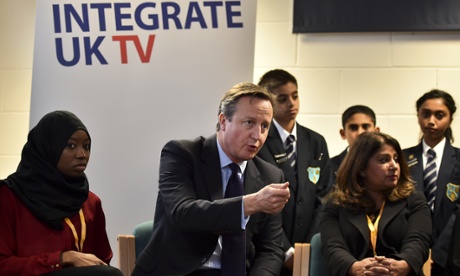
- Cameron said: The extremist narrative needs to be fought every day at the kitchen table, on the university campus, online and on the airwaves.
- The Muslim Council of Britain responded and said such anti-extremism plans had “McCarthyist undertones.”
- Labour’s shadow policing minister Jack Dromey said the governmnet had to “get the balance right” on counter-extremism, adding: “The last thing we should do is to alienate the Muslim community.”
Cameron then addressed the commons about his recent trip to the European Council. The main discussion points were the refugee crisis, extra assistance for Turkey, and loss of jobs at Redcar.
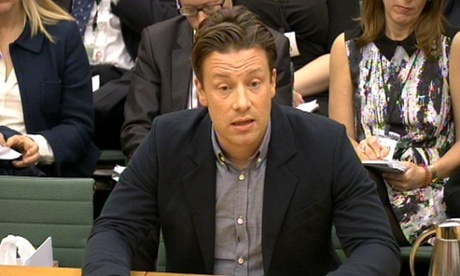
Jamie Oliver, the TV chef, addressed the health committee and implored the government to “be brave” enforce a 20% sugar tax on a litre of drink.
Meanwhile Nicky Morgan, the education secretary, defended last week’s decision to allow a grammar school in Kent, to open a new site as part of a major expansion.
Finally, Theresa May the home secretary said the Wilson Doctrine protects MPs from being spied on still applies, despite a court ruling that the convention has no legal basis.
Thanks for following the liveblog, and you can tweet me at @aishagani. My colleague Frances Perraudin will be back tomorrow, taking you through the day’s political events.
Have a good evening.
Reaction: to cameron's Europe statement
Commenting on the prime minister’s EU statement today Tim Farron, the Lib Dem leader, said:
“The UK is not leading on the EU issue or refugee and the Prime Minister is just posturing. We have a humanitarian crisis on our doorstep and our inaction is hurting our neighbours. He is damaging our reputation in the world.
He added: “Britain deserves better than this. We have had enough of the spin and the careful calibration of the minimum effort for the maximum headline.“
Updated
Now moving back to Jamie Oliver’s select committee appearance, where he said public polls on sugar tax are “favouring it quite strongly”, he was confident that such a sweet-tooth duty would not be ruled out.
He urged Cameron to be “brave” and implement the 20% tax on each litre of sugary drinks.
Asked what he would like to see in the Government’s forthcoming obesity strategy, Oliver said: “I think my passion having worked with the British and international public for 17 years and having daily communications and monthly communication with millions of parents out there - is clarity.”
Jamie Oliver’s petition calling for a #sugartax, which already has nearly 148,000 signatures, was shared on twitter too:
Support the introduction of a sugar tax in UK - Sign now https://t.co/IrLgom0SSX #sugartax #sugarrush #obesity #health
— C. C. Hogan, Author (@Its_CCHogan) October 19, 2015
However, not everyone agreed with his bold proposals. In fact on social media some said it may adversely affect the public in other ways:
What do you think of @jamieoliver 's #sugartax? Will people with diabetes who need sugar to treat hypos be exempt @DiabetesUK ?
— Laura / Ninja (@ninjabetic1) October 19, 2015
Jamie Oliver I care so much about children's health I want the poor to suffer more #sugartax
— Clare (@ScotlandClare) October 19, 2015
Let's talk about Jamie Oliver & how he ruined my childhood by making school dinners healthier & making dinner ladies check our lunchboxes
— Satan's fav Jin (@thebigreddoog) October 19, 2015
Oh my, lots of hate aimed at Jamie Oliver for proposing a #sugartax. He's not saying ban the stuff, just address the (extreme) health issue.
— Tim Smedley (@TimSmedley) October 19, 2015
Oliver, speaking at the all parliamentary party group on diabetes now said:
“The amount of MPs here today hopefully reflects the recognition that we need to tackle type 2 diabetes”
He added: “British people will make good decisions if given clarity. All you need to know is how much sugar is in a bottle it packet.”
The current discussion twitter can be followed under the hashtag: #SugarTax
Listening to @jamieoliver address APPG on Diabetes about his Sugar Rush campaign #sugartax pic.twitter.com/6SbTfzD67F
— Tommy Sheppard MP (@TommySheppard) October 19, 2015
Diabetes UK is also live-tweeting the event, and here is a close-up of Oliver’s suggested labelling:
"Ive just added a simple explanation of how many teaspoons of sugar are in this bottle. It's that simple" #sugar tax pic.twitter.com/JmysntRqoh
— Diabetes UK (@DiabetesUK) October 19, 2015
"Portion sizes are unclear because the industry doesn't want you to have clarity. That had to change" #sugartax
— Diabetes UK (@DiabetesUK) October 19, 2015
Updated
Sir Edward Leigh, tory MP for Gainsborough, said funding for grammar schools had declined vociferously and that worse performing state schools received more.
Morgan said her party’s manifesto promised fair funding and that £390mn was invested for fairness.
Ian Austin MP, the Labour MP for Dudley North, said he did not agree with Morgn that quality of schooling has become better but that the UK had slid down the league tables and that poorer students should be able to attend good private schools.
Morgan replied by saying Labour had abolished the assisted places scheme and had not implemented pupil premium.
Answering Andrew Gwynne, the Denton and Reddish Labour MP, Morgan sad the law would not be changed and that the choice to open the new grammar school last week was a very particular case.
Back to the Commons Nicky Morgan, the education minister, has made a statement on school expansion. It follows her announcement last week about he department approving a new grammar school in Sevenoaks, Kent.
It is thought the government’s decision however is likely to prompt more schools to apply for grammar school status
Labour last week however had accused Nicky Morgan, the education secretary, of “attempting to subvert the law”.
Jamie Oliver: we have to get "medieval" on school lunches
Jamie Oliver said the enemy of healthy food in schools was packed lunch, and that sometimes when a teacher removes unhealthy foods it can cause a fractious conversation ad there currently no governmnet guidelines on this.
Oliver said he has stood at the schoolgates and looked into the lunchboxes because “I want to know” what kids were eating.
He ended by saying that by January he believed positive changes would be made and that “we have to get medieval” on the issue of unhealthy school meals.
To recap the main points made by Oliver were:
- that his main role in front of the committee was “as a dad”.
- there was a need for a “sugar tax” and was the Government’s view, he said. “The discussions that I’ve had have not implied that that is written off.
- He said: “The discussions I’ve had are robust...Mr Cameron is reviewing everything.
- “I think where he is positioned for the next five years...we need to make sure that he’s brave,” Jamie Oliver said.
- He added that public polls on the need for a “sugar tax are favouring it quite strongly”.
Updated
While Jamie Oliver has been addressing the select committee, commentators on twitter have been sharing their thoughts. Here are a few reactions:
Instead of hitting people with Jamie Oliver's Sugar Tax we should be doing everything possible to get kids playing more sport at school.
— Charlie Dewhirst (@charliedewhirst) October 19, 2015
.@jamieoliver shows Health Select Cttee 500ml sugary drink bottle with FOURTEEN teaspoons of sugar in it, clearly labelled. Blimey.
— Ellie Gellard (@BevaniteEllie) October 19, 2015
#jamieoliver reminds Commons Select Committee how sugar "hijacked our Olympics. "Who's running the country? is it big business or is it us?"
— Samira Ahmed (@SamiraAhmedUK) October 19, 2015
When Oliver was asked whether his campaign was negative, he said: “we’re not knocking off the halo of the British kid, it’s about putting the halo back,” and that such sugary products had been presented as positive for too long.
During his interactive session, Jamie Oliver handed out sugar drinks that he had plastered clear labels about sugar levels to committee members.
“The ill health that we are suffering is lack of clarity and wanting to help British parents”, he said.
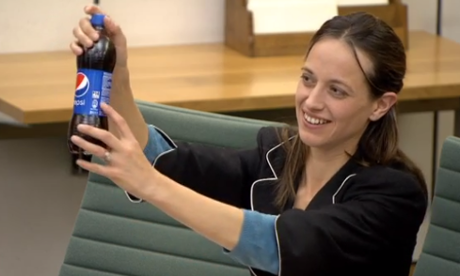
Dr Sarah Wollaston, chair of the health committee, pointed out that the drinks already had labels telling people how much sugar was in them.
Oliver responded and said he didn’t care if the industry will be hurt, or more important than children’s health. “Over my dead body” he said.
“I was born in industry, I worked in a pub” he said and that his sort of labels were more powerful.
Updated
Jamie Oliver: ban junk food ads before watershed
Oliver said there was still an issue in the country and “we have to join the dots” so that good food could be distributed around the country.
He said it could be the first generation in which children could be teaching their parents.
“We’ve normalised the consumption of sugary foods and drinks at home which is completely inappropriate” and that sugary drinks were “not hydration” he said. Oliver said it was a time to “mop up inconsistencies.”
He said junk food should not be advertised before 9pm – singling out such adverts during Britain’s Got Talent, the ITV Saturday night talent show. He said however we were nearly there, as advertising for junk food between children’s TV programmes had stopped.
Updated
When asked whether such a sugar tax would unfairly affect people on lower socio-economic background, Oliver passed around a brief about Sugar Rush and said it was pioneering and that others would follow.
“It’s a profoundly important time” he said.
On profitability, he said within supermarkets it has to be easier to make the right choice and promote a better balance.
He said his suggestion was that there should be a three year 20% tax on each litre of sugary drink.
Many public health experts support the call for a 20% tax on sugary drinks, which they believe would reduce consumption, as even a 10% tax has in Mexico, which has one of the world’s worst obesity problems and high rates of type 2 diabetes.
The tax could raise £1bn, according to Sustain, the campaigners for a sugar duty, which should be spent in initiative to prevent childhood obesity and diet-related disease.
Updated
Oliver was questioned about some of the sugary products sold at his restaurant chain at Gatwick.
Oliver said he was not aware of this and would review it. He said his restaurant was one of the few in an airport to bake fresh bread.
Jamie Oliver, when asked, said he was not demonising sugar – “I think sugar is great.”
He said there was honest and dishonest sugar: chocolate and cake being honest, cereal, sugary drinks being dishonest.
TV chef urges Cameron to impose "sugar tax"
Jamie Oliver said diet and controlling sugar is something that we had to be passionate about, in regards to children’s health, and urged for a sugar tax. He said after the imposition of such a tax: “everything will cascade off it beautifully”.
Jamie Oliver speaks on childhood obesity
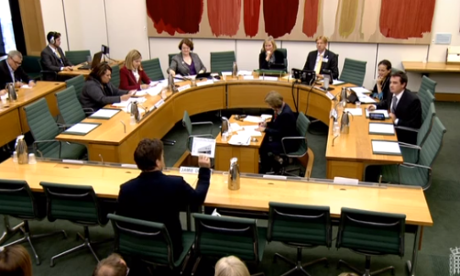
Switching to a select committee now, Jamie Oliver the TV chef, meets with senior MPs to talk about sugary drinks and the issue of childhood obesity.
He said clamping down on sugary drinks was seen as radical by some in the UK as: “the French are doing it, the Mexicans are doing it.”
He called the prime minister “to be brave” and do the right thing for public health, such as considering a sugar tax.
Updated
Keith Vaz, the senior Labour MP said he welcomed the additional support to Turkey and what was already being done to resettle the refugees but said: the scenes of refugees being shuttled from country to anther country was contrary to the values of Europe. He asked what else would be done particularly to stop people smugglers.
In answer to Andrew Tyrie MP for Chichester, Cameron said that possible to boil down the the question on Europe and said that it has: “got to be possible to be a successful member outside the European Union as it is to be inside the European union”.
He said the Britain’s approach would make this possible.
Yvette Cooper, the senior Labour MP, stands now. She said that the Shengen agreement was not the cause of the refugee crisis.
She said of the humanitarian crisis: “please will the Prime Minister show some leadership and not just outside Europe” and help refugees arriving to Europe in Greece?”
Tim Farron, the Lib Dem leader, asked Cameron about the actions of Viktor Orbán, the Hungarian prime minister, who said he wanted to keep migrants out of Europe.
Cameron says “Bishops were wrong” about UK refugee help
Cameron, in answer to Corbyn, said it was right to offer some financial assistance to Turkey as the country was helping 2 million refugees. He reiterated the UK was not part of Schengen so could not do more about the brders.
He said there would be a report after Christmas on the update of the number of refugees helped.
PM says: “Bishops were wrong” about him, and that he had not ignored their pleas to provide further assistance to refugees
In response to a letter signed by 84 bishops of the Church of England who accused David Cameron of ignoring their offers to help to provide housing, foster care and other support for up to 50,000 refugees –the prime minister flatly denied this and said “I have great respect for the bishops” but added that on this occasion “the Bishops were wrong.”
The Prime Minister replied by insisting the UK’s stance has gained “a lot of respect” within the EU, adding the 84 Church of England bishops who have asked him to accept at least 50,000 Syrian refugees are “wrong”.
Mr Cameron suggested the bishops should press other countries to fulfil their aid commitments.
Updated
Jeremy Corbyn, the Labour leader, asked the prime minister to confirm whether there would be votes for 16 year olds on the European Referendum.
He said about the refugee crisis that the duty should not be outsourced to other countries. He said he welcomed the government helping refugee camps but asked what was being done to help refugees that had come to the UK.
He asked for more details on the “command structure” organised to deal with people smuggling across European borders.
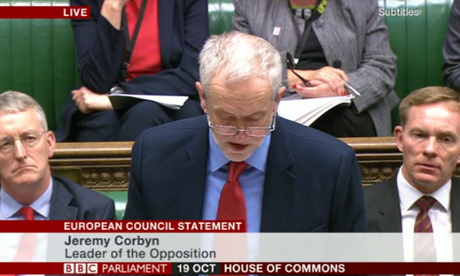
Corbyn said the situation in Syria was complex, that the humanitarian crisis had led to half the population, the vast majority fleeing to neighbouring countries, but said there needed to be a political solution.
Speaking in the Commons, he asked how many Syrian refugees have been accepted under the Government’s scheme to relocate vulnerable people.
Corbyn, who praised the UK’s aid effort in response to the Syrian crisis, added: “Will you give a substantive reply to the letter from 84 bishops calling on you to accept 50,000 refugees?
“If Britain played a more positive role on this front, it may create the goodwill in Europe to make headway in your other forthcoming negotiations.”
He urged for safe spaces in Syria itself to help humanitarian aid.
He asked, finally, whether Cameron had asked his Italian counterpart over job losses as SSI Redcar plant.
Updated
Cameron begins by saying 8,000 people are arriving in Germany each day. The UK does not take part in Schengen and is not participating in the quota system.
Britain would be taking 20,000 refugees from the camps, Cameron said, adding that he thought “this is the right approach”.
The council condemned the brutality of Isil and Assad, Cameron said, in equal measure.
He updated the House telling them that part of the the European Council conclusion was that Turkey should be included to be a part of a comprehensive cooperation agenda based on shared responsibility, mutual commitments and delivery.
He said that he had challenged the raised the issue of Russia’s involvement, and said that 8 out of 10 out of Russia’s attacks were against opposition of Assad, not Isil.
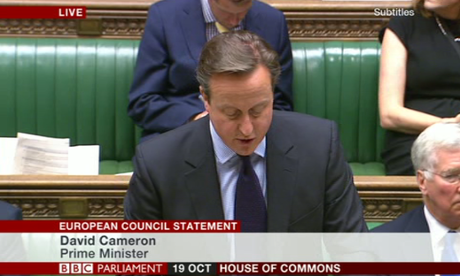
Hello, good afternoon. I’m Aisha Gani and I’ll be anchoring the politics liveblog now, covering David Cameron’s statement statement in the Commons on the recent meeting of the European Council.
Cameron is expected to update the House having attended the meeting of the European Council on 15 October 2015. Among points of discussion was the current migration and refugee crisis in Europe.
Updated
I’m handing over to my colleague Aisha Gani for the rest of the afternoon. She’ll be live blogging the prime minister’s statement updating MPs on last week’s European Council meeting and the debate on the Wilson Doctrine. There will also be an oral statement on grammar schools.
I’ll be back tomorrow morning. Thanks for the comments!
A reminder of the key points in the Wilson Doctrine case:
- The convention is named after former prime minister Harold Wilson, who pledged in 1966 that MPs’ and peers’ phones would not be tapped. He told the Commons “that there was to be no tapping of the telephones of members of parliament ... [but] that, if there was any development which required a change in the general policy, [he] would at such moment as seemed compatible with the security of the country, on [his] own initiative, make a statement in the house about it”.
- In December 1997, the then prime minister, Tony Blair, said the doctrine extended to electronic communication, including emails.
- Two Green party parliamentarians, Caroline Lucas, MP for Brighton Pavilion, and Baroness Jenny Jones brought a case to the investigatory powers tribunal, complaining that disclosures by the whistleblower Edward Snowden made it clear that GCHQ was capturing their communications.
- The tribunal ruled last week that it was “satisfied that the Wilson doctrine is not enforceable in English law”, and that it was merely “a political statement in a political context, encompassing the ambiguity that is sometimes to be found in political statements”.
- Lucas and Jones are now calling on the government to include specific protections for MPs and peers in upcoming legislation on surveillance.
- Downing Street described the Wilson doctrine first expressed in 1966 as a political statement, without legal force, and pointed out that the intelligence agencies might be monitoring an individual who was in contact with an MP. It refused to say whether any MPs’ phones, either at Westminster or in their constituencies, were being currently being monitored by the intelligence agencies.
This was interesting on the Daily Politics from Sir David Omand, former director of GCHQ –
Sir David Omand: ‘You have to understand what Harold Wilson was facing in 1966 when he made this famous statement’ https://t.co/GqDhWw12wv
— DailySunday Politics (@daily_politics) October 19, 2015
Updated
Ahead of the debate on the Wilson Doctrine, the Green party’s only MP, Caroline Lucas, has released a statement calling for the protection of MPs communications to be enshrined in law. The MP for Brighton Pavilion said:
Recent statements by ministers suggested that the Wilson Doctrine was in force – yet last week’s ruling indicates that this crucial protection has been shredded. MPs were repeatedly told that blanket surveillance wasn’t permitted because of the Wilson Doctrine – yet it is in fact taking place and constitutes a grave breach of our constituents’ privacy. The Government must now come clean about what they knew about the status of the Wilson Doctrine.
Members of the public should be able to expect representation without their privacy being compromised. Indeed blanket surveillance of politicians is nothing short of a stain on our parliamentary democracy - it must be stopped.
It is crucial that upcoming legislation on surveillance includes a provision to protect the communications of MPs, Peers, MSPs, AMs and MEPS from extra-judicial spying. For the sake of constituents – and to protect whistle-blowers who need to contact parliamentarians – the protection of national politicians’ communications must now be enshrined in law.
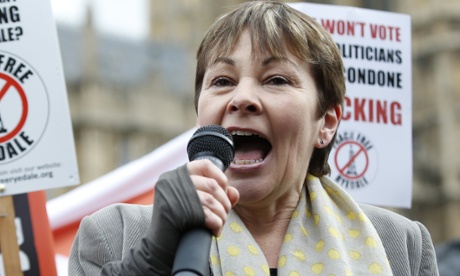
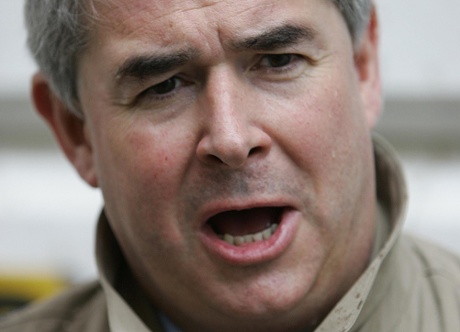
The Telegraph is reporting that Conservative MP Geoffrey Cox has resigned from parliament’s sleaze watchdog after failing to declare hundreds of thousands of pounds of outside income on time. Cox, who is a QC, has apologised and referred himself to the standards commissioner.
The Torridge and West Devon MP is known as one of parliament’s highest earners, and has argued that continuing to practise law alongside his parliamentary duties means he has “practical experience of a world outside politics”.
According to the latest register of members’ financial interests, Mr Cox received £325,000 on June 15 and 16 this year for 500 hours of work carried out between June 2014 and March 2015.
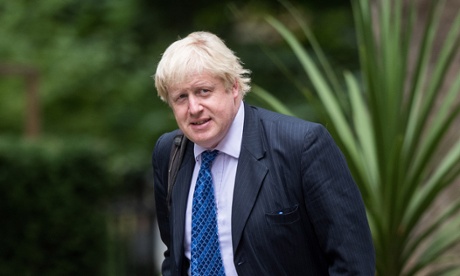
Mayor of London, Boris Johnson, has been on the BBC’s World at One, making comments about the government’s tax credit plans which will not be appreciated by Downing Street.
While Johnson said it was “brave” of Osborne to attempt to change the tax credit system, which he said needed reform, he also said: “Irrespective of the politics of it, nobody wants to do something that is not fair to working people.”
“This is something that is under intensive review and consultation at the moment,” said Johnson. “I have no doubt that people are working very, very hard right now to try to make sure that, as we reform the tax credit system, we do so in such a way as not to bear down too unfairly on the hard working people on low incomes in my city, London, and elsewhere.”
Johnson used his speech at the Conservative party conference to deliver a coded warning to Osborne about the impact of tax credit cuts of up to £1,300 per family. He said: “We must ensure that as we reform welfare and we cut taxes that we protect the hardest working and lowest paid: shop workers, cleaners, the people who get up in the small hours or work through the night because they have dreams for what their families can achieve.”
Two Conservative MPs, David Davis and Stephen McPartland, voted against the government’s reforms to tax credits last month.
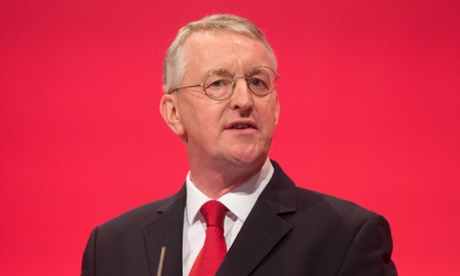
Hilary Benn, Labour’s shadow foreign secretary, has written to Philip Hammond asking him to intervene with Interserve after the reports of disciplinary action against FCO cleaners.
Here is the text of the letter –
I have read with great concern reports in the press today regarding disciplinary action taken by Interserve, a contractor working for the FCO, against cleaners in their employment who work at the FCO’s offices.
It appears that a letter sent to you dated 21 July 2015 by a number of cleaners asking for a meeting to discuss the possibility of receiving a Living Wage was used as part of this action by Interserve. I spoke to one of your cleaners today who told me about this and she was very upset about what happened.
I understand that other government departments do pay the Living Wage to their cleaners. Indeed your Cabinet colleague Iain Duncan Smith MP met with cleaners asking for the Living Wage and ensured they got it.
I have some questions that I would be grateful if you could answer:
· Did your office pass this letter to Interserve and, if so, were any comments made about its contents?
· Is the FCO aiming to become an accredited Living Wage employer and, if so, by when?
· Will you investigate what happened and intervene with Interserve to ensure that citizens exercising their democratic right to write to a Government minister are able to do so without having to fear repercussions from their employer?
The people who clean your offices are trusted colleagues who work in a sensitive environment. They should be treated with dignity and respect, and if their colleagues elsewhere in Whitehall are now being paid the Living Wage then I cannot see why they should not be treated equally. I do hope that you will ensure that a Living Wage is paid to the cleaners at the FCO in time for Christmas.
Labour’s shadow policing minister Jack Dromey has been speaking to the BBC. He said it was crucial that the government should “get the balance right” on counter-extremism: “The last thing we should do is to alienate the Muslim community.” He likened the government’s approach to that taken with Irish republican terrorism, which he said served to drive “a whole community into the hands of the IRA”.
The prime minister’s got to be very careful not to use the language he used earlier in the summer that somehow the Muslim community is not standing up to terrorism.
Lunchtime summary
- The government has published its full counter-extremism strategy, setting out plans to set up a full review of all public institutions to safeguard them against the risk of ‘entryism’ by extremists. It will also include an official investigation into the application of Sharia law, new powers to intervene in the activities of faith-based “supplementary schools” and a new “extremism community trigger” to guarantee the police will take seriously complaints from the public about suspected extremists.The Muslim Council of Britain issued a statement responding to the announcement saying it was based on “fuzzy conceptions of British values”. “The measures could be seen more as a means to address the anxieties a minority of people may have against Muslims and their religious life, rather than the scourge of terrorism itself,” said Dr Shuja Shafi, the organisation’s secretary general.
- MPs will debate the Wilson Doctrine – a convention that the UK’s intelligence agencies will not eavesdrop on members of parliament – after around 2.30pm. Writing for Progress, former Labour Home Secretary Jacqui Smith has said:
Today’s debate is probably timely. However I hope MPs will resist the temptation to use misplaced arguments about their own importance and ill founded conspiracy theories to try to protect an outdated ‘doctrine’. A modern, transparent legally sound basis for interception and protection from it is what is needed now.
- David Cameron has insisted that the UK’s new “golden era” with China will not harm the special relationship with the US, as he prepares to roll out the red carpet for a historic state visit by the country’s president, Xi Jinping this week. Xi’s first official visit to London, beginning tomorrow, is expected to be marked by protests by activists against human rights abuses, and concerns that the UK is jeopardising national security by allowing Chinese state companies to invest in British nuclear power plants. John Cridland, the director general of the Confederation of British Industry, said:
2015 will be a year to remember for China and Britain. Despite a slight slowdown in China’s growth, its choice of the City of London to lead the world in debt issuance in renminbi and the Chancellor’s recent visit are signs that our thriving trading partnership lies at the heart of the UK’s economic future.
From infrastructure projects to digital technology, the UK is the top destination for Chinese foreign direct investment in Europe, whilst UK exports to China have more than trebled since 2007. President Xi’s State Visit is a timely sign of the ever-deepening importance of the relationship between Britain and China. It will help further strengthen the trading bonds that link our two countries, and thus drive growth and create jobs in both our nations.
Updated
Here’s some Twitter reaction to the counter-extremism strategy.
From Jonathan Russell at the Quilliam Foundation –
Like me, take the time to read the counter-extremism strategy inside out. Don't let your dogma get in the way of this debate!
— Jonathan Russell (@JRussellEsq) October 19, 2015
From Kevin Maguire, associate editor at the Mirror –
Unfortunate timing, Dave unveiling a counter extremism strategy then greeting China's head with an extreme record on violating human rights
— Kevin Maguire (@Kevin_Maguire) October 19, 2015
From the law and policy blogger David Allen Green –
The "counter-extremism" strategy, by which the UK will protect free speech by curbing free speech: https://t.co/Bk5r8X9iXO
— Jack of Kent (@JackofKent) October 19, 2015
A statement from the Henry Jackson Society, a rightwing think tank which has previously been accused of pushing an anti-Muslim agenda.
HJS has long highlighted the threat posed to both national security and British society by extremists and believes the government is largely on the right track. The UK already has a world-leading counter-terrorism strategy and the Prime Minister has taken important steps to redefine the debate in recent months. Many of the new initiatives are vital in protecting the British public and HJS welcomes in particular the measures that empower individuals and institutions to challenge extremists, something we have consistently called for.
However, much work remains to be done and some significant concerns remain. In particular these relate to anticipated measures - such as extremism disruption orders – which restrict freedom of expression and may risk undermining these welcome steps.
Counter-extremism strategy summary
In a foreword to the counter-extremism strategy, David Cameron writes that the fight against Islamist extremism is “one of the great struggles of our generation”.
In responding to this poisonous ideology, we face a choice. Do we close our eyes, put our kid gloves on and just hope that our values will somehow endure in the end? Or do we get out there and make the case for those values, defend them with all that we’ve got and resolve to win the battle of ideas all over again? In the past, I believe governments made the wrong choice. Whether in the face of Islamist or neo-Nazi extremism, we were too tolerant of intolerance, too afraid to cause offence. We seemed to lack the strength and resolve to stand up for what is right, even when the damage being done by extremists was all too clear.
Here are some key announcements in the strategy -
- An independent review will be set up to understand the extent to which Shari’a is being “misused or applied in a way which is incompatible with the law”. This will be expected to provide an initial report to the Home Secretary in 2016.
- A full review will be set up to ensure all public sector institutions are safeguarded from the risk posed by ‘entryism’. The review will report in 2016 and will cover schools, further and higher education colleges, local authorities, the NHS and the civil service.
- A group will be created that brings industry, government and the public together to agree ways to limit access to terrorist and extremist content online without compromising the principle of an open internet. The group will take inspiration from the Internet Watch Foundation (IWF), which the document says has been successful in tackling child sexual exploitation content online.
- The Department for Education will introduce a new system to enable intervention in “unregulated education settings which teach children intensively” or “supplementary schools”. This intervention will apply if there are concerns about the safety or welfare of the children attending them, including from extremism. “This will provide for the registration of settings so that they can be inspected and will introduce appropriate sanctions to protect children,” the strategy says.
Updated
Here is a first take on the counter-extremism strategy from the Guardian’s home affairs editor, Alan Travis.
A major government “counter-ideology campaign at pace and scale” to combat Islamist and other forms of extremism in Britain is at the heart of the new counter-extremism strategy published on Monday.
The campaign will include a full review of all public institutions to safeguard them against the risk of ‘entryism’ by extremists, including schools, colleges, the civil service and local authorities.
The launch of the hunt for extremists across the public sector follows the Trojan Horse affair in Birmingham schools.
“The review will clearly set out the risk posed and advise on measures to guard against entryism, for example by improving governance, inspection and whistle-blowing mechanisms. It will also engage charities and businesses to help them identify and tackle entryist behaviour,” says the new strategy.
It will also include an official investigation into the application of Sharia law, new powers to intervene in the activities of faith-based “supplementary schools” and a new “extremism community trigger” to guarantee the police will take seriously complaints from the public about suspected extremists.
The details of the published strategy show that the tough package first proposed by the home secretary, Theresa May, back in March has survived largely intact despite objections from no fewer than six of her cabinet colleagues.
She has compromised with her cabinet colleagues over her initial proposal to require broadcasters to allow television programmes to be vetted for extremist content before they are broadcast. Instead they will be challenged “whenever extremists have been given a platform to preach harmful messages and falsehoods without critical challenge.”
Existing legislation requiring Ofcom, the broadcasting watchdog, to immediate suspend television services that broadcast unacceptable extremist material is also to be extended to radio services.
Also missing from the revised strategy is the previous plan to publish a list of “hate preachers”. Instead the strategy includes previously advertised orders banning extremist groups, closure orders against mosques used by extremists, and ‘disruption orders’ issued against individual named extremists. These orders will mean it is set out clearly for the first time which individuals and organisations the government and the public sector should not engage with.
Updated
Government publishes full counter-extremism strategy
The Home Office has published the full counter-extremism strategy. It’s 40 pages long. You can read it here. I will publish a summary shortly.
Updated
David Cameron has issued a statement on his Facebook page on today’s counter-extremism strategy announcement.
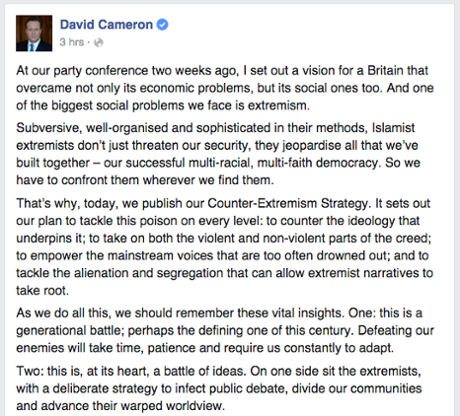
Two: this is, at its heart, a battle of ideas. On one side sit the extremists, with a deliberate strategy to infect public debate, divide our communities and advance their warped worldview.
On the other side must sit everyone else – not just the institutions of the state, such as the government, police and security services; but community groups and the rest of society. The extremist narrative needs to be fought every day at the kitchen table, on the university campus, online and on the airwaves.
In the end, this battle will only be won through argument and persuasion – people taking a stand to demonstrate the incredible power of our liberal, democratic values, and the emptiness of theirs...
Three: while Islamist extremists in no way represent the true spirit of Islam, we cannot ignore the fact that they attempt to justify their views and actions through Islamic scripture and theology.
Globally, it is a challenge for all of Islam that a perverted, illiberal and hostile interpretation of this great religion has been allowed to grow. It is a problem that so many see the West as an oppressor, and buy into the grievances, if not necessarily the violence. And it is a worry for the world that some feel allegiance only to a religious brotherhood, instead of to their fellow citizens in nation states.
Updated
Muslim Council of Britain: anti-extremism plans have McCarthyist undertones
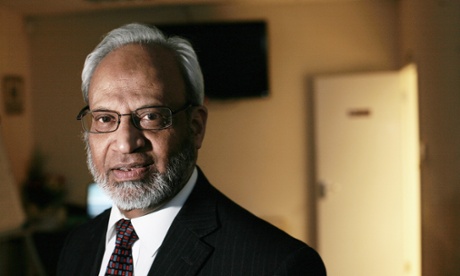
The secretary general of the Muslim Council of Britain, Dr Shuja Shafi, has issued a statement on the anti-extremism announcement saying it is based on “fuzzy conceptions of British values”:
...today’s ‘one nation’ counter-extremism strategy continues down a flawed path, focusing on Muslims in particular, and are based on fuzzy conceptions of British values.
It risks being counter-productive by alienating the very people needed to confront Al-Qaeda or Daesh-related terrorism: British Muslim communities. For over 10 years we have had to contend with a misguided ‘conveyor-belt theory’ analysis that conflates terrorism with subjective notions of extremism and Islamic practices. Whether it is in mosques, education or charities, the strategy will reinforce perceptions that all aspects of Muslim life must undergo a ‘compliance’ test to prove our loyalty to this country...
...The measures could be seen more as a means to address the anxieties a minority of people may have against Muslims and their religious life, rather than the scourge of terrorism itself...
...We cannot help also detect the McCarthyist undertones in the proposal to create blacklists and exclude and ban people deemed to be extremist. If we are to have such lists at all, they should be determined through a transparent process and subject to judicial oversight to prevent any discrimination and political interference based on pressure from foreign governments...
In the Muslim Council of Britain’s view, there needs to be clarity of purpose: is this new policy initiative about tackling alienation, or seeking more securitisation? The former requires long-term capacity building and empowerment of Muslim civil society organisations and addressing structural socio-economic imbalances; the latter is about preventing criminality and enforcing the law. To lump both in one programme of action is not logical.
...these initiatives will not be successful if they perpetuate further alienation of the community and are used to restrict freedom of thought and expression, or to conflate conservative views with violent extremism without any evidence base. The Muslim Council of Britain will be doing its part to explore the issue. While the MCB has not taken government funds towards this, it has consistently spoken out against terrorism.
Updated
Here’s a round-up of some interesting political stories that you might have missed this morning.
- The BBC is reporting that Sir Jeremy Heywood, head of the civil service, wrote to government ministers in the run up to the party conference season, warning them against speaking out on the proposals for a third runway at Heathrow. One cabinet minister told the BBC’s political editor Laura Kuenssberg that such a move was “unprecedented”. You may recall that David Cameron promised “no ifs, no buts” that there would not be a third runway at Heathrow in 2010, but in July the Davies commission ruled very firmly in Heathrow’s favour.
-
The Telegraph is reporting that six Conservative Cabinet ministers have privately demanded that David Cameron to waive “collective responsibility” in the run-up to the referendum and allow them to campaign for Britain to leave the European Union.
- A group of cleaners at the Foreign and Commonwealth Office have been put under disciplinary investigation by their employers after raising the issue of their low pay in a letter to the foreign secretary, Philip Hammond. The 14 cleaning staff were sent letters by the FCO cleaning contractor Interserve asking them to attend an interview that could lead to suspension or punishment, after they signed a joint letter to Hammond suggesting a meeting to discuss the living wage.
- MPs on the Commons work and pensions committee have warned that pensions could become the next mis-selling scandal if stronger support is not offered to consumers taking up the new retirement freedoms. They said the freedom introduced in April was “not yet operating entirely as it should” – and a lack of clarity was “endangering pension savers”.
-
The Financial Times reports that two devolution deals covering the whole of north-east England with a combined value of more than £1bn are expected to be announced this week. The deals would mean the creation of two more mayors to represent the interests of the area stretching from the Scottish border to the edge of North Yorkshire, bounded by the North East and the Pennine ridge.
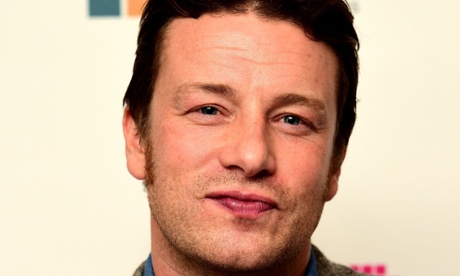
Celebrity chef Jamie Oliver will be giving evidence to the Health select committee this afternoon at around 3.40pm, along side Duncan Selbie, the chief executive of Public Health England. They will be talking about childhood obesity and Oliver will present on his campaign for the introduction of a sugar tax. I’ll try and bring you the highlights later on.
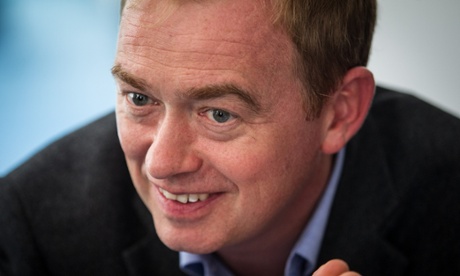
The Liberal Democrat leader Tim Farron spoke to the Today programme about the Wilson Doctrine earlier this morning. He insisted that he was not in favour of protecting privilege for MPs.
I’m in favour of protecting privacy for everybody else and what the Wilson Doctrine was seeking to achieve was to ensure that you could have conversations with journalists. A constituent could blow the whistle to me or any other MP and not be at risk of having their telephone tapped, which in the digital age is a much more likely occurrence....
You should get rid of the Wilson Doctrine if we could replace it with a proper digital bill of rights for everybody. So my privacy is no more important than anybody’s listening to this programme and that’s absolutely critical.
Farron predicted that the government was likely to revive the Snooper’s Charter, which the Liberal Democrats blocked in the coalition.
My concern is that what government is doing is heading in exactly the opposite direction, that if they bring back the Snooper’s Charter, which is what they are planning to do ... If that happens then you’re going to find not only the security services massively hampered by having so much data they won’t be able to find the people they need to find, but you also have a massive blow to traditional British liberties...
I take the view that not only is that counter-productive, because if you’re looking for a needle in a haystack, don’t triple the size of the haystack, you should also make sure we understand that when we’re trying to fight against terrorists you don’t go giving away your traditional freedoms that Britain has fought for so hard over the years.
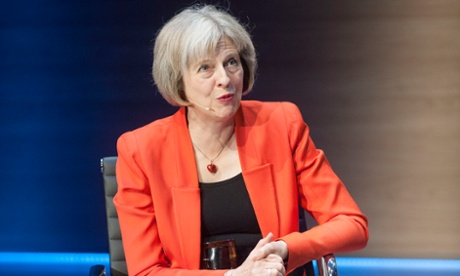
Theresa May: "This isn’t about people having different views"
Speaking on the BBC’s Today programme, home secretary Theresa May insisted that the anti-extremism measures were not about “people having different views”.
This isn’t about people having different views; different beliefs. It’s not about people saying things that some people don’t agree with. That debate is part of freedom of speech and that debate is part of our democracy - it underpins our society. What this is about is those whose extremist message is there in order to try and spread hatred and to divide communities. And that can, of course, lead to violence, but it also leads to other harms, as we have seen.
May was cross-questioned about the extension of powers to cancel passports.
If you talk to, as I have, parents of young people who have been on the path to radicalisation, or perhaps parents, as I have heard from, who have children who have gone out to Syria, some of whom have died out there fighting, then they are saying that they want to see more action taken. They want themselves, within their communities to be able to take more action...
I’m not pretending that any of this is easy. Of course this is difficult, but government has a choice here. We can either say ‘well, this is difficult so let’s not do anything’ or we can say ‘well, actually it is difficult, but this is so important that we need to take action.’...
When I talk to people in the muslim community who are out there themselves working against extremism they will welcome support and welcome the fact that the government is saying this is an important issue that we need to deal with.
May also refused to be drawn into condemning the allegations against former Conservative home secretary Leon Brittan – who was cleared of rape allegations – saying instead that she thought it was important that sexual abuse victims weren’t deterred from coming forward.
The decisions in relation to looking into allegations are for the police to take. Somebody had come forward with an accusation and what we have seen in recent months and continuing is more people coming forward with allegations of sexual abuse of various sorts ... I think it’s very important that we allow people to come forward with their allegations.
Updated
Good Morning.
David Cameron is due to launch his anti-extremism strategy this afternoon as well as making the case for two new pieces of law – the investigatory powers bill and a counter-terrorism bill.
As part of the overall strategy, he will extend the powers of parents to cancel their children’s passports if they are worried that their children may be about to travel to Syria or Iraq to join Islamic State. The powers that currently apply to under-16s will now be rolled out to all those under-18.
There will also be new measures to automatically bar convicted terrorists from working with children and vulnerable people. Cameron will also announce that suspected jihadi returning from Syria and Iraq will be forced to attend classes to address their support for extremist ideology.
Home Secretary Theresa May has just been speaking on Today and I’ll bring you a summary shortly.
There will be an emergency debate on the Wilson Doctrine – a convention that the UK’s intelligence agencies will not eavesdrop on members of parliament – after around 2.30pm. The Psychoactive Substances Bill will get its second reading after that.
I’ll be covering for Andrew this week, bringing you breaking political news as it happens, as well as bringing you the best reaction, comment and analysis from the web.
If you want to follow me or contact me on Twitter, I’m on @fperraudin.
Updated