A campaign that never promised a winner has dragged itself to a climax. David Cameron looks done for on the numbers but in the atmosphere of stalemate and bravado in these last days, that does not seem to mean he will leave No 10.
He is being urged to hole up in there, like the hero of a Hollywood siege, no matter what the voters decide. For his anxious backers, the prime minister is a man born to rule and born to stay.
Even during the campaign’s final push, his sleeves rolled up for the fight, Cameron seems oddly untouched by office. Being president lent even George W Bush a kind of grave distinction. Obama grew grizzled and grey. But after five years of running a nation of 65 million, Cameron is as pink and sleek as he always was.
Only his politics have hardened. In this contest, the surface is glossy, the policies are tame and the strategies are brutal. Neither Labour nor the Conservatives have offered an earth shattering programme but Cameron has bet the future of the United Kingdom to win a second victory.
Cameron’s supporters commend his sense of humour, his resilience and high intentions. His cheerfulness holds him in good stead. For a leader who has broken so many promises, Cameron remains surprisingly liked, with a net approval rating just in positive territory.
These backers also say Cameron had no choice but to take the Conservatives to the right and put the boot into Scotland to mop up the extremists of the right. But he must take a fair slice of blame for the leverage these people have come to hold over Conservative politics in the UK.
This campaign is being fought in the shadow of the 2014 referendum on Scottish independence. But another referendum is crucial to the contest: the 2011 referendum on electoral reform that saw Cameron and the Conservatives fight tooth and nail to save the first-past-the-post system.

The damage they did themselves was terrible. Preferential voting tames threats from splinters and breakaways. Votes are not so easily lost out on the fringes but tend to flow back to the big parties. Little parties can still flourish but they don’t have the same power to spook the political establishment of either left or right.
Voting is to be savoured
Factor in my bias. This is an Australian speaking. We have had preferential voting for decades. It’s not without problems. It can be gamed and shouldn’t be compulsory. If you want to park your vote out on the fringe you should be allowed to. But it is so obviously fairer – more “legitimate” in the language of this week – than putting one cross in one box.
While I’m at it: why on earth hold elections on Thursdays? The idea that this guarantees a new government will be in office by the time the bond markets open on the Monday came to look irrelevant in 2010 and promises to look ridiculous in 2015, if Cameron hunkers down for a long siege in No 10.
God gave us Saturdays for voting. Where I come from, it’s a civic ritual. You take your time. It isn’t something rushed before or after work. It’s the point of the day. You walk to the local primary school, talk to your neighbours for the first time in years, vote in the cardboard box provided, buy a sausage sandwich from the team raising money for the school library and wander home, all democratic instincts satisfied.
Since the second world war the turnout at every federal election has been about 94%. We all vote – and not because we’re threatened with $20 fines. It’s a national habit. This week, with so much at stake and leaders begging their followers to make their way to the ballot box to end the looming stalemate, the turnout in the UK today might hit 70%.
But if this were an election in Australia, I wouldn’t have seen Cameron standing on a suburban railway station with a red dispatch box at his feet. The prime minister was pretending to carry his own luggage.

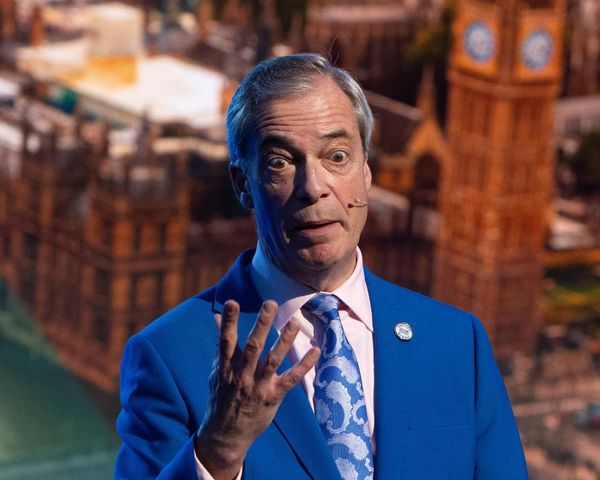
Only in Britain, surely, would a party official try to ban the New York Times from a political rally. I was there for Nigel Farage’s bizarre meeting in a Ramsgate pub. My Guardian colleagues were there. The Daily Telegraph was present. So was the BBC. So why in heaven would you try – and fail - to keep out the New York Times?
Boombox populi
Back home I can’t imagine demonstrators choosing Handel’s Dead March from Saul as the soundtrack to their angry picket. “Give us Beyoncé,” a wit called from the crowd, but the boombox roared the Dead March for half an hour as the aristocracy of Scottish Labour fought their way into Glasgow’s Tollcross swimming centre to listen to Ed Miliband.
I can’t imagine Australia’s political leaders ever being held to account as Miliband and Nick Clegg were by Citizens UK at Westminster Central Hall. Their grilling by preachers, imams and children seemed, as the hours went by, to echo the old Church of England order of baptism: “Do you forswear the devil and all his works?”
Labour’s leader did enthusiastically. Nick Clegg had reservations. The prime minister’s stand in, the secretary of state for culture, media and sport, Sajid Javid, read from a document apparently drafted by a good QC.
And I don’t believe I would ever read in Australia a political headline as ferocious as the one the Daily Mail put across Richard Littlejohn’s column on Tuesday: “Trust Labour? I’d rather trust Jimmy Savile to babysit.”

Back in the 1980s, Australians spent a lot of time wondering about national identity. The point eventually came when we decided to get on with being who we were whatever that might turn out to be. Time would tell us.
A great surprise of the 2015 campaign is to find the UK caught up in the same debate but with so little time to reach an answer. Voters know a Conservative win puts the European question back on the table in 2017. A Scottish National party sweep through Scotland will keeps dreams of independence alive.
In the streets above the Forth and Clyde canal in Glasgow, they talk of Nicola rather than the SNP. “I was thinking of Nicola,” an old woman says when asked by SNP canvassers how she will vote. And on doorstep after doorstep we were delivered little lectures on English greed: “All they’re worried about is what England’s getting.”
What Conservative England wants now is some plausible excuse to bin the votes of Scotland. Here’s where this election campaign for this outsider becomes not just surprising but unique.
With the polls locked in almost a dead heat, with no prospect of a winner being picked by the voters, Cameron’s best hope of hanging on at No 10 is to persuade the political establishment to ignore the presence of as many as 50 of Sturgeon’s MPs at Westminster.
They have to politically disappear, constitutionally evaporate. Much scorn and ingenuity have already been displayed to achieve this difficult outcome. But that may be nothing to what is attempted in the days ahead if those SNP votes might, as expected, deliver power to Miliband.
The vote has yet to be counted. Late shifts may save the Scots from this fate. But if, after the manoeuvring is done and the cars have shuttled back and forth to Buckingham Palace, Miliband stands in front of that shiny black door to claim victory, the Conservative sabotage of the union threatens to roll on for years, for as long as it takes to bring a Labour government down.