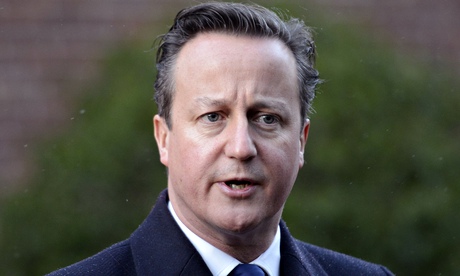
David Cameron has been briefed by Britain’s intelligence chiefs on the dangers of what the prime minister described as “roving firearms terrorist” attacks in Britain along the lines of the Paris shootings.
As a leading counter-terrorist expert said that Islamist extremists were now intent on launching “marauding attacks”, rather than targeting aircraft, Cameron had said he planned to use the meeting with the intelligence chiefs to ensure Britain was prepared for such an attack.
The prime minister met the intelligence in Downing Street on Monday morning after returning from what he described as the “unbelievable” unity march in Paris.
Speaking on the steps of the British embassy in Paris on Sunday, Cameron suggested that the main focus of the meeting with the intelligence chiefs would be to assess Britain’s preparedness if extremists sought to launch attacks on the lines of the Paris shootings or the attacks in Mumbai in 2008.
He told the BBC: “One of the things I will be checking up on is that we have looked at every potential scenario, we’ve looked at what happens in other countries, how the threats could change. I remember going back to when I first became prime minister we held a whole series of meetings to examine how we’d respond to the sort of attack that took place in Mumbai – a sort of roving firearms terrorist attack, not totally unlike what we saw in Paris. These are incredibly difficult situations to prepare for.
“We are fortunate that we have very capable counter-terrorism police, we have very capable security and intelligence services, we have brilliant special forces. We need to make sure we have everything in place to cope with whatever situation might arise. But we live in a free and open democracy. You cannot be certain of always preventing attacks like these from taking place. I think what changes [after Paris] is running through all the potential scenarios, all the things that happened again and asking again – because of course we have asked these questions many times in the past – have we got everything we need to respond to these sorts of attacks.”
Prof Michael Clarke, director general of the Royal United Services Institute, said extremists were switching tactics and launching “marauding” gun attacks rather than attacking aircraft. Clarke told the BBC Radio 4’s Today programme: “The jihadists are great creatures of fashion. The fashion at the moment is for what the police call marauding attacks – not terribly well organised attacks but attacks which just take weapons and kill as many as they can in public places.
“What we saw in Paris was a bit more of a directed version of that … That is exactly what would-be jihadists in the UK have been trying to do. So this fashion, not so much to attacks aircraft and airports but to go for these marauding attacks, is likely to increase. Quite a lot of what is happening in the Middle East, in Syria with Isis, is going to increase that motivation.”
The prime minister is also understood to have told the intelligence chiefs he will introduce the so-called snoopers’ charter after a Tory general election win as he redoubles Britain’s efforts to tackle the “poisonous death cult” of Islamist extremists.
In marked contrast to Ed Miliband, the Labour party leader, who rejected calls for an immediate revival of the charter in the UK after last week’s terrorist attacks in Paris, the prime minister said he would adopt a more comprehensive approach to surveillance than he has done in coalition.
Cameron’s remarks suggest that surveillance could become a divisive issue at the general election. Miliband said after his own talks with the intelligence chiefs that he would adopt a cautious and considered approach in answer to calls for increased surveillance powers for the intelligence agencies.