Pick up almost any account of early human civilization, and the story is much the same: men at the center, women adapting around them. But a discovery from one of the world's oldest settlements is quietly challenging that picture, and the evidence is written in 9,000-year-old DNA.
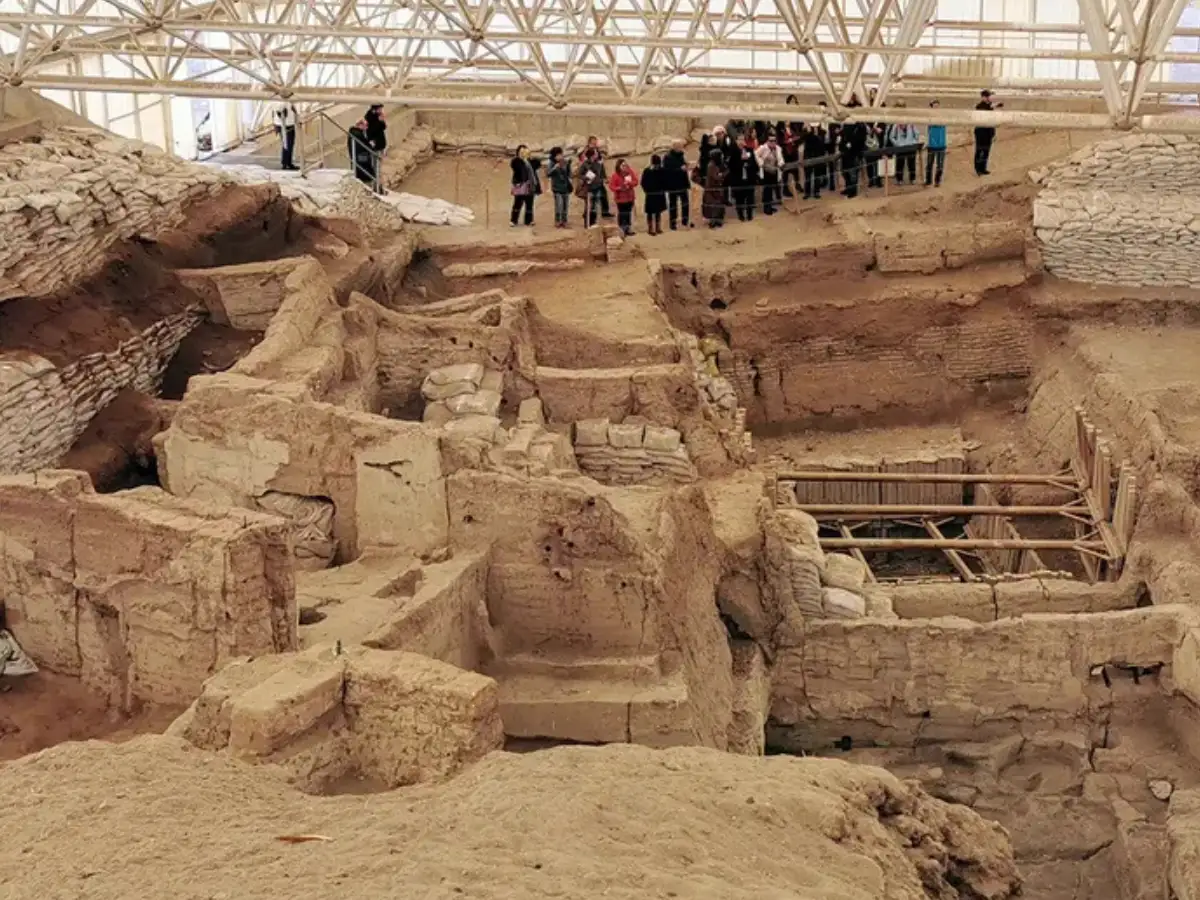
According to a study titled 'Female lineages and changing kinship patterns in Neolithic Çatalhöyük,' published in the journal Science by Eren Yüncü and colleagues, ancient DNA from 131 skeletons found at the Neolithic settlement of Çatalhöyük in what is now southern Turkey was analyzed. The settlement dates to roughly 9,000 years ago, with the study covering remains from 7,100 to 5,950 BCE, a research effort that took 12 years to complete. Their findings suggest a challenge to a long-held assumption: in this society, it appears men moved into their wives' households, not the other way around.
A proto-city unlike anything before it
According to Scientific American, Çatalhöyük covered 34 acres, may have supported up to 8,000 people, and flourished for nearly 2,000 years without interruption. Annalee Newitz, a science journalist, writes in Four Lost Cities that residents “farmed, made bricks from mud, crafted weapons, and created incredible art” all without the benefit of large trade networks. It is not a city in the modern sense, but has long been described as a proto-city, one of mankind's first permanent communities. Residents buried their dead under the floors of their homes, a practice that gave researchers an extraordinary genetic window into the past.
What the DNA revealed
According to the Science study, individuals buried in communal graves under the same house were often not closely related genetically. Relatives were more likely to share maternal than paternal ancestry. “If they were family, it was through the females,” said co-author Eline Schotsmans, an archaeologist at the University of Wollongong in Australia. “The family's identity went through the mother's line.”