The daughter of a victim of the Hillsborough tragedy said her dad had been "buried with a lie" as a trial linked to the aftermath of the disaster collapsed.
Christine Burke told lawyers the judicial system is a "disgrace" amid emotional scenes in court.
Her comments came after a judge ruled three men accused of perverting the course of justice by amending police statements about the tragedy had no case to answer.
Prosecutors had accused the defendants of changing dozens of officer witness accounts to "mask the failings" of South Yorkshire Police at the FA Cup semi-final between Liverpoool and Nottingham Forest on April 15, 1989.
The accounts were being collected by West Midlands Police ahead of the Taylor Inquiry into the tragedy, which unfolded at the Leppings Lane end allocated to Liverpool supporters.
Ninety six men, women and children died as a result.
In 2016 an inquest jury ruled they were unlawfully killed.

Prosecutions followed that verdict but no-one has been held criminally accountable for their deaths.
David Duckenfield, the police match commander at the tragic Sheffield fixture, was acquitted of gross negligence manslaughter in 2019.
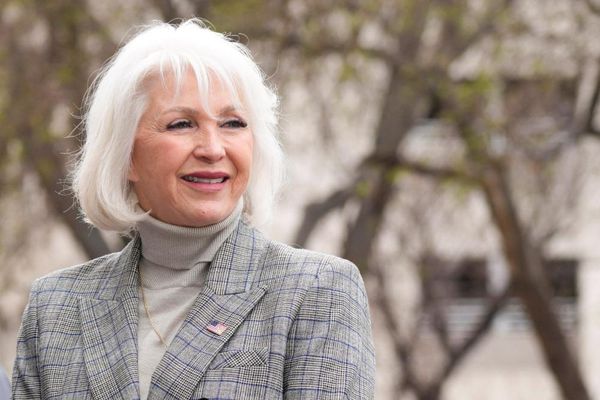
On Wednesday morning, Ms Burke, whose dad Henry was killed in the tragedy, told the converted court at the Lowry theatre in Salford: “Ninety six people were found to have been unlawfully killed to a criminal standard, I would like you to tell me who is responsible for my father’s death and those of 95 other people?”
She suggested that, had police officers and not football supporters died, the outcome of investigations into the tragedy would have been different, concluding: “I think the judicial system is broken. It is a disgrace.”
The latest trial centred on allegations about the actions of two former South Yorkshire Police officers and a solicitor who worked with the force after the tragedy.
Ex-Chief Superintendent Donald Denton, former Detective Chief Inspector Alan Foster and Peter Metcalf each denied two counts of perverting the course of justice.
Following legal submissions last week the judge, Mr Justice William Davis, found the Taylor Inquiry was not a course of public justice, and therefore could not have been perverted by the actions alleged against the defendants.
He ruled: "I conclude that it is equally apparent from the initial case summary that the initial focus of the prosecution case was interference with the process of the Taylor Inquiry.
"That is the submission made on behalf of Mr Foster. I see the force of it.
"As matters have developed, it has been necessary for the prosecution to switch its focus to other proceedings.

"The problem is that there is little or no evidence about those other proceedings and/or there is no basis upon which to say that anything done by any of these defendants had a tendency to pervert the course of public justice in relation to other proceedings.
"So it is that I have concluded that there is no case fit for the jury’s consideration on any count on the indictment."
Before the jury was informed of his judgement, Ms Burke told the court: "I have got to live the rest of my life knowing my father was buried with a lie when he shouldn't have been. He was my dad. This court was put in place to protect the criminals not the victims and the law needs to change."
The prosecution, led by Sarah Whitehouse, QC, had taken the jury through 68 police statements that had been amended before being submitted to West Midlands Police for the Taylor Inquiry.
Changes included the removal of a reference to a call for the kick-off to be delayed before the tragedy unfolded on the terraces, officer claims they were short of manpower on the day and descriptions of police previously being asked to oversee access to the tunnel that led to the central pens in which the tragic crush developed.
After the judge's ruling was explained in court, Ms Whitehouse confirmed the Crown Prosecution Service would not appeal his judgement.
In a statement released this morning, Sue Hemming, CPS Director of Legal Services, said: “Since 2013 we have worked closely with the Independent Office for Police Conduct (IOPC) to establish whether there was sufficient evidence to bring prosecutions against a number of individuals for offences committed before the day of the match, on the day of the match or in the aftermath.
“This is the first time that people have appeared in court for actions following the disaster.
"It has been a complex case looking at evidence from three decades ago and whether the defendants deliberately changed police statements in order to mislead future inquiries.
“It is crucial that we presented the evidence gathered by the IOPC investigation teams to a court and we have worked tirelessly to prepare the case for the jury to understand this evidence and any implications resulting from the amended statements.
“After long and incredibly careful consideration, especially for the families involved, we decided not to appeal the ruling.
"The CPS was right to bring this case and for a court to hear the evidence of what happened in the aftermath of the Hillsborough disaster."
One of the prosecution claims was that a legal "duty of candour" existed in 1989.
An expert witness called by Metcalf's defence team said there was no such obligation for police or lawyers to "be candid in the sense of producing everything warts and all" to an inquiry - so long as they did not mislead it.
Mr Justice Davis ruled there was no legal basis for the prosecution claim.
Ms Hemming said: “What has been heard here in this court will have been surprising to many.
"That a publicly funded authority can lawfully withhold information from a public inquiry charged with finding out why 96 people died at a football match, in order to ensure that it never happened again - or that a solicitor can advise such a withholding, without sanction of any sort, may be a matter which should be subject to scrutiny."