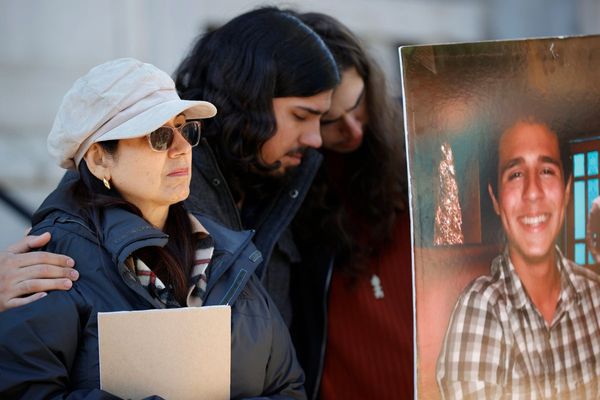
In 2012, Stephanie Daniels took her own life aged 32. Stephanie had a history of mental illness and drug abuse. From 2004 until her death, Daniels spent long periods in hospital in Manchester, both voluntarily and sectioned. In the month before she died, Daniels said she was feeling increasingly suicidal. By mid March, clinicians decided she needed urgent inpatient admission, but no beds were available. She was eventually found a place on the Safire short stay assessment unit in the grounds of North Manchester general hospital, run by Manchester Mental Health and Social Care Trust.
“Stephanie had been asking to go into hospital for a couple of weeks,” says Janet Daniels, Stephanie’s mother. “When she was finally admitted, she was never assessed by a doctor. If they had assessed her, they would have realised that she needed to be put on 1:1 watch.”
Just two days later, staff found her hanging in a locked bathroom. “My mother managed to make a ligature, but handed it in to staff,” says Keighley Daniels, 21. But Daniels managed to get hold of another one and used it to end her life.
Lack of permanent staff was a factor in Daniels’ death, her mother and daughter maintain. “There were only one or two permanent staff. The rest were all agency, who didn’t know procedures,” Janet says.
“There was a certain number [the crash team] that staff were supposed to dial in emergencies, but they dialled 999 instead, so had to wait for an ambulance,” explains Keighley. “Nobody could find any scissors or anything else to cut through the ligature. They couldn’t find the resus trolley and when they did find it there was nowhere to plug it in in the bathroom and the batteries weren’t charged.”
The coroner raised a number of serious concerns about the care Daniels received at the Safire unit. “There was a delay of eight days in securing her [Daniels’] admission, which should not have occurred,” wrote Nigel Meadows, senior coroner for Manchester. Other failings highlighted in his prevention of future deaths notice include poor care, communication, record keeping, handovers between staff, clinical leadership and supervision of junior staff, as well as a failure to follow procedures or review Daniels’ medication.
Although Daniels’ mother and daughter were awarded compensation in an out of court settlement, they do not feel there has been any closure and worry the same errors could occur again. “They haven’t learned from their mistakes,” says Keighley. “They are still failing other families. There’s not enough staff or beds.”
“If we knew that they were putting in place measures to stop it happening, it would be much easier to cope with my daughter’s death,” says Janet.
For Keighley, her mother’s death has had a lasting impact on her life choices. “It’s shaped me,” she says. “I’m going to university to study mental health nursing, so I can help people like my mum.”
Eddie Jones, a partner at JMW solicitors, which represented the family, says Daniels’ story is far from uncommon. “Sadly, Stephanie Daniels’ death was by no means an isolated incident. We have taken on four similar cases across England and Wales in the last year alone. The lack of inpatient mental health services means preventable deaths are likely to keep occurring while so few beds are available.”
Gill Green, the director of nursing and governance for Greater Manchester Mental Health NHS foundation trust (GMMH), said: “I would like to reassure Stephanie’s family that GMMH has learned the lessons from her death. On behalf of the trust I would like to offer our deepest condolences to them.
“GMMH took responsibility for mental health services in Manchester in January 2017 and a plan to transform care is well under way. Stephanie’s family are very welcome to meet with us, so that we can explain our plans to them in detail. Since the tragic events of 2012, staff have reviewed policies and a programme of works is ongoing to continually improve all our in-patient environments. Enhanced clinical leadership has also been implemented across all areas.
“The transformation of mental health services in Manchester comes too late for Stephanie and her family, but I want to assure them GMMH is working relentlessly to ensure incidents like this never happen again.”
• In the UK the Samaritans can be contacted on 116 123. In the US, the National Suicide Prevention Lifeline is 1-800-273-8255. In Australia, the crisis support service Lifeline is 13 11 14. Other international suicide helplines can be found at www.befrienders.org.