Washoku, the traditional culinary culture of Japan, was developed in Kyoto. Therefore, even in the present-day capital of Tokyo, many upscale Japanese restaurants display signs for "Kyoto cuisine." What makes washoku authentic? The answer lies in the dashi, and the way it is used to make Kyoto cuisine stand out.
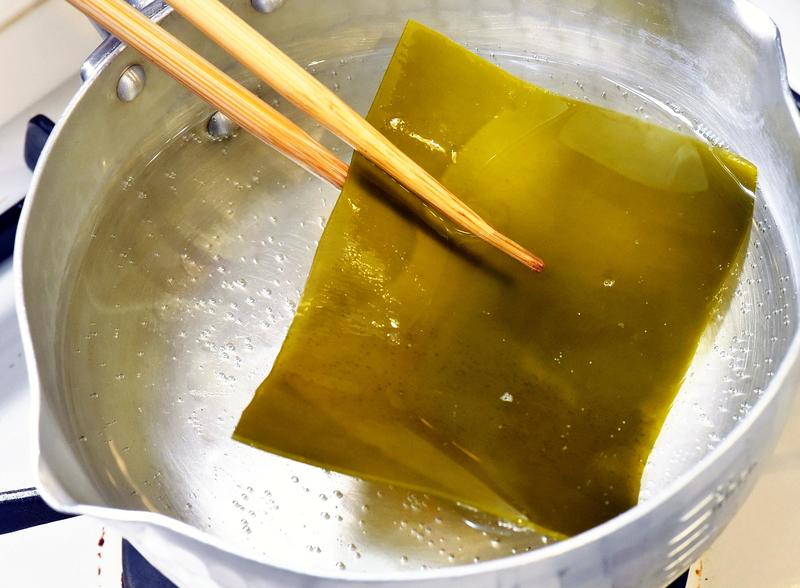
Dashi is a broth made by boiling ingredients such as kombu kelp and dried bonito. Bouillon used in Western cuisine, and tang used in Chinese and Korean dishes, are also varieties of broths. The difference is that washoku is characterized by the concept that it is the dashi that determines the flavor of dishes.
"Dashi is an all-purpose seasoning," said Masaki Izumi, owner of Wagokoro Izumi, a Kyoto restaurant with two Michelin stars. "In soups and simmered dishes in particular, dashi brings out the umami from vegetables. We add salt and soy sauce, but only the very minimum."
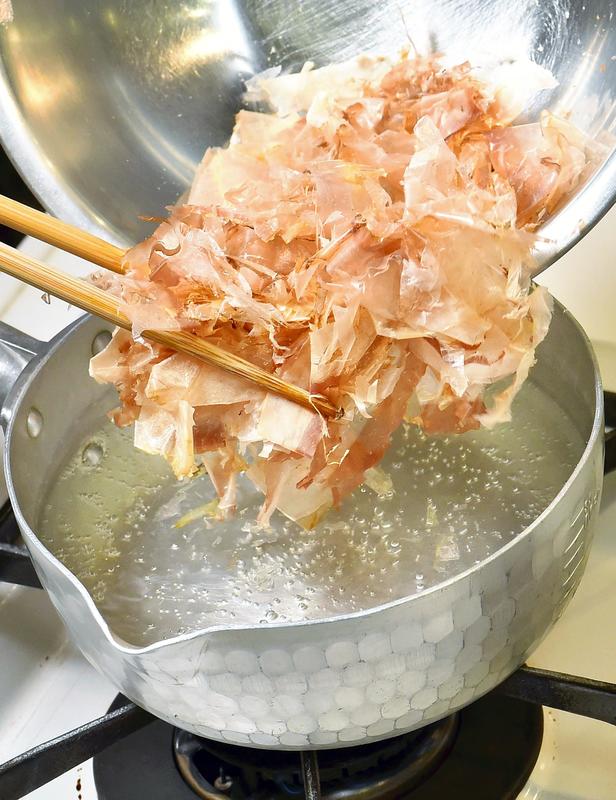
Izumi added, "Sauces in French cuisine take time and effort to create. In comparison, little time is needed to make dashi. The dried bonito and kelp used to make the dashi require far more time."
The taste that dashi brings is called umami. This was discovered by a Japanese chemist. In 1908, Kikunae Ikeda, a professor at Tokyo Imperial University, found that glutamic acid was the primary component of kombu dashi, and named the taste "umami." A disciple of his later discovered that the umami component of dried bonito was inosinic acid.
Today, umami is regarded as one of the five basic tastes, along with sweetness, sourness, saltiness and bitterness.
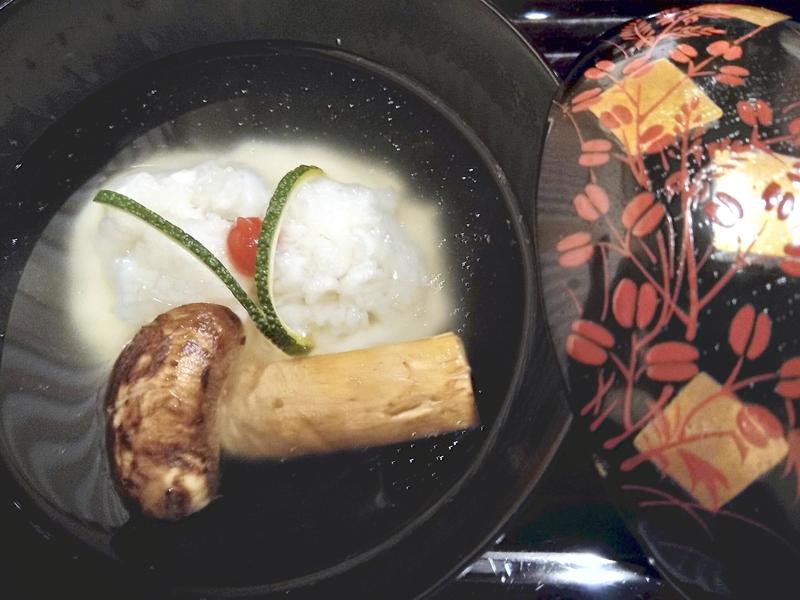
Umami brings out the original tastes of ingredients, explains food anthropologist Naomichi Ishige.
"French cuisine has focused on creating unnatural flavors using artificial techniques," Ishige said, giving a comparative analysis in broth culture. "The famous gastronomist Jean Anthelme Brillat-Savarin once said, 'The discovery of a new dish does more for human happiness than the discovery of a star.' This is the mainstream of culinary philosophy in the world."
Traditional bechamel and demiglace sauces were inspired by such an idea.
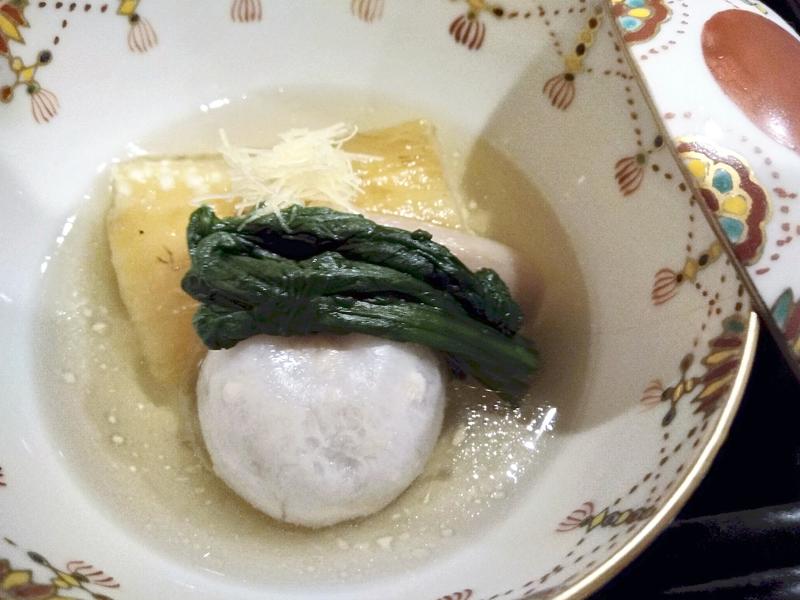
"As for Kyoto cuisine, however, it is ideal to add as little as possible to prevent the natural flavors from being hampered. Therefore, flavor of kombu dashi doesn't stand out," Ishige said.
Among different types of dashi for washoku, the use of dried bonito flakes is preferred in Tokyo, while people in Kyoto and Osaka tend to use kombu as the base and blend in dried bonito flakes.
With its subtle flavors, Kyoto cuisine is also characterized by its "light flavor," but that is because people feel only a surface layer of the taste. That is the flavor of upscale cuisine that was refined to suit the tastes of court nobles, Buddhist monks and the upper-class living in Kyoto over its long history.
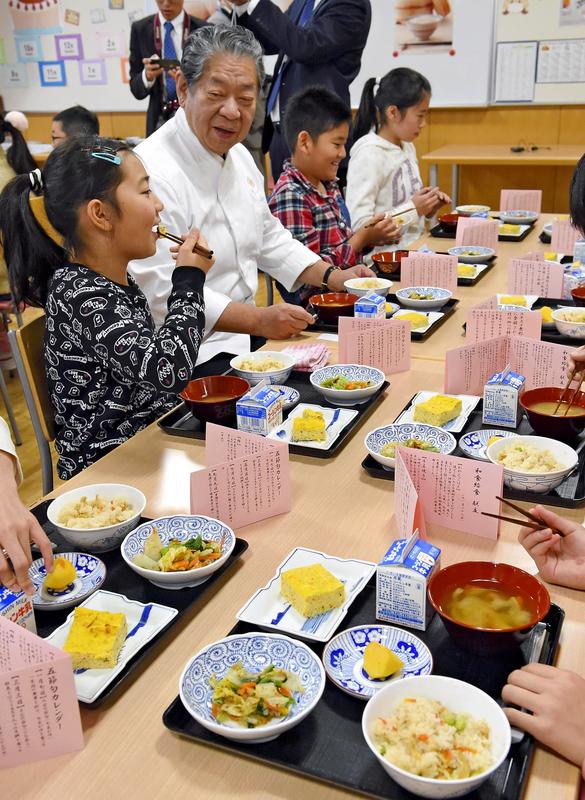
In 1568, the feudal warlord Oda Nobunaga, who conquered Kyoto after leading his troops from a rural town in present-day Gifu City, was close to taking control of the entire country. While in Kyoto, he called for a cook who was reputed to be the best in Japan. However, it is said he become furious about a dish prepared by the cook, saying, "It's too watery to eat." The warlord was about to kill the cook, but the cook prepared the dish again, this time adding salt. He was greatly satisfied. Behind his back, the cook mocked him as a "country bumpkin." Kyoto people love this tale.
Unfortunately, young Japanese people today have become accustomed to fast food and seem to prefer rich tastes like Nobunaga.
Read more from The Japan News at https://japannews.yomiuri.co.jp/