Photograph: Stefan Rousseau/PA
As you were, says chancellor Philip Hammond to the public sector, give or take 2,500 extra staff for prisons and some wiggle room on efficiency savings, which might pay for the reputed 30,000 extra civil servants who will need to be drafted in to work on Brexit.
Staying “as you were” means the UK government is still on the trajectory drawn by George Osborne – to shrink. Public sector spending is 36.3% of GDP now and will fall to 33.5% in 2020-21 – assuming the Office for Budget Responsibility has got it broadly right on the growth of the economy.
The language about public service may be softer than under David Cameron but the implications for civil and other public servants are as dark as ever: numbers will go on declining amid tight control of pay.
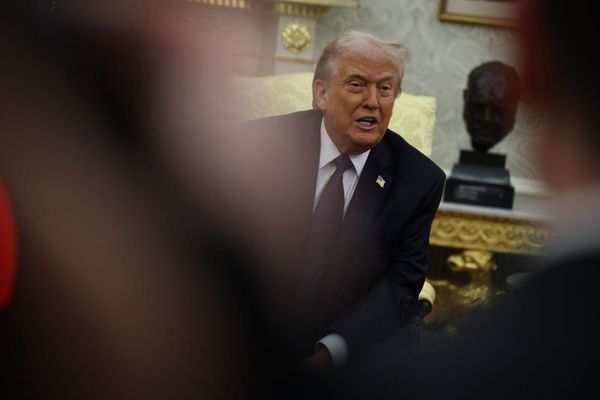
You might take comfort from looking across the Atlantic. Things look bad. Egged on by a Republican-controlled Congress, Donald Trump plans to cut the number, pay and pensions of federal employees, abolish the education department and decimate the rest (except the military).
Yet the move would be less alt-right than more of the same – a continuation and intensification of what central government staff have faced for the past eight years, not just in the US but across the richer nations.
The latest OECD survey says civil servants in nearly all its 35 member countries have had their pay frozen, their numbers cut and departments downsized as governments responded to the financial crash and recession or, as a matter of political principle, had a go at shrinking the state.
In the OECD’s round up, UK civil servants haven’t suffered the worst, but they have endured both significant spending cuts and a superfluity of HR measures, compared with other countries. The thinktank’s conclusion is that austerity has resulted in a loss of trust, commitment and motivation among state employees as well as increased stress in the workplace. The cuts threaten government effectiveness and have not improved productivity.
Anticipating the strain Whitehall faces in coping with Brexit, the OECD fears austerity “may paralyse public organisations’ abilities to evolve in ways required of today’s fast pace of change”.
The Cabinet Office’s chief analyst, Liz McKeown, helped with the OECD report. But it’s hard to square the international finding of decreased trust in organisation and leadership and lower job satisfaction with the most recent UK data. UK cabinet secretary Sir Jeremy Heywood says he is proud of what the Cabinet Office’s people survey shows – but “puzzled” would be more appropriate.
Look, he says, at the response rate, which is relatively high for a repeated staff survey. As forengagement – a composite index of what staff think about their management, pay, opportunities for learning and development and so on – it is quite remarkable that since 2009 the figure has stayed so high (59% this year). Even more noteworthy are the high scores (83% and 73% respectively) on questions about organisational aims and resources.
Civil servants do say they are getting a rotten deal on pay and pensions: low scores are evident across departments and agencies. Yet that negativity doesn’t spill over into other domains of their working life.
The explanation may be that British civil servants are like the three wise monkeys. They appear neither to hear nor see evil in the ministers they serve, nor are they prepared to speak ill. Yet many of those ministers – it’s as true with Theresa May as with David Cameron – despise “big government” and “bureaucracy”, are critical of civil service capacity and would, if they could, remove or privatise entire blocks of public administration.
But HR surveys don’t have a box for what civil servants think of their ministers or their values. Maybe they just don’t think. The evidence suggests that civil servants cultivate an identity based on department or sub group and ignore the “top of the office”.
In education they ignore Justine Greening; in work and pensions they are indifferent to the replacement of Iain Duncan Smith briefly by Stephen Crabb and equally indifferent to the arrival of Damian Green. Instead they focus on their immediate colleagues and their team.
It’s odd asymmetry. Ministers get on with ideology, which may include diminishing Whitehall and public services. Civil servants ignore them and get on with the job of delivering partisan policies, but without losing the values of disinterested service of the public.
The OECD observes that austerity has had little effect on the ethos of public service: it hasn’t increased corruption or led to “misappropriate” use of public resources. Which makes civil servants a kind of human shield for the political prophets of austerity.
Talk to us on Twitter via @Guardianpublic and sign up for your free weekly Guardian Public Leaders newsletter with news and analysis sent direct to you every Thursday.