In the seconds before the start of Katie Mitchell's bitterly funny, often anguished revival of The Cherry Orchard at the Young Vic, it feels as if you are staring into a void, a darkness so complete that it smothers everything. Just as grief does when somebody you love dies.
It's a haunting and haunted revival of a familiar play, and one that makes you see it afresh. You notice things in the relationships that you've never seen before; you understand that the paralysis of Kate Duchene's Ranevskaya is not just born of mere fecklessness or an unwillingness to face the future, but of a despair so deep it's like a black hole.
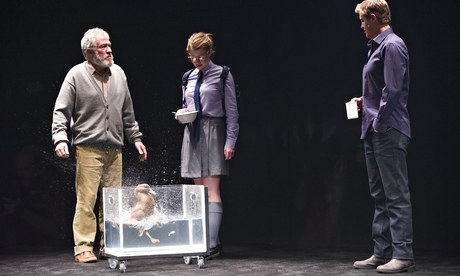
Over at the Barbican, Sydney's Belvoir St Theatre company is reinventing The Wild Duck for a post-Neighbours generation. Yes, it's true that it takes a moment or two for British audiences to reconcile the Australian accents with Ibsen, but the brilliant thing about Simon Stone's snappy version is how well it takes Ibsen's themes of mendacity and responsibility – in both our public and private lives – and reinvents them for the 21st century.
We cannot but help see ourselves in this Wild Duck: quite literally because the glass cage in which most the action takes place reflects the faces of the audience back, reminding us that we all live in glass houses and shouldn't be tempted to throw stones at the frailties exposed on stage. It's Ibsen, but not as we've previously seen it.
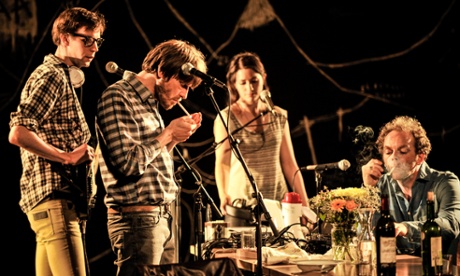
It's been a great year so far for the reinvention of classics and modern classics from Thomas Ostermeier's An Enemy of the People, also at the Barbican, to Ivo Van Hove's take on Miller's A View from the Bridge at the Young Vic.
What's interesting is that just as many non-British directors somehow seem more comfortable than their British counterparts in being playful, experimental and just plain inquisitive when it comes to Shakespeare, they are similarly uninhibited by plays that have any kind of classic status.
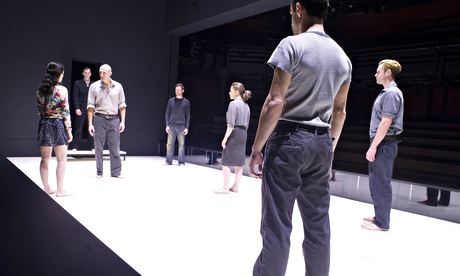
Mitchell is a rare exception, and on occasion she has paid the price in loud tuts from those who do not think that you can muck about with Chekhov. But the only way that Chekhov, Ibsen, Shakespeare and Miller will survive is if we recognise that all plays, even the most famous ones, are simply a suggestion for a performance, not a template for one that must be reproduced slavishly. That way lies nothing but plays crumbling into dust.
Rupert Goold has always understood that, as has Mitchell, and we have evidence that younger directors such as Robert Icke, Ben Kidd and Ellen McDougall are willing to treat classic plays just like the new texts that they once were when they were first produced. They are not inhibited by the accumulated layers of a long performance history. They are uninfected by nostalgia for these plays, and simply see their possibilities. They are not scared by them so they take cheeky liberties and often reap the rewards.
Tight purses and reduced funding lead to conservatism in the theatre. Many theatres see it as a chicken-and-egg situation: audiences are more likely to buy tickets for titles they know rather than take a punt on an untested and untried piece of work, so theatres programme classic plays in the hope of improving the box-office figures. That's why so many revivals of classic plays on our stages feel like a trip to church rather than a trip to the theatre.
So yes, let's have revivals of classic or modern classic plays, but let's also make sure that before it gets staged there is a rigorous debate about why this particular play at this particular play for this particular audience. And if the answer is simply that it will be good box office, it's not a good enough reason to programme it. Because Ostermeier, van Hove, Mitchell, Stone and others are not doing it for the box office. But they sell tickets by the bucketload because audiences know that although they may not always like what they see, they will be galvanised and excited by it and won't fall asleep in the stalls.