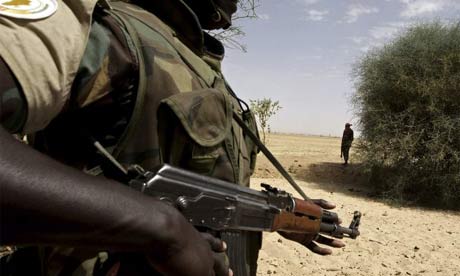
The world seems to be growing ever more violent towards those filming, with journalists and cameramen and women increasingly the targets of armies. That is having an impact on broadcasters' ability to cover foreign news — and is also leaving us ever more dependent on the work of freelancers. People will still be sent to cover the headline international stories, and there will still be overseas bureaux. But there are other stories, wars and situations that although are not necessarily front-row for our audiences, do matter, and feed into the wider picture more than we realise. Sudan first allowed Osama bin Laden to flourish — and Sudan then was the province largely of freelancers, just as Somalia is now. Not least because it is so damned dangerous.
There is an increasingly crucial role for news freelancers in the Somalias and the Waziristans of this world. The coverage of conflicts that seem distant today can be thrust to the fore of our cities via the suicide bomber, or whatever means, tomorrow. Know thine enemy, armies say — but it's something journalists must do too. And southern Afghanistan, like Waziristan, is not a place I am willing or able to go. The traditional roving correspondent simply cannot correspond at all from critical places. Freelancers still can, and they do. But they have paid a high price. Many of us had freelance friends who are now dead, and that is not going to stop. But what can stop and must stop is the sometimes poor level of recognition and protection such essential people have had. When things go wrong for freelancers the only organisation in the world that exists to help out is the Rory Peck Trust.
Only a year ago I was asked to stand and hold a begging bucket at the end of the RPT annual awards evening. Had it really come to this, I wondered? Surely the major broadcasters simply agreed to chip in every year to ensure this essential organisation has a future? In fact, while they did all to help out, no such funding was in place. Less than one year on, that has changed. So hats off to Mark Wood at ITN, Helen Boaden at the BBC, John Ryley at Sky and David Schlesinger at Reuters. The financial underpinning of the trust has been put on a much sounder footing.
What has to happen now is for our other global partners and competitors to face up to their responsibilities too. They need to begin funding this unique organisation properly. RPT's help is low-level, local, direct, meaningful and effective. Its overheads are low. Its impact is high. And I say again — it's the only help in town.
Alex Thomson is chief correspondent for Channel 4 News