FORT WORTH, Texas _ Few things in politics are more cynical than a leader's (or prospective leader's) eleventh-hour "conversion" on an issue that for many of us is simply a matter of principle.
Who can forget President Barack Obama's "evolution" on gay marriage?
Or Sen. Mitt Romney's flip from pro-choice governor to pro-life presidential candidate?
A bit closer to home, we have the declared evolution of Fort Worth's own Rep. Kay Granger on abortion, a transformation some voters are meeting with skepticism.
I'll admit that at first, I did, too.
As recently as 2007, when she was serving as a campaign surrogate for (quite ironically) Romney, Granger called herself a "pro-choice Republican."
There must not have been many Republicans watching that MSNBC interview 13 years ago, because when video of her pro-choice declaration resurfaced as part of an aggressive primary challenge from businessman Chris Putnam, many conservatives, myself included, were shocked.
In fairness, that's because Granger's record, at least of late, largely belies the statement she made more than a decade ago.
In 2015, she supported the Defund Planned Parenthood Act; she voted "yes" in 2017 for a similar bill.
Last year, she opposed the Equality Act, which among other things, would deny conscience protections to health care workers who did not want to participate in an abortion procedure and undercut existing prohibitions on direct federal funding for abortion.
For these and other reasons, the Susan B. Anthony List, a leading nonprofit group whose explicit goal is to end abortion in the U.S. by supporting pro-life politicians, has given Granger an "A" rating.
And just last month, the organization's vice president for government affairs, Marilyn Musgrave, called Granger a "pro-life hero".
That's probably an overstatement.
But even a cursory look at her voting record suggests that when it comes to pro-life legislation, Granger is well within the party mainstream and has been for years.
So what of her purported conversion?
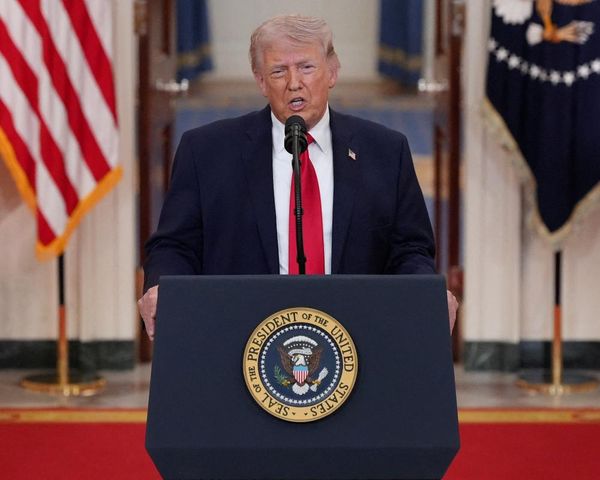
Granger insists that at some point in the last 13 years, her position on abortion changed _ "just like President Trump's position has changed," she told a Republican forum earlier this month.
Her invocation of Trump was shrewd because no political leader's supposed evolution on abortion is more unbelievable than that of Donald Trump.
His decision to speak at this year's March for Life in Washington _ the first sitting president to do so _ was not merely unprecedented, it was astonishing.
Especially considering how in the years leading up to his seeking to the Republican Party's nomination, Trump also self-identified as "pro-choice."
And during the 2016 Republican primary debates, Trump's idiosyncratic position on the nation's largest abortion provider _ "I would defund it, because I'm pro-life. But millions of women are helped by Planned Parenthood" _ earned him praise from a writer at progressive website ThinkProgress, who called his support of the "real nature" of Planned Parenthood's work "unusual and noteworthy" and fully "exceptional" among his GOP rivals.
That was less than four years ago. Yet Trump is now considered by some to be the "most pro-life president in history."
Wonders never cease.
Is it possible that Trump's stance on abortion is anything other than political expediency? Sure.
But what is happening in Trump's mind and heart matters far less to pro-lifers than what happens in his administration.
The same should be true for Granger.
As proof that her conversion is authentic and not just political, Granger should take the lead on pro-life bills, perhaps becoming a co-sponsor of the Born-Alive Abortion Survivors Protection Act.
But to say her past statements are disqualifying but Trump's aren't (as Putnam seems to be doing), is just nonsense.
We can hope their conversions are real, but it's their records that matter.