More and more teams are using satellite internet systems to provide fast and stable data and video in their team cars, creating a small but important technological marginal gain.
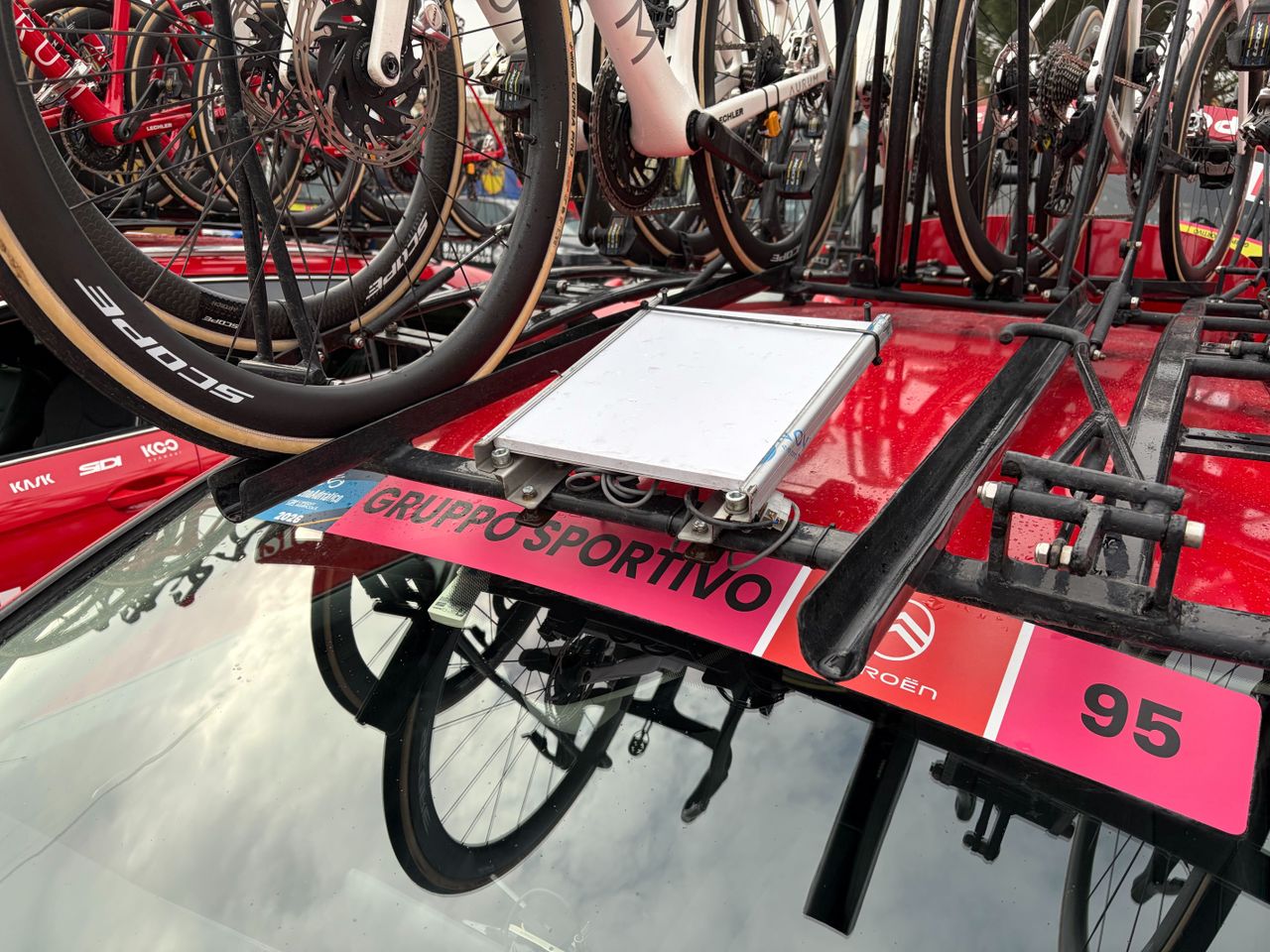
Cyclingnews noticed a growing number of white square Starlink antenna on team cars at this year's Tirreno-Adriatico, with at least half of the teams using the system owned by Elon Musk's SpaceX company.
Starlink hit the headlines when Russia invaded Ukraine in 2022. Musk initially refused a request from the Ukraine to extend Starlink's coverage into the occupied Crimea area but has recently helped the Ukraine and their use of drones by blocking Starlink use by the Russians in their occupied areas. Starlink has also been used in Iran after the government blocked the internet to stop the spread of information on public protests.
Visma-Lease a Bike and Lidl-Trek were some of the first teams to add a Starlink antenna to their team cars early in 2025 and other teams quickly followed for the Tour de France. Now even ProTeams are using the system.
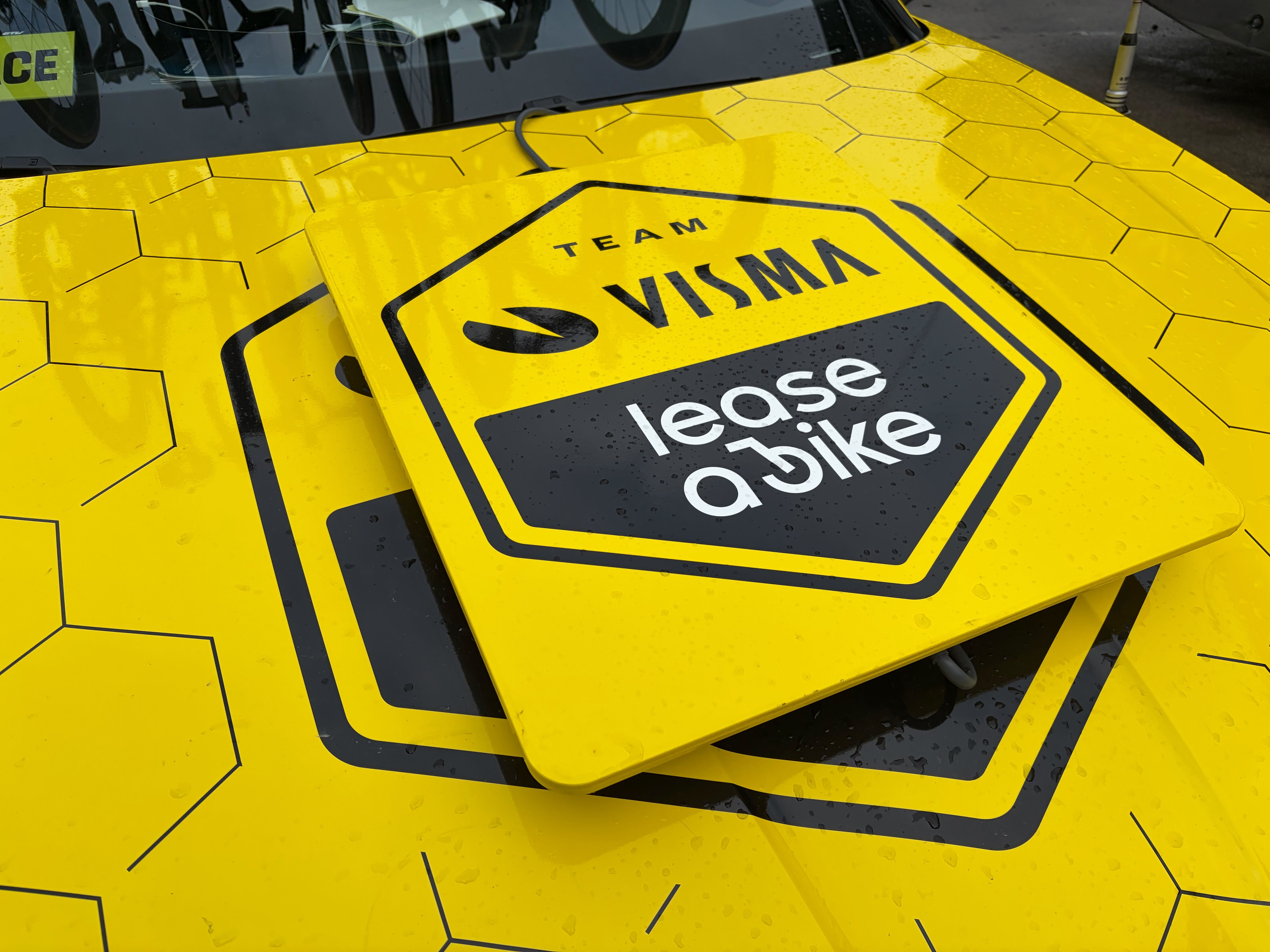
Some have placed the Starlink antenna on the front of the bike racks, others have them on vertical poles, poking out above the team bikes. Visma-Lease a Bike have added a bigger antenna on the hood of their race team cars, covered in the team's yellow and black colours and logo.
Team cars are mobile strategy vehicles, with one sports director driving the car in the race convoy behind the peloton and another sitting alongside in the passenger seat who watches the race on television.
The sports director also listens to communications from the race organisers and race officials via the traditional UHF Radio Tour system and then communicates information and strategy to their riders via their short-range team radio systems. Most teams also have vital route information from the VeloViewer WorldTour race hub and app, which provides detailed route information on a tablet.
The teams have used 4G and 5G mobile telecommunication networks for their TV streaming and data in recent years. However, a lack of mobile signal in the mountains or when the networks were overloaded meant the team cars were unable to follow the race and provide information in important moments of the races.
Starlink uses thousands of low orbit satellites to prove their internet connection, which is stable and fast enough to download television images and other data. Download speeds are usually between 100Mbps and 200Mbps, enough to provide quality TV streaming images.
One team explained that the Starlink antennas are relatively cheap to buy or are included in Starlink subscription contracts, which start at around €50 and go up depending on data needs.
A sports director suggested that 5G mobile systems can cause a delay or latency of up to a minute compared to terrestrial television. However Starlink reduces the lag to around 20 seconds. That helps sports directors react sooner and inform their riders more quickly, offering a data and tactical margin gain.