Recent research from BT has shown that businesses across the world are still very much in favour of overseas expansion. The research, “The art of connecting global business,” found that an overwhelming 80% of business decision makers believed that international expansion is highly essential for the success of their organisation, even in the aftermath of the global recession.
Environmental regulations were cited by many respondents as an important consideration when expanding into other markets. Most larger enterprises now have a strong internal focus on sustainability; in fact over two thirds of FTSE 100 companies have carbon reduction targets in place (pdf). Such organisations will look to expand in a sustainable fashion – growing while minimising their impact on the environment.
When businesses expand, an inevitable consequence is increased travel. Executives have to go to new markets to ensure that new offices and operations are running effectively, and local staff often travel to corporate headquarters for training and management meetings. This effect is of course multiplied by the number of company premises, and the remoteness of each location.
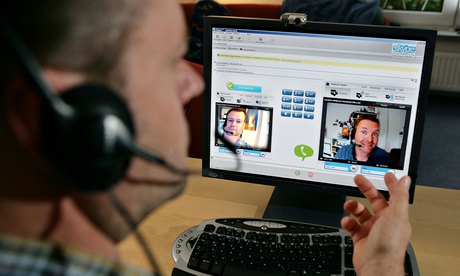
However, conferencing technologies can help keep this travel to a minimum. Even after a company has become fully established in a new market, video and audio conferencing can become the medium for regular meetings, decreasing a company’s environmental impact and keeping costs low. An example of this is Yazaki, a Japan-based automotive component maker with 421 sites in 39 countries. After installing video conferencing solutions from BT, Yazaki’s business travel was decreased across the board – with one division reporting that expenses had been reduced by a third.
PA Consulting introduced BT’s Telepresence video conferencing to facilitate workshops between business leaders and experts in London and Dublin which needed to be highly collaborative.
They held five virtual workshops and delegates’ feedback showed it wasn’t only PA Consulting that gained value from the Telepresence technology. 100% of delegates said that participating in the workshops via Telepresence had improved their productivity because of time saved through not having to travel to attend, and half said that without Telepresence they would have been unlikely to take part. In terms of benefit to the environment and the bottom line it’s estimated that almost three tonnes of carbon and at least £16,000 in travelling costs were saved (based upon 50% of the attendees turning up for a meeting in London).
BT has been using its own technologies to great effect by changing its approach to meetings. Audio, web or video conferencing is the preferred option when meeting with colleagues, suppliers or business partners. The use of conferencing services helps BT avoid more than 700,000 face to face meetings, cut 53,000 tonnes of CO2 and save £180 million a year. BT’s sustainability programmes have helped elevate the company to the top of its sector in the Dow Jones Sustainability Index eight times since 2001.
It is clear from BT’s research that the majority of businesses regard expansion into new countries as essential for growth. Enabling technologies such as conferencing solutions can help companies grow, connect and collaborate, and do so sustainably.
Content on this page is paid for and provided by BT, sponsor of the technology and innovation hub.
Read more stories like this:
- BT Digital Champions and Rock Assembly - video
- Reduce carbon emissions with BT online energy saving tool
- New research reveals social value of being online worth over £1,000 a year