The profile of shirataki is rising overseas, mainly because the noodles made from konjak offer an alternative to pasta and can help reduce calorie intake.
Here, cooking expert Aki Kamishima shares some recipes using shirataki. According to Kamishima, you can partially substitute meat or other ingredients with chopped shirataki noodles while keeping dishes filling.
Shirataki are mainly produced in Gunma Prefecture, and according to the prefectural government, the export volume has been rising steadily because the noodles are attracting attention in European countries, China and Hong Kong, where they are known as "zen pasta" or "konjak pasta."
"Eating shirataki noodles helps you get enough dietary fiber," Kamishima said. "They can be used as an ingredient for main or side dishes."
When cooking shirataki, the noodles are usually first boiled to remove their unpleasant flavor, but an increasing number of products come precooked.
The smell particular to shirataki can be removed by carefully washing them, draining and heating them in a pan without oil. This process can also improve their texture.
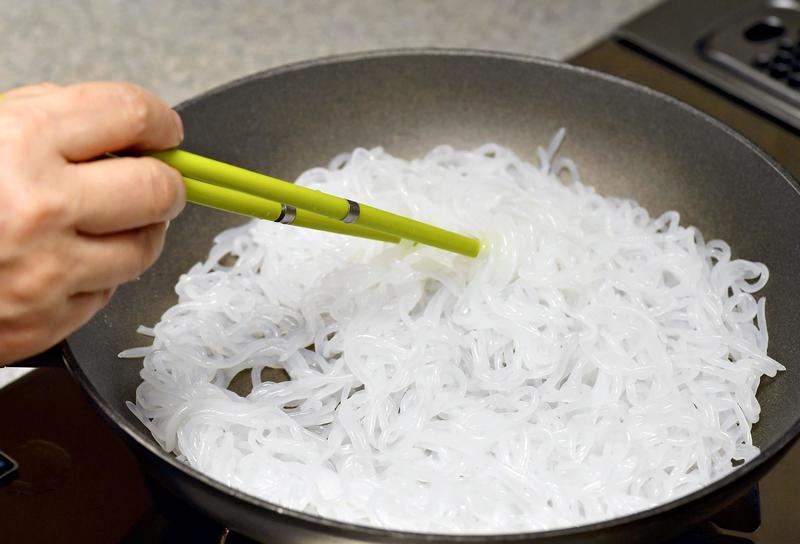
Said Kamishima: "Shirataki are done when you stir them and no water remains in the pan, and they don't produce hissing sounds."
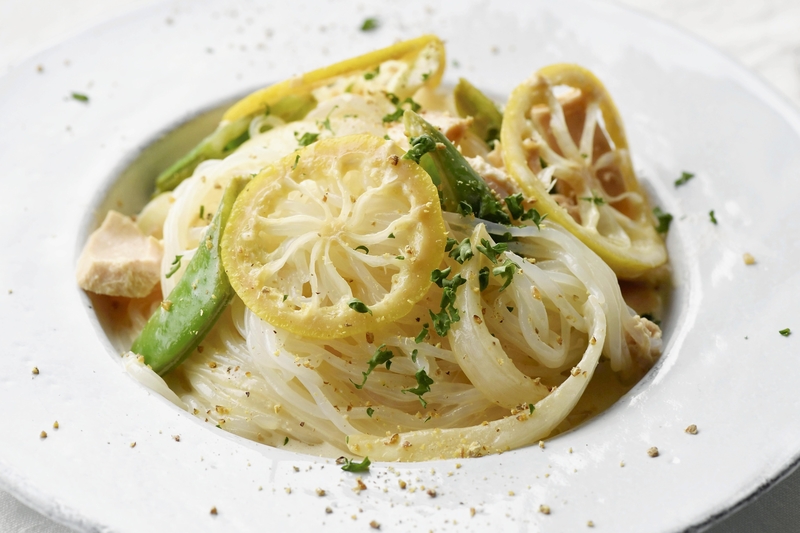
Pasta with spring vegetables
Slice the lemon, remove stalks and strings from the snap peas and cut the newly harvested onion into wedges. Heat olive oil in a frying pan and stir-fry the ingredients until the onion becomes translucent.
Add the heated shirataki, the canned tuna together with its oil, fresh cream and grated garlic. Stir-fry all together until warm. Add salt and pepper to season. Place on a serving plate and garnish with parsley if desired.
Shirataki have a chewier texture than pasta and the rich cream sauce complements the noodles, making the dish filling.
"As shirataki don't have a distinctive flavor, they can go well with various types of pasta sauces," Kamishima said.
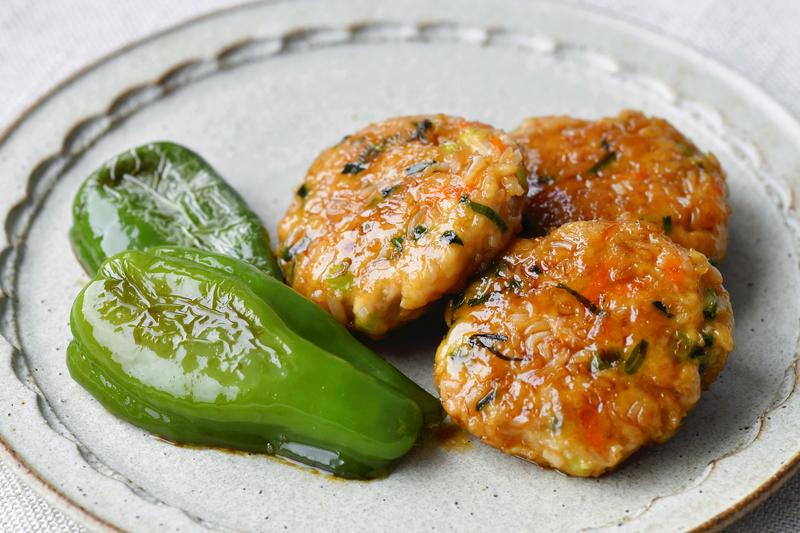
Meatballs with chopped shirataki
Adding shirataki noodles to the mix for this dish allows you to use less meat.
First, chop shirataki before heating them without oil. Mince the banno-negi leeks and roughly chop the carrot. Put all these ingredients in a bowl.
Put minced chicken meat, grated ginger, katakuriko starch, sake and salt into the bowl. Mix well before dividing into six pieces and shape them into oval patties.
Next, make a sauce by mixing the soy sauce, sugar and mirin. Heat cooking oil in a frying pan over medium heat and place the meatballs. Turn over when the bottom side has browned.
Cut the green bell peppers in half lengthwise and place cut section down in the pan. Cover and cook over low heat for five minutes. Remove the lid and pour the seasoning mixture over everything. Turn off the heat after the sauce thickens slightly.
The meatballs should turn out juicy with a light texture. "You can also chop shirataki to mix with rice," Kamishima said.
Ingredients
Shirataki pasta with spring vegetables
(serves 2):
300 grams shirataki
small can of tuna
8 snap peas
¼newly harvested onion
6 slices of lemon
1/2 tbsp olive oil
1/2 tsp grated garlic
150 ml fresh cream
1/3 to 1/2 tsp salt
pinch of pepper
parsley, if desired
Tori-tsukune chicken meatballs with shirataki
(serves 2):
150 grams minced chicken thigh
100 grams shirataki
3 sticks of banno-negi leeks
¼carrot
2 green bell peppers
1-1/2 tbsp katakuriko starch
1 tsp grated ginger
1 tbsp sake
1/2 tsp salt
1/2 tbsp cooking oil
Sauce:
2/3 tbsp soy sauce
1/2 tbsp sugar
1 tbsp mirin
To find out more about Japan's attractions, visit http://the-japan-news.com/news/d&d
Read more from The Japan News at https://japannews.yomiuri.co.jp/