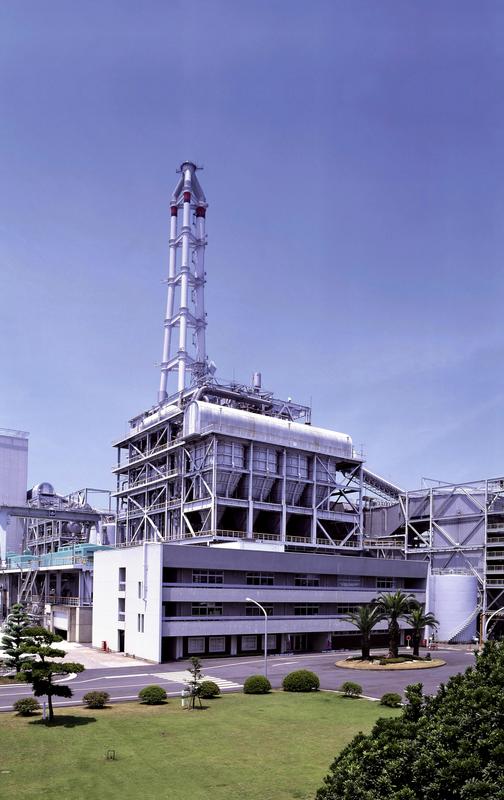
Economy, Trade and Industry Minister Hiroshi Kajiyama has announced that inefficient coal-fired power plants will be suspended or shut down.
The move is in line with a global trend toward "decarbonization." However, reducing the amount of cheap energy made from coal could mean higher electricity prices, which could invite a backlash from industry.
Considering the difficulties involved in generating more renewable energy and restarting nuclear power plants, there are likely to be twists and turns in this tale before a conclusion is reached.
-- Benefits
"We will begin studying how to introduce a framework for phasing out inefficient coal-fired power plants," Kajiyama said at a press conference after a Cabinet meeting Friday.
In March, Kajiyama met with top officials from the Natural Resources and Energy Agency and told them, "If we don't change energy policy now, it will never change."
He also directed them to draw up feasible policies for gradually suspending or shutting down inefficient coal-fired power plants that emit large amounts of carbon dioxide.
Generating energy from coal makes it easy to adjust the amount of electricity produced based on the demand. As a fuel, coal is not only low cost, but, unlike energy sources such as petroleum or liquefied natural gas, it is produced in many areas, which gives a sense of security regarding procurement.
One energy agency executive who has witnessed Kajiyama's determination said, "There's no avoiding opposition from electric power companies. I wondered, 'Is he really going to do it?'"
-- Tough to boost renewables
The ditching of inefficient coal-fired power generation that Kajiyama announced has been a long-standing challenge.
The fifth Strategic Energy Plan, formulated in 2018, states, "The [government of Japan] will take specific measures, including the consideration of a mechanism to encourage fadeout for inefficient coal-fired power plants."
Yet the reason why progress has not been made in reducing coal-fired power generation is that restarting nuclear reactors halted after the Great East Japan Earthquake has not gone as planned. Aging coal-fired plants are what the nation has relied on to supply electricity that was previously generated by nuclear plants.
Many believe scrapping these plants has been deferred out of a desire to avoid a backlash from the business world, which wants lower electricity prices.
Akio Mimura, chairman of the Japan Chamber of Commerce and Industry who is also honorary chairman of Nippon Steel Corp., said Thursday when the policy was announced that "the conclusion to make a 90-percent cut is crazy. We need to create a holistic energy policy. It is important to go through a proper process."
Japan, being poor in natural resources, has dedicated itself to a policy of creating a good balance of thermal power (coal, oil, gas), nuclear power and renewable energy.
If the government intends to reduce coal-fired power generation, which is cheap but produces large amounts of CO2, it must increase the amount of power generated by renewable sources, but this is easier said than done.
According to a Natural Resources and Energy Agency study, the cost to generate a kilowatt-hour with coal in 2030 will be about 13, yen while the cost with offshore wind, which is expected to expand, is more than double that at about 30 yen.
Solar power is in the 10 yen range, about the same as coal, but the amount of electricity it can generate depends on the weather, which is a barrier to it becoming the main power source.
Akihiro Kuroki, research advisor at the Japan Institute of Energy Economics, points out that when creating an environment that allows for a stable supply of renewable energy, "Discussions need to occur between the government and private sector, including on the mechanisms for recovering investments."
Read more from The Japan News at https://japannews.yomiuri.co.jp/