Get all your news in one place.
100's of premium titles.
One app.
Start reading
The Guardian - UK
The Guardian - UK
Environment
Shiona Tregaskis

Curse of the Black Gold: 50 Years of Oil in the Niger Delta

The Curse of Black Gold: Environmental and human impact of oil extraction in Niger Delta, Nigeria
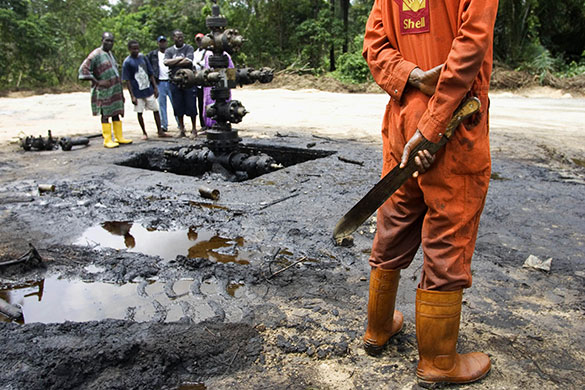
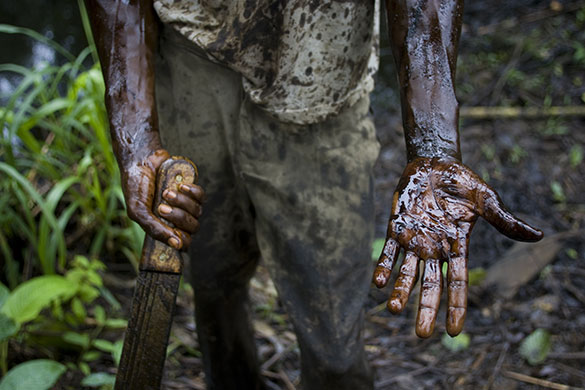
An oil spill, polluting groundwater and ruining cropland, from a well owned by Shell that had been left abandoned for over 25 years. Badly maintained equipment is the cause of many leaks, but oil operators blame sabotage, saying oil spills are caused for compensation money
Photograph: Ed Kashi/Corbis
The Curse of Black Gold: Environmental and human impact of oil extraction in Niger Delta, Nigeria
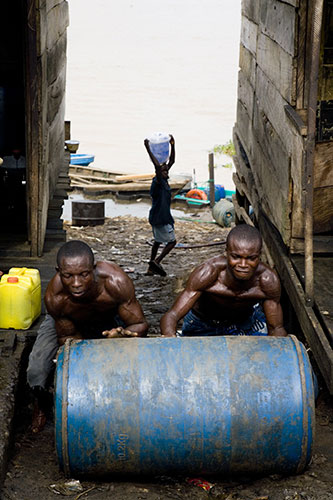
Workers push heavy barrels of gas from the waterfront into the main market road of Yenagoa, Bayelsa. Mangroves cleared for pipelines and the acid rain from gas flares have killed off fish, once the main source of employment
Photograph: Ed Kashi/Corbis
The Curse of Black Gold: Environmental and human impact of oil extraction in Niger Delta, Nigeria
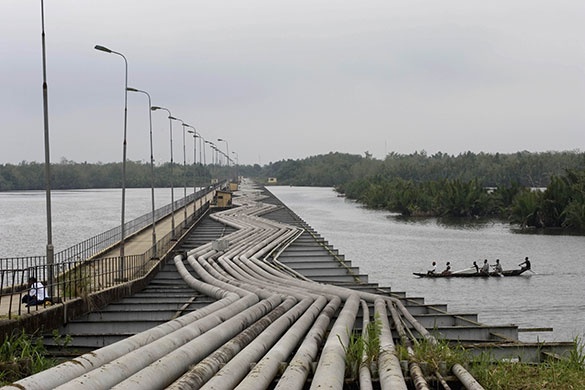
Oil companies, led by Chevron, ExxonMobil, Total, Agip and Royal Dutch Shell, have transformed what was once a waterlogged equatorial forest, stripping away mangroves to lay 4,500 miles of pipelines, over 150 oil fields and 275 flow stations
Photograph: Ed Kashi/Corbis
The Curse of Black Gold: Environmental and human impact of oil extraction in Niger Delta, Nigeria
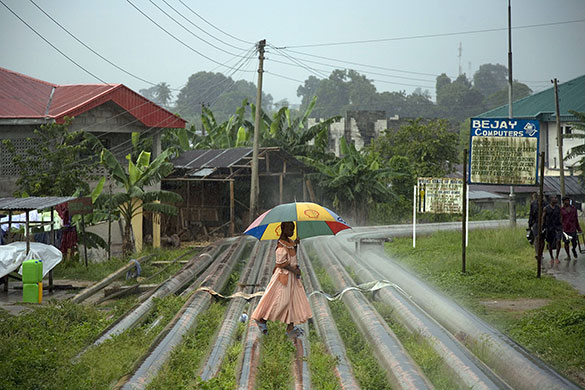
A young girl crosses over pipelines that run directly through the town. A troubled area near Port Harcourt, factional fighting is common in Okrika
Photograph: Ed Kashi/Corbis
The Curse of Black Gold: Environmental and human impact of oil extraction in Niger Delta, Nigeria
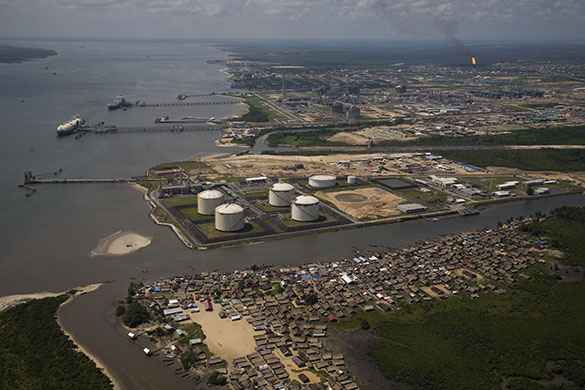
The Bonny Island Nigerian Liquified Natural Gas terminal is the largest of its kind in the delta and is a owned by a consortium of oil companies. No inhabitants from the surrounding villages work in this facility
Photograph: Ed Kashi/Corbis
The Curse of Black Gold: Environmental and human impact of oil extraction in Niger Delta, Nigeria
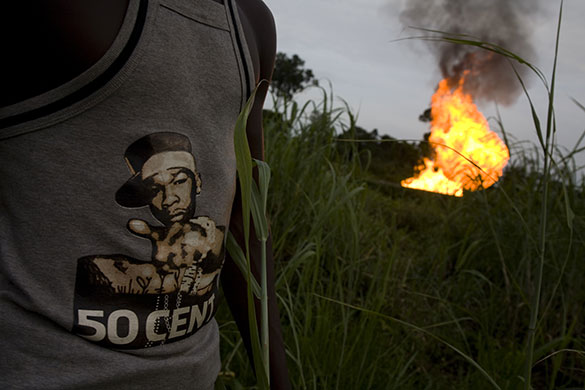
Hundreds of flares like this burn continuously, releasing greenhouse gases and causing acid rain
Photograph: Ed Kashi/Corbis
The Curse of Black Gold: Environmental and human impact of oil extraction in Niger Delta, Nigeria
An Urhobo woman bakes krokpo-garri, or tapioca, in the heat of a gas flare in Afiesere. Local people have worked in this way since 1961, when Shell first opened this flow station. Pollutants from the flare cause serious health problems and life expectancy is short Photograph: Ed Kashi/Corbis
The Curse of Black Gold: Environmental and human impact of oil extraction in Niger Delta, Nigeria
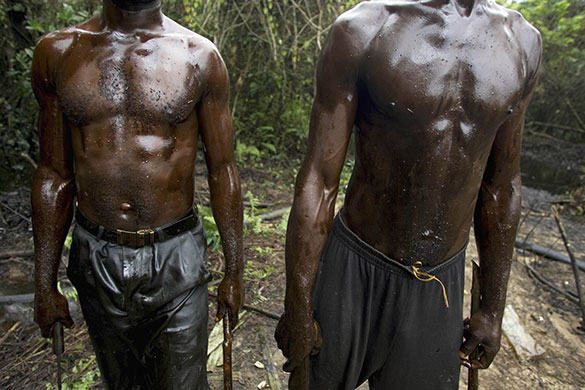
Workers subcontracted by Shell to clean up an oil spill from an abandoned well. A report by Amnesty International suggests in the past 50 years at least 9m barrels worth of oil have leaked into land and rivers in the region
Photograph: Ed Kashi/Corbis
The Curse of Black Gold: Environmental and human impact of oil extraction in Niger Delta, Nigeria
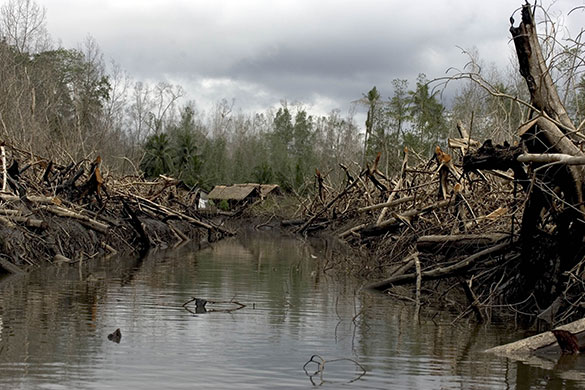
In the village of Kalabilema, Bayelsa, a felled mangrove forest shows the damage of a fire which killed four people in March 2004. The cause of the fire was an old oil spill from leaking pipelines
Photograph: Ed Kashi/Corbis
The Curse of Black Gold: Environmental and human impact of oil extraction in Niger Delta, Nigeria
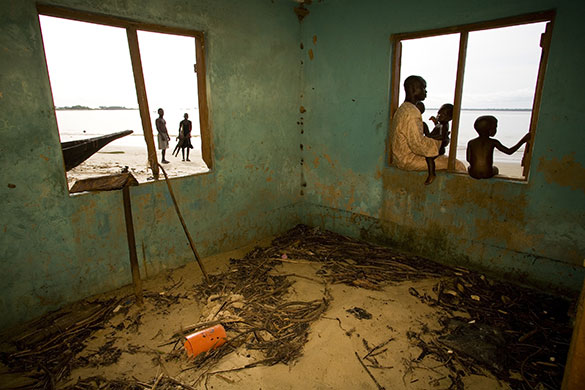
The home of Papa Isamu in Ogulagha lays sunken in sand since the encroaching waters of the delta creeks eroded the unprotected shoreline. Hundreds of homes in this town have been lost to the same fate. It is estimated that between more than 20,000 hectares (50,000 acres) of mangroves have disappeared from the coast
Photograph: Ed Kashi/Corbis
The Curse of Black Gold: Environmental and human impact of oil extraction in Niger Delta, Nigeria
Old Bonny Town on Bonnie Island, where the slave trade and palm oil trade previously thrived. Now the town is in poverty while the oil and gas companies continue to grow
Photograph: Ed Kashi/Corbis
The Curse of Black Gold: Environmental and human impact of oil extraction in Niger Delta, Nigeria
The head of Nigeria's anti-corruption agency has estimated that during 2003, 70% of oil revenues, more than $14bn, was stolen or wasted
Photograph: Ed Kashi/Corbis
The Curse of Black Gold: Environmental and human impact of oil extraction in Niger Delta, Nigeria
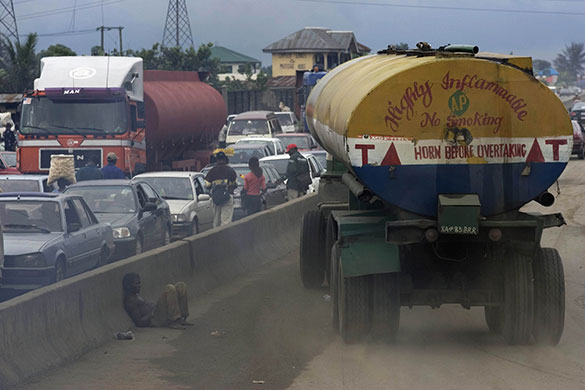
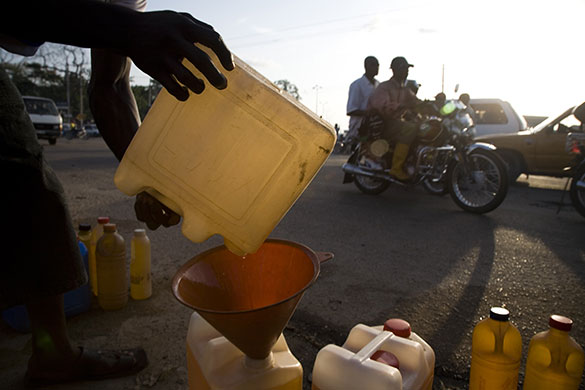
On the streets of Warri, hawkers sell fuel illegally. Because of shortages and high prices, sellers are common
Photograph: Ed Kashi/Corbis
The Curse of Black Gold: Environmental and human impact of oil extraction in Niger Delta, Nigeria
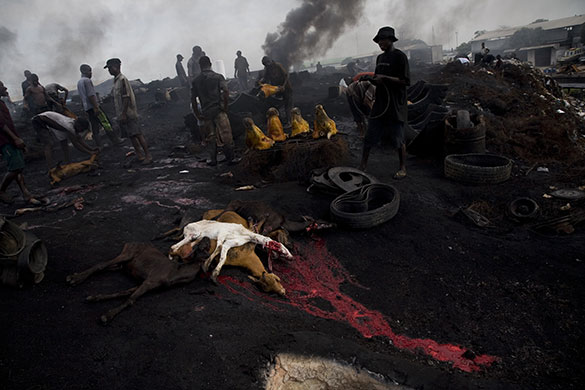
A roaster tends a fire created by old tire remnants, at the Trans-Amadi slaughter, the main abattoir of Port Harcourt. At the open-air slaughter, animals' blood spills into the waterways below and their skin is burned by the flames of old tires, which creates thick clouds of black smoke over the city
Photograph: Ed Kashi/Corbis
The Curse of Black Gold: Environmental and human impact of oil extraction in Niger Delta, Nigeria
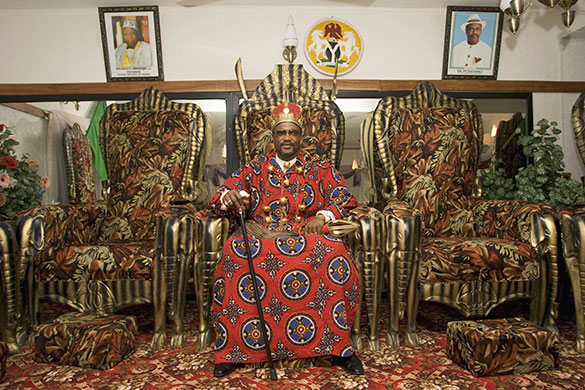
King Nemi Tamunoiyala Oputibeya the Xth sits on his thrown in Okrika. He was made a new king in 2002, as part of the evolution of the tribal communities
Photograph: Ed Kashi/Photograph by Ed Kashi
The Curse of Black Gold: Environmental and human impact of oil extraction in Niger Delta, Nigeria
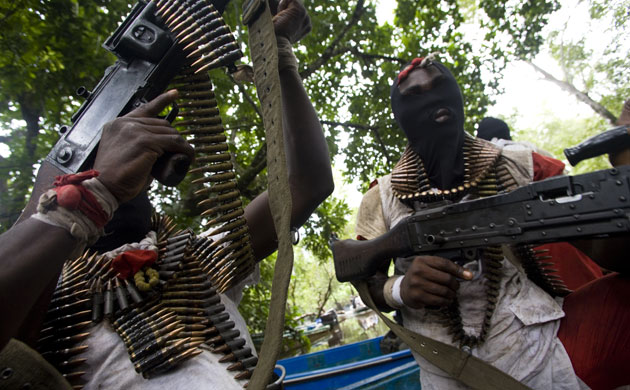
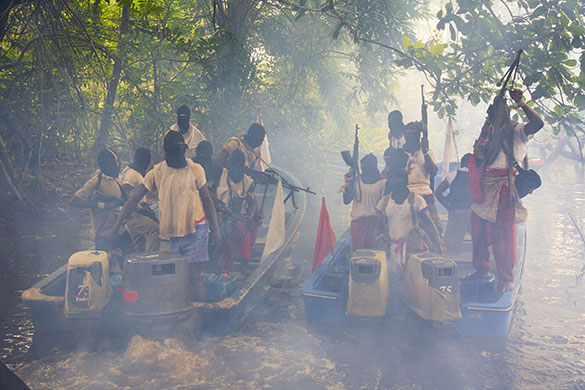
Fighters with Movement for the Emancipation of the Niger Delta (Mend) brandish weapons near their camp in Oporoza. The movement vows to shut off oil if demands for access to the oil wealth in their territories and local control of resources aren't met
Photograph: Ed Kashi/Corbis
Curse of Black Gold: Ed Kashi on oil in Niger Delta : MEND, Nigeria
Mend militants, who wear red-and-white knots as protection from Egbesu, the Ijaw god of war, have in the past year intensified a guerrilla offensive. Hostages and casualties cause oil prices to rise
Photograph: Ed Kashi/Ed Kashi
The Curse of Black Gold: Environmental and human impact of oil extraction in Niger Delta, Nigeria
A woman and child in Sanghana, Bayelsa. Most of the delta's 30 million people live off $1 a day
Photograph: Ed Kashi/Corbis
Curse of Black Gold: Ed Kashi on oil in Niger Delta : Aker Camp Community, Nigeria
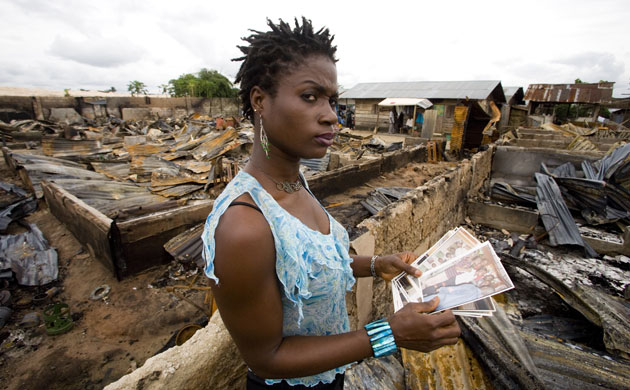
Preye Godswill, 27, owner of The Booze bar and restaurant, looks at photographs of expats and Nigerians in her bar, after returning to the burned out remains of the Aker Camp Community. Aker Camp, a slum of 3,000 people in Port Harcourt, was attacked and burned down by the Nigerian military. The attack was prompted by the killing of a soldier, as he tried to foil a kidnapping of an Italian expat at Godswill's bar. This kind of attack on civilians by the military is not uncommon
Photograph: Ed Kashi/Corbis
The Curse of Black Gold: Environmental and human impact of oil extraction in Niger Delta, Nigeria
Last year, Friends of the Earth Netherlands and four Nigerian farmers brought a compensation case against Shell over environmental degradation. Friends of the Earth claims the decades of oil spills are not accidents but represent a pattern of systematic pollution
Photograph: Ed Kashi/Corbis

Sign up to read this article
Read news from 100's of titles, curated specifically for you.
Already a member? Sign in here
Related Stories
Top stories on inkl right now
One subscription that gives you access to news from hundreds of sites
Already a member? Sign in here
Our Picks
Fourteen days free
Download the app
One app. One membership.
100+ trusted global sources.