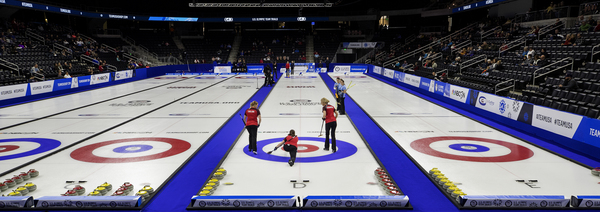
The Winter Olympics have launched in Pyeongchang, South Korea, but for all the televised offerings that include the daredevil speeds of downhill skiing, the balletic grace of figure skating and the physical wonders of snowboarding, only one set of the Games' elite athletes can lay claim to being in competition each day: curlers.
Introduced in the first Winter Olympics in 1924, curling was a sporadic presence at the Games before taking hold in the late '90s. Involving a long sheet of ice and polished granite stones being slid toward a bull's-eye target (the house) while guided by vigorous use of a broom, the sport was a ratings hit during the 2014 Winter Olympics in Sochi, Russia.
Hugely popular in Canada, the competition carries an eccentric sort of viewer appeal _ the sight of a huddle of people furiously sweeping a path for a stone across an icy surface for initially mysterious ends will do that. Plus, there's the ever-formidable Norwegian team, which has a reputation for uniforms that boast pants so colorful they border on psychedelic (seriously, they're impressive).
But as its fans from far colder climates can attest, the game itself has an approachable, engrossing quality, combining elements of baseball, shuffleboard and chess for a surprisingly addictive experience for players and viewers.
"People love it," said veteran sports reporter Trenni Kusnierek, who for the second consecutive Winter Olympics will join NBC's broadcast to cover curling. She was reached by phone from her hotel in South Korea a few days before the Opening Ceremony.
"Because it seems like, 'Oh, this is easy. I could do this,' but it's really, really difficult. Like you watch snowboarding and you're like, 'OK. I don't think I can do what Shaun White does or what Lindsey Vonn does on alpine (skiing), but I think I could throw a rock to the house.' "
Below, Kusnierek talks more about curling and what the sport's fans can expect in Pyeongchang.