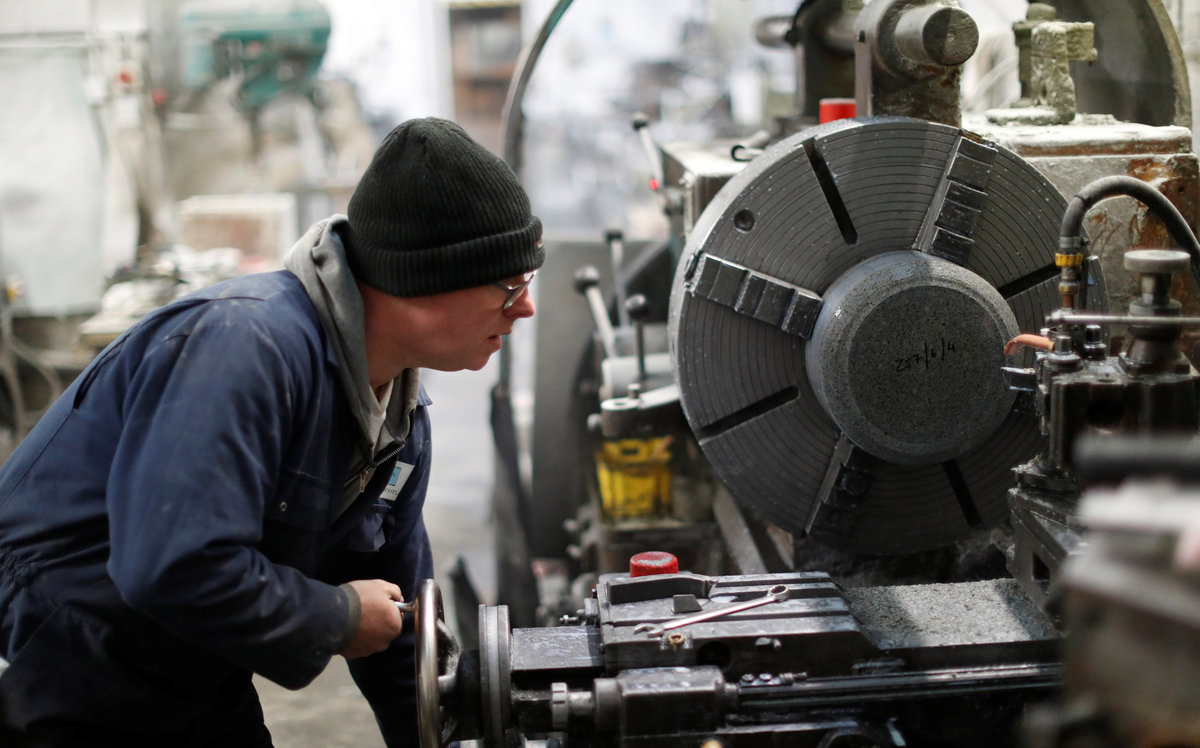
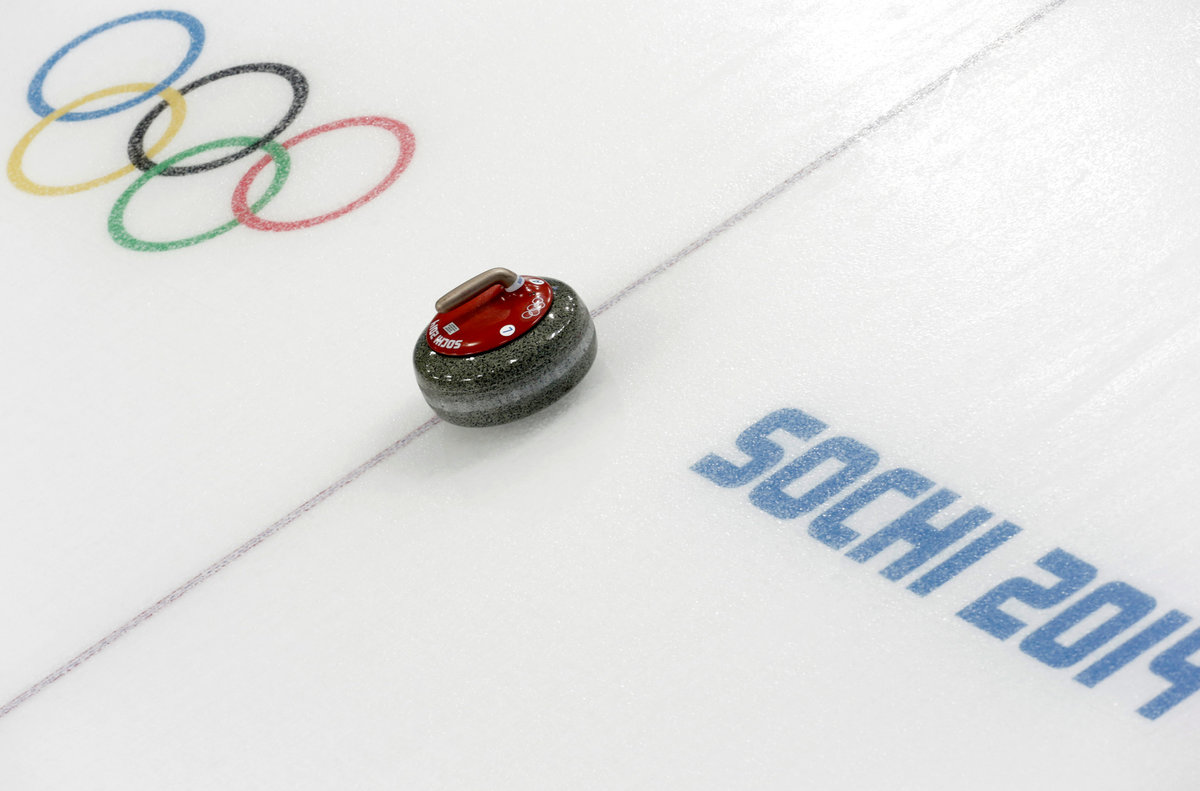
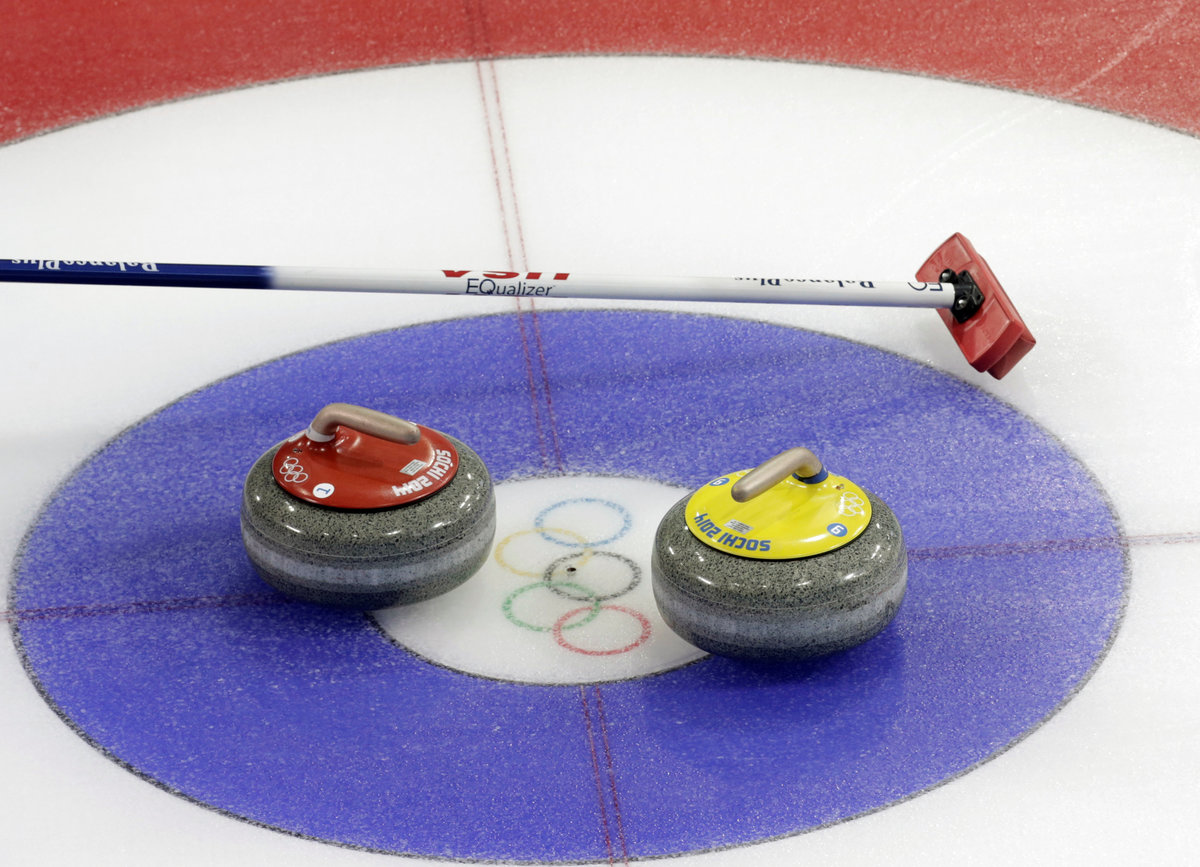
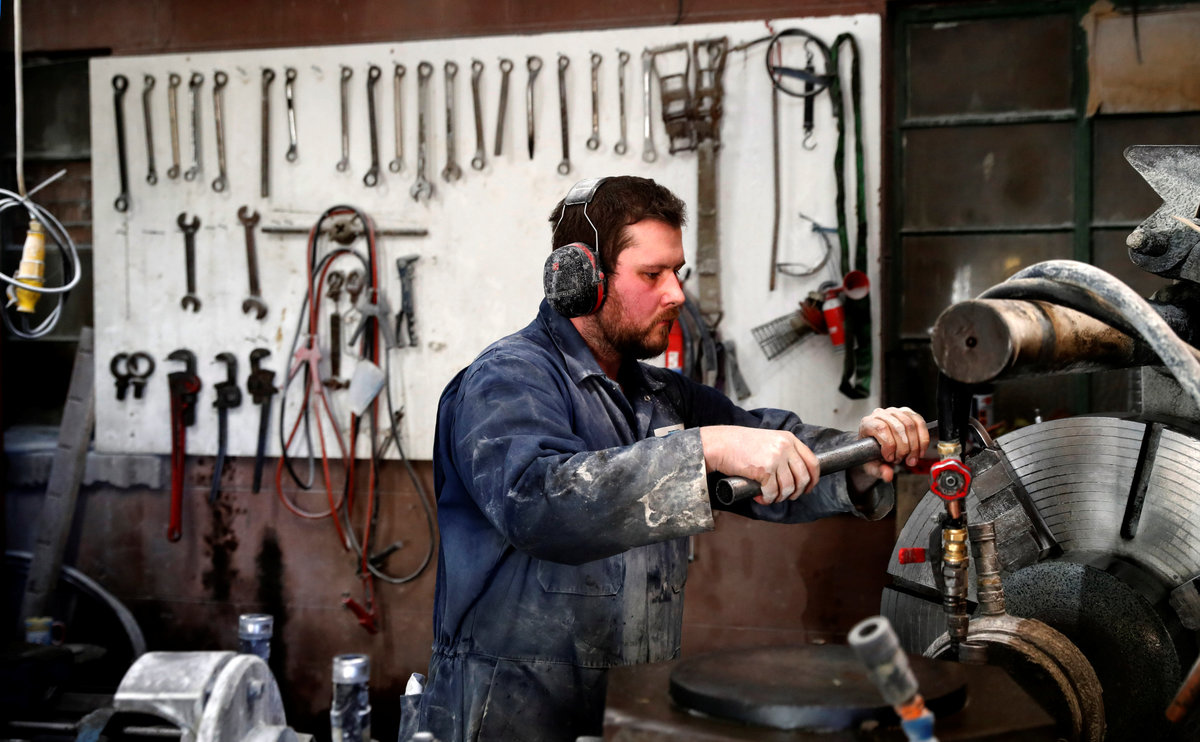
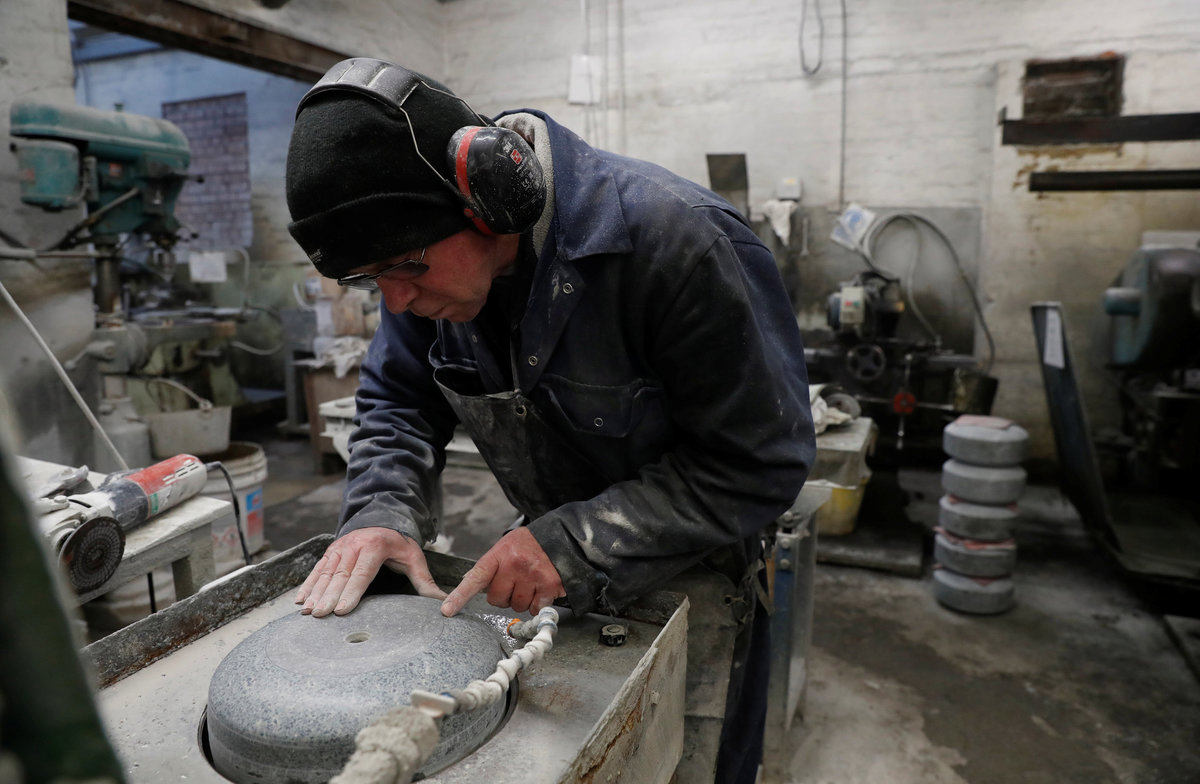
MAUCHLINE, Scotland (Reuters) - John Brown has lovingly polished each and every one of the curling stones to be used at the Pyeongchang Olympics, buffing and burnishing the granite in a workshop whose machines look older than him.
The 52-year-old says he will be "chuffed to bits" to see them thrown in South Korea.
The former fitter, who has worked at sole Olympic stone suppliers Kays Curling for 12 years, also expects to have his hackles raised by some of the accompanying television commentary.
"They say ‘Oh, maybe the stones aren’t running right' and that. It’s not the stones; It’s the ice, it’s the player," he told Reuters, stepping outside for a break in the steady Scottish drizzle.
"It’s nothing to do with the stones. Every stone is so closely matched, it’s unbelievable."
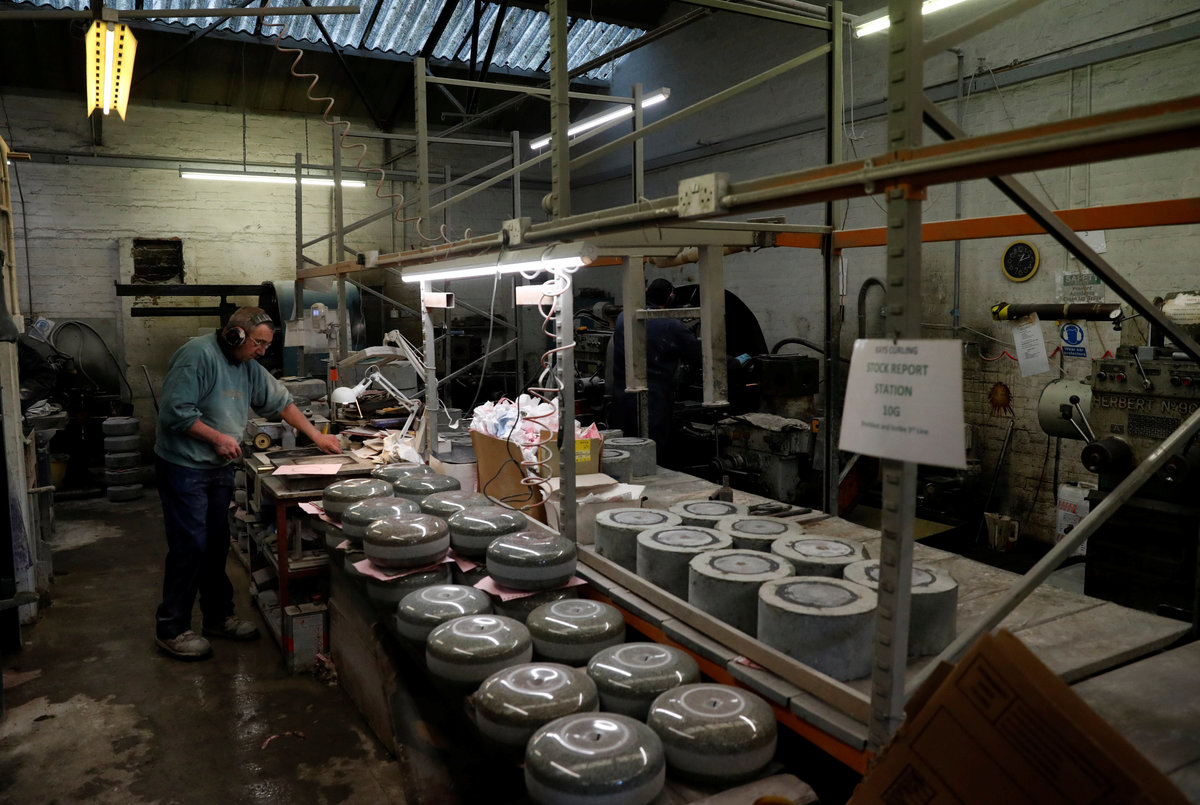
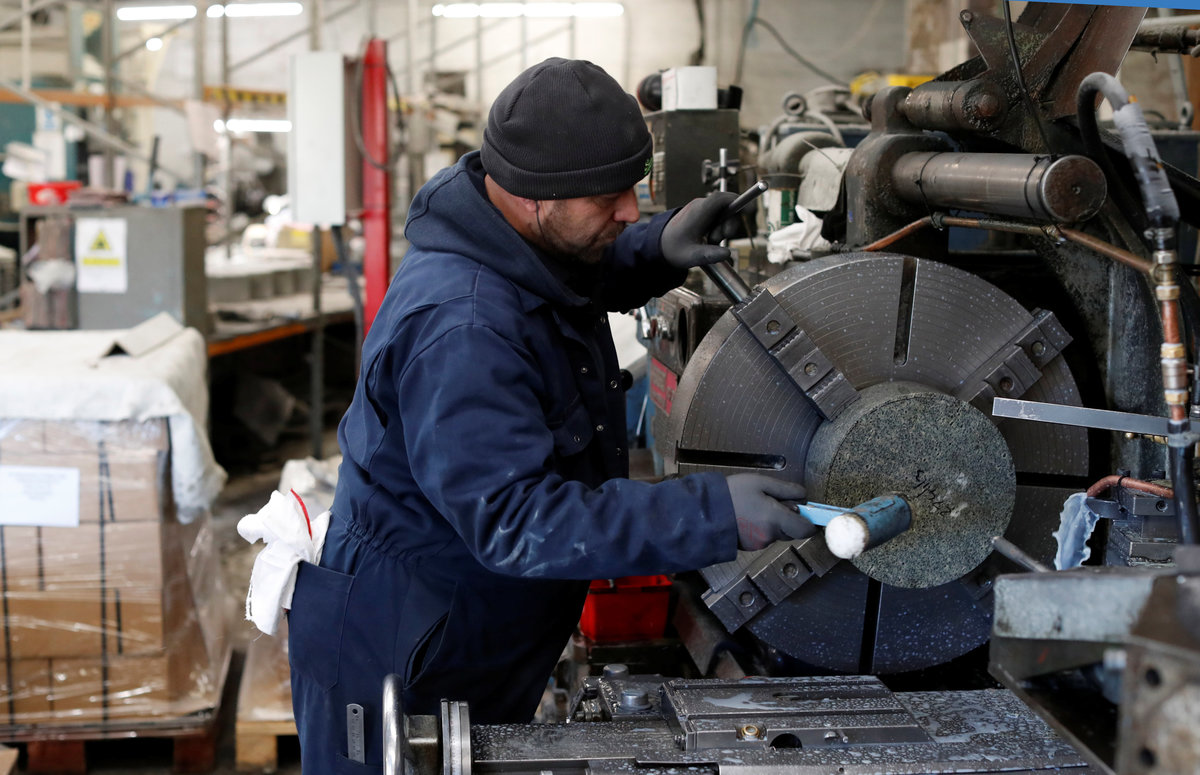
Entering the Kays factory in Mauchline, a small town some 50km south of Glasgow, is like stepping back in time to a pre-computer age of noisy, dusty industrial lathes and hands-on craftsmanship.
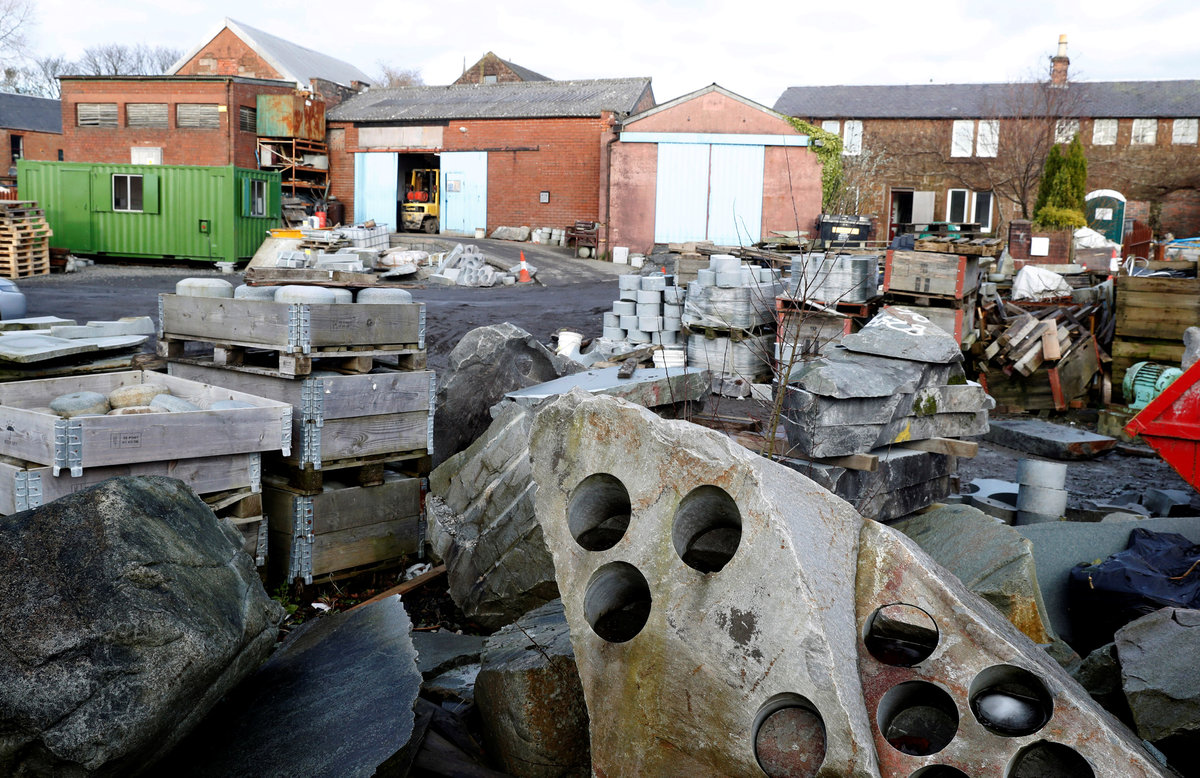
The yard outside is littered with granite, and slabs with more holes than a slice of Emmental.
Founded in 1851, Kays has occupied its present site -- down the road from the former home of Scottish poet and 'Bard of Ayrshire' Robert Burns -- since 1911 and first supplied Olympic stones in 1924.
The family-owned business employs just 16 people, their numbers dwarfed by some of the television crews who traipse to this quiet corner of rural Scotland from around the world in search of curling's roots.
It also has an exclusive licence to extract granite from Ailsa Craig, an uninhabited island 16km off the western coast of Scotland and visible on a clear day from Royal Troon and Trump Turnberry golf clubs.
Once known as 'Paddy's Milestone', a prominent marker on the sea journey between Belfast and Glasgow in the Firth of Clyde, the island has a Blue Hone granite found nowhere else in the world.
'SPRINGY STONES'
"The body of the stone, the main bit with the striking band where they bump off each other, is made of Ailsa Craig Common Green," says Kays director Mark Callan over a coffee in the kitchen of a house that is also an office.
"It’s a very open structure granite so it takes impacts very well and is very ‘springy’; they (the stones) bounce off each other very, very well.
"However, you don’t want to make a running surface with this granite because it is porous. Being on ice, they would suck in water and moisture, freeze and then crack and break."
Blue Hone, a non-porous micro-granite formed by volcanic eruptions some 60 million years ago, is used for the running edge instead.
Kays extracted 2,000 tonnes from Ailsa Craig in 2013, using a military landing craft to bring the stone back to the mainland, and have enough left to last beyond the 2022 Beijing Olympics.
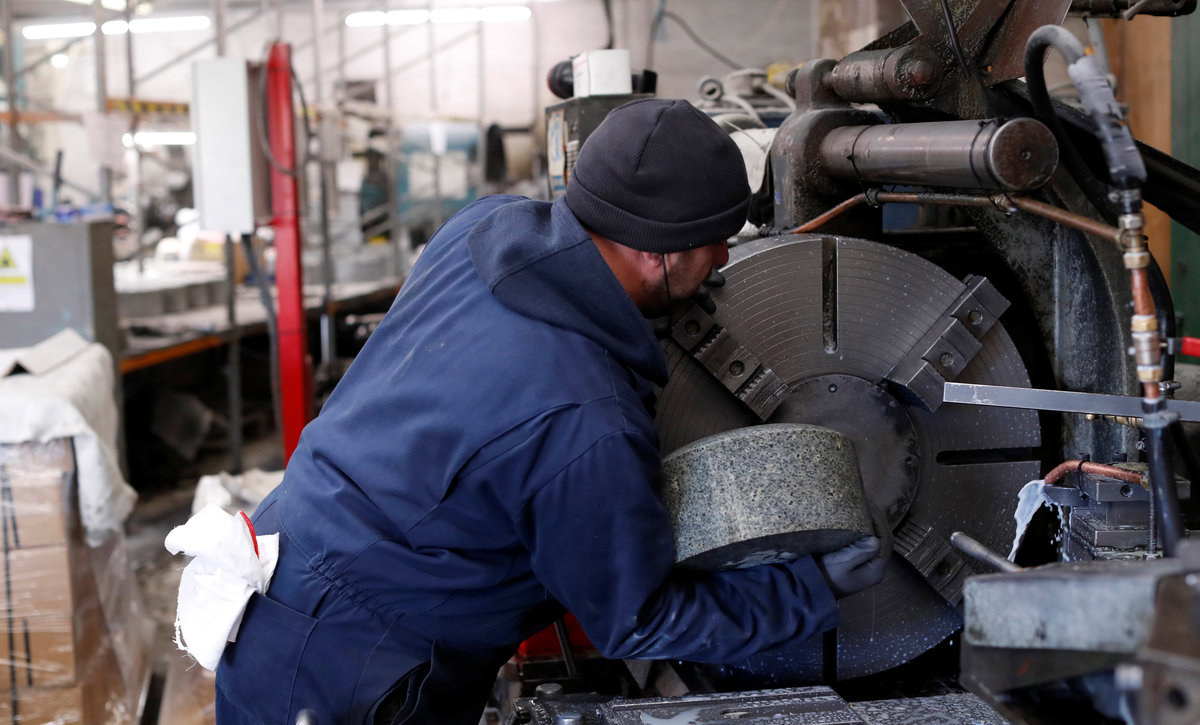
A typical boulder weighs between three to five tonnes, with each sent up to Aberdeen to be cut into slabs before being brought back down to Mauchline.
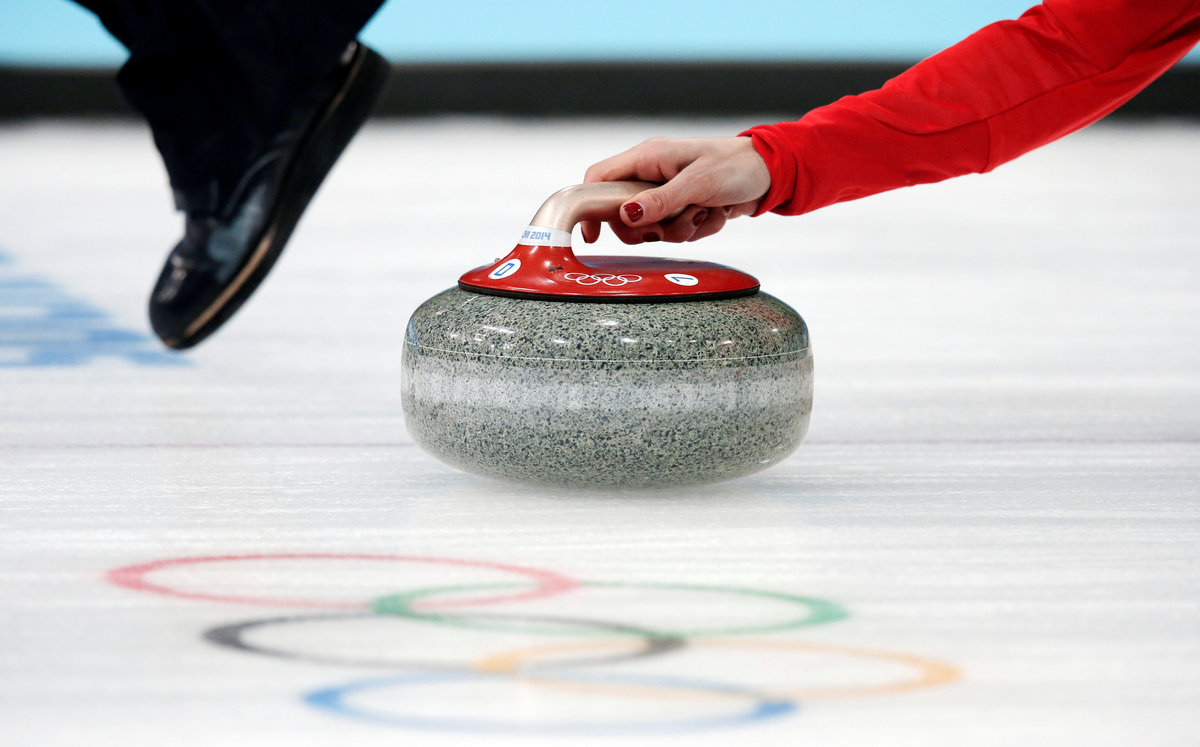
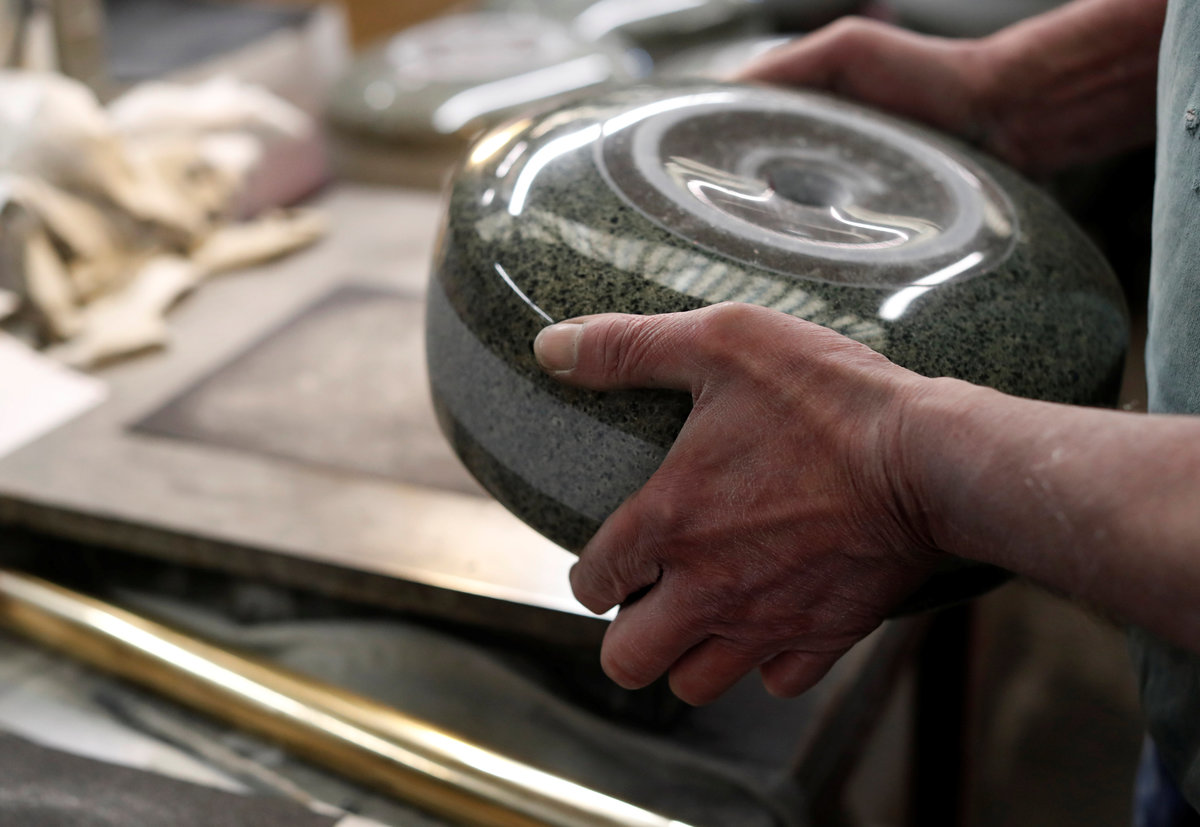
They are then cored to produce 25kg 'cheeses' -- ultimately reduced to 20kg with Blue Hone inserts fixed to the top and bottom with an aircraft-grade epoxy resin that never sets.
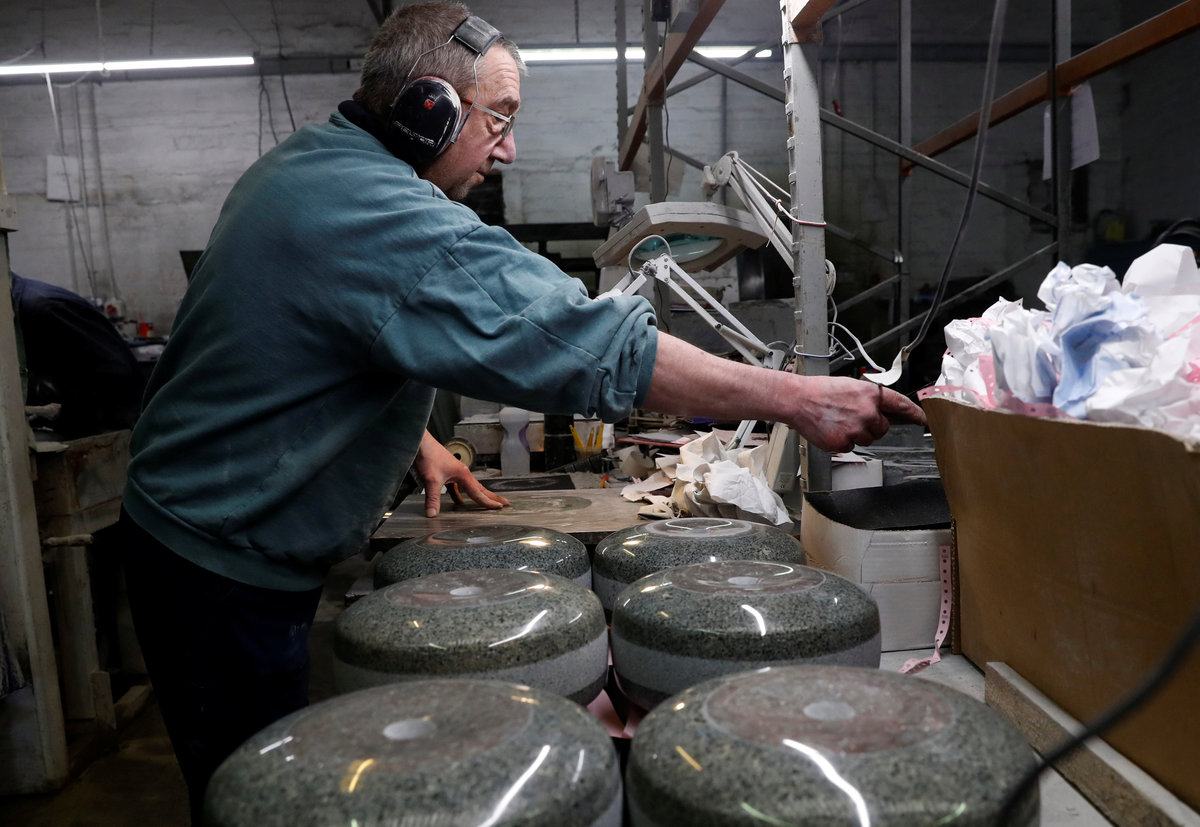
"If we used a glue that set, because curling stones and the like can be subject to fairly extreme temperature changes, the glue would crack and become brittle and fall out," explained Callan.
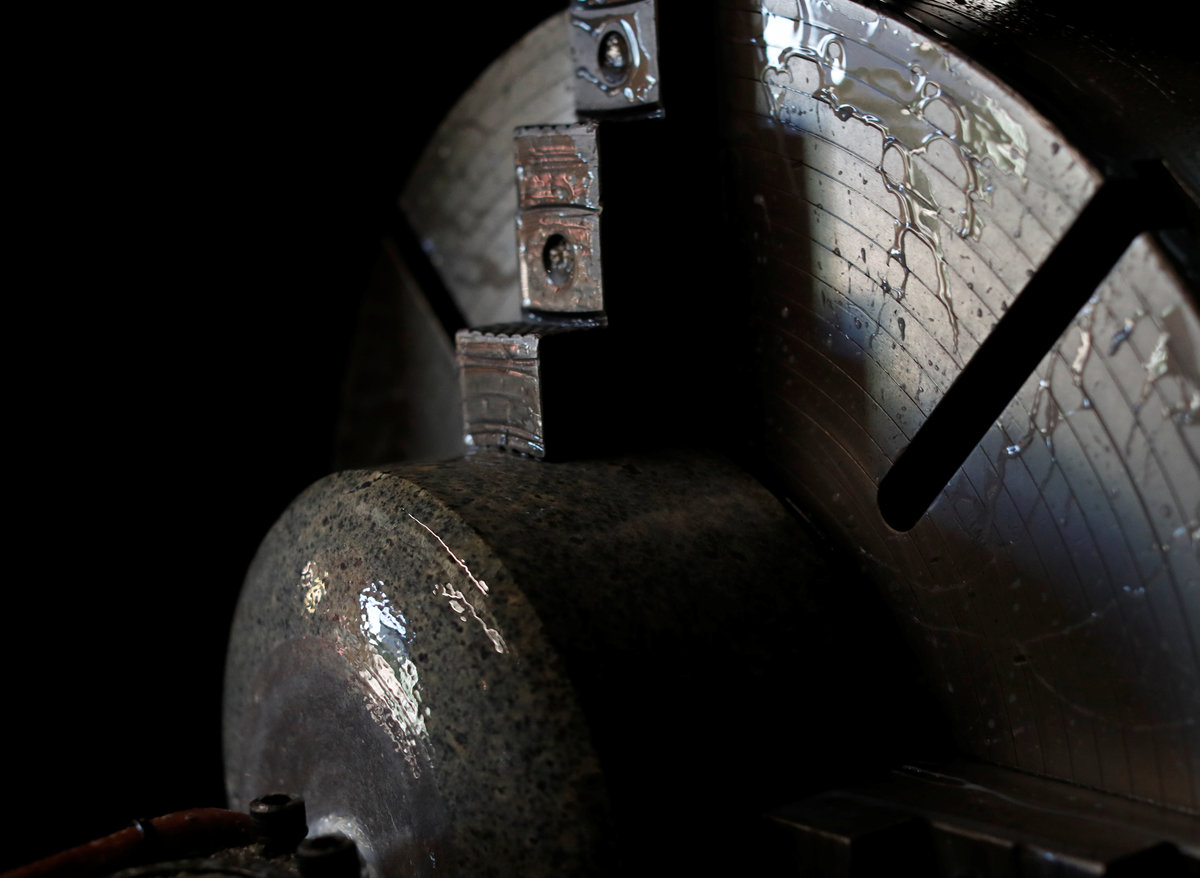
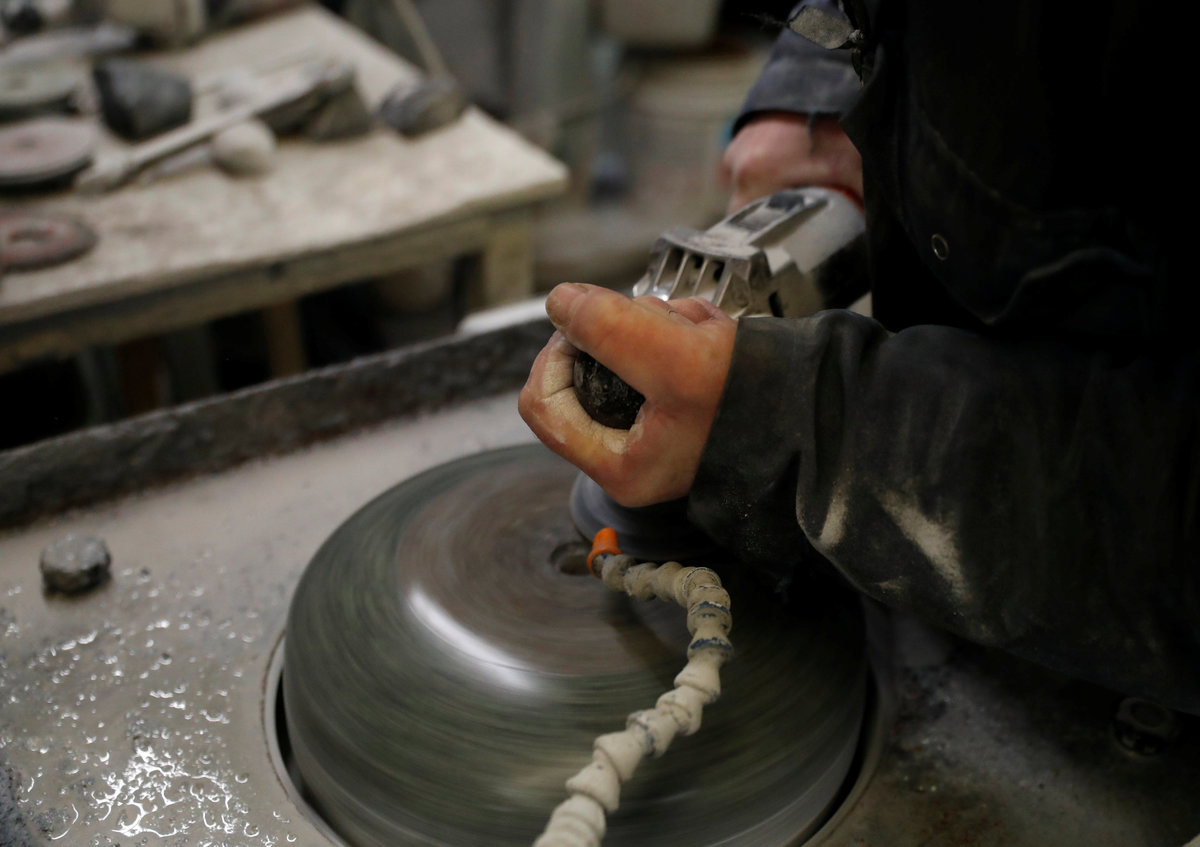
A hole is drilled through the middle for bolt and handle and the dull stone is polished manually on a water-cooled turntable, using tin oxide before a 'striking band' is sand-blasted on.
MIDDLE EASTERN INTEREST
Each stone costs 470 pounds and the factory makes eight or nine a day -- an annual output of between 1,800 and 2,000 -- with a three month waiting list.
The stones, 16 to a set, can last for up to 50 years.
"It's not something you’re going to run out and buy every year," said Callan.
The Olympic curling competition starts with mixed doubles on Feb. 8, the day before the Games' opening ceremony, and runs through to Feb. 25.
The tournament stones were despatched to South Korea a year ago and the world body, which has a machine that can throw eight at once, has tested them for distance and curl.
Dating from at least the 16th century when stones were thrown on frozen ponds in Scotland, curling, or 'chess on ice' as it has been dubbed, became a full Olympic sport only in 1998 but is rapidly expanding.
"We’ve got enquiries in at the moment from Qatar. We know the United Arab Emirates are very keen," said Callan. "And they play a big competition every October in Hawaii.
"So our stones are scattered about the globe."
(Editing by Peter Rutherford)