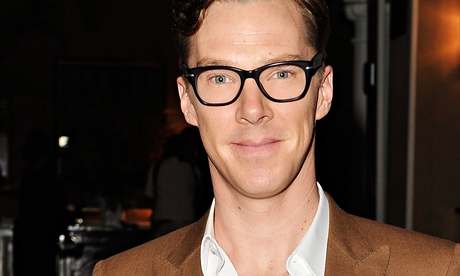
So, Benedict Cumberbatch has apologised for using the word “coloured” to describe black actors in a US televison interview.
After an online backlash which pointed out that his word is outdated and potentially offensive, he did a quick mea culpa, calling himself “an idiot” and “a complete fool”, adding: “I can only hope this incident will highlight the need for correct usage of terminology that is accurate and inoffensive.” The irony is that his “gaffe” was made in the context of criticising the lack of opportunities for ethnic minority actors in the UK.
And if this apology sounds familiar, that’s because it is: in recent years we’ve had “Sorry, didn’t mean to say coloured”, from football pundit Alan Hansen, from golf’s European tour chief, and from an ITV reporter, to name but three.
In making a swift apology, Cumberbatch has done the right thing. But those wishing to condemn him should take a step back too. Because it wasn’t so long ago that “coloured” was a perfectly respectful and polite term.
Growing up in the 1960s, it wasn’t that uncommon to hear myself being referred to as a “negro”. I never liked that word – it reminded me too much of the savages in the Tarzan films screened on TV at the time. “Black” you would only ever hear when followed by the word “bastard” – or as “blackie” in the regular playground taunting. So to be called “coloured” was a pleasant relief – it was the progressive, liberal term of its age.
The word black only started to become detoxified when the ripples of the 1960s US Black Power movement were felt, with its “I’m Black and I’m Proud” slogan.
Since then there have been several developments, all with added nuance, but all struggling to find a group term for those whose racial origins lie beyond Europe – many of whom don’t want to be called “black”, which is seen as a term for Africans and Caribbeans only. It used to be OK to say non-white – but defining in terms of whiteness is self-defeating, plus it has links to apartheid segregation.
Then it became “ethnic minority” – but that sounds slightly patronising, and has led to the misused term “ethnic” to describe black and brown people, as if white people are somehow above ethnicity. Minority ethnic was seen to be a bit better – though I’m not exactly sure why. And currently popular is BAME (Black, Asian and minority ethnic) – which is more and more being pronounced “Bame”, and which I hate, because it takes out all personality and humanity from the people to whom it refers.
My current favoured term is “people of colour”. It makes a positive acknowledgement of our skin tone and has no links to the segregation or colonialist era, or the second-class status with which “coloured people” will always be associated. Though, with all these machinations, perhaps the foremost American black civil rights organisation, founded in 1909, will feel justified in never having changed its name from the National Association for the Advancement of Colored People.
There are large swaths of the land, though, where none of this thinking has even started to penetrate. One obvious demographic is those of retirement age, many of whom won’t have kept up to speed with the changes, or who have continued using the term out of habit. I won’t condemn anyone for being old.
It’s also worth pointing out that “coloured” is never said as a deliberate insult. Ex-England football captain John Terry would never have shouted “You fucking coloured cunt”; neither would former manager and pundit Ron Atkinson have described a player as a “fucking lazy thick coloured person”.
The other main groups who still use the word are those who never mix with racial minorities; and those who have little interest in discussions on race. Cumberbatch almost certainly fits into one of these. He was born in 1976, so is young enough to know better; but then he was educated at Harrow, and has played the role of posh boy in several typically English monocultural movies (Atonement, Tinker Tailor Soldier Spy, War Horse, The Fifth Estate, The Imitation Game) plus, of course, Sherlock, for which he’s probably best known.
If he’d used the word “coloured” in front of any black actors he’d have been corrected immediately, so we can only assume he’s never had that conversation. His impressive list of roles simply proves that you can wade through the deepest waters of the British film industry and still barely meet a single black person (and, no, 12 Years a Slave does not even come close to balancing out all the other inadequacies).
So to criticise Cumberbatch is missing the point. His comments betray the whiteness of the whole industry; and its representatives should be the ones apologising today.