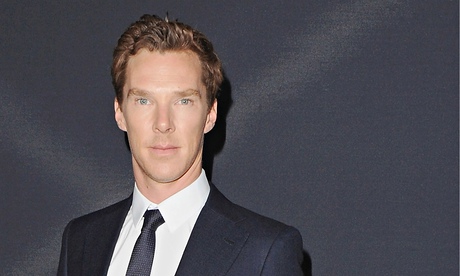
Joseph Harker (Cumberbatch got it wrong but we can cut him some slack, 28 January) claims that the term “people of colour” “makes a positive acknowledgment of our [black people’s] skin tone”. It does not. It refers to no particular colour, nor did the earlier euphemism “coloured people”, which, Harker argues, will always be associated with a second-class status. We spent many years in the 1980s and 90s teaching college students not to use “coloured” on grounds of anti-discrimination and of logic. Everyone is coloured. There are no pure black or white people. To call all people who are a bit browner “coloured” is to imply that white is the norm and all the rest are different. It was a colonialist-era term that categorised those who many wanted to believe did not “belong” here – the rise of Ukip indicates that many still wish for a similar way of speaking.
I have heard that “people of colour” differs in that US black people promoted and “own” it. But I’m afraid the subtlety of this difference will be lost on the average Joe and Jane and inevitably the term will be shortened back to coloured, again giving the white majority a term with which to dismiss “the rest”. I fail to see how the difference between coloured people and people of colour permits the latter to avoid the negative implications and discriminatory power of the former. Can we leave this ugly term behind?
Hugh Coolican
Broughton Astley, Leicestershire
• The story goes that some years ago an American cleric was guest preacher at a church in Middle England. The incumbent introduced the visitor: “Our coloured friend; our coloured brother; our coloured guest; our coloured cousin …” Eventually the visitor got his chance: “Colourless brethren …” No doubt apocryphal, but the point is valid. The historian AJP Taylor once remarked: “I have never seen a white man, and I should be very concerned were I to turn white myself.”
All the terms used to distinguish sections of the human race based on skin colour are pernicious in that they perpetuate the belief that these differences are significant. No matter how well intentioned users are, they distract attention from the fact that our common humanity should outweigh the things that divide us.
Frank Jackson
Harlow, Essex
• While I broadly agree with Joseph Harker’s take on Cumberbatchgate, I find his patronising dismissal of “those of retirement age” as thoughtless as Benedict’s blunder. Many people like me, whom Harker dismisses as “old” also grew up in the 1960s. People in my demographic had our political consciences formed under the influences of such figures as Bob Dylan, Martin Luther King and Enoch Powell, and are likely to be highly aware of the battles for respect fought by black people which younger people may take for granted.
Jill Allbrooke
Bromley, Kent
• Using the “right” language and being understood are sometimes mutually exclusive. A phone call from me to a hospital ward went like this: “I need to speak to the black woman doctor who was on duty yesterday. I don’t know her name.” “You mean the Indian lady?” “No [what do I say now?], I mean the … African doctor.” “Oh, the coloured doctor.”
Pam Lunn
Kenilworth, Warwickshire
• Lindy West (G2, 28 January) suggests that the phrase “people of colour” may evolve over time. How about using just the word “people” right now?
Ellie Sedgwick
Halesworth, Suffolk
• Lindy West advises: “If people tell you that a word harms them, just don’t use that word.” So why doesn’t the same rule apply to cartoons that may offend people of a religious faith? Just asking.
Charlotte Hofton
Ryde, Isle of Wight