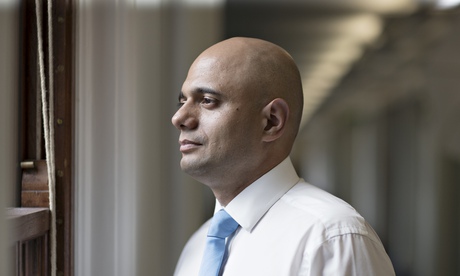
The culture secretary Sajid Javid has pledged to crack down on police and other authorities using the Regulation of Investigatory Powers Act (Ripa) to access journalists’ telephone records.
Javid, speaking at the Society of Editors annual conference in Southampton, said that maintaining the anonymity of sources was a “sacrosanct principle” of investigative journalism.
“The right to keep sources anonymous is the bedrock of investigative journalism,” he said. “It is a sacrosanct principle and one that the authorities need a damn good reason to interfere with. Ripa was passed to help with the fight against serious criminal wrongdoing. Not to impede fair and legitimate journalism, no matter how awkward that journalism may be for police officers and local councils. The legislation should never be used to spy on reporters and whistleblowers who are going about their lawful, vital, business.”
Javid acknowledged that Theresa May, the home secretary, has promised action to curb the misuse of Ripa but he also pledged that the culture department would launch a crackdown.
“As the secretary of state responsible for the media, I’ll be making sure the Home Office knows just how important this issue is for the industry,” he said. “And I’ll be watching closely to ensure the Act is not misused in the future.”
Javid also said that that regulation of newspapers must remain in the hands of the industry-led system.
“This government has absolutely no intention of imposing any form of state-controlled regulation of the press,” he said. “No government ever should. The process must be industry-led, with no opportunity for politicians, present or future, to interfere with legitimate journalistic practice.”
The culture secretary also criticised the European Union’s so-called “right to be forgotten” law as “censorship by the back door”.
“Google has been receiving a demand for deletion every 90 seconds,” he said. “Criminals are having their convictions airbrushed from history. Terrorists have ordered Google to cover up stories about their trials. The ‘right to be forgotten’ is censorship by the back door.”
Javid also touched on the thorny issue of the BBC’s impact on the local newspaper industry.
“As news moves online, local newspapers with five or even four figure circulations have found themselves going head to head with one of the world’s biggest broadcasters,” he said. “As with so many of the changes brought about by the internet, it raises a lot of questions. Is it healthy for a publicly funded broadcaster to compete with commercial newspapers? Should the BBC share its local public service content under a creative commons licence?”
• To contact the MediaGuardian news desk email media@theguardian.com or phone 020 3353 3857. For all other inquiries please call the main Guardian switchboard on 020 3353 2000. If you are writing a comment for publication, please mark clearly “for publication”.
• To get the latest media news to your desktop or mobile, follow MediaGuardian on Twitter and Facebook.