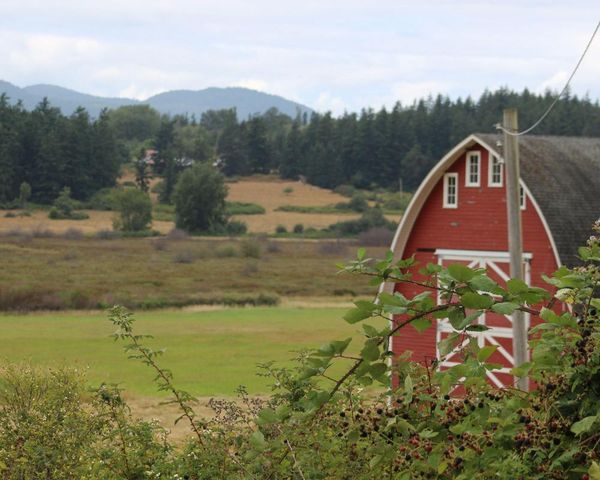
For more than a century the sport of rugby has fundamentally shaped the New Zealand weekend. Frigid morning games on rural pitches stippled with frost, quarter time oranges and final whistle beers. Test matches – especially against the Wallabies – bring entire communities together, and unite a nation that is sparsely populated, geographically remote and famously emotion-shy.
But behind the scenes, behind the magnetism of the Richie McCaws and Jonah Lomus, and past the screaming, adoring fans, New Zealand rugby has been struggling to survive. Charged not only with funding and managing the country’s premier team, the All Blacks, it is also in charge of funding and managing provincial and community rugby teams, training coaches nationwide, and pouring money into the development of women’s and girls’ rugby.
With dwindling participation numbers country-wide, and the ever-growing lustre of foreign clubs hand-picking the best All Blacks, New Zealand Rugby is now – partially at least – up for sale.
“Sport is a valuable commodity, and even in this deal, in my view, there isn’t enough money,” says Steve Jackson, a sports scientist from Otago University in the South Island. “In my view, if they don’t have enough money to retain the top All Blacks in New Zealand, then they’re not getting enough money full-stop.”
On Thursday, 26 provincial unions and the Māori Rugby Board voted to sell a 12.5% stake of NZR to the private equity firm Silver Lake that would bring a cash injection of $NZ387m to NZR, which posted a NZ$18.7m operating loss at its AGM on Thursday. This means the All Blacks could become a non-wholly publicly owned entity for the first time in the team’s 115-year history.
The move comes at the end of a tough decade for the sport in New Zealand, with participation numbers down and star players increasingly lured overseas. Non-traditional sports such as skateboarding and e-sports are also capturing potential players, and the science of concussion risk in rugby has become common knowledge.
Multiple sex scandals have also not helped the New Zealand rugby brand, or its image with Kiwis increasingly intolerant of sexism and racism on and off the field.

Traditionally, All Blacks would head overseas towards the end of their career, when their skills were still sharp but their bodies needed a break. Now, top All Blacks like Beauden Barrett and Brodie Retallick are playing in Japan in their prime, as well as dozens of would-be All Blacks from the provincial New Zealand pools, especially the Otago Highlanders.
The flight of top All Blacks is not the only issue. Despite the dominance of their premier team on the world stage, NZR is not a heavy-hitter globally, and lacks the sponsorship and funding opportunities of Europe and Japan.
But despite the provincial support, the deal is not going unchallenged. NZR have said it will continue discussions over the coming weeks with the New Zealand Rugby Players’ Association, which is refusing to sign off on the deal, citing a range of issues.
Some within the players’ association are concerned that the partial buy-out may pose threats to player welfare, with players forced to play more games, while there are also widespread concerns about protecting the cultural integrity of the haka and other distinctly New Zealand elements of the All Blacks’ game.
In a nation where rugby is often cited as the dominant religion, the cultural shame factor of the esteemed All Blacks being partially foreign-owned is also high. Following the announcement at Thursday’s AGM, accusations of soul-selling and doing anything for money have flown.
However in the regions, where clubs are “desperate” for cash, the possible funding injection comes as a relief.
Blair Mirfin coaches provincial rugby on the west coast of New Zealand’s south Island. He thinks it’s a shame that part of the All Blacks will now be part foreign-owned, but welcomes the funding hit nevertheless, estimated to be around 10% of the total funding for the provinces.
“Its only a little share and it keeps NZ rugby strong in these testing times,”Mirfin said. “I think it’s good as it will filter some well-needed money though to our small unions in these tough times. At one stage this year they were talking about changing the heartland competition in pools South Central and North due to funding and to cut back on travel. I know a lot of the players were not keen on this as that’s why they play – to travel throughout NZ .”
Jackson says the players’ association is pushing hard for other options to save New Zealand rugby, including more government investment, or even selling NZR shares to New Zealanders, potentially matched dollar for dollar by Silver Lake. It is an idea that has the potential to reinvigorate the game, Jackson says.
“That sense of ownership and attachment could reignite the sense of bonding and community that many sports are trying to manufacture,” Jackson says. “And here you have 100 years of history that you could hopefully rekindle.”
For many, the news of the Silver Lake deal has come as a welcome bit of good news, and Jackson says even for hard-core fans, a partially foreign-owned All Blacks is better than an All Blacks team so denuded of its star players that it is no longer able to win trophies.
“It’s hard to gauge how the New Zealand population will react, as it is increasingly multi-cultural and diverse. People’s priorities have changed since Covid, I think they are starting to rethink what their priorities are in life - and whether those priorities are rugby.”

.png?w=600)