Cuba's deputy prime minister spent this week telling anyone who'd listen that his government's biggest market opening in a generation wasn't handed down by Washington. Six months of tightening U.S. sanctions, he insists, haven't written a single line of the plan. What he leaves unsaid is that he's making that argument as a great-nephew of Fidel and Raúl Castro — a bloodline that complicates the claim that this is purely a technocratic, non-political exercise.
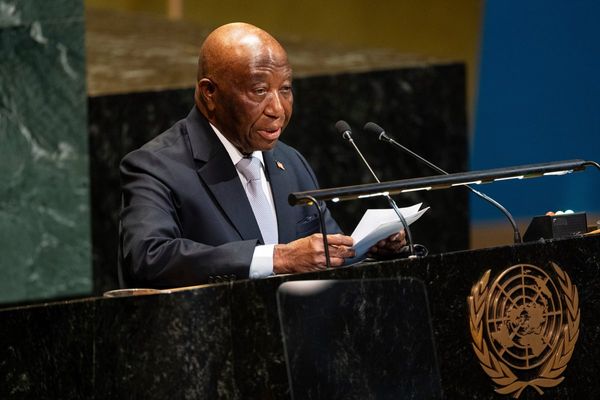
In a same-day interview with CNN's Juan Carlos López, Deputy Prime Minister Óscar Pérez-Oliva Fraga traced the overhaul back to the government's own economic and social program, arguing the measures rest on Cuban law and the constitution and answer to nothing but leadership's own push for "bienestar" — well-being. He also defended trimming the island's system of blanket subsidies, arguing that spreading aid equally across the whole population is mathematically unsustainable and that support should instead follow the person, in pursuit of what he called greater social justice.
The Family Connection the Story Left Out
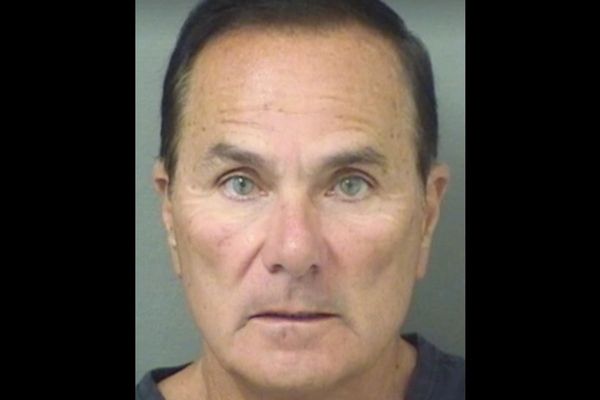
That defense carries different weight given who's delivering it. Pérez-Oliva Fraga is the grandson of Angela Castro, sister of Fidel and Raúl, making him a great-nephew of both revolutionary leaders. He rose through the military-run conglomerate GAESA before taking over Cuba's foreign trade ministry, and is now frequently named as a potential successor to President Miguel Díaz-Canel. That doesn't make his legal or economic arguments wrong — but it means the person insisting these reforms are untouched by outside pressure has a direct, familial stake in the system they're meant to preserve.
A Package Cuba Calls Sovereign, Washington Calls Theater
The remarks follow the National Assembly's approval, on June 18 and 19, of 176 measures spanning 23 policy areas — private banking, currency exchange houses, the lifting of worker caps on small businesses, and the sale of stakes in state-run firms among them. Pérez-Oliva Fraga has separately accused the U.S. of forcing Cuba into economic dependency, telling a Havana chamber of commerce gathering this week that foreign shippers and airlines are abandoning Cuban routes over fears of secondary sanctions while U.S. carriers keep flying in without penalty. Days earlier, at a labor congress, he rejected any suggestion the package was a smokescreen, telling delegates the changes were not being done under pressure or to please anyone.
That defiance echoes language Cuban officials have leaned on before. A National Assembly declaration from July 2025, issued in response to a U.S. presidential memorandum, insisted the country's political will "will not be broken nor subjugated," regardless of Washington's demands.
The State Department dismissed the reform package as modest, long overdue and ultimately superficial smoke signals from the Cuban government. Four days later, the Trump administration sanctioned five entities generating revenue for Havana — though only three, according to Secretary of State Marco Rubio's own statement, are actually tied to the military-run conglomerate GAESA: a financial arm, a commercial bank, and a logistics firm. The other two — a state mining company and Cuba's largest steel producer — were designated separately over mineral exports. Rubio said GAESA "continues to operate as the financial muscle behind the regime's repressive security apparatus." The fifth designation targeted Annalie Lilliam Rueda Cardero, daughter-in-law of Raúl Castro. Cuba's foreign minister, Bruno Rodríguez, has meanwhile acknowledged that separate diplomatic talks with Washington show no progress, even as he insists Havana remains open to dialogue.
Blackouts, a Shrinking Economy, and a Missing Oil Supplier
The dispute is unfolding against a grim backdrop. Cuba lost most of its Venezuelan oil supply after the U.S. captured former President Nicolás Maduro on January 3, and the island has since endured lengthy blackouts and shortages. Estimates of the damage vary: the U.N.'s regional economic commission projected a 6.5% GDP contraction for 2026 in late June, while a more recent estimate puts the figure at 7.2% — both pointing to a cumulative decline of roughly 23% since 2019, among the steepest in Latin America.
Analysts Split on What Actually Changes
Outside observers disagree on what the reforms will accomplish. Georgetown's Michael Shifter described an earlier, smaller Cuban reform announcement this spring as an expression of desperation forced by the crisis — a framing observers have since applied to the larger June package as well. University of Miami scholar José Azel goes further, arguing in that same CNN piece that without a change of government, foreign capital is unlikely to follow regardless of the new rules, since Cuba lacks the property guarantees investors would need.
Rodríguez has asked for a U.N. General Assembly session on July 7 to denounce Washington's sanctions and what he calls the threat of direct military aggression against Cuba — a broader agenda than a simple embargo complaint. He has accused U.S. officials of pressuring foreign diplomats to derail the debate before it happens.