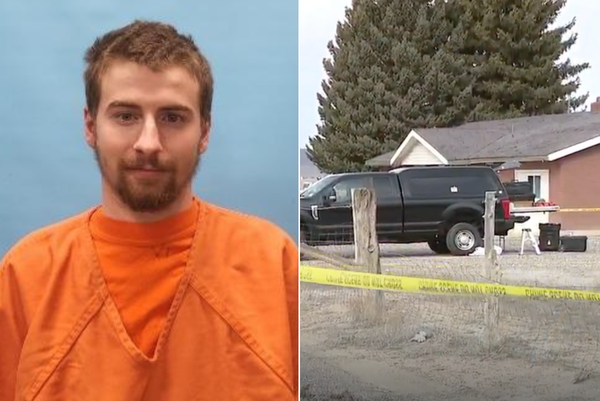
Amid an international campaign for the release of a dissident, Granma, Cuba�s Communist Party newspaper, dedicated an unusual editorial on Wednesday to attack the country's best-known political prisoner, Jose Daniel Ferrer, and the U.S. Embassy in Havana.
Under the governments of Fidel and Raul Castro` and their current successor, Miguel Diaz-Canel, the names of very few dissidents and members of the opposition have ever appeared on state media, an attempt to deprive them of public visibility. But the intense international campaign, with calls from Amnesty International, regional organizations and politicians from several countries to release Ferrer, seems to have forced the government to respond with accusations of its own directed against a frequent target: the United States.
Granma accused the U.S. of leading "a new slander and discredit campaign against Cuba," using "the arrest of the counterrevolutionary Jose Daniel Ferrer" as a pretext. The unsigned editorial said Ferrer was "a salaried agent serving the United States, with a long history of provocative actions against public order and legality."
The party newspaper also accused the U.S. Embassy in Havana of providing guidance and financing to Ferrer, and its charge d'affaires, Mara Tekach, of trying to "recruit mercenaries" and "discredit the leadership of the Cuban government and the Revolution."
Granma, however, did not include the name of the American diplomat in the editorial.
Ferrer, the leader of the largest opposition organization on the island, the Patriotic Union of Cuba (UNPACU), was arrested along with seven other activists on Oct. 1 at the headquarters in Santiago de Cuba.
The government held him 39 days before filing charges, in violation of the country's laws. Cuban authorities also denied an appeal of habeas corpus for his release.
The Cuban prosecutor's office charged Ferrer and three activists with causing "serious injuries" to a person identified as Sergio Garcia Gonzalez at the UNPACU headquarters on Sept. 20. According to Granma, Gonzalez accused them of "having kidnapped him for a whole night and beat him up, so he had to get admitted to a hospital."
But in a recording of a conversation between a member of UNPACU and Maribel Cabreja, the wife of Garcia Gonzalez, she says that her husband told her the injuries were due to an accident on a motorcycle.
Cabreja also confirmed that state security agents were pressing Garcia Gonzalez to blame the injuries on a beating received at the UNPACU headquarters. "Exactly," said Cabreja in the recording of the telephone call published both by that organization and the Cuban American National Foundation.
Granma also said that Ferrer had received the visit of relatives "as appropriate according to the rules for his legal situation." Still, the Cuban authorities prevented his wife from seeing him on several occasions. On a brief visit at the end of October, Ferrer's wife, Nelva Ortega Tamayo, said he had lost a lot of weight and had shown him several injuries, she told el Nuevo Herald.
Granma said there is evidence of Ferrer's "criminal trajectory and violent behavior totally lacking political motivations" but did not provide any.
Ferrer's arrest has generated a strong international reaction and criticism from Amnesty International, the United Nations, Secretary of State Mike Pompeo, Secretary General of the Organization of American States Luis Almagro, and more recently from the Vice President of the European parliament, Dita Charanzova.
Under intense repression within the island, many opposition organizations receive financial support from Cuban exile organizations such as the Foundation. The island government regularly accuses dissidents of being "mercenaries" and agents of the United States.
In recent years, dissidents and activists have denounced new methods of repression, such as travel bans, the fabrication of charges for common offenses, temporary arbitrary arrests and pressures to emigrate, which have proved successful in limiting protests and other activities of organizations such as the Ladies in White.
Despite the pressures, the Patriotic Union of Cuba remained active, especially in the eastern part of the country, organizing some public protests and using social media to publish complaints about the situation in those provinces.
This is not the first time that the island's government has tried to imprison Ferrer or accuse him of a common crime.
Ferrer was an activist in the Christian Liberation Movement and one of the 75 dissidents arrested during the so-called Black Spring in 2003. He was released in 2011 under a variant of probation, a status that the government has used several times to arrest him or prevent him from traveling abroad.
In August last year, the government arrested Ferrer and accused him of attempted murder of an Interior Ministry officer. Ferrer and other witnesses to the events said that the agent pounced at the car Ferrer was driving. According to the prosecuting documents, the agent had only suffered minor injuries in one arm.
Ferrer was released a few weeks later, after another international campaign that did not reach the pages of the official newspaper. On this occasion, it does not seem that he will run the same fate. Granma reported that he was "awaiting trial."