People in Cuba will soon be able to access the internet from their mobile phones for the first time after the government announced it would launch a 3G service.
The president of the state telecoms company, Mayra Arevich, announced on television on Tuesday evening that the long-awaited service would begin on Thursday.
Cuba is one of the last countries on Earth to join the mobile internet. Citizens of the repressive Caribbean country have only been able to get online via fixed connections to their homes from last year.
The regime has also been opening state-owned internet cafes since 2013 and wifi hotspots in public places since 2015.
While the 3G mobile service will open up the net to browsing in many more places across the island, it will be out of reach for most Cubans.
The data packages available from the state-run monopoly range from 600MB for about £5.50 to 4GB for about £23.60.
Although these prices are broadly in line with what is available in other countries, the average monthly salary in Cuba is between £15 and £23.
One Havana resident, Joaquin Montiel, welcomed the development but said it would still be too pricey for him.
“It was about time this became a possibility for Cubans too,” he told ABC News. “But for some, like me, it’s still a remote one.”
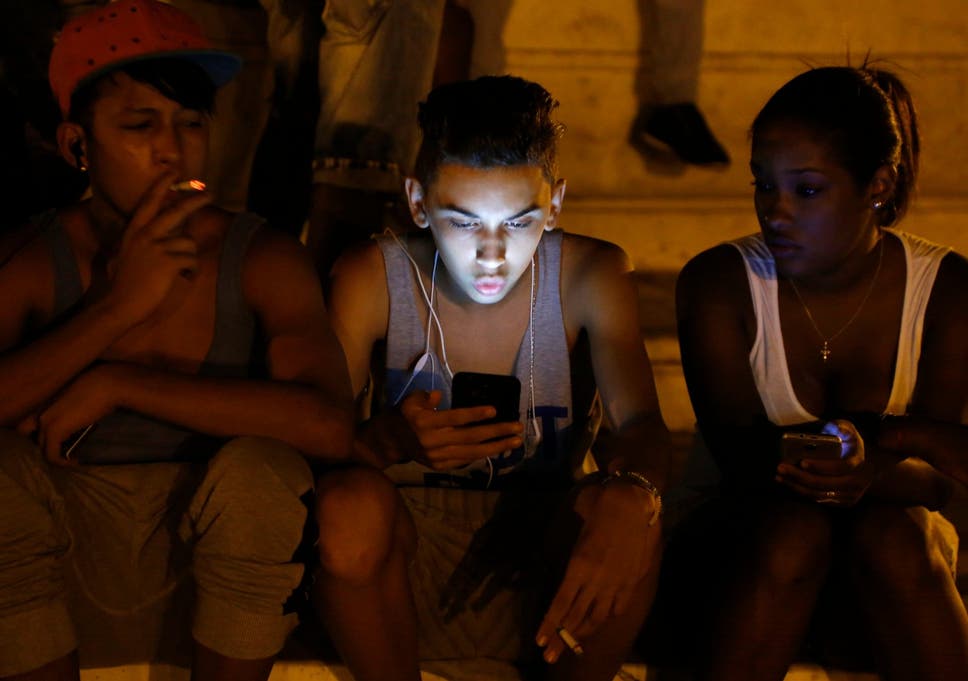
Cubans who can afford the net currently have to leave home and head to public hotspots, braving insects and a lack of privacy.
Guillermo Diaz, a 38-year-old who regularly logs in at the hotspots to video chat with family in the US, said: “It will be good to be able to connect to the web with greater comfort.”
The Cuban authorities have been trying to boost connectivity, particularly since President Miguel Diaz-Canel succeeded Raul Castro – brother of revolutionary leader Fidel – in April. He also opened a Twitter account to much fanfare in October.
North Korea, another authoritarian country which strictly controls internet access, only allows its citizens to browse a nationwide intranet full of pages vetted by the regime.
Cubans, however, will be able to access the actual world wide web, although the government does block access to US-funded websites which broadcast anti-communist news from Florida and a few other sites which call for change in Cuba.