As COVID-19 cases overwhelm hospitals and clinics in Cuba, authorities are resorting to a Chinese vaccine in the latest effort to get a ravaging pandemic under control, despite early promises that the population would be fully immunized by August with much-touted locally produced inoculations.
After months of an intense propaganda campaign promoting the Cuban vaccines and a stubborn refusal to participate in a World Health Organization effort to acquire vaccines produced around the world, news about the use of the Chinese vaccine is raising questions about the government strategy to fight the pandemic, especially because official numbers do not seem to portray the real extent of the disease.
Local media outlets 5 de septiembre and Perlavision first reported Sunday that authorities launched a vaccination push in Cienfuegos — a province reporting more than 20,000 cases in the past two weeks — with two doses of China’s Sinopharm and an additional third dose of Cuba’s Soberana Plus vaccine.
The Miami Herald has also learned that the government started offering the Chinese vaccines to members of the military several weeks before the Cienfuegos program.
In Cienfuegos and across the island, hospitals lack medications, oxygen and even beds to treat patients. Patients with obvious COVID symptoms are told to go home and find antibiotics on their own because the hospitals do not have them in stock. Cubans continue to publish distressing videos of patients agonizing without oxygen, after a broken part in a Havana plant halted almost all oxygen production for two months.
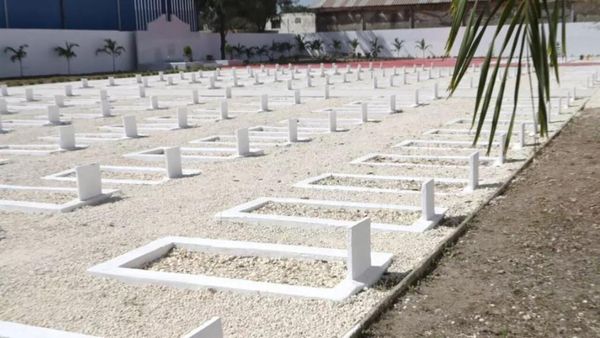
Authorities also plan to use the Sinopharm vaccine in Artemisa, a province near the capital, where authorities had to build a makeshift cemetery due to the high number of COVID-related deaths.
The reports were the first official acknowledgment that China had donated at least 250,000 vaccines to Cuba, Ileana Morales Suárez, a Ministry of Health official, told Perlavision.
In a call Monday between China’s Xi Jinping, and Cuban leader Miguel Díaz-Canel, the Chinese president promised to continue providing “assistance and support within its capacity to Cuba in fighting against the pandemic,” but there was no mention of the vaccines in the statement released by the Chinese government.
Cuban authorities never responded to a public offer by President Joe Biden to send vaccines from the United States to the island if he received assurances that they would reach the population.
A Cuban Embassy spokesperson did not immediately reply to a request for comment.
The news reports come months after Cubans began questioning why authorities had not secured vaccines through the World Health Organization’s COVAX initiative, while it was developing and producing its own pharmaceuticals. Promises in early March to mass produce the Cuban shots quickly enough to get the adult population vaccinated by August were off the mark by several months, as only around 30% of the population is fully vaccinated.
Dr. Jarbas Barbosa, assistant director of the Pan American Health Organization, said Cuba has not expressed interest in being part of the COVAX initiative, which allows countries to buy vaccines at discounted rates or receive donations. Since Cuba is not a member and it’s also not seeking to sell its vaccines through PAHO’s program, he said, it is not obligated to share data of its vaccine trials with the organization.
“So far, the WHO prequalification team has not received information from the Cuban vaccines, so we don’t know what exactly their effectiveness is,” he said. The island’s government said “the vaccines were very effective, but we need to see this data published in scientific journals.”
On Monday, Dr. Eduardo Martínez Díaz, the president of BioCubaFarma, which is producing the island’s Soberana vaccines, said Cuban health officials want to have a meeting “soon” with WHO representatives “to show the results and start discussing the process to obtain the certification and make our results transparent with them.”
The government has not explained the decision to start providing the Chinese vaccine to Cubans, but state media reports said the intention was to speed up the vaccination process during a COVID surge in Cienfuegos.
It is not clear if production or personnel issues have slowed down the vaccination process. Previously, the government complained that it did not have enough syringes for the mass inoculation campaign, but so far it has received several donations of medical supplies from PAHO, several countries and solidarity groups.
Martínez Díaz, who promised the production of all required doses to vaccinate the population by August, said Monday there were “productive problems with Soberana,” which he blamed on the U.S. embargo and “some technical issues” in ramping up production.
He said the doses will be ready in September, but the full-vaccination goal has now moved to November.
On Aug. 13, to mark the birthday of the late Fidel Castro, Cuba’s AICA laboratories and the Center of Genetic Engineering and Biotechnology announced they had already produced 20 million doses of the Abdala vaccine, which requires three shots. That’s enough to fully immunize more than half the island’s population of about 11.3 million people, although not all were available for distribution yet, AICA’s director, Dr. Antonio Emilio Vallín, said.
In the absence of an official explanation about the use of a foreign vaccine, Cubans are trying to make sense of the government strategy.
According to the Cuban Health Ministry, Abdala, the first Cuban vaccine that received emergency use authorization by the country’s regulators, showed 100% efficacy in protecting from severe disease and 92.2% in protecting from symptomatic disease after three doses. Two other candidates, Soberana and Soberana Plus, were 91.2% protective against symptomatic disease in three doses, the government said.
If the numbers are correct, following so much propaganda about the local shots, Cubans wonder why authorities are relying on the Sinopharm vaccine, which is only 79% effective against symptomatic disease and hospitalizations.
“I honestly do not understand this strategy,” a reader of Granma identified as Miguel wrote on the Communist Party newspaper’s website. “If the country already has Soberana 02 and Soberana Plus with approval for emergency use, why begin experimenting with a foreign vaccine with 79% efficacy when ours exceed 90%?”
Even if local production delays are the reason behind the use of the Chinese shots, questions about the vaccines’ effectiveness still remain, since the government started mass inoculations without waiting for trial data and results have yet to be published in peer-reviewed scientific journals.
Health officials have been sharing incomplete, if not openly contradictory, information, adding to the confusion about the real impact of the vaccines in controlling the epidemic.
The Ministry of Health does not make public how many vaccinated people have contracted the disease, experienced symptoms or died. In early August, the same week that the vaccination campaign in Havana ended, Morales Suárez, the Health Ministry official, said 72% percent of positive cases in the capital “in recent days” had received three doses of the vaccines, including 42% who received their last dose at least two weeks prior and were supposed to be fully immunized.
But citing unpublished Ministry of Health data, Martínez Díaz, the head of BioCubaPharma, told Granma last week the exact opposite: that only 0.96% of the 2.6 million vaccinated had contracted the virus, and of those only 0.004% had died.
On Monday, health officials acknowledged on the “Mesa Redonda” evening news show that the population has “concerns” about the effectiveness of the vaccines but blamed the delta variant for the increase in cases, a trend happening also in Israel and Florida, they said. They also mentioned studies showing that immunity provided by COVID vaccines wanes over time but didn’t say how the Cuban products compare.
Health authorities reported a decrease in the number of new cases last week that they are trying to link with the vaccination campaign, but shortages and delays in processing PCR tests, reliance on rapid tests to diagnose patients and breakdowns in the treatment and reporting protocols make it difficult to draw meaningful conclusions from public data.
On Tuesday, authorities reported 6,342 positive cases nationwide, down from 9,548 on Aug. 22. But they conducted 10,000 fewer PCR tests.
Accounts shared on social media and the state press, as well as comments by government officials, strongly suggest the real toll of the pandemic is much worse than what official numbers portray, as many cases and related deaths are not being counted.
Frequent changes in the methodology used to count cases and deaths, variables like age or place of residence that suddenly stopped being reported, and national statistics that do not correspond with locally reported data, all make it more difficult to evaluate the COVID numbers published by the government, said Cuban journalist Barbara Maseda, the head of Proyecto Inventario, which has been tracking the daily numbers of positive COVID cases and deaths published by the Ministry of Health.
“Sometimes it is the fact that the exact number of people seem to die day after day in the same province, or that daily deaths have not passed the 100 mark,” she says. “But what is happening now, the expansion of cemeteries, the overwhelmed hospitals, that cannot be explained looking at the official numbers.”
The disconnect is significant enough that it is getting through to state media reports. An official in charge of funeral services in the city of Guantánamo told a local TV station that in the first days of August daily deaths had increased dramatically.
The official reported 80 deaths on Aug. 1, 61 on Aug. 3, and 67 the following day.
Those same days, the Ministry of Health only reported 27 COVID-related deaths in the whole of Guantánamo province.
Jose Angel Portal Miranda, Cuba’s health minister, told the Ciego de Avila province Invasor that the ministry’s daily COVID report, the only source of official data in the country, only includes those with a positive PCR at the time of death. The newspaper notes that many patients die without getting the PCR test or before the results come back.
That’s exactly what happened to the grandfather of Cuban YouTuber Magdiel Jorge Castro.
He said his grandfather died of COVID at home on Aug. 18 and shortly after, his father was admitted to a hospital in the city of Holguin. They both took a PCR test and 10 days later, the results had still not arrived.
“One has died, the other is still in the hospital. However, neither will appear in (Health Ministry) statistics,” he said on Twitter. “There are hundreds like them.”
———