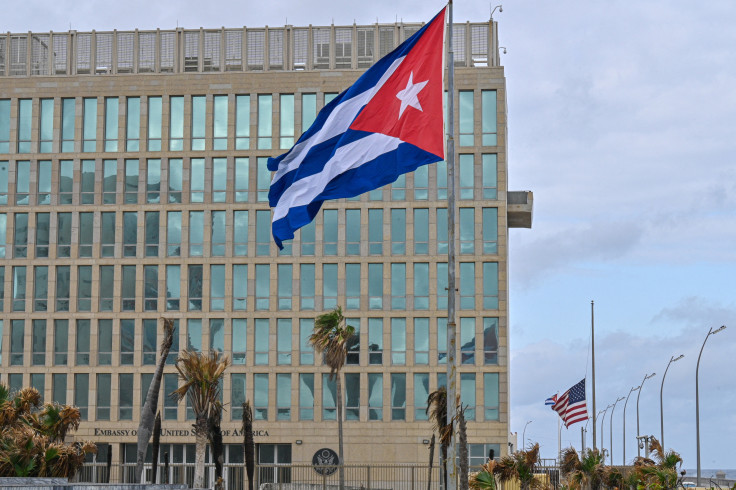
Cuban officials are considering compensating Americans and U.S. companies whose property was nationalized during the Cuban revolution, aiming to attract foreign investment to the island.
In an interview with Drop Site News, Deputy Foreign Minister Carlos Fernández de Cossio said the Cuban government is considering paying lump sums to U.S. citizens and companies as part of a deal to address sanctions and the ongoing U.S. embargo on the island.
As noted by the outlet, Cuba negotiated similar compensation deals with Canada, Switzerland, the United Kingdom, Spain, and France after the revolution. The United States, however, refused to participate, planning instead to overthrow Fidel Castro's government.
"[Cuba made] lump sum agreements with the six governments whose property was nationalized in Cuba. All of them had compensation schemes; all were compensated except the U.S.," Cossio said.


According to the official, all payments could have been made by the 1980s if the United States had accepted compensation. Today, Cuba lacks the reserves to make such payments, but officials argue that lifting the embargo could generate revenue to finance such an arrangement.
Based on U.S. government data and industry estimates collected by Bloomberg, nearly 6,000 American individuals and businesses have filed claims for nationalized property, which studies estimate is worth $9 billion.
Despite Cuba's willingness to reach a deal with Americans, Cossio said negotiations should not be one-sided.
"We're ready to sit down with the United States and discuss these issues; but Cuba also has claims," he said. "We believe the Cuban people and the Cuban nation deserve to be compensated for the damage caused by the economic blockade, by invasions, by terrorism, by assassinations, by violent actions against the economy."
The move to repay American companies follows a similar policy earlier this month, in which Cuba allowed nationals living abroad to invest in the private sector and own businesses in their homeland as a way to reignite the economy.
Although it appears the Cuban government is trying to appease the United States, Trump administration officials have expressed skepticism.
Last week, Secretary of State Marco Rubio said the economic changes announced by Cuba are "not dramatic enough," adding that the country "has an economy that doesn't work under its political and governmental system."
Despite concerns from U.S. officials, Rubio rejected reports claiming the United States is seeking the ouster of Cuban President Miguel Díaz-Canel as part of negotiations to open the island's economy.
"The reason so many in U.S. media keep putting out fake stories like this is because they continue to rely on charlatans and liars claiming to be in the know as their sources," Rubio said on social media, responding to a New York Times report suggesting the Trump administration is pushing for Díaz-Canel's removal as part of its reform efforts.


© 2025 Latin Times. All rights reserved. Do not reproduce without permission.