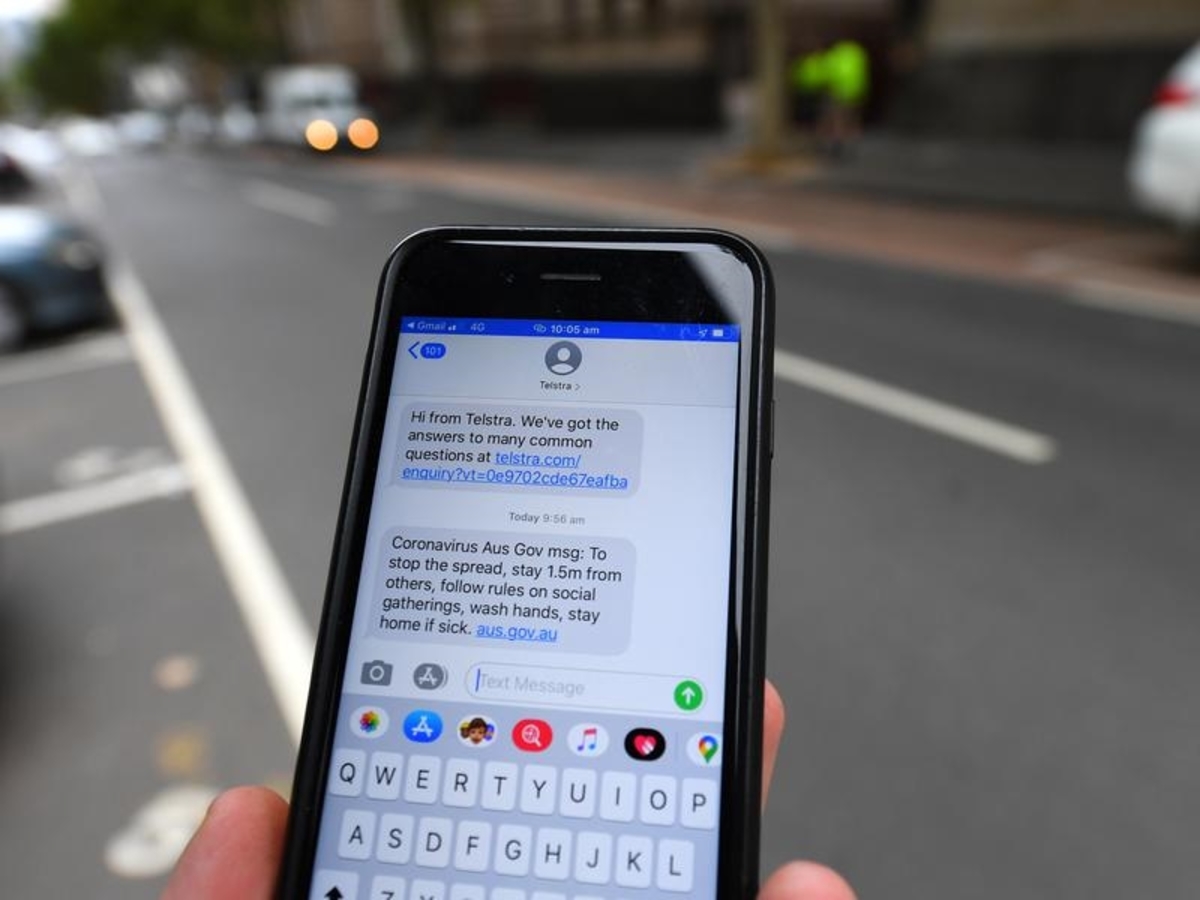
Australian scientists have found that the virus that causes COVID-19 can survive for up to 28 days on surfaces such as the glass on mobile phones, stainless steel, vinyl and paper banknotes.
The national science agency, the CSIRO, said the research undertaken at the Australian Centre for Disease Preparedness (ACDP) in Geelong also found that SARS-CoV-2 survived longer at lower temperatures.
It said in a statement the virus survived longer on paper banknotes than on plastic banknotes and lasted longer on smooth surfaces rather than porous surfaces such as cotton.
The research, published in the Virology Journal, also found the virus lasted 10 days longer than influenza on some surfaces.
Dr Larry Marshall, Chief Executive of CSIRO, said establishing how long the virus survived on surfaces enabled scientists to more accurately predict and prevent its spread, and so protect the community from infection.
ACDP Deputy Director Dr Debbie Eagles said the results reinforced the need for good practices such as regular handwashing and cleaning surfaces.
"At 20 degrees Celsius, which is about room temperature, we found that the virus was extremely robust, surviving for 28 days on smooth surfaces such as glass found on mobile phone screens."
Similar experiments for Influenza A found it survived on surfaces for 17 days.
Further experiments were carried out at 30 and 40 degrees Celsius, with survival times for the SARS-CoV-2 virus decreasing as the temperature increased.
"While the precise role of surface transmission, the degree of surface contact and the amount of virus required for infection is yet to be determined, establishing how long this virus remains viable on surfaces is critical for developing risk mitigation strategies in high contact areas," Dr Eagles said.
ACDP Director, Professor Trevor Drew, said the research may help explain the apparent persistence and spread of SARS-CoV-2 in cool environments such as meat processing facilities and how that might be better addressed.